
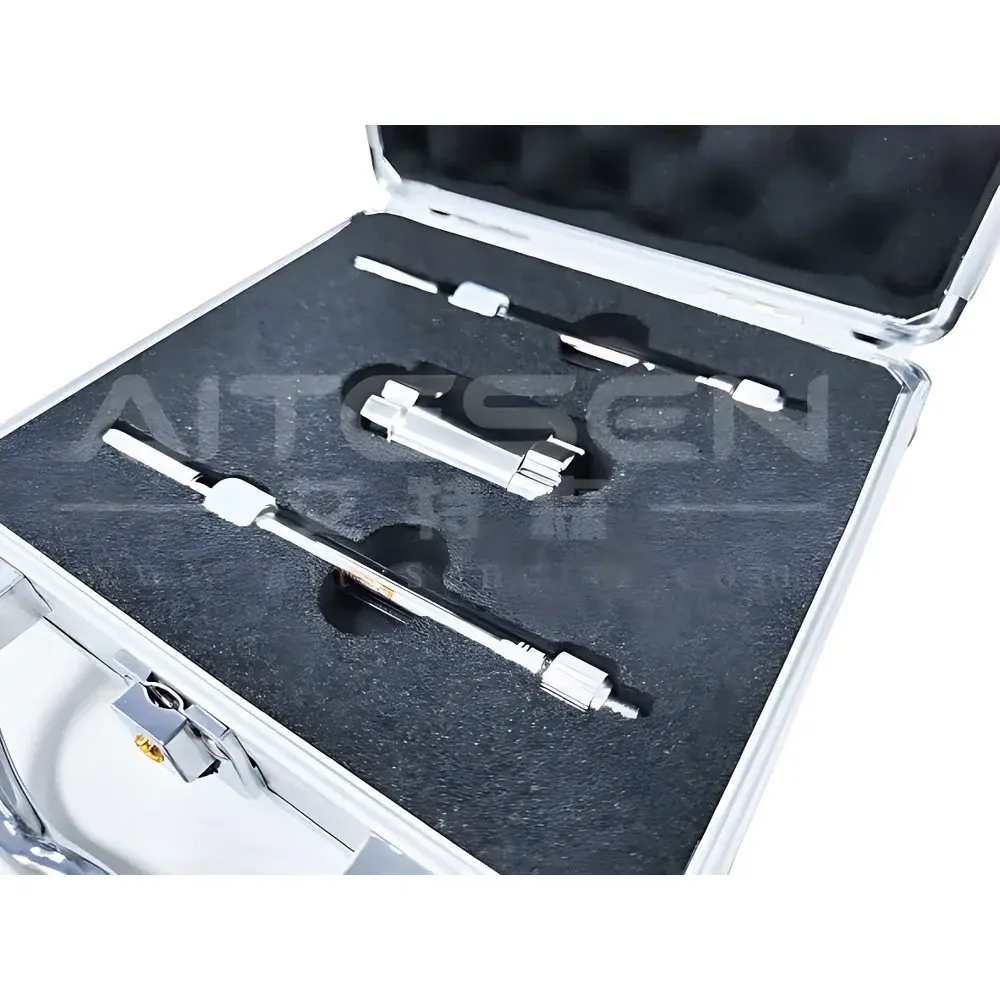
Aitesen HPEx-L1 Manual Liposome Extruder
| Brand | Aitesen |
|---|---|
| Model | HPEx-L1 |
| Type | Manual Liposome Extrusion Device |
| Sample Volume Range | 0.1–1.0 mL per run |
| Residual Volume | 0 mL |
| Polycarbonate (PC) Membrane Diameter | 19 mm |
| Available Membrane Pore Sizes | 50 nm, 100 nm, 200 nm, 400 nm, 800 nm |
| Temperature Compatibility | Water-bath compatible (ambient to 60 °C) |
| Weight | <2 kg |
| Cleaning | Fully disassemblable |
Overview
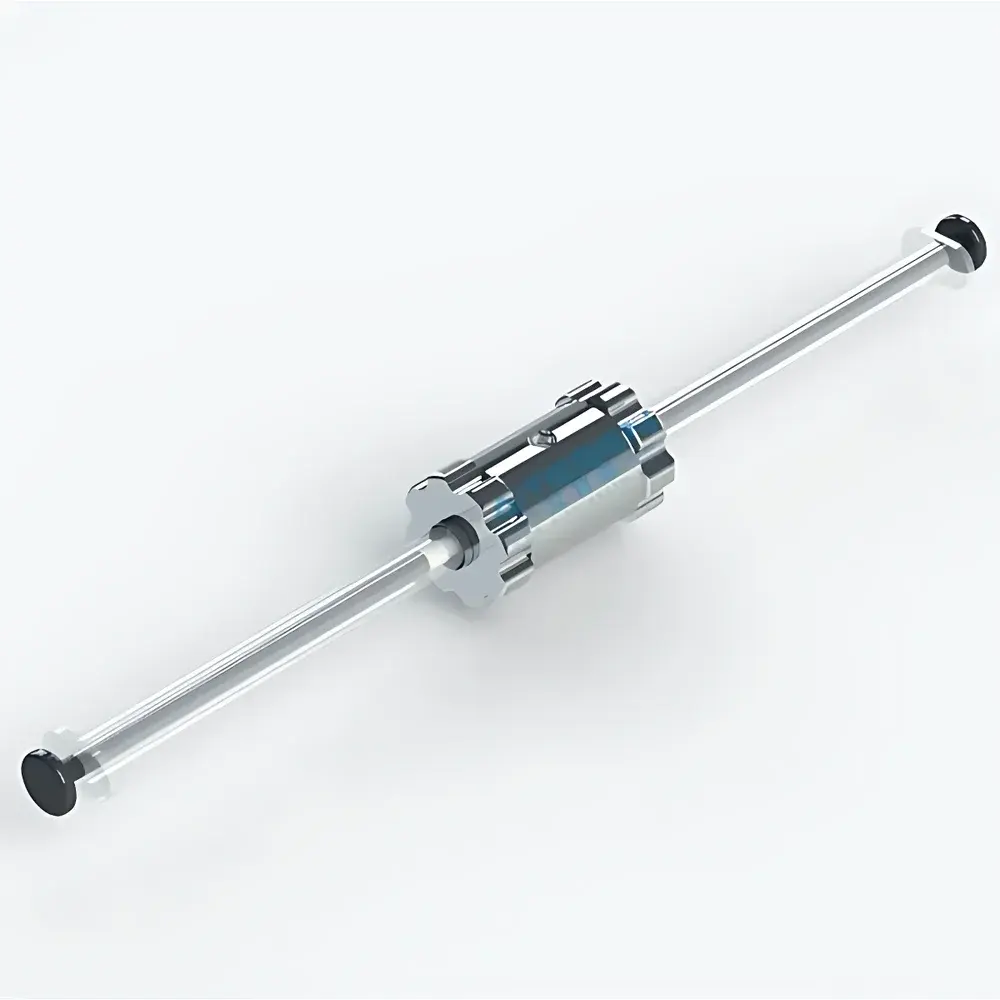
The Aitesen HPEx-L1 Manual Liposome Extruder is a precision-engineered, hand-operated extrusion device designed for the controlled size reduction and homogenization of lipid-based nanocarriers—primarily liposomes, lipid nanoparticles (LNPs), and other vesicular systems. It operates on the principle of membrane extrusion: a defined volume of pre-sonicated or hydrated lipid suspension is loaded into a sealed glass syringe and manually forced under steady pressure through stacked polycarbonate (PC) track-etched membranes with precisely calibrated pore diameters. This mechanical sieving process yields narrow polydispersity index (PDI) distributions by eliminating multimodal aggregates and enforcing uniform vesicle formation via repeated passage (typically 5–21 cycles). Unlike high-pressure homogenizers or sonication-based methods, the HPEx-L1 avoids thermal degradation, oxidation, and shear-induced lamellar disruption—making it especially suitable for temperature-sensitive formulations including mRNA-LNPs, PEGylated liposomes, and sterol-rich bilayers.
Key Features
- Zero-residual design ensures quantitative recovery of all processed sample—critical for low-yield or high-value formulations such as clinical-grade LNPs.
- 19 mm diameter PC membranes offer standardized, traceable pore geometry compliant with ISO 8503-1 surface roughness specifications for membrane filtration validation.
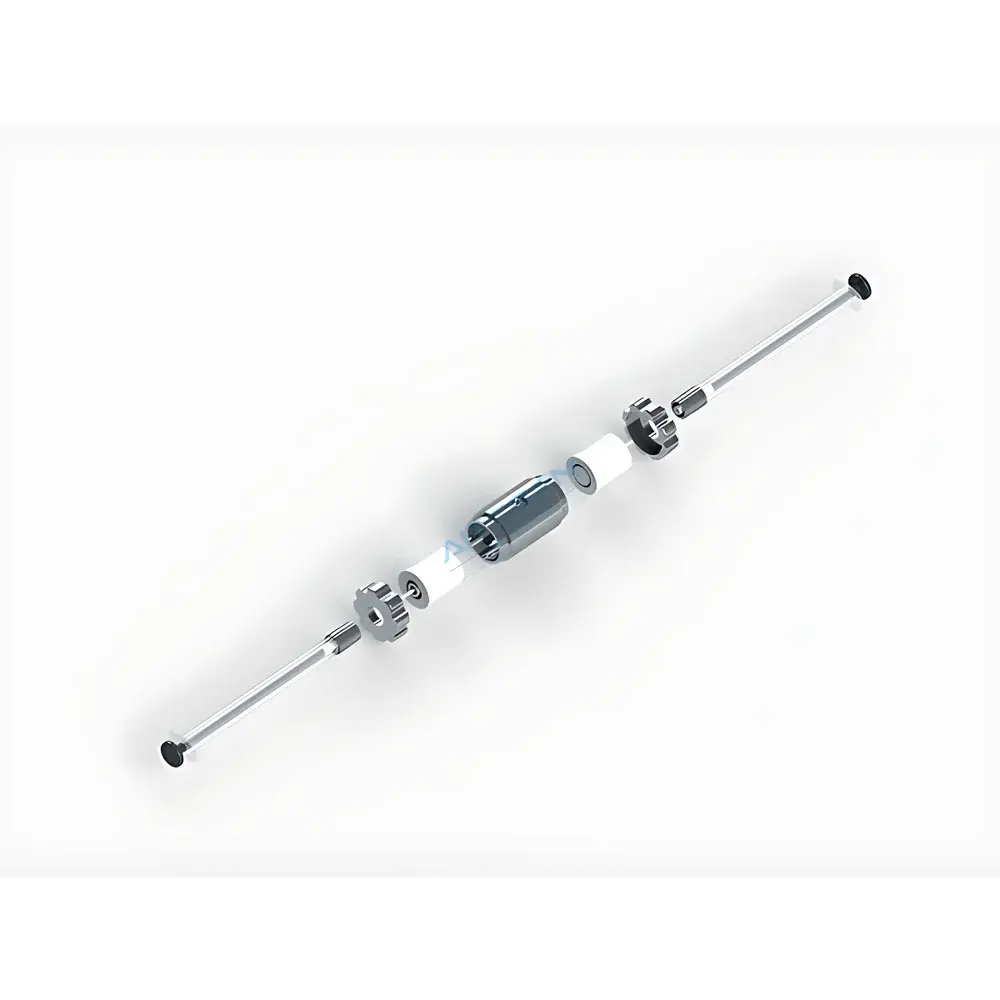
- Modular, tool-free assembly allows rapid membrane exchange between pore sizes without cross-contamination—supporting iterative optimization from coarse (800 nm) to final formulation grade (50 nm).
- Integrated water-jacket compatibility enables external temperature control via circulating water bath (range: 4–60 °C), preserving thermolabile components during extrusion.
- Sub-2 kg total mass and compact footprint (<15 × 8 × 12 cm) facilitate benchtop use in BSL-2 hoods, cleanrooms, and mobile GMP pilot facilities.
- All wetted parts—including borosilicate glass syringe barrel, stainless-steel plunger rod, and anodized aluminum housing—are autoclavable (121 °C, 20 min) and compatible with ethanol, isopropanol, and 0.1 M NaOH cleaning protocols.
Sample Compatibility & Compliance
The HPEx-L1 accommodates aqueous lipid dispersions, detergent-stripped micelles, and polymer-stabilized nanovesicles across a broad compositional spectrum: DOPC/DPPC/Cholesterol/DSPE-PEG2000 formulations, cationic lipid mixtures (e.g., DOTAP, DLin-MC3-DMA), and hybrid phospholipid–polymer systems. It meets baseline requirements for GLP-compliant process documentation when used with calibrated syringes and certified membranes. While not a regulated medical device, its construction adheres to ISO 13485-aligned material traceability (304 stainless steel, USP Class VI-certified elastomers) and supports audit-ready workflows under FDA 21 CFR Part 11 when paired with electronic lab notebook (ELN) integration for extrusion cycle logging.
Software & Data Management
As a manually actuated instrument, the HPEx-L1 does not incorporate embedded electronics or firmware. However, it is fully compatible with digital process documentation ecosystems: users may log extrusion parameters—including cycle count, membrane lot number, bath temperature, and post-extrusion DLS results—into validated ELNs (e.g., LabArchives, Benchling) or LIMS platforms. Optional barcode-scannable membrane packaging enables automated lot tracking. For regulatory submissions, Aitesen provides Certificate of Conformance (CoC) and membrane pore size verification reports (via SEM metrology per ASTM E122–22) upon request.
Applications
- Preclinical formulation development of siRNA/mRNA delivery systems requiring <100 nm monodisperse LNPs.
- Reconstitution of freeze-dried liposomal drugs (e.g., doxorubicin, amphotericin B) to target hydrodynamic diameter (e.g., 80 ± 15 nm).
- Quality-by-Design (QbD) studies evaluating membrane pore size vs. encapsulation efficiency and in vitro release kinetics.
- GMP-adjacent batch record generation for Phase I–II clinical trial materials where scalability from manual to semi-automated extrusion is planned.
- Academic teaching labs demonstrating fundamental principles of nanostructure self-assembly and membrane filtration physics.
FAQ
What is the recommended number of extrusion cycles for achieving optimal unilamellarity?
Typically 11–15 cycles through 100 nm membranes yield >90% unilamellar population for standard DOPC:Chol (7:3) formulations, as confirmed by cryo-TEM and asymmetric flow field-flow fractionation (AF4).
Can the HPEx-L1 be used with organic solvent-containing lipid stocks?
No—only aqueous-phase dispersions are compatible. Chloroform/methanol stock solutions must be fully dried, hydrated, and pre-sonicated prior to loading.
Is membrane sterilization possible without compromising pore integrity?
Yes: gamma irradiation (25 kGy) or ethylene oxide (EtO) treatment is validated for PC membranes; autoclaving is not recommended due to thermal deformation risk.
How is reproducibility ensured across operators?
Consistent extrusion force is achieved using standardized plunger speed (approx. 30–45 s per 1 mL pass); training videos and torque-calibrated practice syringes are available from Aitesen Technical Support.
Related Products



