
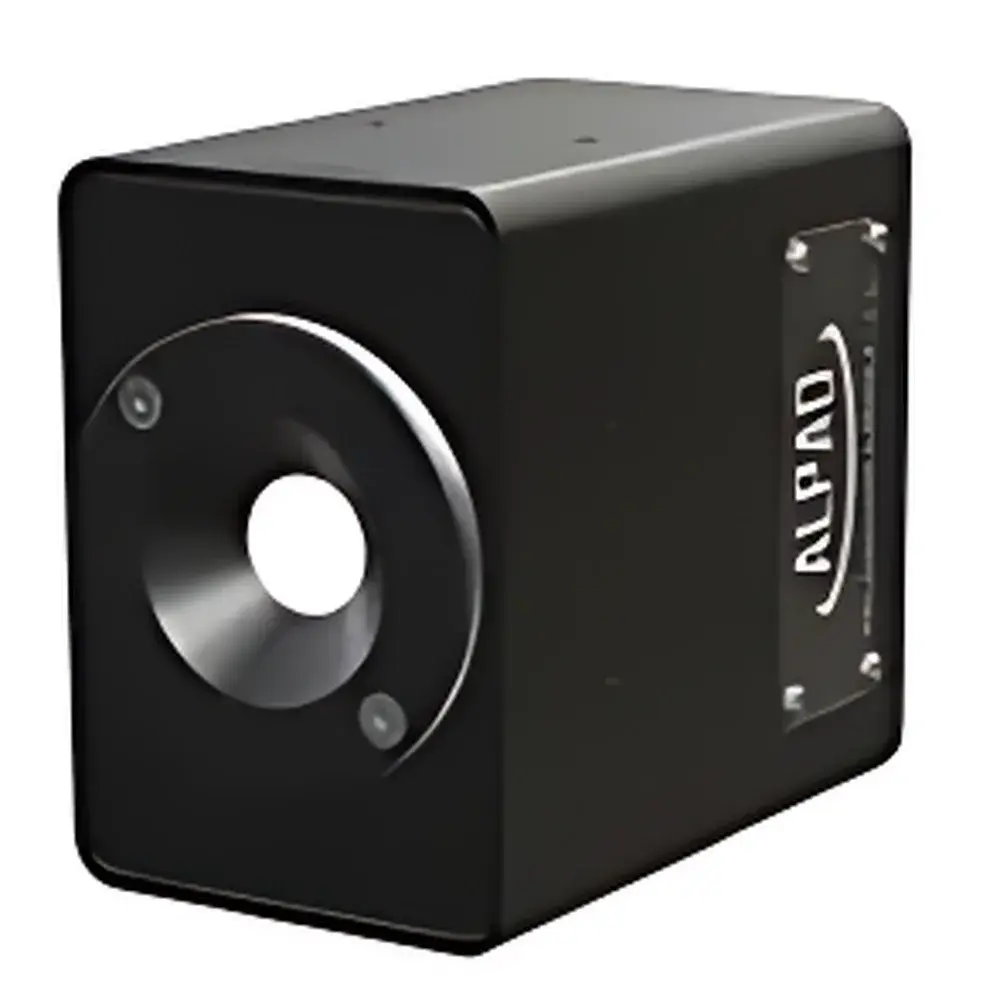
ALPAO DM Series High-Speed Deformable Mirror
| Brand | Alpao |
|---|---|
| Origin | France |
| Model | DM Series |
| Actuation Principle | Magnetic Actuator |
| Maximum Wavefront Stroke | >80 µm (peak-to-valley) |
| Spatial Resolution | <5 µm |
| Response Time | <500 µs ±10% |
| Linearity Error | <7 nm RMS |
| Hysteresis | Negligible (typ. <0.5% F.S.) |
| Surface Quality | λ/20 @ 633 nm (rms) |
| Coating | Protected Aluminum (Ravg >92% from 400–1000 nm) |
| Operating Temperature | 15–30 °C |
| Interface | Analog ±10 V input per actuator |
| Compatibility | Compatible with real-time control systems (e.g., LabVIEW, MATLAB, Python via SDK) |
Overview
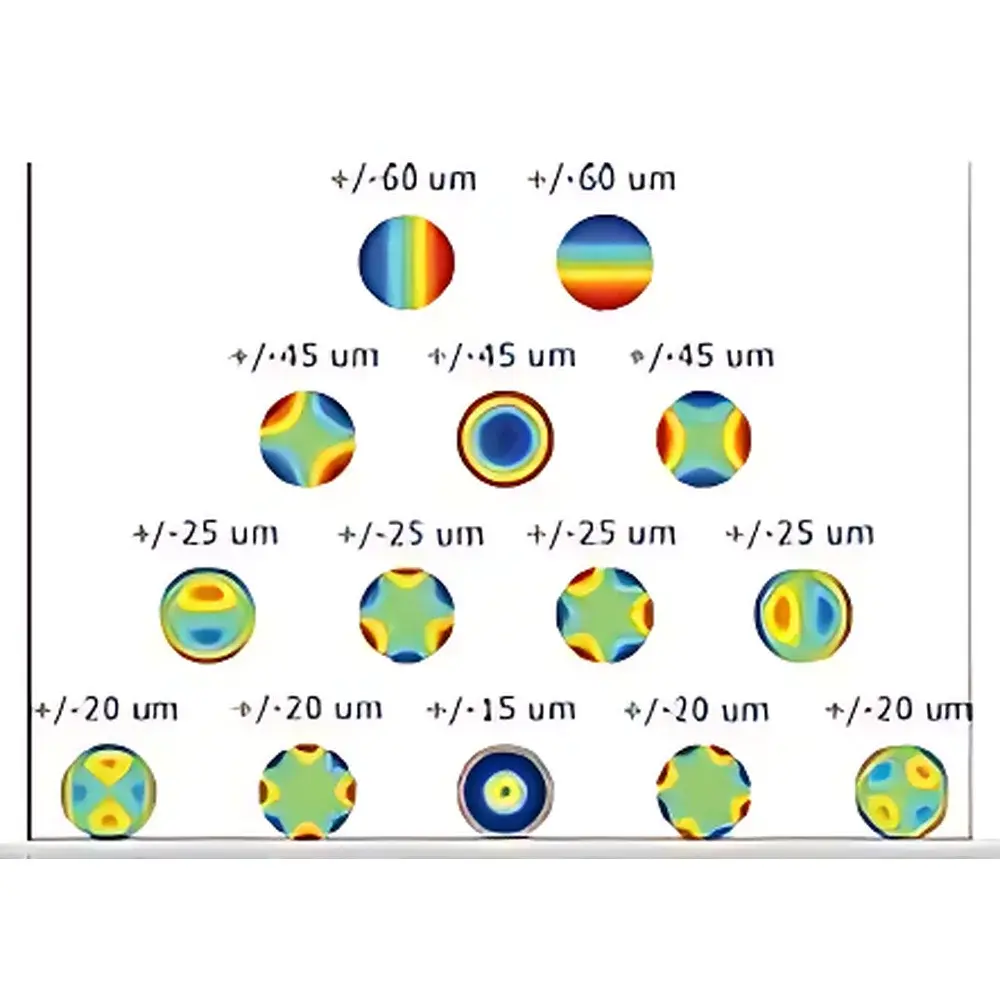
The ALPAO DM Series High-Speed Deformable Mirror is a precision adaptive optics component engineered for real-time wavefront correction in demanding optical systems. Based on a monolithic, continuous-faceplate design actuated by an array of high-bandwidth magnetic actuators, it enables closed-loop compensation of dynamic optical aberrations—including defocus, astigmatism, coma, and higher-order Zernike modes—with exceptional fidelity and temporal responsiveness. Unlike piezoelectric or electrostatic deformable mirrors, the magnetic actuation architecture delivers extended stroke (>80 µm PV), minimal hysteresis, and stable performance across ambient temperature fluctuations—making it especially suitable for applications requiring both large dynamic range and sub-millisecond correction cycles, such as astronomical adaptive optics, ultrafast laser pulse shaping, ophthalmic retinal imaging, and high-NA microscopy.
Key Features
- High Stroke & Precision Surface Control: Achieves peak-to-valley wavefront correction exceeding 80 µm while maintaining surface flatness better than λ/20 (rms) at 633 nm—ensuring minimal static distortion prior to actuation.
- Sub-Millisecond Temporal Response: Full-scale actuator response time is <500 µs ±10%, enabling synchronization with kHz-rate wavefront sensors and real-time feedback loops in closed-loop AO systems.
- Sub-5 µm Spatial Sampling: Integrated actuator pitch supports spatial resolution below 5 µm, permitting accurate reconstruction of fine-scale phase gradients and localized aberrations.
- Low Linearity Error & Hysteresis: Demonstrates linearity deviation under 7 nm RMS and hysteresis <0.5% of full scale—critical for repeatable, calibration-stable operation in quantitative metrology and regulated environments.
- Optimized Optical Coating: Standard protected aluminum coating provides >92% average reflectivity from 400 nm to 1000 nm, supporting broadband visible-to-NIR applications without spectral trade-offs.
- Flexible Integration Architecture: Analog ±10 V per actuator interface ensures compatibility with standard DAQ hardware; native SDK support for LabVIEW, MATLAB, and Python enables rapid prototyping and integration into custom control frameworks.
Sample Compatibility & Compliance
The DM Series is designed for integration into Class 1 laser safety-compliant optical benches and ISO 14644-1 Class 5 cleanroom-compatible enclosures. Its non-vacuum-compatible housing requires operation in ambient laboratory conditions (15–30 °C, non-condensing humidity). While not certified to IEC 61000-6-2/6-4 or FDA 21 CFR Part 11 out-of-the-box, its deterministic analog control interface and traceable voltage-to-displacement transfer function support validation under GLP/GMP and ISO/IEC 17025 quality management systems. Users deploying the mirror in regulated biomedical imaging or aerospace testbeds are advised to perform system-level verification per ASTM E2912 (Standard Practice for Adaptive Optics System Performance Testing) and ISO 20473 (Optics and Photonics — Terminology for Adaptive Optics).
Software & Data Management
Alpao provides a comprehensive, cross-platform Software Development Kit (SDK) supporting Windows, Linux, and macOS. The SDK includes low-latency drivers, preconfigured LabVIEW VIs, MATLAB toolboxes with Zernike decomposition utilities, and Python bindings (via ctypes) for real-time control loop implementation. All firmware updates and configuration files are digitally signed and version-logged. While the mirror itself does not embed onboard data logging, its analog interface allows seamless integration with third-party acquisition systems that enforce audit trails, timestamped command histories, and electronic signatures—enabling compliance with FDA 21 CFR Part 11 requirements when deployed within validated software environments.
Applications
- Astronomical adaptive optics systems for ground-based telescopes (e.g., MCAO, LTAO configurations)
- Confocal and multiphoton microscopy for aberration-corrected deep-tissue imaging
- Retinal imaging systems including AOSLO (Adaptive Optics Scanning Laser Ophthalmoscopy)
- Ultrafast laser beam cleanup and pulse front tilt correction in CPA and OPCPA systems
- Free-space optical communication link stabilization under atmospheric turbulence
- Beam shaping and homogenization in EUV lithography source development and metrology
FAQ
What is the maximum recommended operating frequency for closed-loop correction?
Closed-loop bandwidth is system-dependent but typically reaches 500–800 Hz when paired with a high-speed Shack-Hartmann sensor and optimized control algorithm.
Can the DM be operated in vacuum environments?
No—the current DM Series is rated for ambient air operation only; vacuum-compatible variants require custom engineering and are available under NRE agreement.
Is factory calibration data provided with each unit?
Yes—each mirror ships with a full actuator coupling matrix, static influence function map, and voltage-to-displacement characterization report traceable to Alpao’s internal metrology lab.
How is thermal drift managed during extended operation?
The magnetic actuator design exhibits negligible thermal drift (8-hour runs.
Does Alpao offer OEM integration support?
Yes—Alpao provides mechanical mounting drawings, electrical interface schematics, thermal management guidelines, and application-specific firmware tuning as part of its OEM partnership program.




