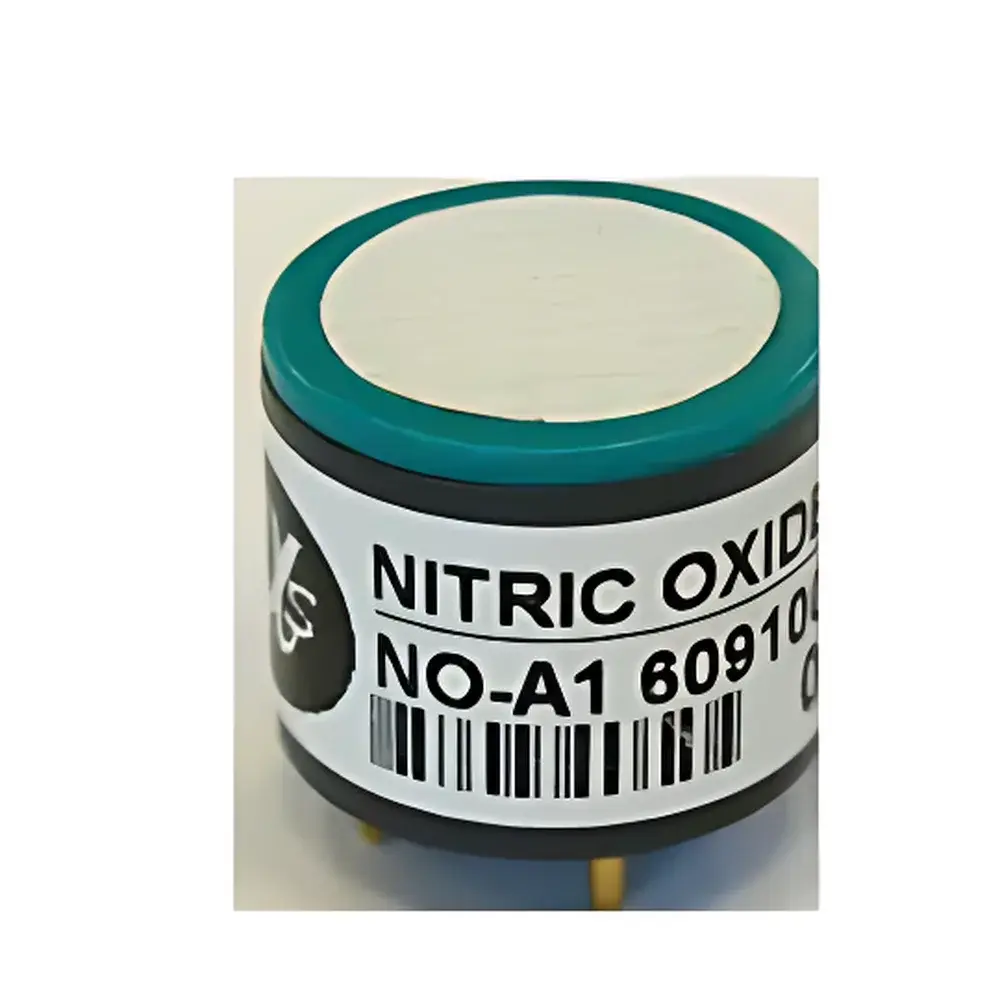
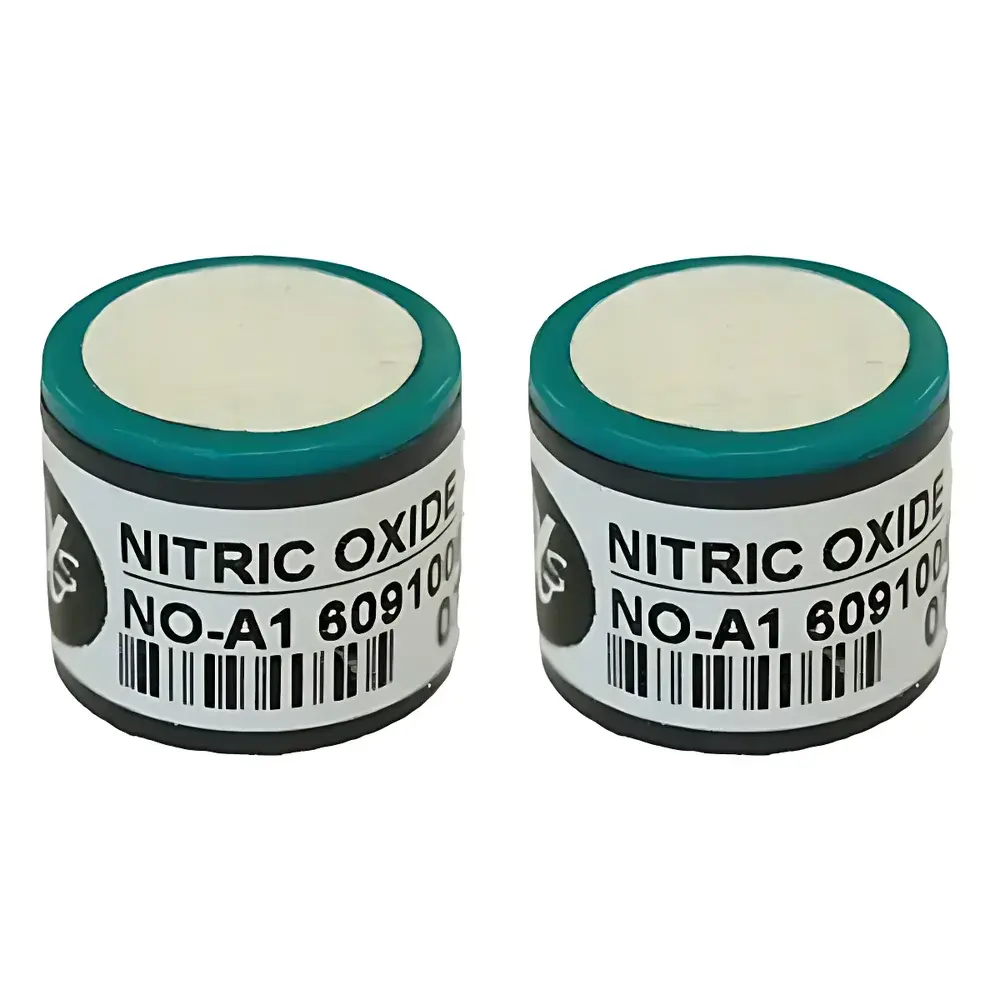
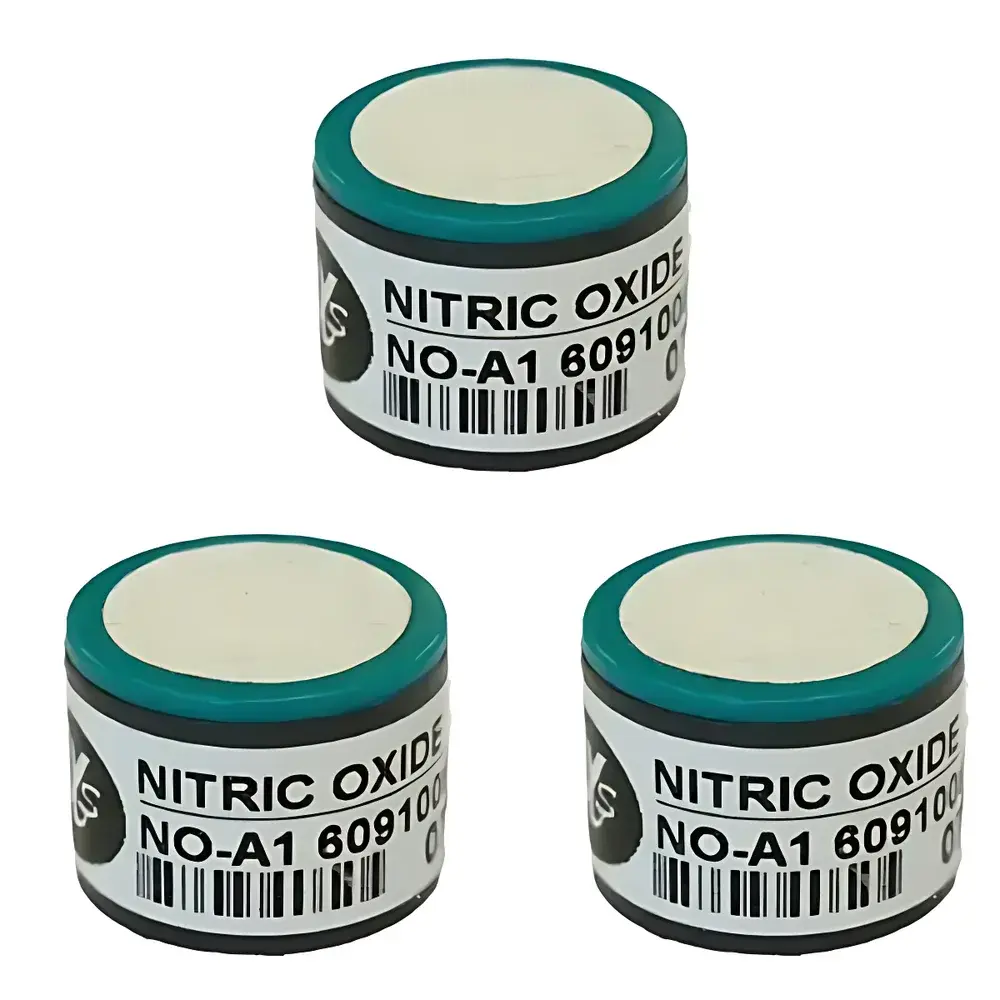
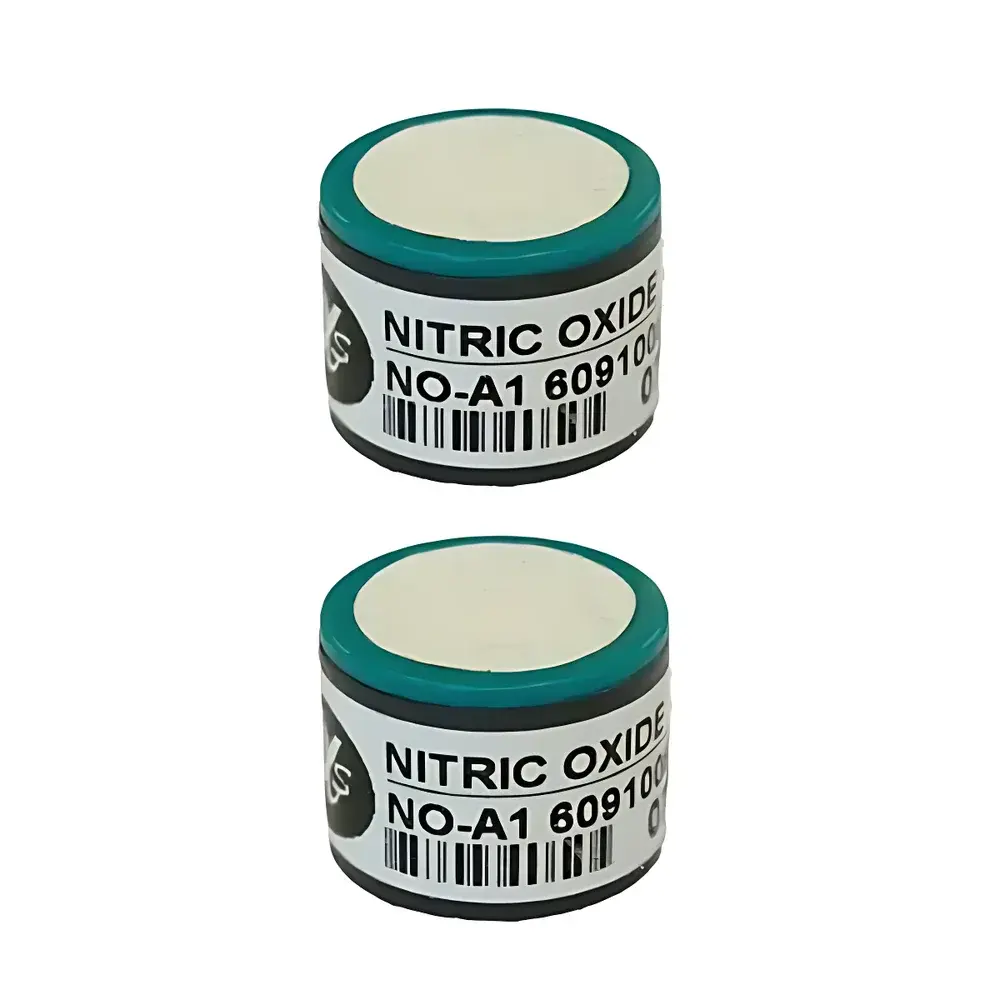
Alphasense NO-A1 Electrochemical Nitric Oxide (NO) Gas Sensor
| Brand | Alphasense (UK) |
|---|---|
| Origin | United Kingdom |
| Model | NO-A1 |
| Sensitivity | 320–480 nA/ppm |
| Response Time (t₉₀) | <45 s |
| Linear Range | 0–50 ppm |
| Linearity Error | ±5% of reading (0–25 ppm), ±10% (25–50 ppm) |
| Overload Capacity | 800 ppm |
| Resolution | <0.2 ppm |
| Dimensions | Ø20.2 × 16.5 mm |
| Operating Temperature | −30 to +50 °C |
| Operating Humidity | 15–90 %RH (non-condensing) |
| Load Resistance | 10–47 Ω |
| Bias Voltage | +300 mV |
| Expected Operational Life | 24 months |
| Storage Stability | 6 months (unpowered, sealed, 23 °C) |
Overview
The Alphasense NO-A1 is a high-performance, three-electrode electrochemical gas sensor engineered for the selective and stable detection of nitric oxide (NO) in ambient air and industrial process streams. Based on amperometric transduction, the sensor operates via diffusion-controlled oxidation of NO at a catalytic working electrode, generating a current proportional to gas concentration. Its robust design incorporates a proprietary electrolyte formulation and hydrophobic membrane that minimizes cross-sensitivity to common interferents—including nitrogen dioxide (NO₂), carbon monoxide (CO), sulfur dioxide (SO₂), and hydrogen sulfide (H₂S)—while maintaining consistent output across variable humidity and temperature gradients. The NO-A1 is optimized for integration into portable analyzers, fixed-gas monitoring systems, and OEM emission control platforms where regulatory-grade reliability and long-term baseline stability are required.
Key Features
- Three-electrode electrochemical architecture with integrated reference and counter electrodes for improved zero stability and reduced drift
- Factory-calibrated sensitivity range of 320–480 nA/ppm, traceable to NIST-traceable NO standards
- Fast t₉₀ response time of under 45 seconds—critical for dynamic emission profiling and real-time combustion optimization
- Linear measurement range from 0 to 50 ppm with full-scale linearity error ≤ ±10% (per ISO 12032:2019 Annex B verification protocol)
- High-resolution output (<0.2 ppm equivalent noise level) compatible with 16-bit analog-to-digital converters
- Compact cylindrical form factor (Ø20.2 × 16.5 mm) designed for space-constrained PCB layouts and multi-gas module integration
- Extended operational lifetime of up to 24 months under continuous operation at 23 °C and 50 %RH, validated per Alphasense Accelerated Life Test (ALT) protocol
- Wide operating envelope: −30 to +50 °C ambient temperature and 15–90 %RH non-condensing humidity
Sample Compatibility & Compliance
The NO-A1 is intended for use in clean, non-corrosive gas matrices with particulate loading <1 mg/m³. It is not recommended for direct installation in high-velocity exhaust ducts without upstream filtration or dilution sampling. The sensor complies with CE marking requirements under the EU Electromagnetic Compatibility Directive (2014/30/EU) and RoHS 2011/65/EU. While not intrinsically safe certified as a standalone unit, it is routinely deployed in ATEX Zone 2 and IECEx Zone 2 compliant systems when integrated with appropriate barrier circuits and enclosure ratings. Its performance characteristics align with method requirements specified in EPA Method 7E (NOx determination in stationary source emissions) and EN 14625:2012 (portable instruments for NO measurement in workplace atmospheres).
Software & Data Management
The NO-A1 outputs a low-impedance analog current signal (nA-level), requiring external conditioning circuitry including transimpedance amplification, temperature compensation, and linearization. Alphasense provides comprehensive technical documentation—including detailed calibration certificates, temperature compensation coefficients, and aging correction algorithms—for seamless integration into custom firmware environments. When deployed within systems compliant with FDA 21 CFR Part 11 or EU Annex 11, the sensor’s output may be logged with audit-trail-enabled data acquisition software supporting electronic signatures, version-controlled calibration history, and automated drift alerting. Raw sensor data is fully compatible with LabVIEW™, Python-based SCADA frameworks, and industry-standard Modbus RTU/ASCII protocols via compatible interface modules.
Applications
- On-board diagnostics (OBD-II) and portable tailpipe emission analyzers for NO quantification in gasoline and diesel vehicle exhaust
- Fixed-site ambient air quality monitoring networks (e.g., urban NOₓ stations meeting EU Directive 2008/50/EC reporting thresholds)
- Industrial hygiene monitoring in semiconductor fabrication cleanrooms, welding environments, and nitric acid production facilities
- Research-grade environmental chambers simulating tropospheric photochemistry and NOₓ cycling kinetics
- OEM integration into multi-parameter indoor air quality (IAQ) sensors for smart building HVAC control
- Calibration transfer standards in metrology laboratories supporting ISO/IEC 17025-accredited gas analyzer validation
FAQ
What is the recommended warm-up time before stable readings?
A minimum of 120 seconds is advised after power application to achieve thermal equilibrium and stable baseline current.
Can the NO-A1 be used in oxygen-deficient environments?
Yes—its three-electrode design ensures stable operation down to 5 % v/v O₂; however, sensitivity may decrease by up to 15 % below 10 % O₂ and requires empirical correction.
Is field recalibration supported?
Field zero and span adjustment are possible using certified NO calibration gas (e.g., 10 ppm NO in N₂); full 2-point calibration is recommended every 3–6 months depending on exposure history.
Does the sensor require periodic electrolyte replacement?
No—the NO-A1 is a sealed, maintenance-free electrochemical cell; electrolyte replenishment is neither feasible nor recommended.
How does humidity affect measurement accuracy?
The integrated hydrophobic membrane mitigates humidity-induced signal drift; output variation remains within ±3 % across 15–90 %RH when operated within specified temperature limits.