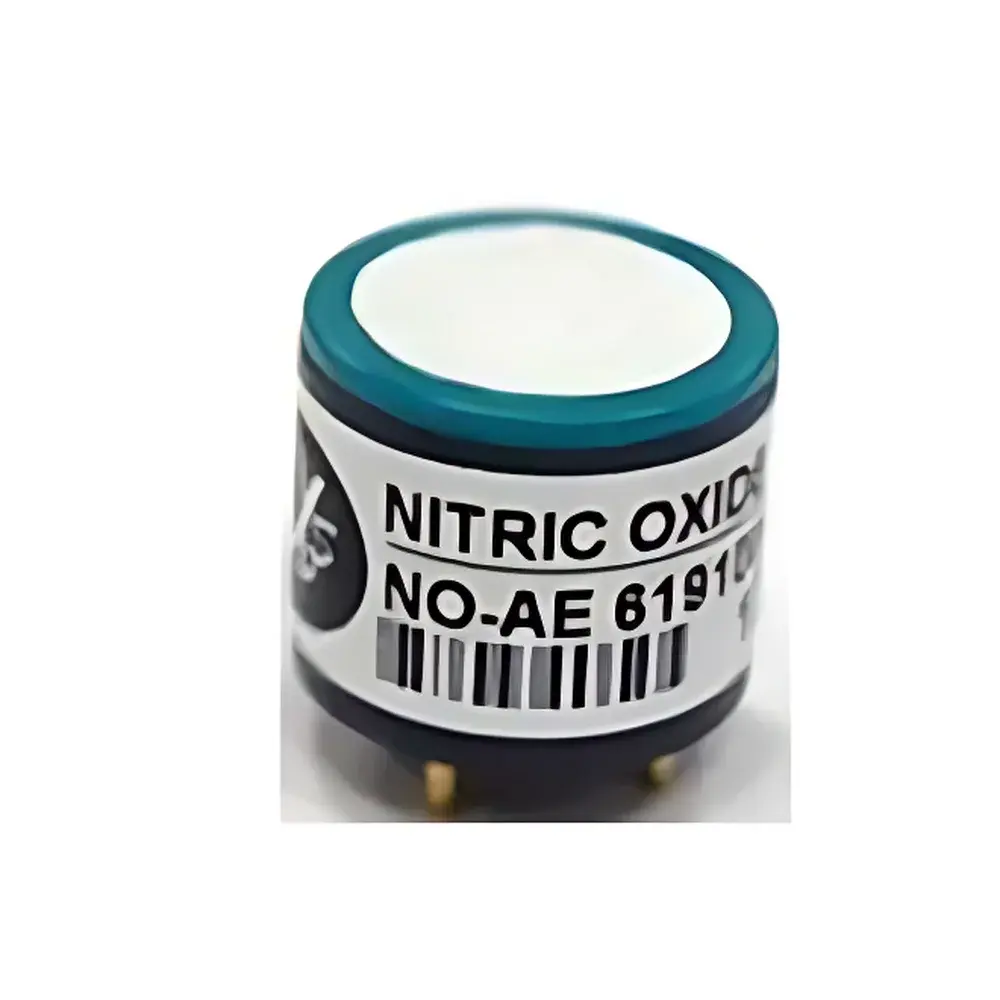
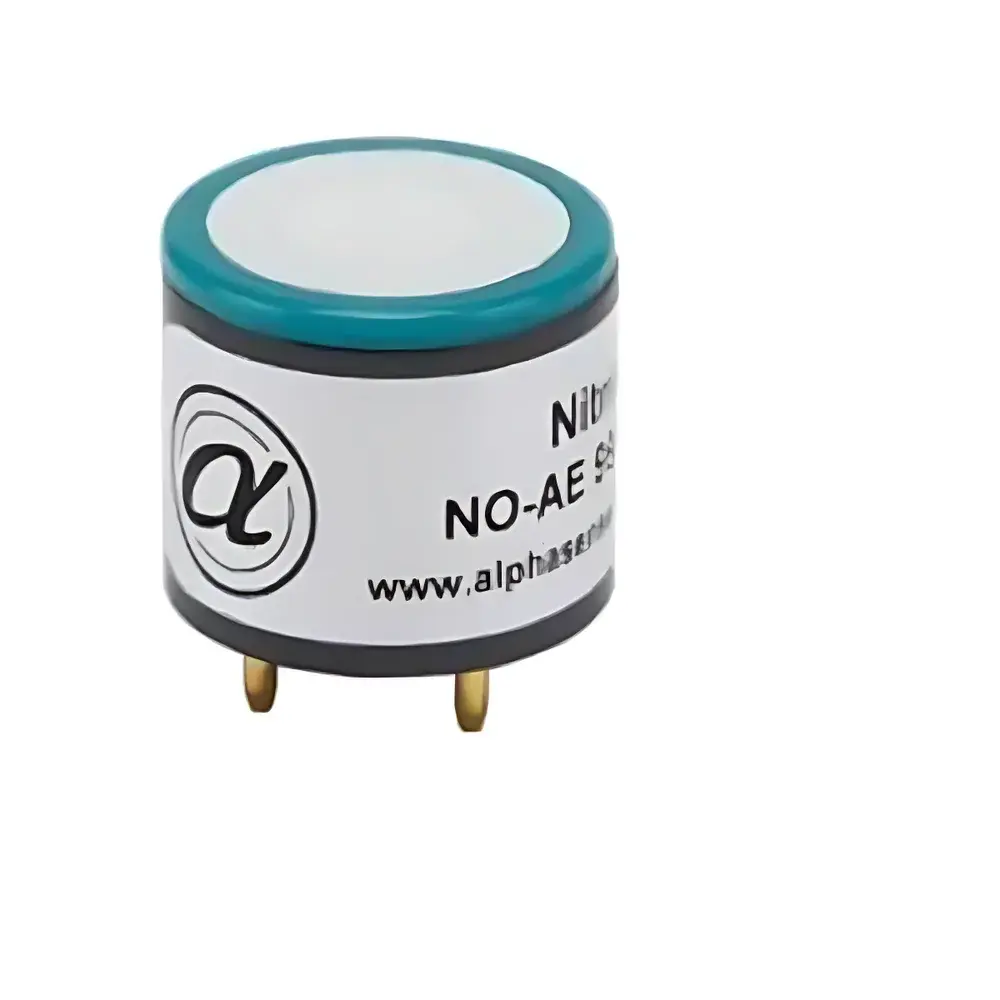
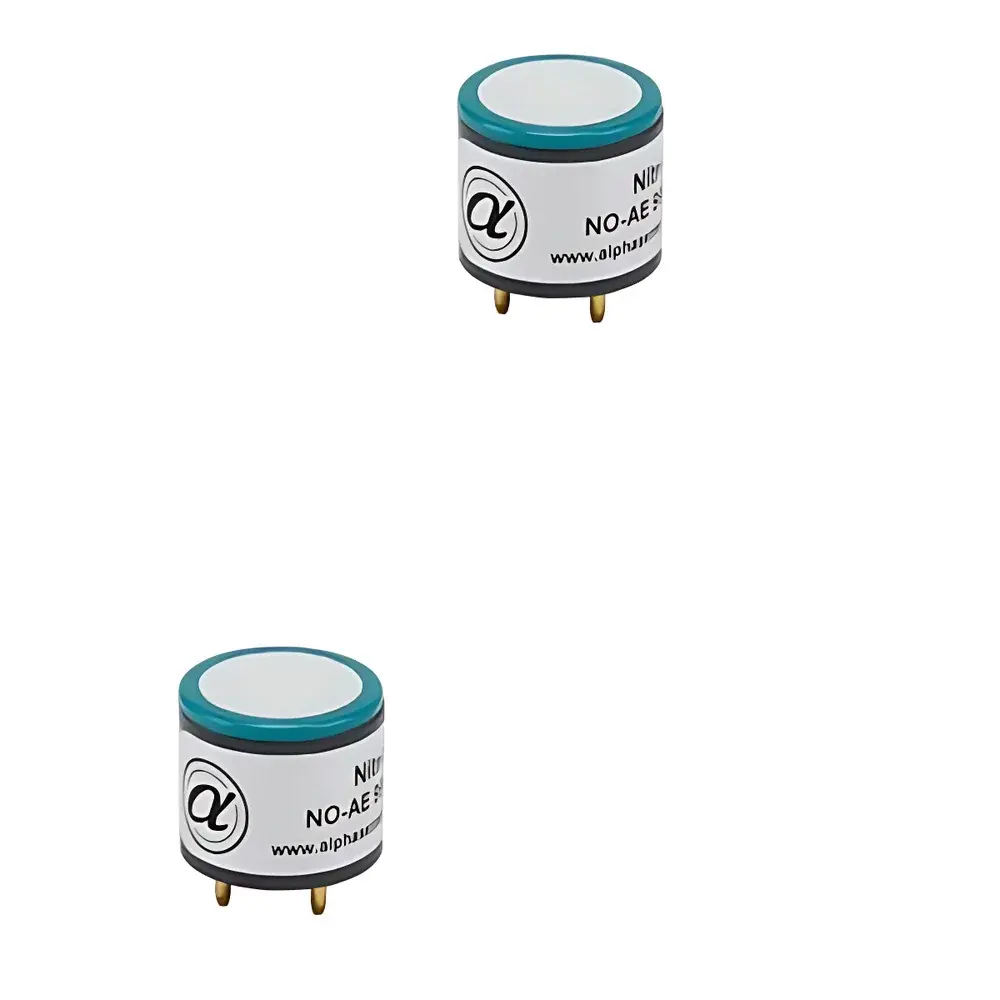
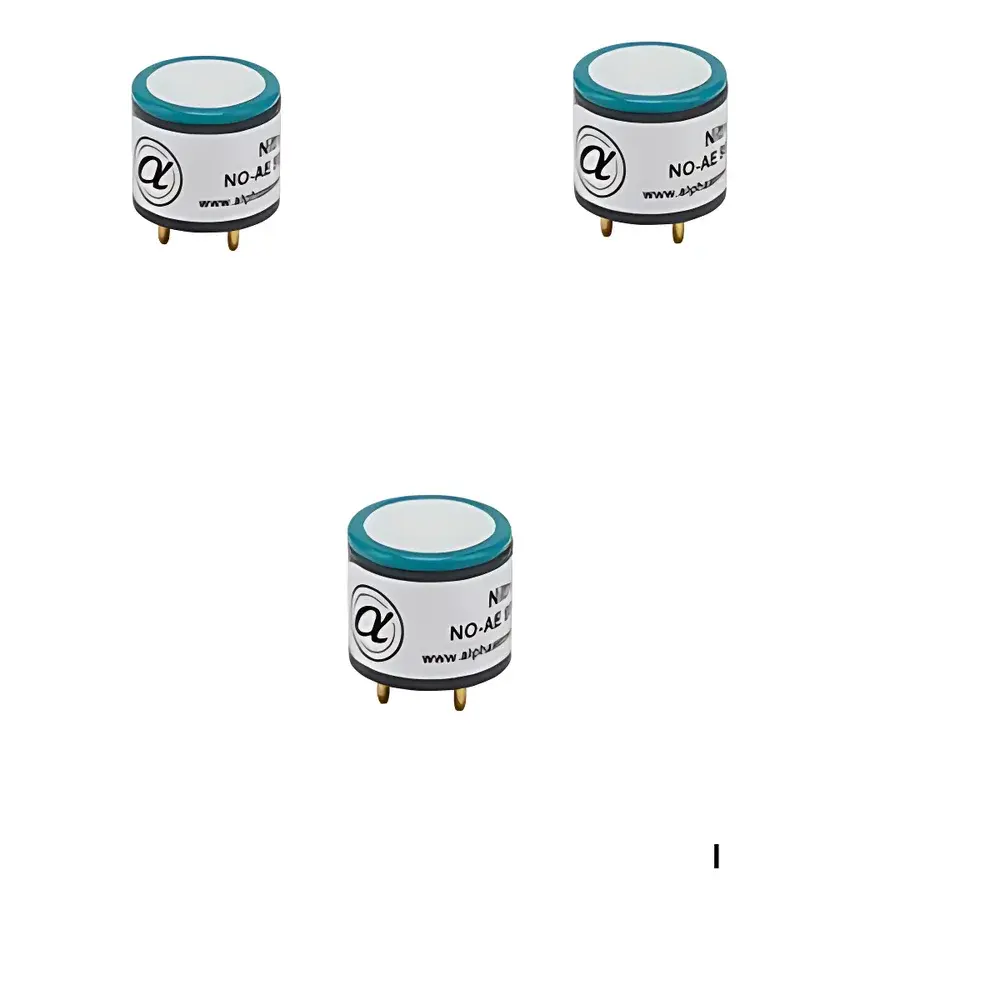
Alphasense NO-AE Electrochemical Nitric Oxide (NO) Gas Sensor
| Brand | Alphasense (UK) |
|---|---|
| Origin | United Kingdom |
| Model | NO-AE |
| Measurement Principle | Amperometric Electrochemistry |
| Range | 0–5000 ppm |
| Sensitivity | 60–100 nA/ppm |
| Response Time (t₉₀) | <45 s |
| Linear Range | 0–250 ppm |
| Overload Capacity | 10,000 ppm |
| Resolution | 1 ppm |
| Diameter × Height | Φ20.2 × 16.5 mm |
| Operating Temperature | −30 to +50 °C |
| Operating Humidity | 15–90 % RH (non-condensing) |
| Load Resistance | 10–47 Ω |
| Expected Service Life | 24 months |
| Storage Stability | 6 months (unpowered, sealed, 20 °C) |
Overview
The Alphasense NO-AE is a precision-engineered electrochemical gas sensor designed for the selective and stable detection of nitric oxide (NO) in ambient air and industrial process streams. Based on three-electrode amperometric technology, the sensor operates via diffusion-controlled oxidation of NO at the working electrode, generating a current proportional to gas concentration. Its robust design incorporates a proprietary acid electrolyte system and integrated hydrophobic membrane, ensuring consistent sensitivity and low cross-sensitivity to common interferents such as CO, NO₂, SO₂, and H₂S—critical for reliable operation in complex gas matrices. The NO-AE is optimized for integration into portable analyzers, fixed-site monitors, and OEM emission control systems where regulatory-grade accuracy and long-term baseline stability are required.
Key Features
- High-selectivity amperometric sensing architecture with built-in temperature compensation circuitry
- Wide dynamic range (0–5000 ppm) supporting both trace-level environmental monitoring and high-concentration industrial safety applications
- Fast t₉₀ response time (<45 seconds) enabling real-time tracking of transient NO events in combustion exhaust or catalytic converter testing
- Stable calibration performance across −30 to +50 °C, validated per IEC 60079-29-1 for use in non-hazardous environments
- Compact cylindrical form factor (Φ20.2 × 16.5 mm) compatible with standard 12-pin sensor sockets and PCB-mounting configurations
- Low-power operation (typical bias voltage: +300 mV; quiescent current <1 µA), suitable for battery-powered instrumentation
- Factory-calibrated with NIST-traceable NO reference gas; calibration certificate supplied with each unit
Sample Compatibility & Compliance
The NO-AE sensor is intended for use in clean, dry, non-corrosive gas streams. It is not rated for direct exposure to condensate, aerosols, or high concentrations of acidic vapors (e.g., HF, Cl₂). For automotive tailpipe analysis, it must be deployed downstream of particulate filters and water traps to prevent membrane fouling. The sensor complies with RoHS Directive 2011/65/EU and meets the electromagnetic compatibility requirements outlined in EN 61326-1:2013 for laboratory and industrial measurement equipment. While not intrinsically safe certified, it may be incorporated into ATEX-compliant systems when used within approved barrier configurations (e.g., Zener barriers per EN 60079-11). Data integrity protocols align with GLP principles for field-deployed environmental sensors.
Software & Data Management
The NO-AE outputs a linear analog current signal (nA) proportional to NO concentration, requiring external transimpedance amplification and ADC conversion. Alphasense provides open-source calibration coefficients and temperature compensation algorithms in its Technical Note TN-NO-AE-01, facilitating seamless integration with custom firmware (e.g., ARM Cortex-M4-based data loggers) or commercial platforms including LabVIEW, MATLAB, and Python-based SCADA systems. When paired with Alphasense’s B4C evaluation board, users gain access to real-time diagnostics—including electrode health monitoring, zero-drift trending, and humidity-corrected output—supporting predictive maintenance scheduling. All raw sensor data logs can be exported in CSV format compliant with ASTM D6522-20 for air quality reporting.
Applications
- On-board diagnostics (OBD-II) and benchtop engine exhaust analysis for NO quantification in diesel and lean-burn gasoline systems
- Occupational health monitoring in welding fume extraction ducts, semiconductor cleanrooms, and chemical synthesis labs
- Environmental air quality networks measuring urban NO pollution (e.g., roadside, tunnel, and harbor monitoring stations)
- OEM integration into handheld toxic gas detectors (e.g., multi-gas instruments meeting EN 45544-1:2017 standards)
- Research-grade studies of NO biochemistry in controlled atmosphere chambers and bioreactor off-gas analysis
FAQ
What is the recommended operating humidity range for the NO-AE sensor?
The sensor is specified for continuous operation at 15–90 % RH (non-condensing); prolonged exposure above 90 % RH may cause electrolyte dilution and drift.
Can the NO-AE be exposed to NO₂ without performance degradation?
Cross-sensitivity to NO₂ is 10 ppm NO₂, co-location with an NO₂-specific sensor and software-based compensation is advised.
Is factory recalibration required before first use?
No—each NO-AE is shipped with a valid calibration certificate and is ready for immediate integration; however, end-user verification using certified 100 ppm NO span gas is recommended prior to deployment.
How does temperature affect zero-point stability?
The sensor includes internal thermistor feedback; zero drift remains within ±2 ppm across the full −30 to +50 °C operating range when used with proper thermal management.
What is the expected shelf life if stored unpowered?
When sealed in original packaging and stored at 20 °C, the sensor retains ≥95 % of initial sensitivity for up to 6 months; storage beyond this period requires reconditioning per Alphasense Application Note AN-004.