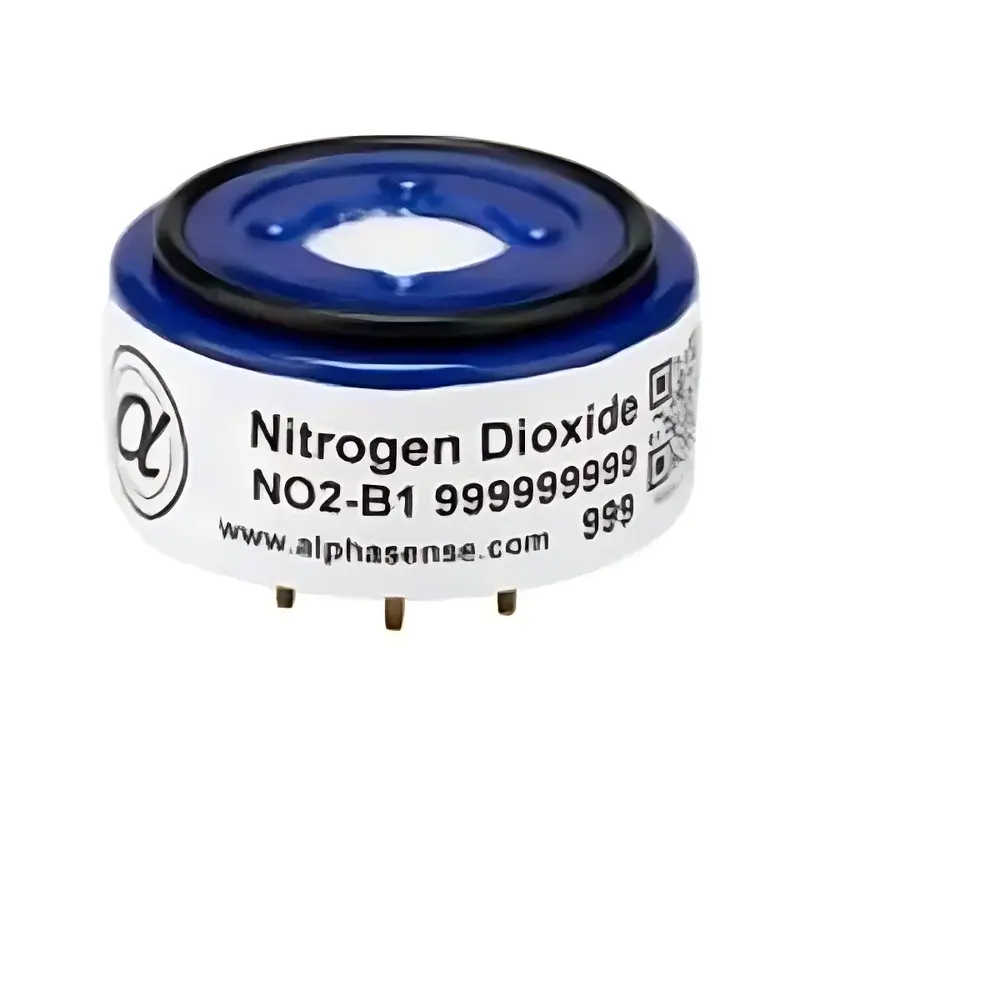
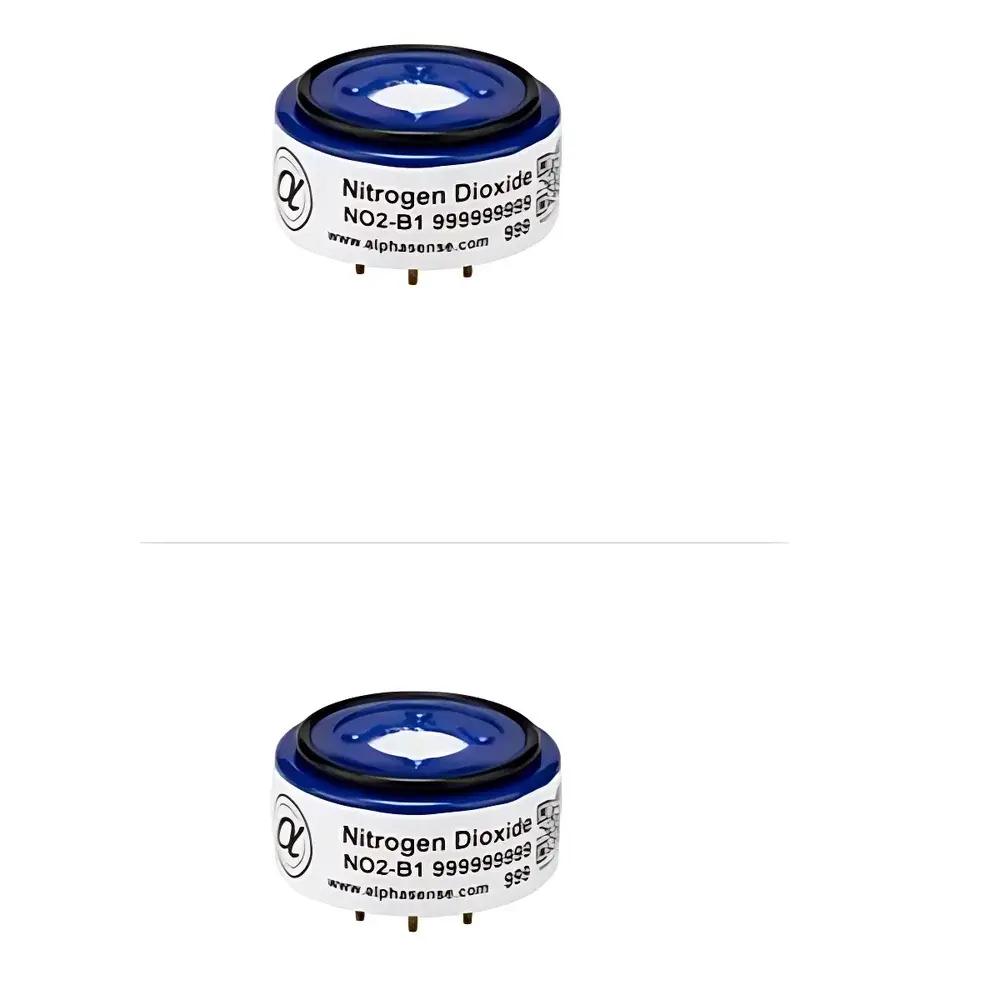
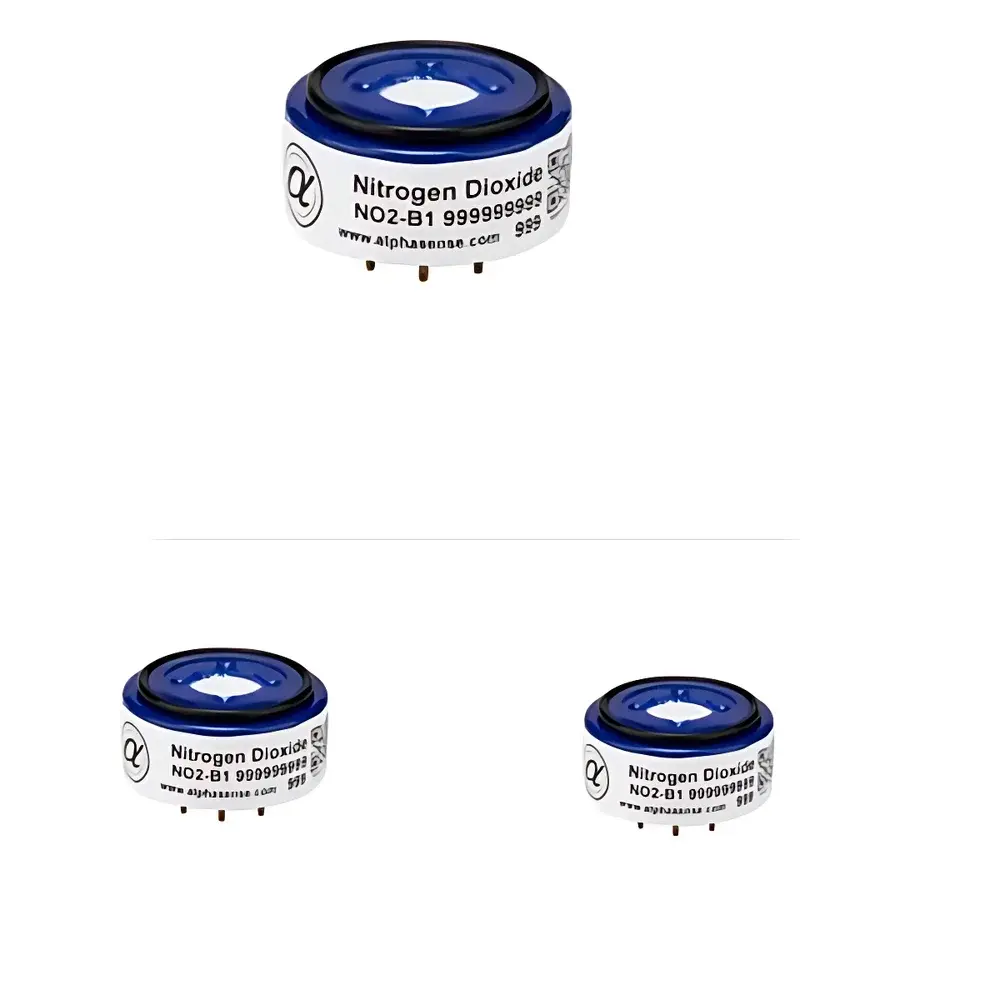
Alphasense NO2-B1 Fixed-Mount Electrochemical Nitrogen Dioxide (NO₂) Gas Sensor
| Brand | Alphasense |
|---|---|
| Origin | United Kingdom |
| Model | NO2-B1 |
| Measurement Range | 0–20 ppm |
| Sensitivity | −600 to −1150 nA/ppm |
| Response Time (t₉₀) | <60 s |
| Linearity Error | ±0.2 ppm |
| Overload Capacity | 100 ppm |
| Resolution | 0.02 ppm |
| Dimensions | Ø32.3 × 16.5 mm |
| Operating Temperature | −20 to +50 °C |
| Operating Humidity | 15–90 %RH (non-condensing) |
| Load Resistance | 33 Ω |
| Expected Service Life | 24 months |
| Storage Shelf Life | 6 months |
| Sensor Type | Three-Electrode Electrochemical Cell |
Overview
The Alphasense NO2-B1 is a fixed-mount, three-electrode electrochemical sensor engineered for continuous, selective detection of nitrogen dioxide (NO₂) in ambient air and industrial environments. Based on amperometric transduction, the sensor operates via diffusion-controlled electrochemical oxidation of NO₂ at the working electrode, generating a current proportional to gas concentration. Its design adheres to the fundamental principles of potentiostatically controlled electrochemical cells—ensuring stable baseline performance, low cross-sensitivity to common interferents (e.g., CO, SO₂, O₃), and minimal zero drift under varying environmental conditions. The NO2-B1 is optimized for integration into fixed-location gas monitoring systems requiring long-term stability, regulatory-compliant reporting, and compatibility with standard 4–20 mA or analog voltage signal conditioning circuits. It is not intended for portable or personal exposure monitoring but rather for permanent installation in wall-mounted analyzers, environmental stations, or process safety cabinets where continuous NO₂ surveillance is mandated by occupational health standards or emissions compliance protocols.
Key Features
- Three-electrode architecture with integrated reference and counter electrodes for enhanced signal stability and reduced polarization effects
- Optimized catalytic layer formulation minimizing interference from ozone (O₃) and nitrogen monoxide (NO), critical in urban air quality and combustion exhaust applications
- Hermetically sealed Teflon membrane ensuring consistent diffusion-limited response and protection against particulate contamination and condensation
- Factory-calibrated with traceable NIST-traceable NO₂ reference gas; calibration certificate provided per batch
- Robust mechanical design (Ø32.3 × 16.5 mm stainless-steel housing with gold-plated contacts) suitable for DIN-rail or PCB-mount integration
- Operational tolerance across −20 °C to +50 °C and 15–90 %RH (non-condensing), validated per IEC 60068-2 environmental stress testing protocols
- Compliant with RoHS 2011/65/EU and REACH (EC) No. 1907/2006 substance restrictions
Sample Compatibility & Compliance
The NO2-B1 is designed exclusively for gaseous-phase NO₂ measurement in clean, non-corrosive air streams. It is incompatible with high-humidity saturated environments (>90 %RH), aerosol-laden exhausts without pre-filtration, or atmospheres containing >10 ppm chlorine, hydrogen sulfide, or organic solvents—substances known to poison the platinum working electrode or degrade the electrolyte. For regulatory deployment, the sensor supports compliance with ISO 16000-25 (indoor air quality), EN 50194-1 (gas detection system safety), and OSHA PEL/TWA requirements (5 ppm NO₂ ceiling limit). When integrated into certified analyzers, it contributes to systems meeting UL 2075 (gas detectors) and CE marking under the EU ATEX Directive 2014/34/EU for Group II equipment (non-mining use).
Software & Data Management
As a transducer-level component, the NO2-B1 outputs a raw analog current signal (nA range) requiring external signal conditioning. It is fully compatible with Alphasense’s proprietary B4/B5 interface boards and third-party DAQ platforms supporting 24-bit ADC resolution and programmable gain amplification. When deployed in networked monitoring systems, sensor data—when paired with temperature/humidity compensation algorithms—can be logged with audit-trail metadata compliant with FDA 21 CFR Part 11 (for pharmaceutical cleanroom applications) and ISO/IEC 17025:2017 (testing laboratory data integrity). Firmware-upgradable host controllers may apply dynamic baseline correction and multi-point span validation routines traceable to ISO 17025-accredited calibration laboratories.
Applications
- Ambient air quality monitoring networks (AQMS) measuring urban NO₂ concentrations per EU Directive 2008/50/EC
- Indoor air quality (IAQ) systems in schools, hospitals, and office buildings per ASHRAE Standard 62.1
- Industrial hygiene monitoring near diesel generators, boiler rooms, and welding stations
- Stack emission monitoring for small-scale combustion sources where full CEMS is cost-prohibitive
- Smart city infrastructure integrating real-time NO₂ data into municipal environmental dashboards
- Research-grade atmospheric chemistry studies requiring calibrated, field-deployable NO₂ endpoints
FAQ
What is the recommended calibration frequency for the NO2-B1 in continuous operation?
For applications requiring regulatory compliance (e.g., workplace exposure monitoring), zero and span calibration should be performed every 3–6 months. In high-accuracy research deployments, bi-weekly zero checks and quarterly span verification against certified NO₂ standard gas are advised.
Can the NO2-B1 be used in outdoor enclosures without active humidity control?
Yes—provided the enclosure maintains internal RH below 90 % and prevents direct rain ingress or thermal shock. Use of desiccant cartridges and passive ventilation is strongly recommended for unheated outdoor installations.
Does the sensor require a warm-up period before achieving specified accuracy?
The NO2-B1 achieves operational stability within 30 minutes of power application at 25 °C; however, full thermal equilibrium under extreme ambient conditions (e.g., −20 °C) may require up to 2 hours.
Is the NO2-B1 compatible with Modbus RTU or CAN bus communication protocols?
No—the sensor itself is analog-only. Protocol compatibility depends entirely on the host controller or signal conditioner interfacing with the sensor’s current output.
How does storage duration affect sensor performance prior to installation?
Storage beyond the 6-month shelf life results in progressive electrolyte evaporation and increased baseline noise; sensors stored longer than 6 months must undergo full recalibration and functional verification before field deployment.