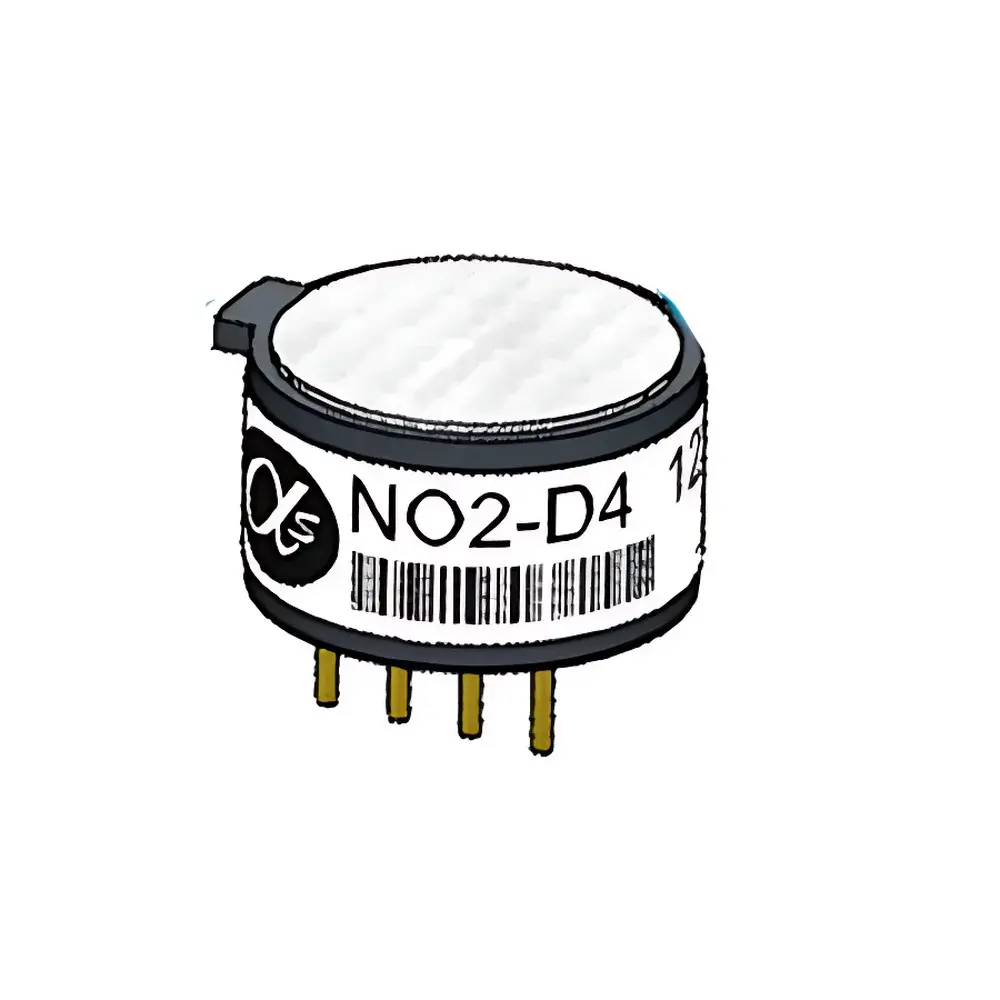
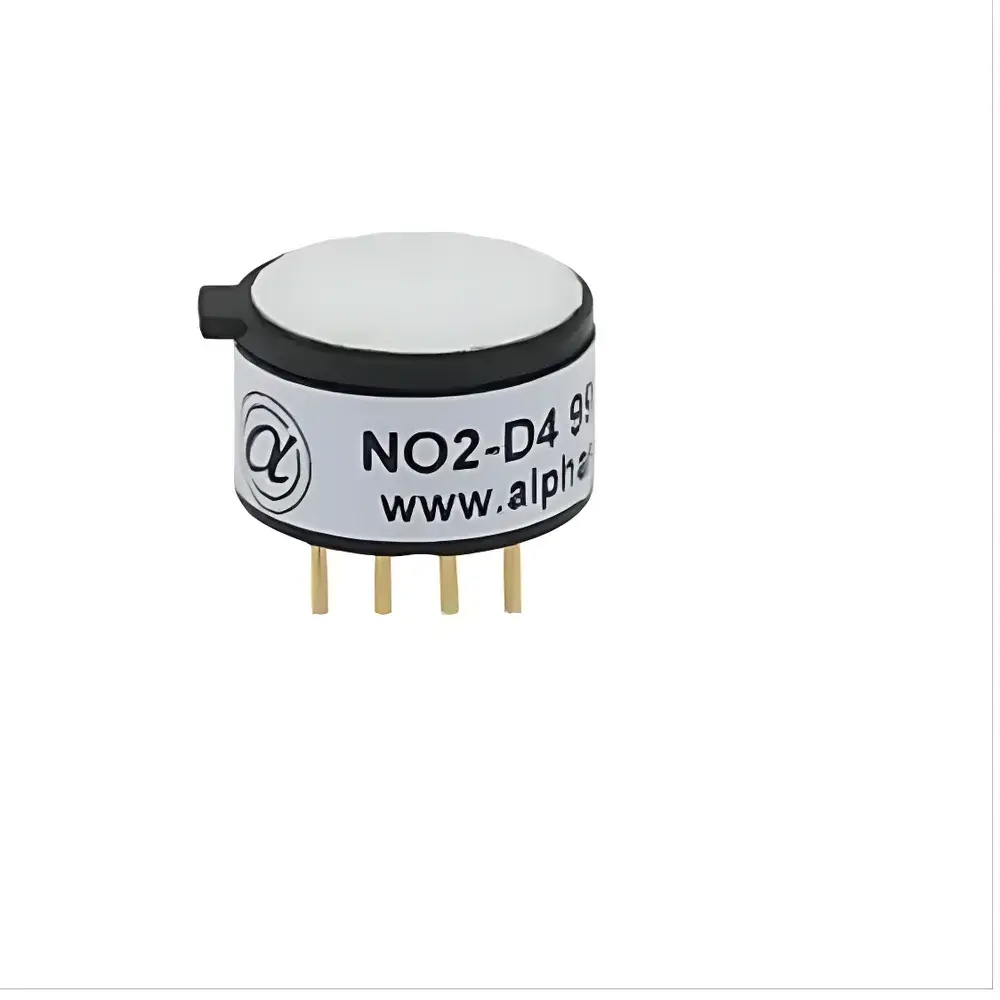
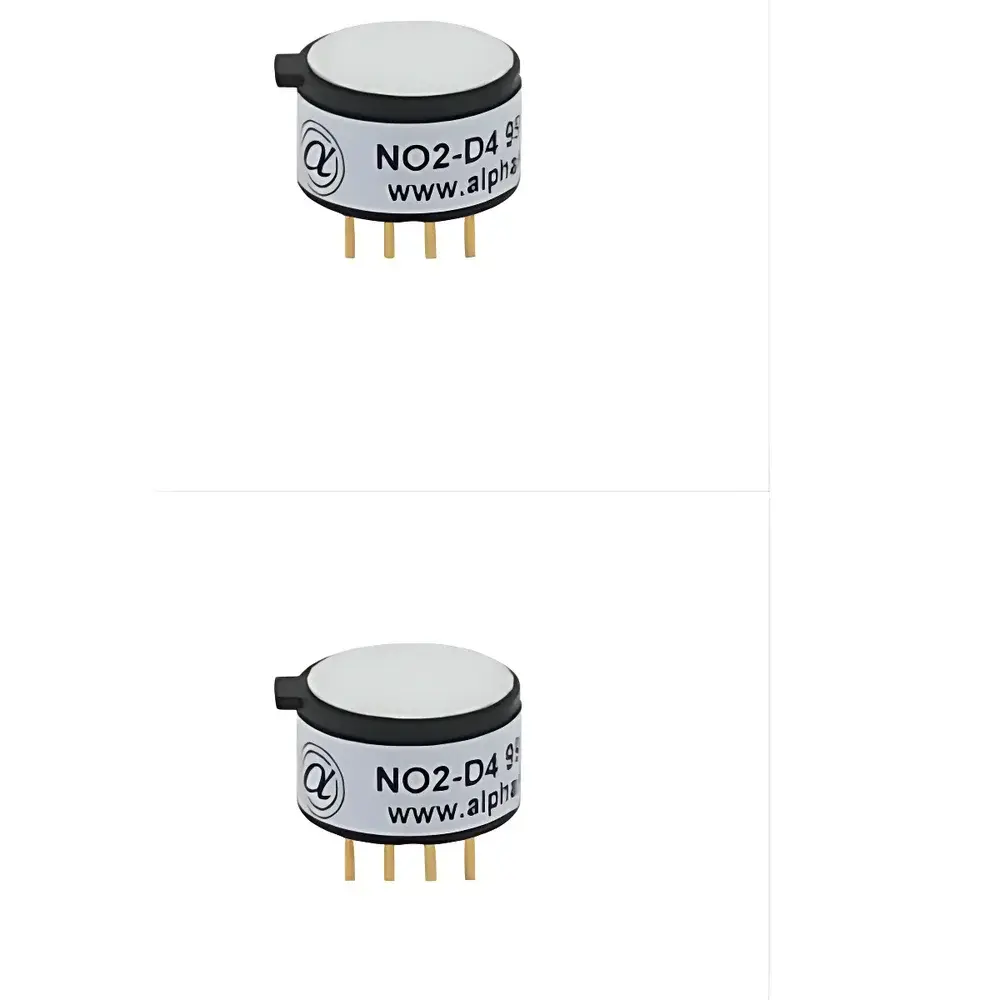
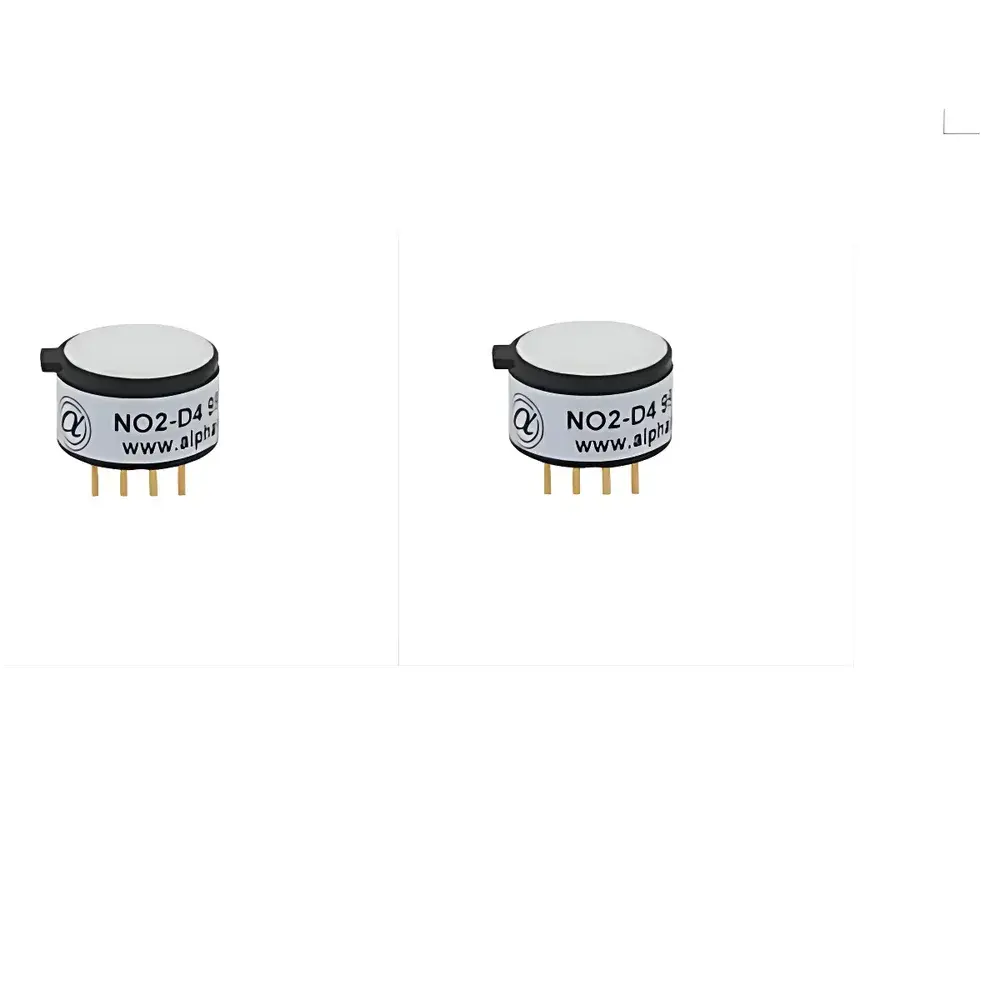
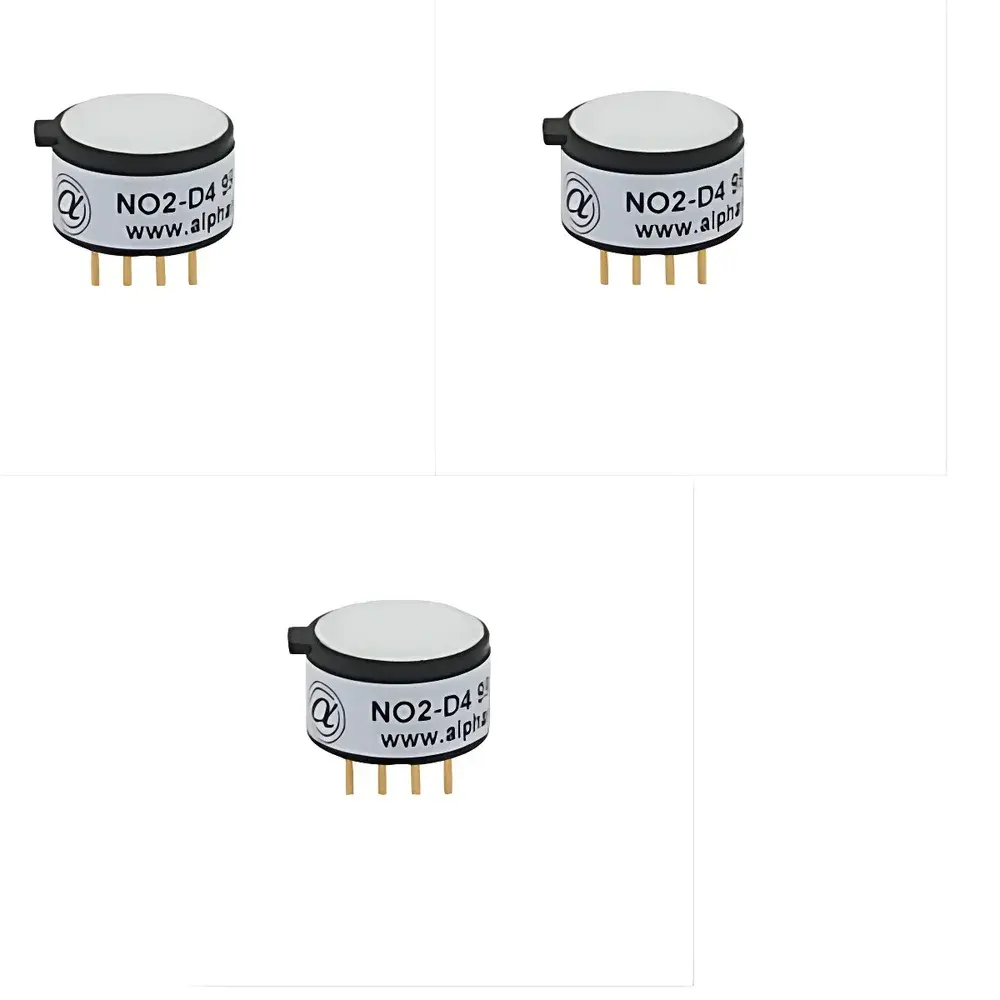
Alphasense NO2-D4 Electrochemical Nitrogen Dioxide Gas Sensor
| Brand | Alphasense (UK) |
|---|---|
| Origin | United Kingdom |
| Model | NO2-D4 |
| Measurement Range | 0–20 ppm |
| Sensitivity | −100 to −350 nA/ppm |
| Response Time (t₉₀) | <35 s |
| Linear Range | 0–10 ppm |
| Linearity Error | ±0.6 ppm across full scale |
| Overload Capacity | 60 ppm |
| Resolution | 0.1 ppm |
| Dimensions | Ø14.5 × 8.3 mm |
| Operating Temperature | −20 to +50 °C |
| Operating Humidity | 15–90 %RH (non-condensing) |
| Load Resistance | 33 Ω |
| Expected Service Life | 24 months |
| Storage Shelf Life | 6 months |
Overview
The Alphasense NO2-D4 is a high-stability, diffusion-type electrochemical sensor engineered for selective and reliable detection of nitrogen dioxide (NO₂) in ambient air and industrial environments. Based on a three-electrode amperometric cell architecture, the sensor operates via controlled electrochemical oxidation of NO₂ at the working electrode, generating a current proportional to gas concentration. This principle ensures inherent selectivity against common interferents—including ozone (O₃), sulfur dioxide (SO₂), and carbon monoxide (CO)—when deployed with appropriate filter integration and signal conditioning. Designed for integration into portable, fixed-site, and personal exposure monitoring systems, the NO2-D4 complies with the fundamental performance requirements outlined in ISO 16000-25 (indoor air—part 25: measurement of NO₂ using electrochemical sensors) and supports traceable calibration protocols aligned with EN 50104 and IEC 60079-29-1 for hazardous area applications.
Key Features
- Optimized three-electrode electrochemical cell with gold working electrode and proprietary electrolyte formulation for enhanced long-term baseline stability
- Fast t₉₀ response time (<35 seconds) enabling real-time tracking of transient NO₂ events, such as traffic-related plumes or combustion process upsets
- High resolution of 0.1 ppm and calibrated linearity over 0–10 ppm, with full-scale error bounded within ±0.6 ppm—critical for regulatory compliance monitoring (e.g., WHO Air Quality Guidelines, EU Directive 2008/50/EC)
- Robust mechanical design (Ø14.5 × 8.3 mm) suitable for space-constrained OEM modules; integrated hydrophobic PTFE membrane provides consistent diffusion control and humidity resilience (15–90 %RH, non-condensing)
- Specified operational lifetime of 24 months under typical environmental conditions (23 °C, 50 %RH); factory-calibrated with NIST-traceable NO₂ reference gas and documented calibration certificate included
- Low-power analog output (current mode, −100 to −350 nA/ppm) compatible with standard transimpedance amplifiers and 16-bit ADCs used in certified air quality instrumentation
Sample Compatibility & Compliance
The NO2-D4 is intended for gaseous sampling only and must be installed upstream of particulate filters (e.g., 2.5 µm pore size) and activated carbon scrubbers where ozone interference is suspected. It is not designed for direct immersion, high-velocity flow (>1 m/s), or exposure to solvents, chlorine, or hydrogen sulfide above 1 ppm. The sensor meets RoHS 2011/65/EU and REACH SVHC criteria. While not intrinsically safe by itself, it is routinely integrated into ATEX-certified enclosures (Zone 1/21) when paired with appropriate barrier circuits. Its performance characteristics support adherence to GLP-compliant field deployment protocols, including documented calibration verification intervals (recommended every 3–6 months depending on exposure history).
Software & Data Management
As a raw analog sensing element, the NO2-D4 does not include embedded firmware or digital interfaces. However, it is fully compatible with Alphasense’s industry-standard evaluation kits (e.g., B4 series interface boards) and third-party data acquisition platforms supporting 4–20 mA or 0–5 V analog input. When integrated into validated systems, its output supports audit-ready data logging compliant with FDA 21 CFR Part 11 (via electronic signatures and change control) and ISO/IEC 17025 requirements for measurement uncertainty reporting. Calibration history, zero/span drift logs, and temperature-compensated output traces can be archived in CSV or TDMS formats for trend analysis and regulatory submission.
Applications
- Portable and wearable NO₂ monitors for occupational health assessments (e.g., roadside workers, tunnel maintenance crews, urban cyclists)
- Fixed-network urban air quality stations meeting EU Air Quality Directive reporting thresholds (hourly averages, 10 µg/m³ annual mean equivalent to ~5.3 ppb)
- OEM integration into smart building HVAC controllers for demand-controlled ventilation based on real-time NO₂ ingress detection
- Research-grade emission source characterization—e.g., diesel engine exhaust dilution tunnels, laboratory-scale combustion rigs, and indoor chemistry chambers
- Community-led air monitoring initiatives requiring low-cost, field-deployable sensors with metrologically defensible performance
FAQ
What is the recommended calibration frequency for the NO2-D4 in continuous monitoring applications?
Calibration should be performed at least every 3 months under moderate exposure conditions (average <5 ppm); more frequent verification (monthly) is advised in high-humidity or high-pollutant environments.
Can the NO2-D4 be used without temperature compensation?
No. Output current exhibits a temperature coefficient of approximately −0.3 %/°C; accurate quantification requires concurrent temperature measurement and linear compensation per the datasheet polynomial.
Is the sensor compatible with wireless LoRaWAN or NB-IoT transmitters?
Yes—when paired with an analog-to-digital converter and microcontroller (e.g., STM32L4 series), the NO2-D4 has been successfully deployed in battery-powered, multi-year field nodes transmitting hourly averaged NO₂ values via LoRaWAN Class C gateways.
Does Alphasense provide NIST-traceable calibration certificates with each sensor?
Yes. Every NO2-D4 unit ships with a unique calibration certificate referencing NIST SRM 2195 (NO₂ permeation tube standard) and includes zero current, sensitivity slope, and linearity deviation data.
What is the impact of long-term storage on sensor performance?
Storage beyond 6 months at room temperature may result in elevated zero current and reduced sensitivity; Alphasense recommends refrigerated (4 °C), dry storage for extended shelf life and pre-use reconditioning per application note AN-007.