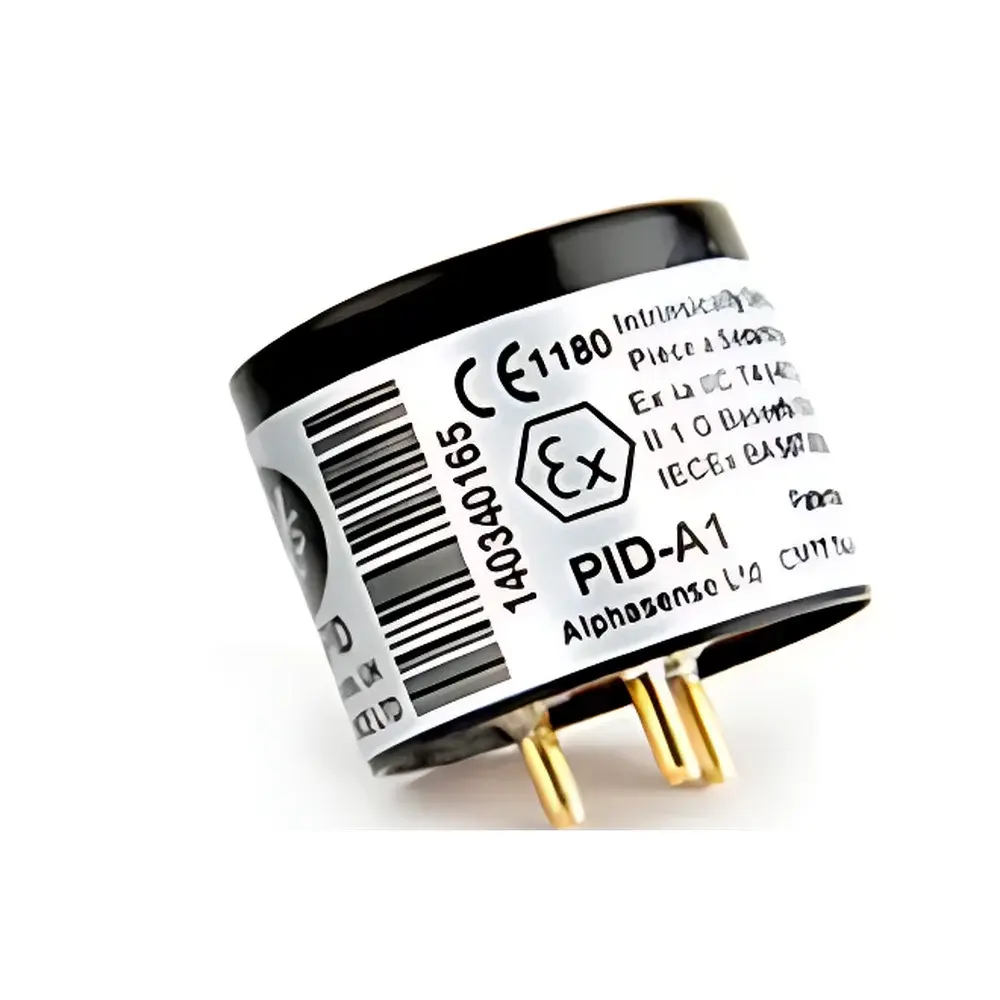
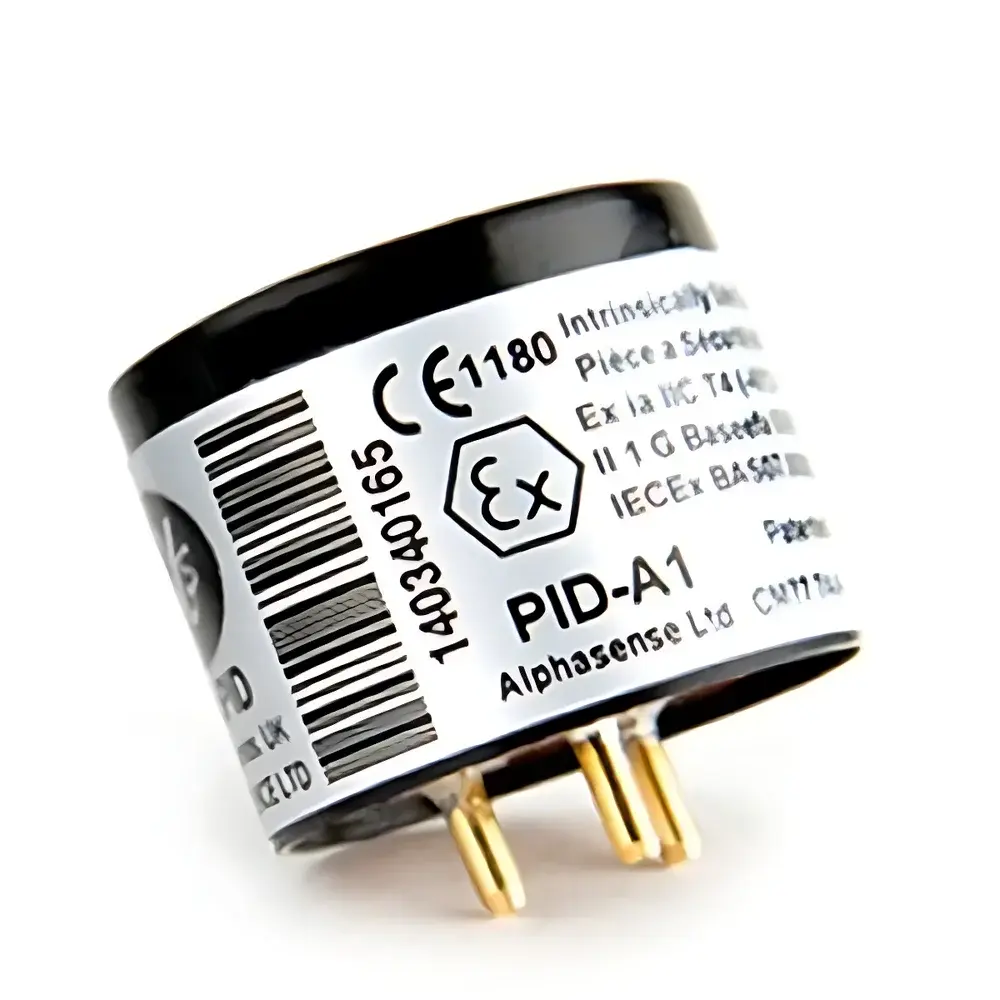
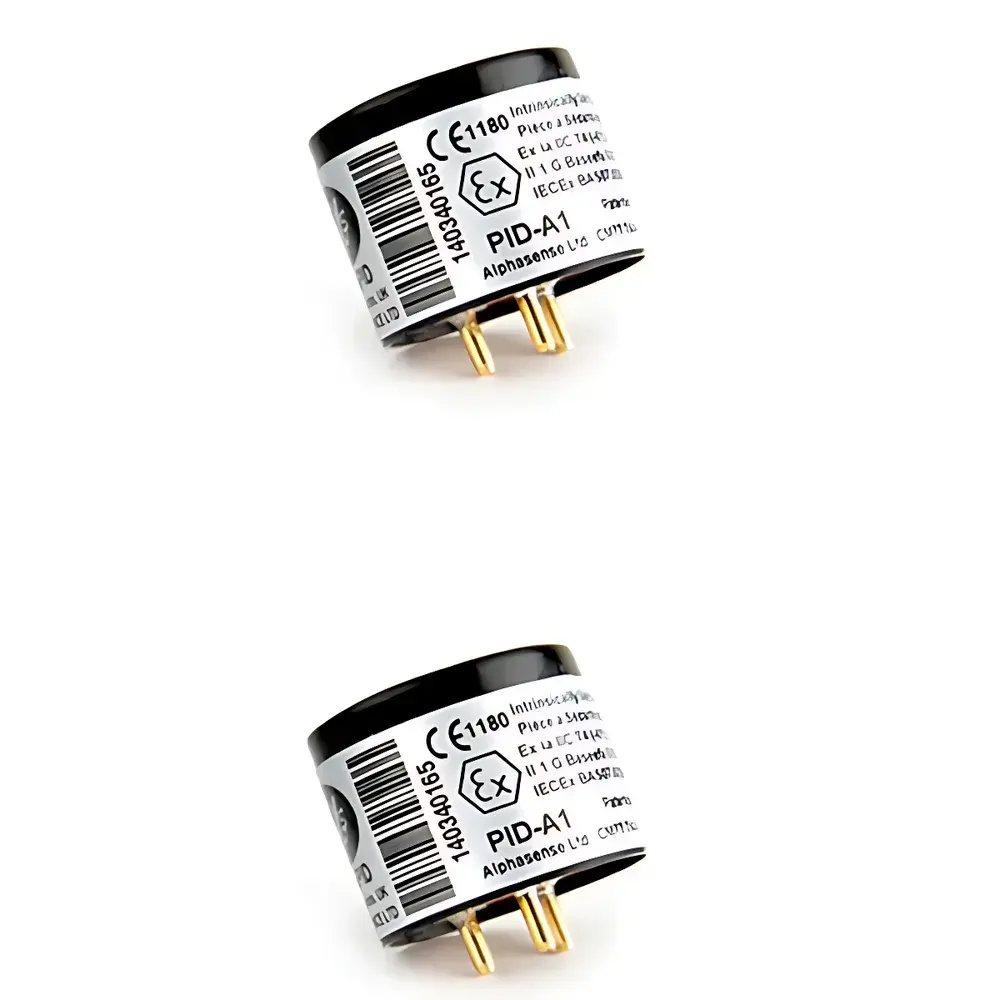
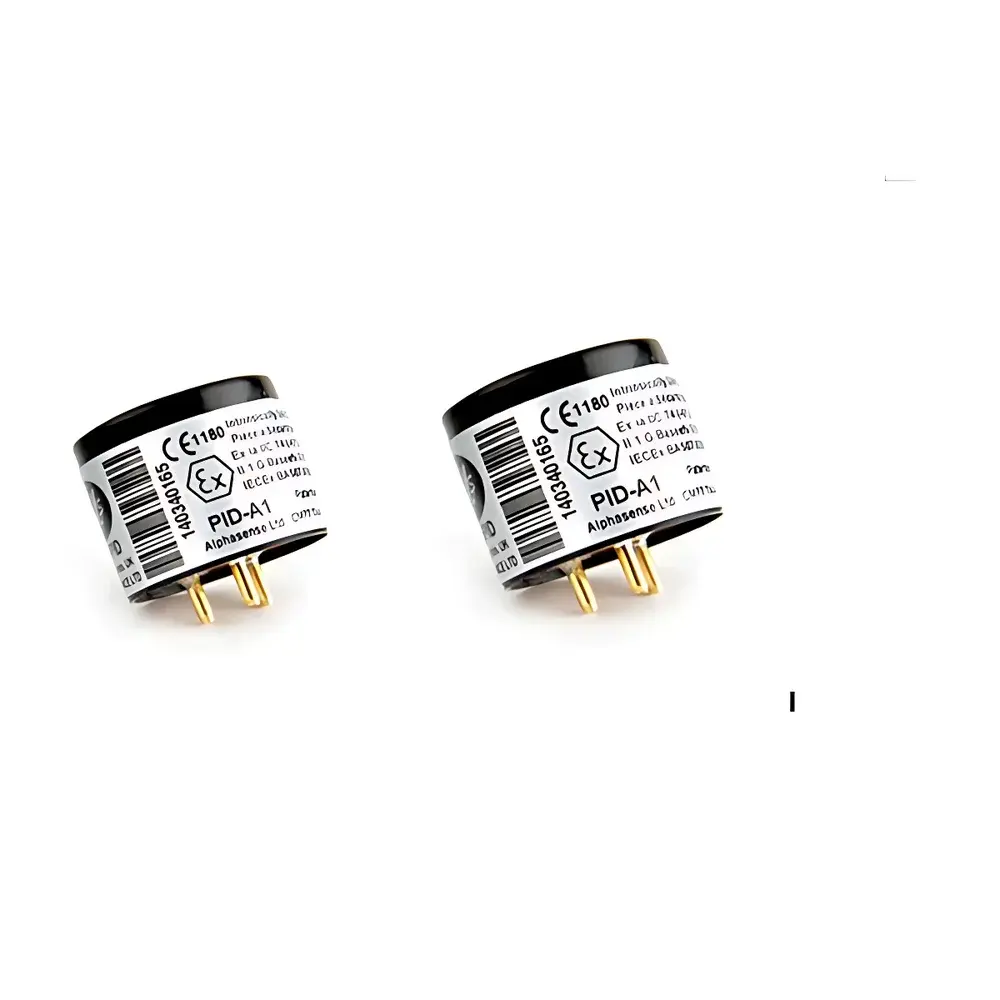
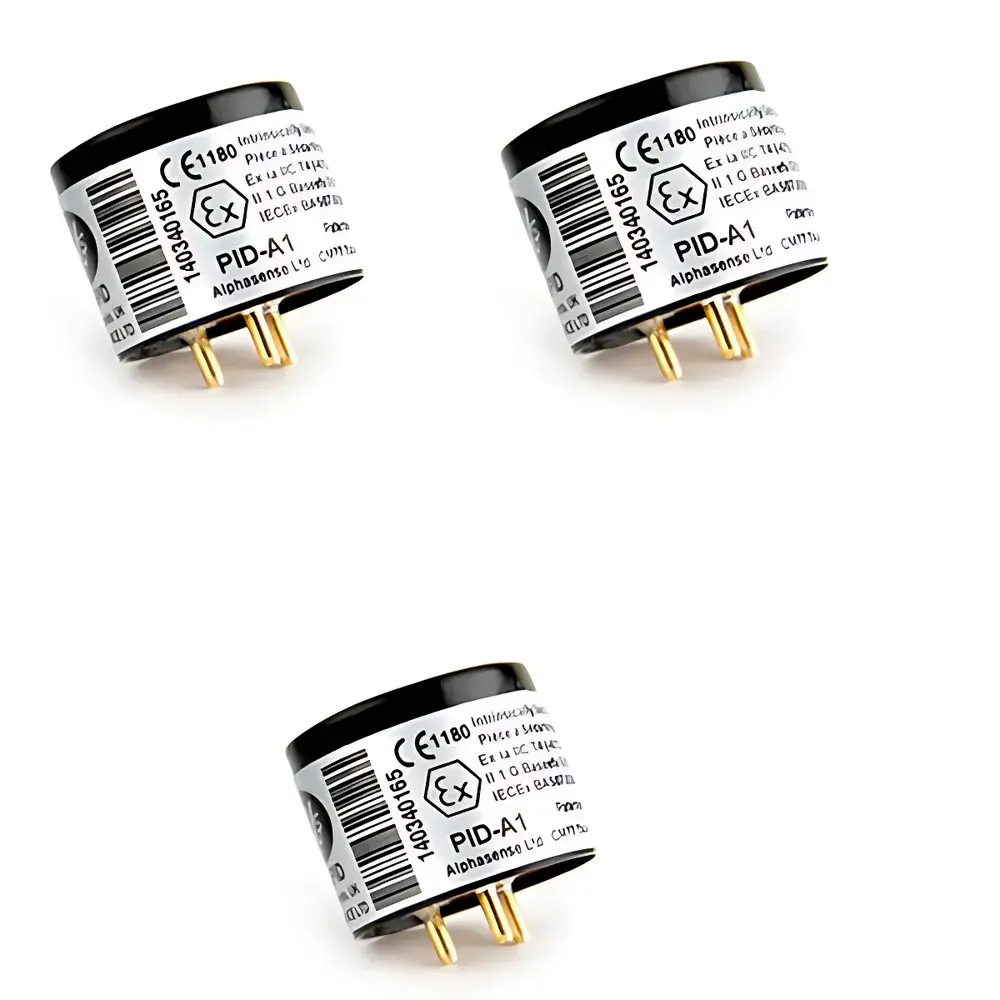
Alphasense PID-A1 Photoionization Detector (PID) Sensor
| Brand | Alphasense |
|---|---|
| Origin | United Kingdom |
| Model | PID-A1 |
| Detection Range | 50 ppb – 4000 ppm (isobutylene-equivalent) |
| Lamp Type | 10.6 eV UV lamp |
| Output Signal | 4–20 mA analog |
| Operating Temperature | −20 °C to +50 °C |
| Humidity Range | 0–95% RH (non-condensing) |
| Lifetime | >5 years (sensor body) |
| Warranty | 12 months (excludes lamp and grid electrode) |
| Compliance | RoHS, CE-marked for industrial use |
| Interface | Plug-and-play OEM module with detachable, pneumatically sealed electrode assembly |
| Diagnostic Capability | Built-in lamp status monitoring and zero-drift diagnostics |
Overview
The Alphasense PID-A1 is a high-performance, OEM-grade photoionization detector (PID) sensor engineered for continuous, reliable detection of volatile organic compounds (VOCs) and select toxic gases in industrial safety, environmental monitoring, and process control applications. Utilizing a stabilized 10.6 eV ultraviolet lamp, the PID-A1 ionizes gas molecules with ionization potentials below this energy threshold—enabling selective, real-time quantification of over 1,500 VOCs including benzene, toluene, xylene, styrene, acetone, formaldehyde, and chlorinated hydrocarbons. Unlike catalytic bead or metal-oxide semiconductor sensors, the PID-A1 operates on the principle of photoionization: sample gas diffuses or is actively drawn into the ionization chamber, where UV photons eject electrons from target molecules, generating a current proportional to analyte concentration. This physical detection mechanism ensures exceptional sensitivity (down to 50 ppb), minimal cross-sensitivity to CO₂, methane, or water vapor, and immunity to poisoning—making it ideal for early leak detection, confined space entry verification, and fugitive emission monitoring in compliance with OSHA 1910.120 and EPA Method 21.
Key Features
- Extended dynamic range: Linear response across 50 ppb to 4000 ppm (isobutylene-equivalent), maintaining accuracy without range switching or auto-scaling artifacts.
- Enhanced lamp longevity: Upgraded drive circuitry and thermal regulation extend operational lamp life beyond industry-standard benchmarks; integrated lamp-status diagnostics alert users to declining output or ignition failure.
- Robust environmental resilience: Engineered for operation in high-humidity environments (0–95% RH, non-condensing) with proprietary hydrophobic membrane and anti-fouling electrode architecture.
- OEM-optimized mechanical design: Modular, plug-and-play form factor with detachable, pneumatically sealed electrode assembly—facilitating field recalibration, cleaning, and lamp replacement without system disassembly.
- Low-power analog interface: Standard 4–20 mA current loop output with HART-compatible signal conditioning; compatible with PLCs, DCS systems, and portable gas detectors without additional signal conversion hardware.
- Zero-drift compensation: Onboard temperature and humidity compensation algorithms minimize baseline drift under variable ambient conditions, ensuring long-term measurement stability.
Sample Compatibility & Compliance
The PID-A1 is validated for diffusion-mode and active-pump sampling configurations, supporting integration into fixed-point monitors, drone-mounted survey systems, and handheld safety instruments. It exhibits high selectivity toward aromatic, olefinic, and oxygenated VOCs while demonstrating negligible response to saturated alkanes (e.g., propane, butane) and common inorganic gases (CO, NOₓ, SO₂). The sensor complies with RoHS Directive 2011/65/EU and bears CE marking for conformity with the EU Electromagnetic Compatibility (EMC) Directive 2014/30/EU and Low Voltage Directive 2014/35/EU. While not intrinsically safe certified as a standalone unit, it is routinely deployed in Zone 1 and Zone 2 hazardous areas when integrated into ATEX- or IECEx-certified host instrumentation. Its measurement performance aligns with ISO 16000-27 (indoor air—determination of VOCs using PID) and supports audit-ready data collection under GLP and ISO/IEC 17025 quality frameworks.
Software & Data Management
As an analog-output OEM sensor, the PID-A1 does not include embedded firmware or wireless connectivity. However, its 4–20 mA signal is fully compatible with third-party data acquisition platforms—including Modbus RTU/ASCII gateways, SCADA historians (e.g., Ignition, Siemens Desigo), and cloud-based IoT infrastructure (AWS IoT Core, Azure IoT Hub). When paired with Alphasense’s optional evaluation board (AEB-PID), users gain access to real-time digital diagnostics via UART, including lamp voltage, chamber temperature, zero-current offset, and accumulated lamp-on hours—enabling predictive maintenance scheduling. All diagnostic logs meet traceability requirements for FDA 21 CFR Part 11-compliant environments when hosted on validated software platforms with electronic signature and audit trail functionality.
Applications
- Industrial hygiene monitoring for occupational exposure limit (OEL) assessment per ACGIH TLV® and NIOSH REL guidelines.
- Fugitive emission detection in petrochemical refineries, pharmaceutical manufacturing, and semiconductor fabrication cleanrooms.
- Soil vapor intrusion screening and landfill gas monitoring per ASTM D6107 and EPA SW-846 Method 8021B.
- Real-time process optimization in paint spray booths, adhesive application lines, and solvent recovery units.
- Emergency response and hazmat incident characterization using portable multi-gas instruments.
- Indoor air quality (IAQ) baselines in schools, hospitals, and office buildings per ASHRAE Standard 62.1.
FAQ
What gases does the PID-A1 detect?
The PID-A1 detects VOCs with ionization potentials ≤10.6 eV, including aromatics (benzene, ethylbenzene), ketones (MEK, acetone), aldehydes (formaldehyde), amines, and sulfur-containing compounds. It does not detect methane, ethane, CO, CO₂, or H₂S.
How often must the UV lamp be replaced?
Lamp lifetime varies with operating duty cycle and environmental conditions; typical service life exceeds 12,000 hours. Built-in diagnostics provide advance warning of diminishing UV output.
Can the PID-A1 be used in high-humidity environments?
Yes—the sensor incorporates a hydrophobic inlet filter and internal moisture management to maintain accuracy up to 95% RH (non-condensing).
Is calibration required, and how frequently?
Initial two-point calibration (zero and span) is mandatory prior to deployment. Field recalibration is recommended every 3–6 months or after exposure to high-concentration events, per ISO 17025 and manufacturer guidelines.
Does the PID-A1 support digital communication protocols?
The base PID-A1 outputs only 4–20 mA. Digital telemetry (UART/RS-232) is available via Alphasense’s AEB-PID evaluation board or custom OEM interface modules.