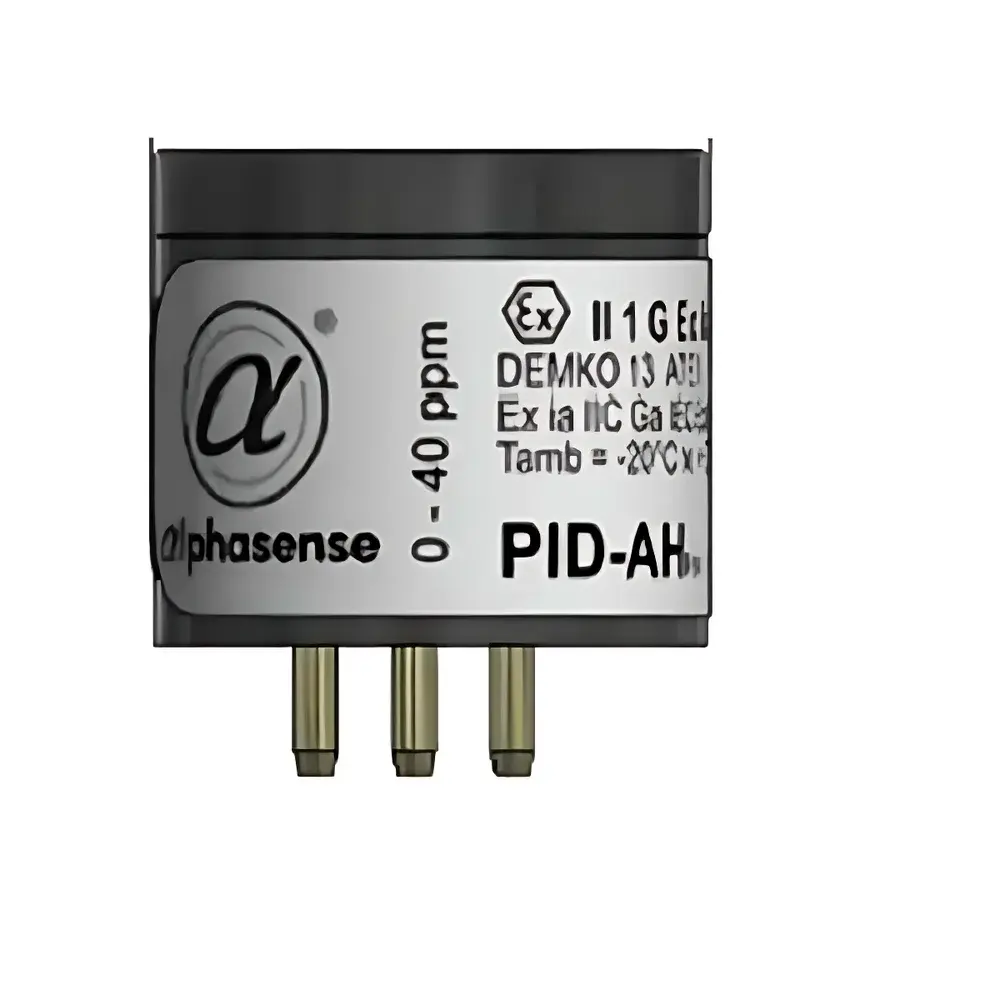
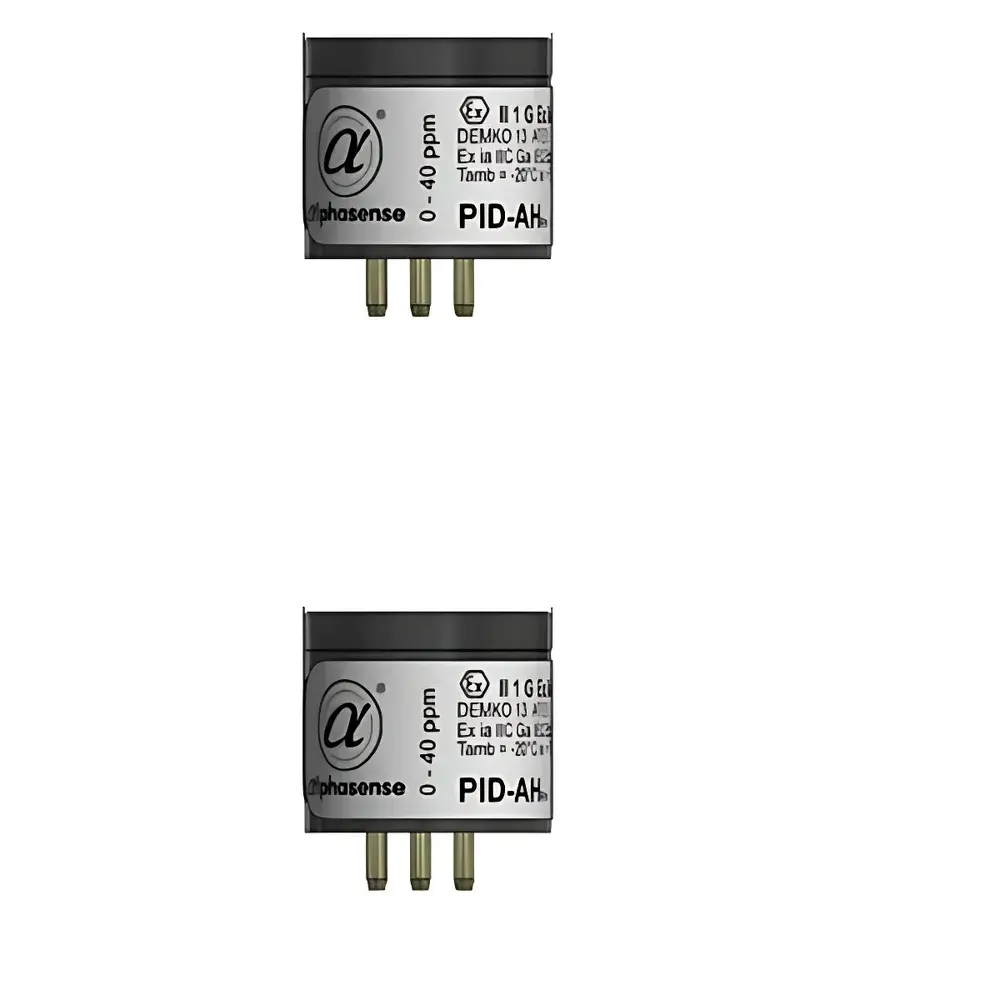
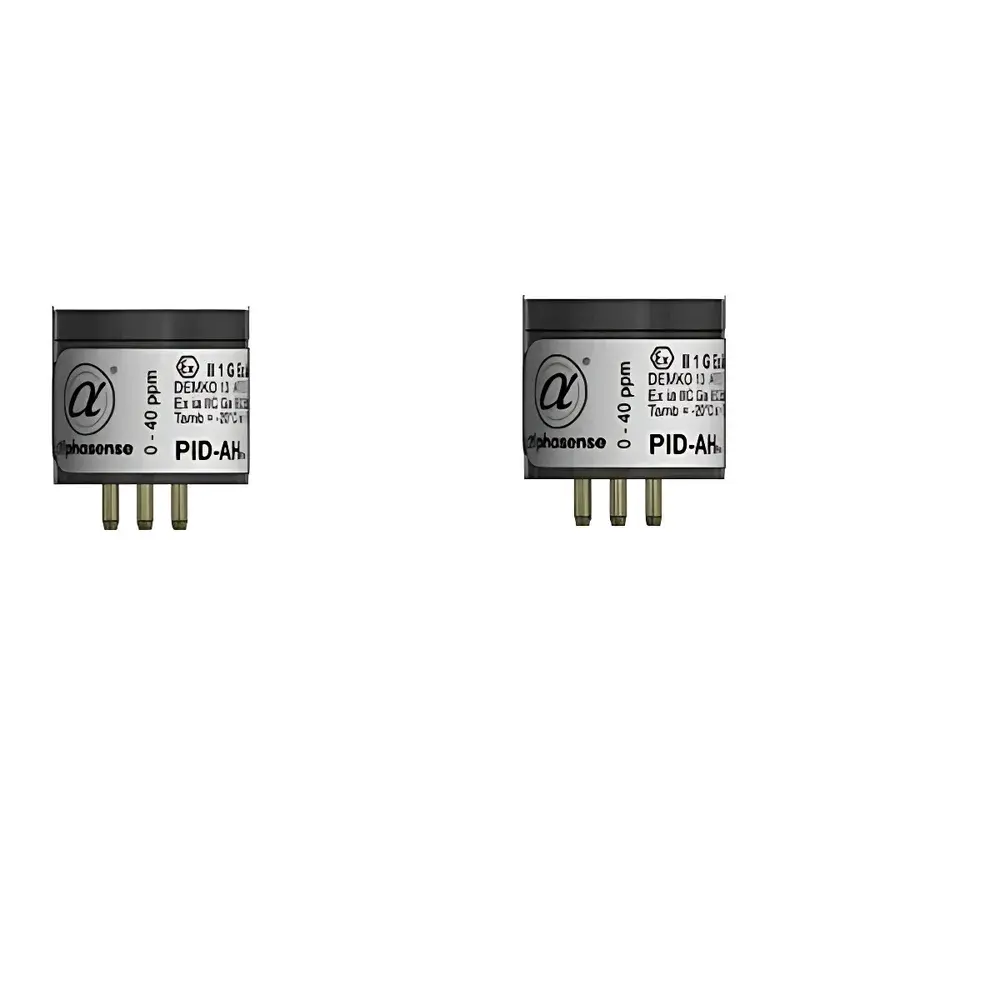
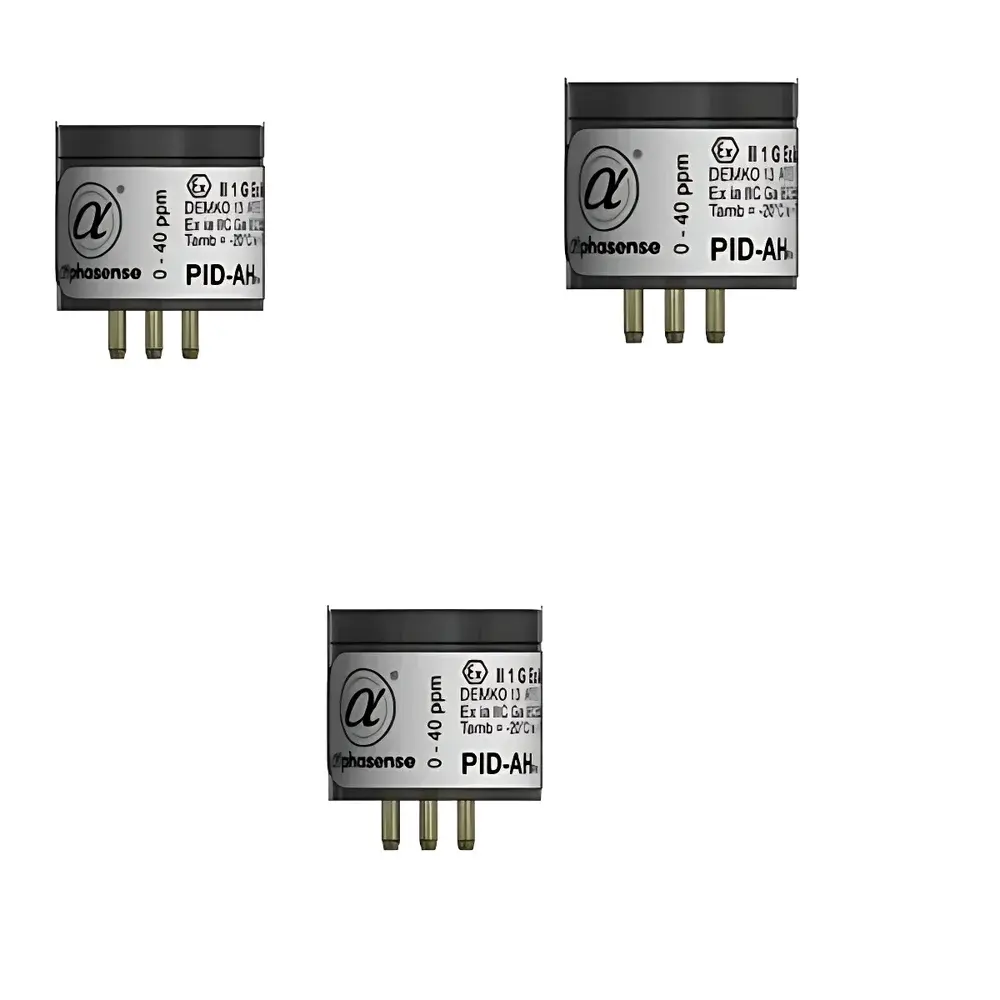
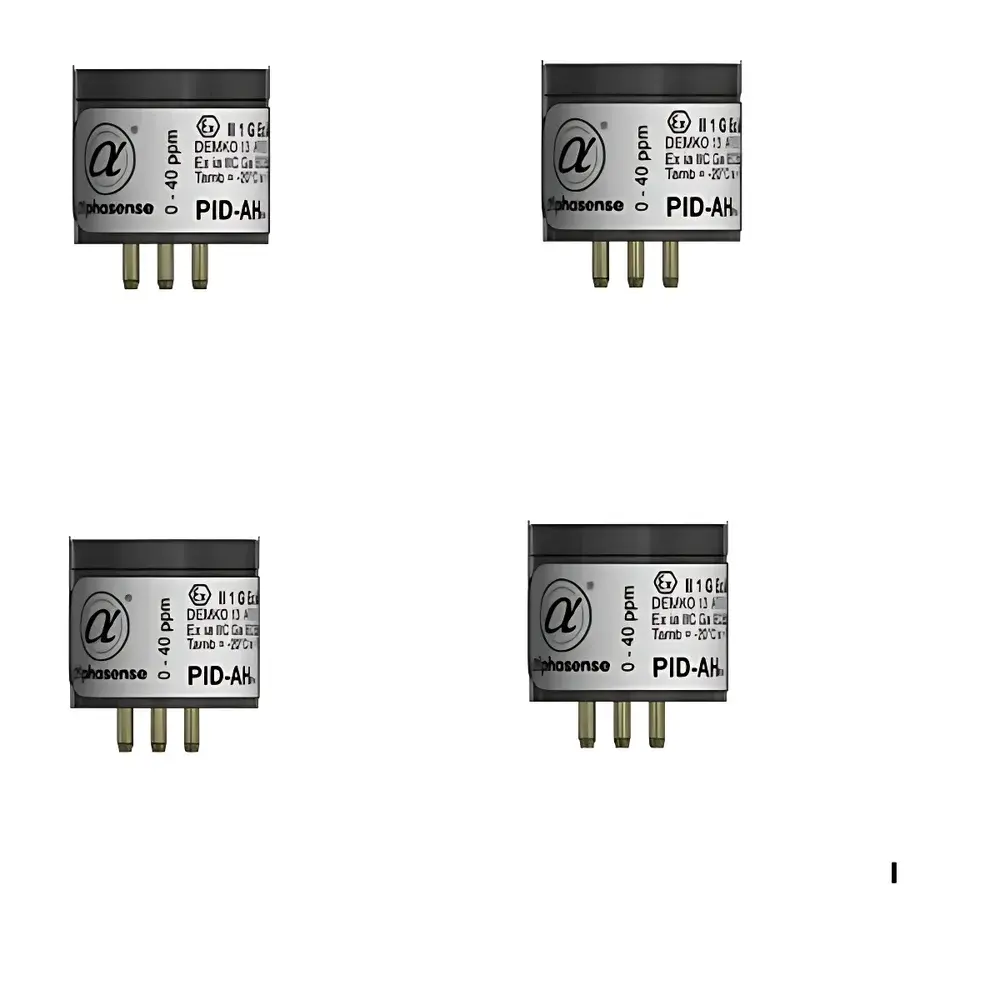
Alphasense PID-AH Photoionization Detector (Low-Range VOC Sensor)
| Brand | Alphasense |
|---|---|
| Origin | United Kingdom |
| Model | PID-AH (Low-Range) |
| Detection Range | 1 ppb – 40 ppm (isobutylene equivalent) |
| Lamp Energy | 10.6 eV |
| Output Signal | 4–20 mA / 0–5 V analog |
| Operating Temperature | −30 °C to +50 °C |
| Humidity Tolerance | 0–95% RH (non-condensing) |
| Lifetime | >5 years (sensor body) |
Overview
The Alphasense PID-AH is a low-range, OEM-grade photoionization detector (PID) sensor engineered for high-sensitivity, selective detection of volatile organic compounds (VOCs) and select inorganic gases with ionization energies below 10.6 eV. Utilizing a stable, high-brightness 10.6 eV ultraviolet lamp and an optimized electrode architecture, the PID-AH operates on the fundamental principle of photoionization: UV photons impart sufficient energy to neutral VOC molecules in the sample gas stream to eject electrons, generating a measurable ion current proportional to analyte concentration. This physical detection mechanism ensures rapid, non-destructive, and repeatable response without chemical consumption or catalyst degradation—making it ideal for continuous monitoring, leak detection, industrial hygiene, and environmental screening applications where trace-level VOC quantification is critical.
Key Features
- Low-range optimization: Engineered for exceptional sensitivity at sub-ppb to low-ppm levels (1 ppb – 40 ppm, calibrated to isobutylene), delivering superior signal-to-noise ratio in clean-air or background-limited environments.
- Robust humidity resilience: Minimal cross-sensitivity to relative humidity (0–95% RH, non-condensing), eliminating need for active humidity compensation in most field deployments.
- Contamination-resistant design: Features a removable, pneumatically sealed electrode assembly and hydrophobic inlet filter to mitigate fouling from particulates, oils, or condensables—extending calibration stability and maintenance intervals.
- Long-term operational integrity: UV lamp lifetime exceeds 12 months under typical duty cycles; sensor housing and electronics are rated for >5 years of continuous service in industrial settings.
- OEM integration ready: Compact footprint, analog output (4–20 mA / 0–5 V), and standardized pinout support seamless integration into portable analyzers, fixed-area monitors, and process control systems.
- Stable 10.6 eV photon source: High-stability UV lamp ensures consistent ionization efficiency across target VOCs—including benzene, toluene, xylene, styrene, formaldehyde (at elevated concentrations), and many chlorinated solvents—without spectral drift.
Sample Compatibility & Compliance
The PID-AH detects over 1,000 VOCs—including aromatics, ketones, aldehydes, amines, and sulfur-containing compounds—provided their first ionization energy is ≤10.6 eV. It does not respond to methane, ethane, CO, CO₂, NOₓ, or most halogenated refrigerants (e.g., R134a), offering inherent selectivity against common background gases. The sensor complies with IEC 60079-0 (explosive atmospheres – general requirements) for intrinsic safety when integrated into certified enclosures. While not a standalone certified device, its performance aligns with methodologies referenced in OSHA Method 1018, NIOSH Method 2549, and ISO 16000-18 (indoor air – VOC measurement by PID). It supports GLP-aligned data acquisition when paired with compliant readout electronics featuring audit-trail logging and calibration verification timestamps.
Software & Data Management
As an analog-output OEM sensor, the PID-AH interfaces directly with host instrumentation firmware supporting configurable scaling, zero/span calibration routines, and temperature/humidity compensation algorithms. When deployed in systems compliant with FDA 21 CFR Part 11, its raw signal output can be captured with electronic signatures, version-controlled calibration records, and automated drift alerts. Alphasense provides comprehensive technical documentation—including spectral response charts, interference matrices, and humidity correction coefficients—for integration into validated analytical platforms. No proprietary software is required; however, Alphasense’s Sensor Evaluation Kit (SEK) enables lab-based characterization, linearity verification, and dynamic range validation per ISO/IEC 17025 guidelines.
Applications
- Portable personal exposure monitors for occupational health compliance (e.g., refinery maintenance, paint spraying, semiconductor fab tool rooms)
- Fixed-site perimeter monitoring for fugitive emissions and fence-line VOC surveillance
- Soil vapor intrusion assessment and groundwater remediation plume tracking
- Indoor air quality (IAQ) systems detecting cleaning agent residues, off-gassing from building materials, or HVAC contamination events
- OEM integration into breath analysis research tools, pharmaceutical stability chambers, and bioreactor headspace monitoring systems
- Early-warning leak detection in chemical storage areas, solvent recovery units, and waste treatment facilities
FAQ
What VOCs does the PID-AH detect?
It responds to VOCs with ionization energies ≤10.6 eV—including benzene, toluene, xylenes, styrene, acetone, ethanol, isopropanol, acetaldehyde, and many chlorinated solvents—but not methane, ethane, or fully halogenated compounds like CFCs.
Does humidity affect its accuracy?
The PID-AH exhibits negligible sensitivity to humidity across 0–95% RH (non-condensing); no active humidity compensation is required for typical indoor or ambient outdoor operation.
How often must the UV lamp be replaced?
Lamp lifetime is typically ≥12 months under continuous operation; replacement is recommended upon observed signal decay >15% during span check or after 10,000 hours of cumulative use.
Can it be used in explosive atmospheres?
Yes—when integrated into intrinsically safe (IS) or explosion-proof housings certified to ATEX/IECEx standards, the PID-AH meets Zone 1/21 requirements for Group II (gases) and Group III (dusts).
Is factory calibration traceable to national standards?
Alphasense calibrates each PID-AH against NIST-traceable isobutylene standards; certificate of conformance includes uncertainty budget per ISO/IEC 17025 and is supplied with every batch shipment.