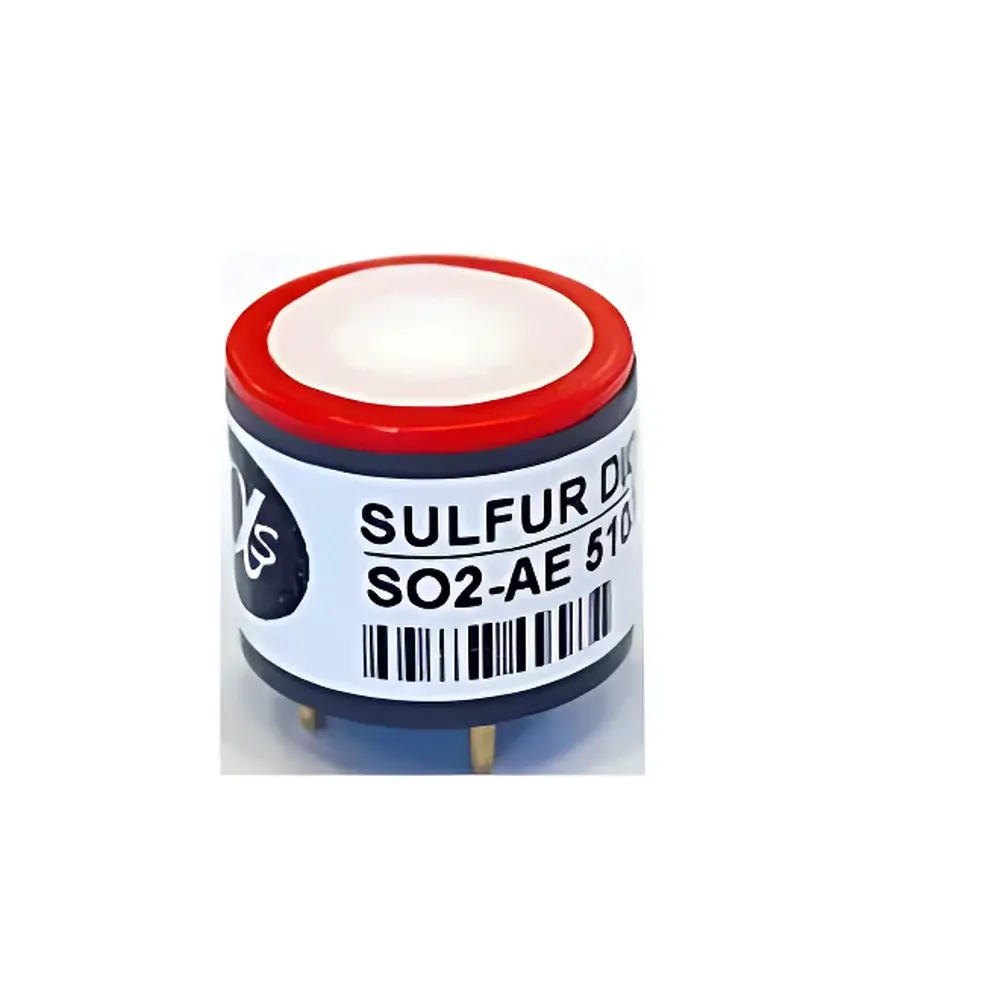
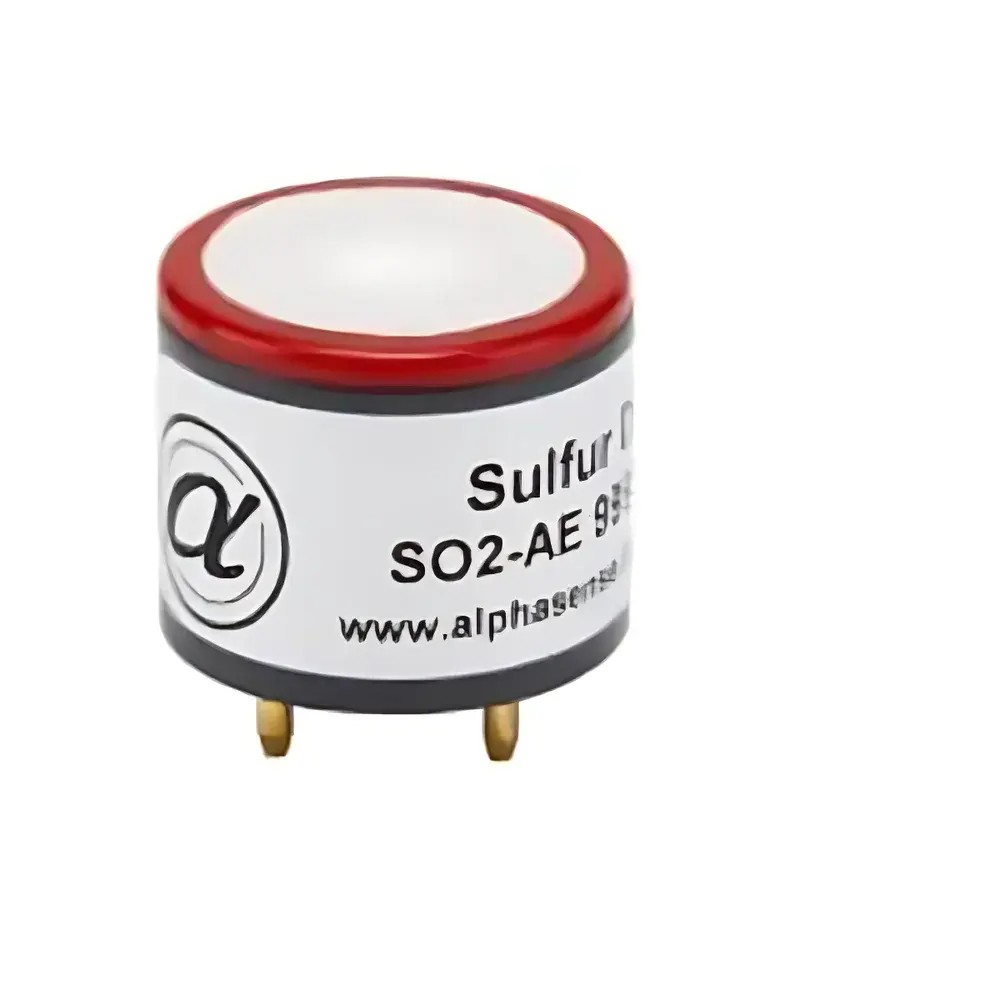
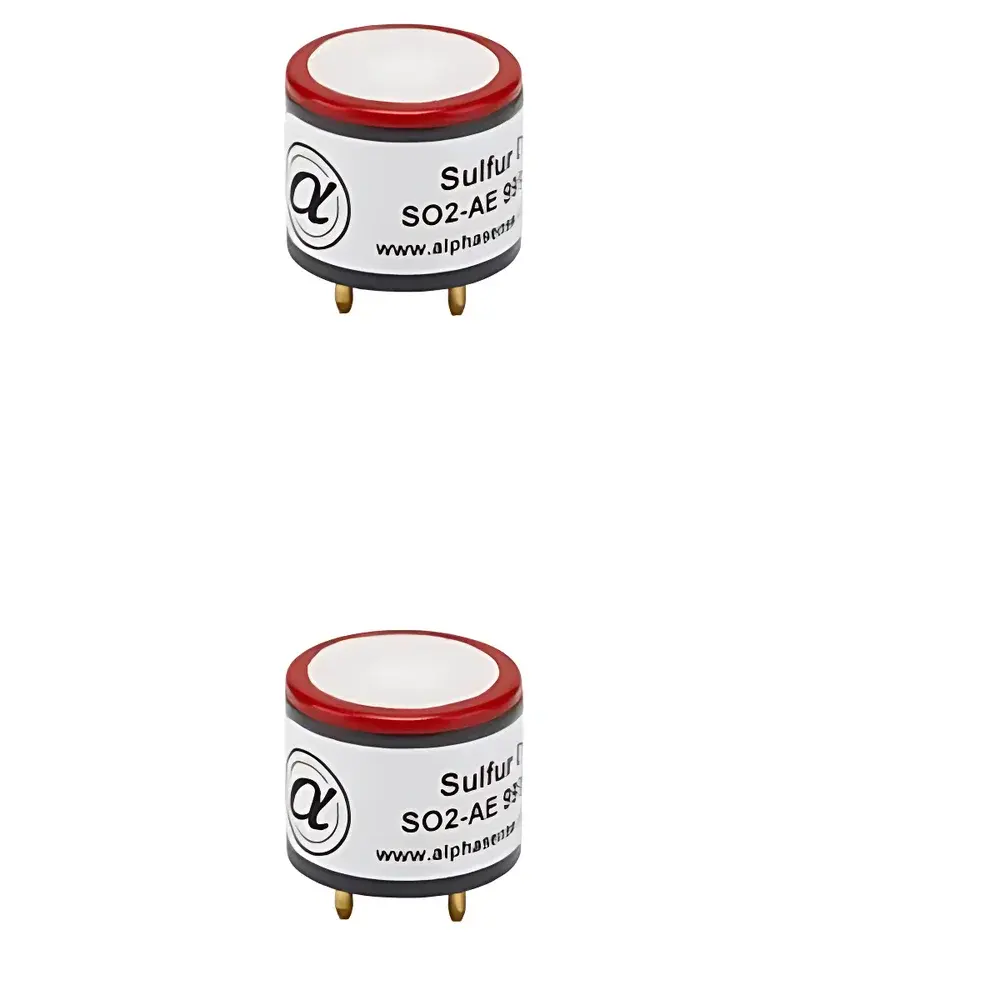
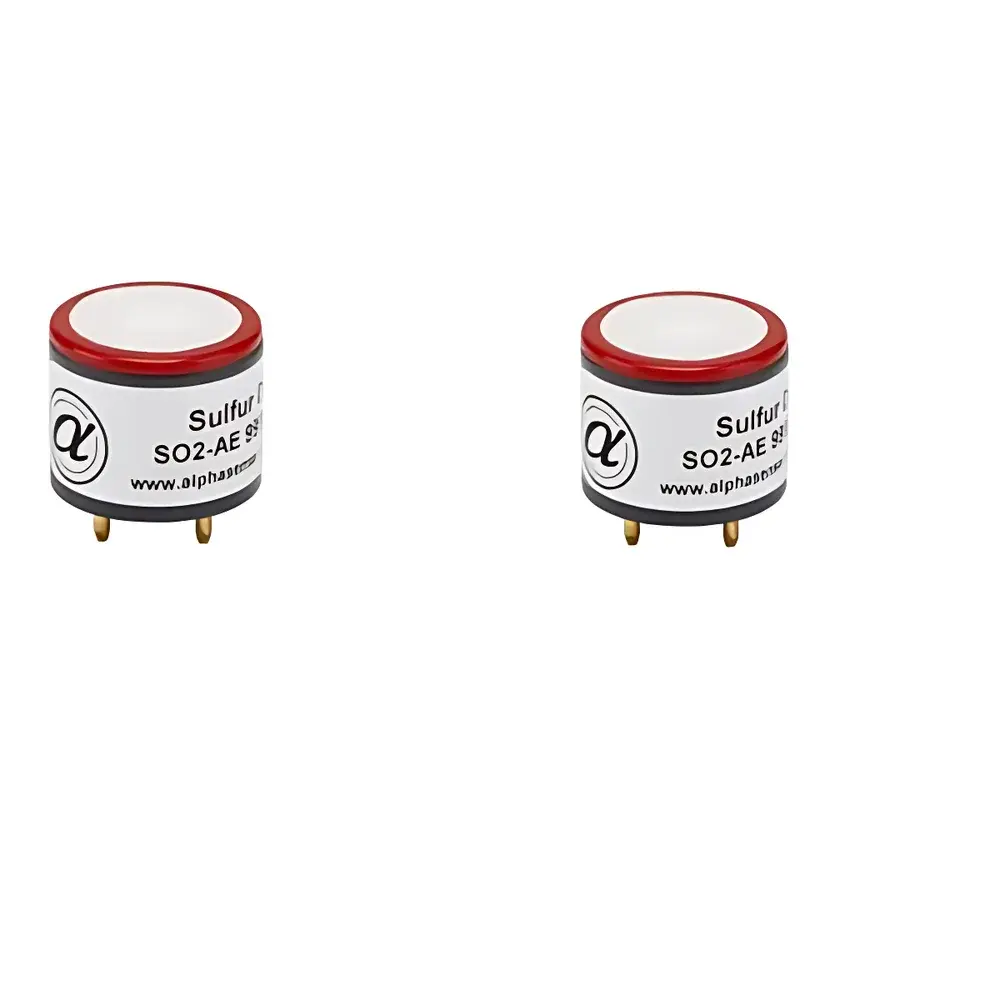
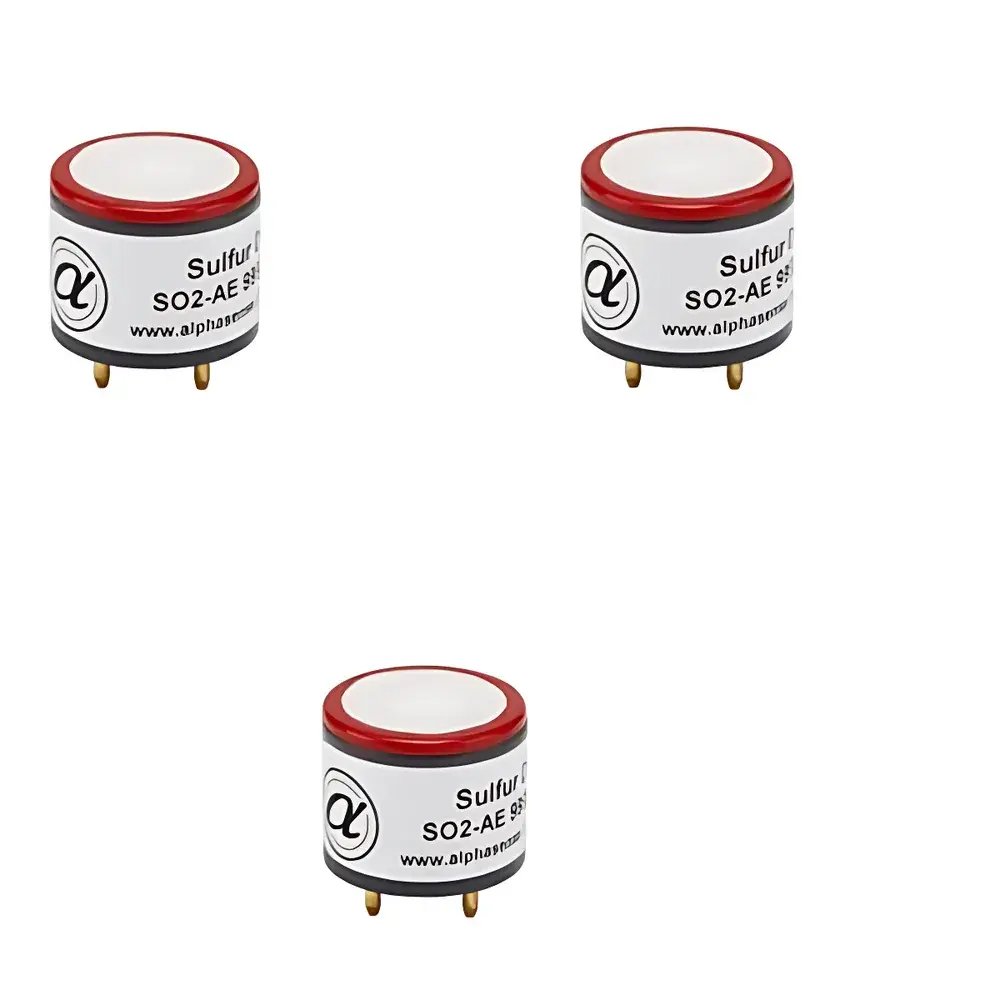
Alphasense SO2-AE Electrochemical Sulfur Dioxide Sensor
| Brand | Alphasense (UK) |
|---|---|
| Origin | United Kingdom |
| Model | SO2-AE |
| Detection Range | 0–2,000 ppm |
| Overload Capacity | 10,000 ppm |
| Response Time (t90) | <33 s |
| Sensitivity | 55–80 nA/ppm |
| Resolution | <1.5 ppm |
| Dimensions | Ø20.2 × 16.5 mm |
| Sensor Type | Three-electrode electrochemical gas sensor |
Overview
The Alphasense SO2-AE is a high-range, three-electrode electrochemical sulfur dioxide (SO₂) sensor engineered for robust, continuous monitoring in demanding industrial and environmental applications. Operating on the principle of amperometric detection, the SO2-AE utilizes a selective working electrode where SO₂ undergoes oxidation in an aqueous electrolyte, generating a current proportional to gas concentration. Its optimized electrode architecture and diffusion-limited design ensure stable baseline performance, low cross-sensitivity to common interferents (e.g., NO₂, H₂S, CO), and minimal zero drift under variable temperature and humidity conditions. Designed specifically for fixed-site air quality monitoring systems, stack emission analyzers, and portable multi-gas detectors, the SO2-AE delivers reliable quantification across its full 0–2,000 ppm range — making it suitable for both ambient air compliance monitoring and high-concentration process control environments such as flue gas desulfurization (FGD) bypass streams or sulfur recovery unit off-gas analysis.
Key Features
- Three-electrode electrochemical configuration for enhanced stability, reduced polarization effects, and extended operational lifetime
- High-range linear response from 0 to 2,000 ppm SO₂ with t90 response time under 33 seconds
- Overload tolerance up to 10,000 ppm SO₂ without permanent performance degradation
- Optimized sensitivity of 55–80 nA/ppm at 20 °C and 65 % RH, enabling precise low-level detection while maintaining signal integrity at elevated concentrations
- Resolution better than 1.5 ppm, supporting accurate differentiation within regulatory thresholds (e.g., EPA Method 6C, EN 14181)
- Compact cylindrical form factor (Ø20.2 × 16.5 mm) compatible with standard 12-pin gas sensor sockets and OEM integration into modular analyzer platforms
- Integrated filter cap with hydrophobic membrane to mitigate particulate fouling and liquid ingress in humid or dusty sampling environments
Sample Compatibility & Compliance
The SO2-AE is validated for use with ambient air, diluted stack gases, and conditioned sample streams containing typical combustion byproducts. It exhibits negligible interference from CO (<2 % signal equivalent at 500 ppm), NO₂ (<5 % at 5 ppm), and H₂S (<3 % at 10 ppm) when operated within specified temperature (–20 to +50 °C) and relative humidity (15–90 % RH, non-condensing) limits. The sensor complies with key international standards governing electrochemical gas detection, including IEC 60079-29-1 (explosive atmospheres), EN 45544-1 (workplace exposure monitoring), and supports traceability under ISO/IEC 17025-accredited calibration protocols. When integrated into certified analyzer systems, it contributes to compliance with EU Industrial Emissions Directive (IED) monitoring requirements and U.S. EPA Performance Specification 2 (PS-2) for SO₂ CEMS.
Software & Data Management
While the SO2-AE is an analog output sensor (typically 0–20 mA or 0–5 V), its linear current output enables seamless integration with industry-standard data acquisition systems (e.g., Siemens Desigo, Honeywell Experion, or custom LabVIEW/SCADA architectures). For traceable calibration and audit readiness, users are advised to pair the sensor with a controller supporting dual-point calibration logging, temperature-compensated zero/span verification, and timestamped event records. When deployed in regulated environments (e.g., pharmaceutical cleanroom HVAC or wastewater treatment plant emissions reporting), the sensor’s output may be incorporated into systems compliant with FDA 21 CFR Part 11 requirements via validated firmware and electronic audit trails — provided the host instrument meets electronic record and signature criteria.
Applications
- Continuous emission monitoring systems (CEMS) for coal-fired power plants and cement kilns
- Portable multi-gas detectors used in refinery maintenance, confined space entry, and emergency response
- Indoor air quality (IAQ) monitors in industrial facilities subject to OSHA PEL or ACGIH TLV limits
- Process analytical technology (PAT) in sulfuric acid production and catalyst regeneration units
- Research-grade atmospheric chemistry instrumentation requiring high dynamic range and long-term baseline stability
- Calibration transfer standards for field-deployable SO₂ analyzers undergoing periodic verification
FAQ
What is the recommended operating temperature range for the SO2-AE?
The sensor is rated for continuous operation between –20 °C and +50 °C, with optimal performance observed between 20–30 °C. Temperature compensation is required outside this band.
Does the SO2-AE require external power or bias voltage?
Yes — it operates as a 3-electrode amperometric cell requiring a dedicated potentiostat circuit providing ±200 mV bias to the reference electrode and load resistance for current-to-voltage conversion.
How often should the SO2-AE be calibrated?
Field calibration is recommended every 3–6 months depending on exposure history; initial zero and span checks should be performed before each deployment cycle per ISO 12039 guidelines.
Can the SO2-AE be exposed to condensing humidity?
No — prolonged exposure to condensation will damage the electrolyte and compromise electrode function. Use with a Nafion dryer or heated sample line is advised in high-humidity applications.
Is the SO2-AE compatible with PID or NDIR-based analyzer platforms?
No — it is exclusively an electrochemical transducer and must be interfaced via dedicated gas sensor signal conditioning electronics, not optical detector interfaces.