
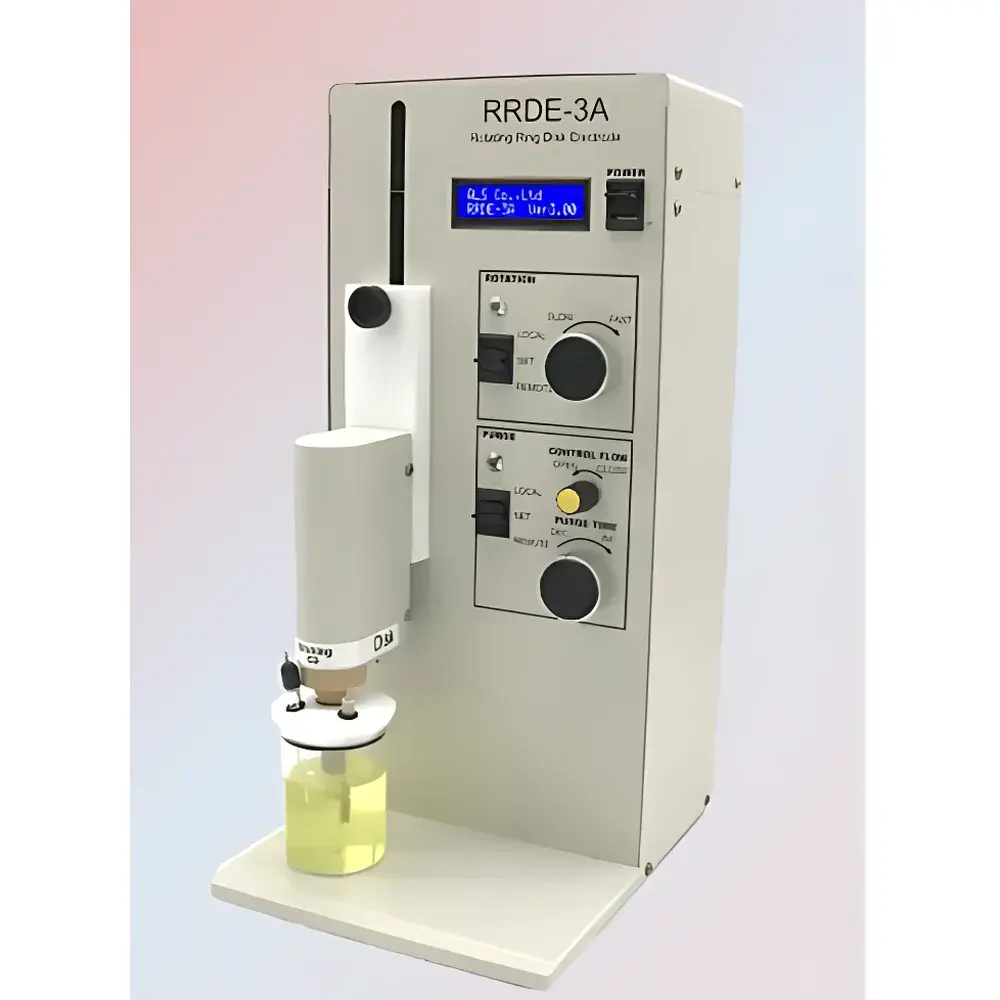
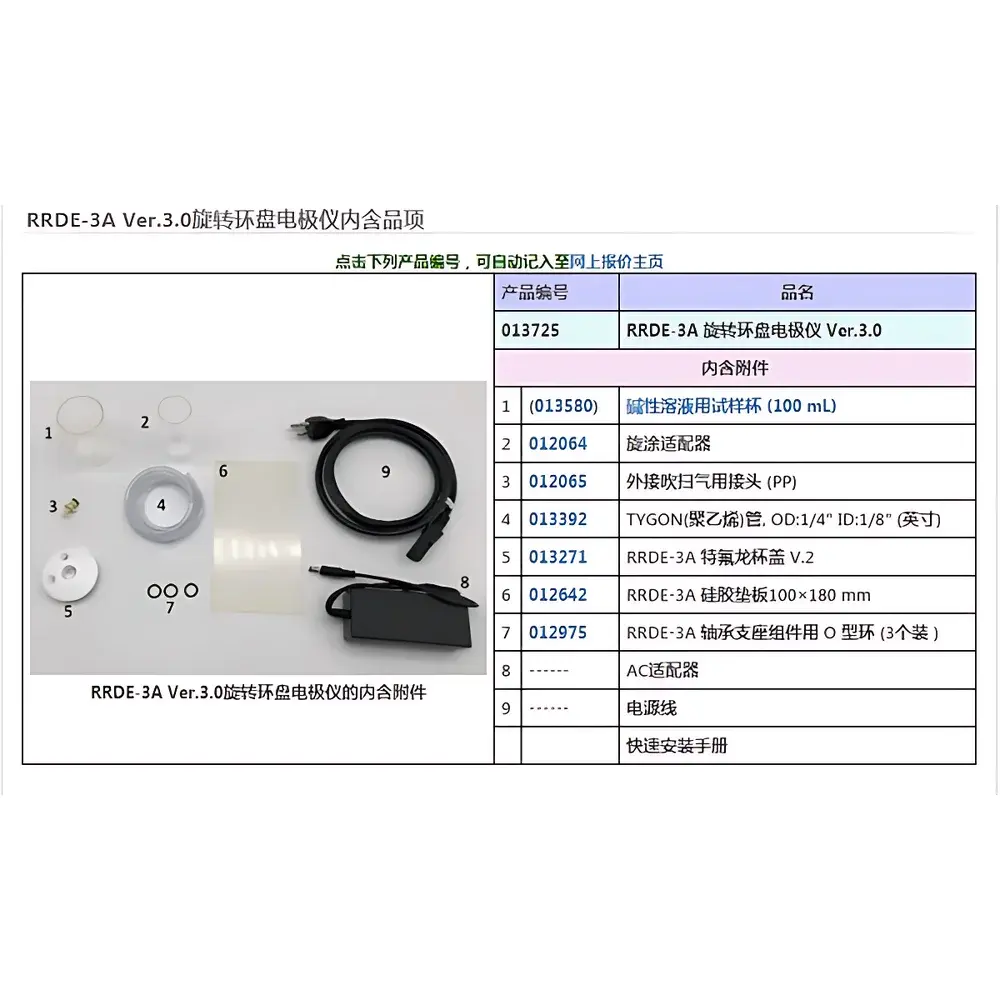
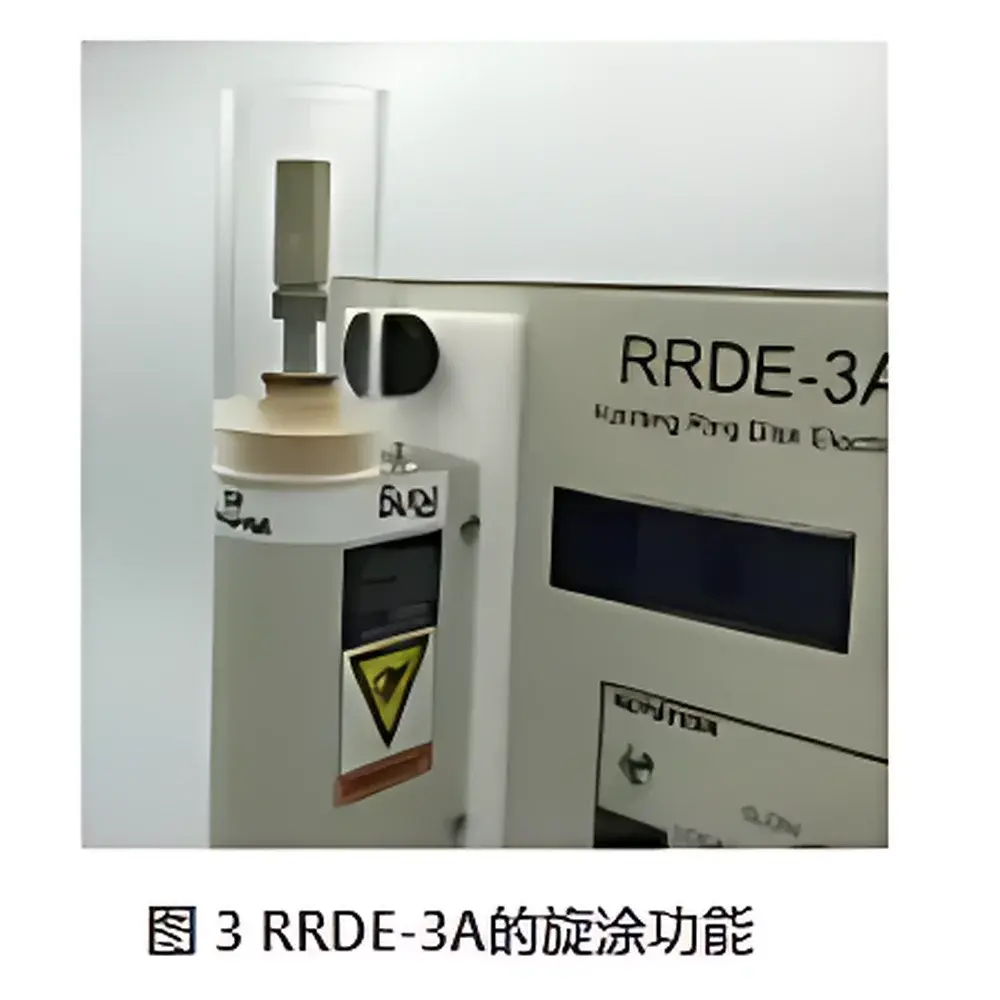
ALS RRDE-3A Rotating Ring-Disk Electrode Instrument
| Brand | ALS (Japan) |
|---|---|
| Model | RRDE-3A |
| Rotation Speed Range | 100–8,000 rpm |
| Gas Purge Control | Programmable ON/OFF timer (up to 9999 s) |
| Display | LCD showing speed, purge duration, model ID, serial number, cumulative motor runtime, maintenance alerts |
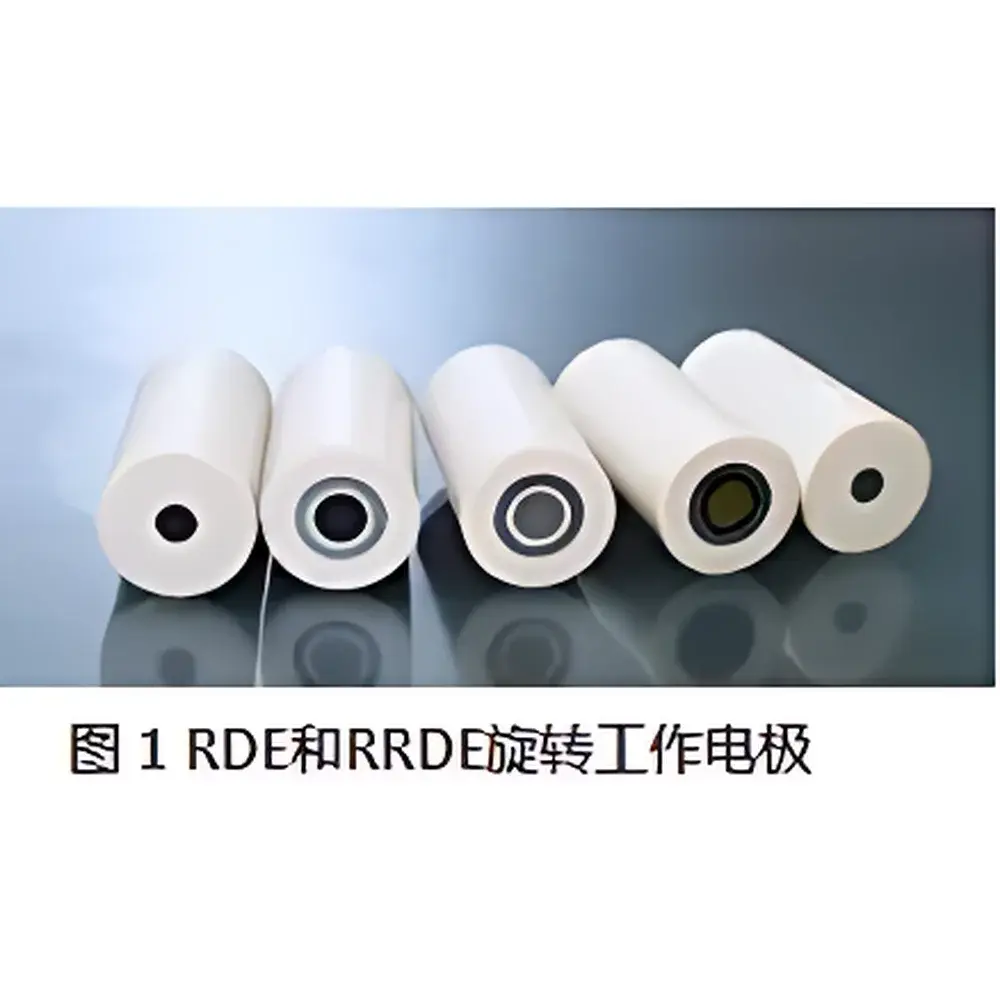
| Electrode Compatibility | Standard 7 mm OD coaxial ring-disk electrodes |
| Motor Type | DC servo motor with PI closed-loop speed control |
| Coupling | Insulated elastomeric coupling + PTFE-insulated dual-shaft assembly |
| Cell Interface | Open-cell design with universal potentiostat pin connections |
| Remote Control | TTL/RS-232 interface compatible with ALS Model 2325 bipotentiostat and third-party electrochemical workstations |
| Operating Modes | Manual or computer-controlled (rotation ON/OFF, speed setpoint, purge gas ON/OFF) |
Overview
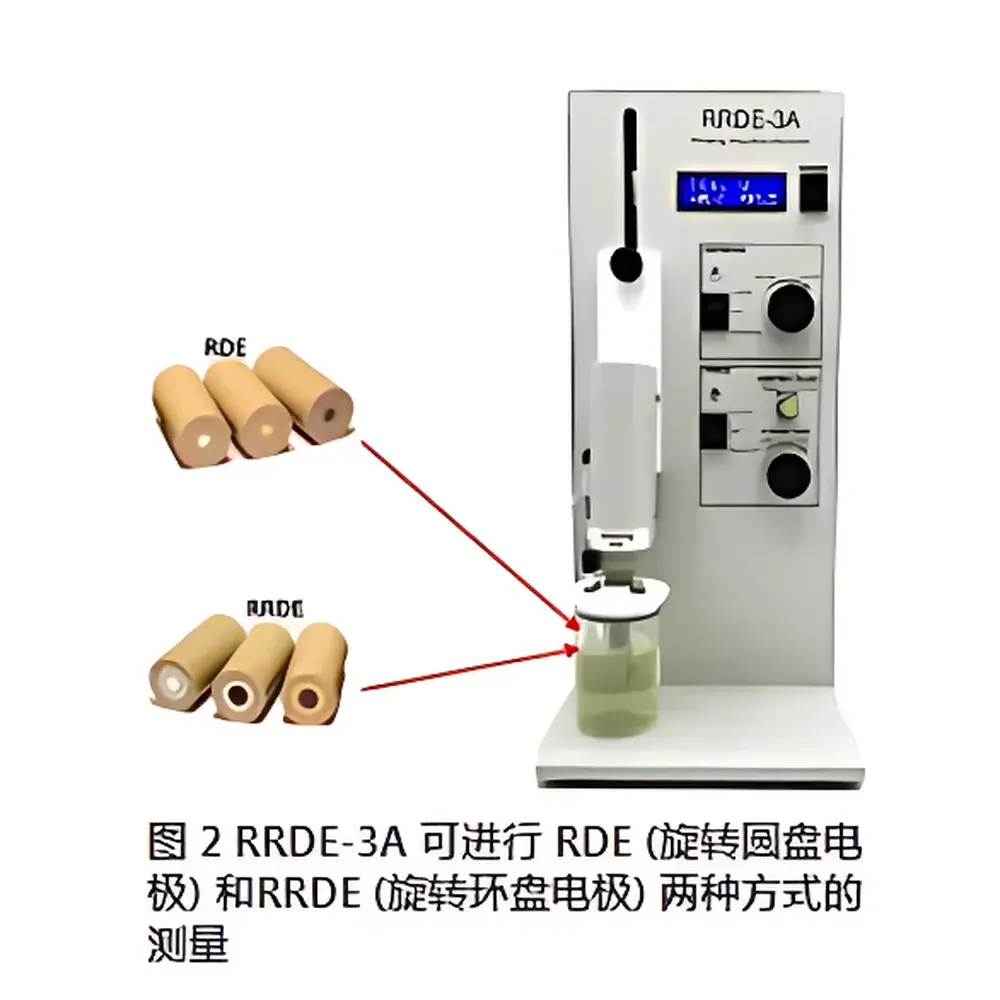
The ALS RRDE-3A is a precision-engineered rotating ring-disk electrode (RRDE) instrument designed for hydrodynamically controlled electrochemical experiments requiring quantitative mass-transport regulation. It operates on the fundamental principle of forced convection at electrode surfaces, where controlled rotation generates well-defined laminar flow patterns—governed by the Levich and Koutecký–Levich equations—to enable kinetic and mechanistic analysis of redox processes, intermediate detection, and catalytic turnover quantification. Unlike conventional RDE systems, the RRDE-3A supports dual-electrode configurations in which oxidation or reduction products generated at the disk are captured and detected at the concentric ring, allowing for real-time product identification and collection efficiency calibration. Its compact mechanical architecture integrates high-stability rotation with inert gas management, making it suitable for oxygen-sensitive measurements, corrosion studies, fuel cell catalyst evaluation, and electrocatalytic O₂ reduction reaction (ORR) analysis under rigorously controlled atmospheres.
Key Features
- DC servo motor with proportional-integral (PI) closed-loop speed regulation ensures <0.1% speed deviation across the full 100–8,000 rpm range, critical for reproducible Levich plot generation.
- Coaxial 7 mm outer-diameter ring-disk electrode holder mounted on a short stainless-steel shaft enables rapid electrode exchange while maintaining precise alignment and minimal runout (<5 µm).
- Dual-path inert gas management system: automated valve switching directs purge flow first through the electrolyte bulk during cell conditioning, then shifts to the headspace above solution upon measurement initiation—preventing atmospheric O₂/H₂O intrusion without manual intervention.
- PTFE-insulated dual-shaft assembly and elastomeric motor coupling suppress electromagnetic and mechanical noise transmission, preserving signal integrity during low-current (<1 nA) amperometric detection.
- LCD interface displays real-time operational parameters including rotational speed, purge elapsed time, instrument model and serial number, total motor runtime, and context-aware maintenance prompts (e.g., “Clean Shaft” or “Replace Seal”).
- Full remote controllability via TTL or RS-232: rotation start/stop, speed setpoint (1 rpm resolution), purge gas activation/deactivation—all programmable from external potentiostats (e.g., ALS Model 2325) or custom LabVIEW/Python scripts.
Sample Compatibility & Compliance
The RRDE-3A accommodates standard commercial and custom-fabricated ring-disk electrodes with 7 mm outer diameter and standardized pin layouts (e.g., BASi, Pine Research, Metrohm). Its open-cell design permits use with classical three-electrode electrochemical cells—including Teflon-bodied, quartz-jacketed, or thermostatted variants—without modification. The instrument complies with general laboratory safety standards for rotating equipment (IEC 61000-6-2/6-4 EMC immunity/emission) and supports GLP-aligned workflows through deterministic timing control (purge duration ±0.1 s accuracy) and non-volatile parameter logging. While not certified to ISO/IEC 17025, its traceable speed calibration and stable torque response meet ASTM D1298 (standard practice for rotational viscometry analogs) and USP environmental control expectations for electrochemical stability testing.
Software & Data Management
The RRDE-3A does not include proprietary acquisition software but provides native integration with industry-standard electrochemical platforms. When paired with ALS Model 2325 bipotentiostat firmware v3.2+, users access synchronized trigger-based control: rotation initiation coincides with potential step application, and purge activation aligns with rest-period sequencing. All device states—including actual speed feedback, purge valve status, and motor uptime—are readable via ASCII command protocol (e.g., “SPD?” returns “SPD=2450”), enabling timestamped metadata embedding into raw .DTA or .MPT files. For audit-ready environments, third-party solutions (e.g., EC-Lab v12+, AfterMath) can log RRDE-3A status alongside current/potential data, satisfying FDA 21 CFR Part 11 requirements when deployed with electronic signatures and audit trail modules.
Applications
- Quantitative determination of electron transfer numbers (n) and peroxide yield (%) in ORR using Pt/C, Fe–N–C, or single-atom catalysts.
- Real-time detection of unstable intermediates (e.g., CO, NO, H₂O₂) generated during electrocatalytic alcohol oxidation or nitrogen reduction.
- Kinetic deconvolution of coupled chemical-electrochemical (EC) steps via ring-collection efficiency (N) calibration and Koutecký–Levich analysis.
- Corrosion product identification in chloride-containing media using rotating ring-disk voltammetry (RRDV) protocols per ASTM G102.
- Stability assessment of redox mediators in flow battery electrolytes under controlled convection and inert atmosphere.
FAQ
What is the recommended rotation speed range for accurate RRDE measurements?
For optimal collection efficiency and laminar flow stability, 200–3000 rpm is advised; speeds above 5000 rpm may induce turbulence in standard 10–20 mL cells and compromise Levich linearity.
Can the RRDE-3A be used with non-ALS potentiostats?
Yes—its TTL/RS-232 interface supports generic command sets; users must map control lines (e.g., rotation enable, speed analog input) per their workstation’s digital I/O specifications.
Is the gas purge system compatible with gases other than N₂ or Ar?
The stainless-steel gas path and PTFE-sealed valves are chemically resistant to common inert and reducing gases (e.g., H₂, CO, He); reactive gases (e.g., Cl₂, NH₃) require optional corrosion-resistant fittings.
How often does the instrument require maintenance?
The LCD display triggers “Clean Shaft” after 200 hours of cumulative runtime and “Replace Seal” after 1000 hours; routine cleaning with ethanol and light lubrication of the shaft collar is recommended every 50 hours of active use.
Does the RRDE-3A support temperature-controlled cells?
Yes—the open-cell mechanical design allows direct integration with jacketed cells connected to external circulators; no internal heating/cooling elements are included.




