
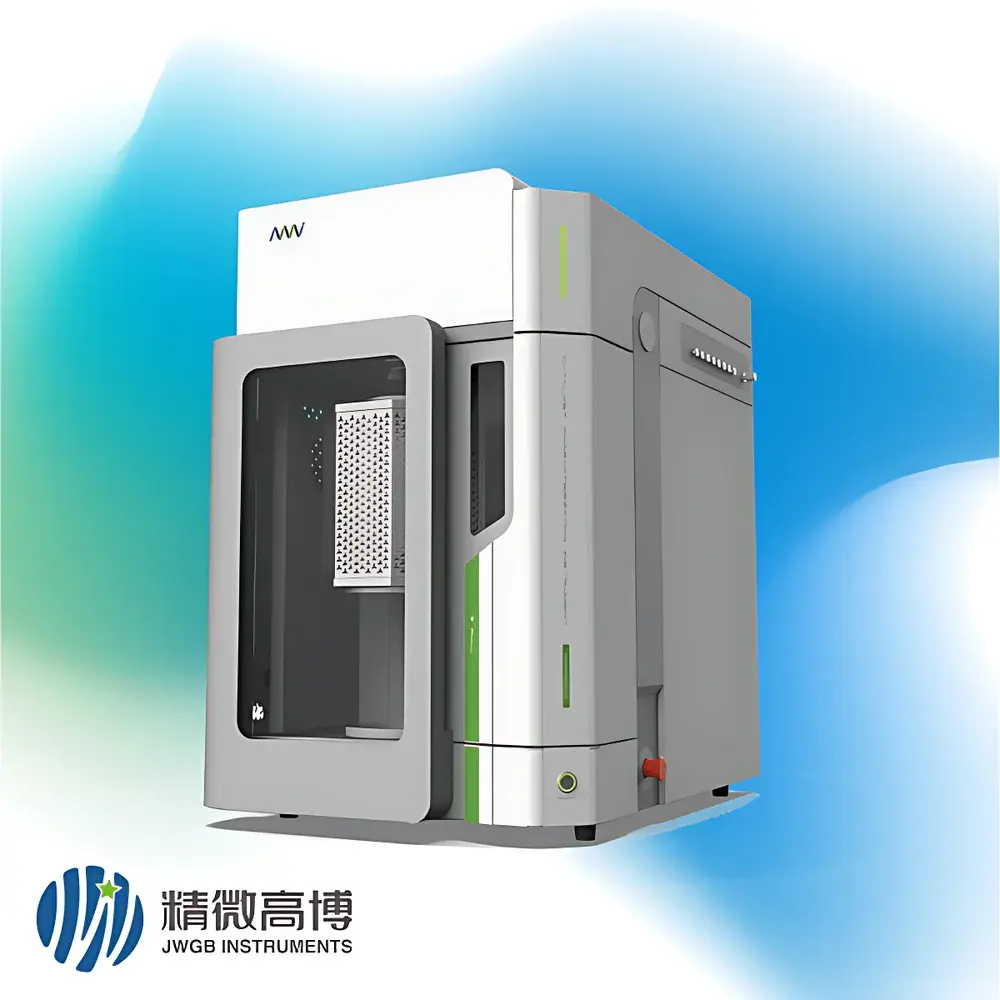
Altamira AMI-400 Automated Chemisorption Analyzer
| Brand | Altamira (USA) |
|---|---|
| Origin | USA |
| Manufacturer Type | Authorized Distributor |
| Origin Category | Imported Instrument |
| Model | AMI-400 Automated Chemisorption Analyzer |
| Instrument Type | Chemisorption Analyzer |
| Measurement Principle | Continuous Flow Method |
| Gas Inlet Ports | Expandable to 12 |
| Temperature Range | Ambient to 1200 °C |
| Isothermal Stability | ±0.01 °C |
| Heating Rate | 1–50 °C/min |
| Pressure Range | Atmospheric to 30 bar (optional up to 100 bar) |
| Analytical Modes | TPR, TPO, TPD, TPS, Pulse Chemisorption, Pulse Calibration |
Overview
The Altamira AMI-400 Automated Chemisorption Analyzer is a high-precision, modular surface characterization system engineered for quantitative assessment of catalytic materials under controlled thermal and gaseous environments. It operates on the continuous flow chemisorption principle—where reactive gases are dynamically introduced over a heated catalyst bed while effluent composition is monitored in real time via thermal conductivity detection (TCD) or mass spectrometry (MS)-compatible output. This enables rigorous thermodynamic and kinetic analysis of surface adsorption/desorption phenomena, including active site quantification, binding energy distribution, and reaction pathway elucidation. Designed for research laboratories and industrial R&D centers requiring GLP-compliant, repeatable surface science data, the AMI-400 supports full automation of temperature-programmed experiments—from gas switching and pressure regulation to data acquisition and post-run baseline correction—without manual intervention.
Key Features
- Modular gas delivery architecture with up to 12 independently controlled inlet ports, supporting complex multi-gas sequences (e.g., H₂/Ar reduction followed by O₂ oxidation and CO pulse titration) without hardware reconfiguration.
- High-fidelity temperature control system featuring dual-zone furnace design, achieving ±0.01 °C isothermal stability across the full 25–1200 °C operating range and programmable heating rates from 1 to 50 °C/min with <0.5 °C overshoot.
- Wide dynamic pressure range: standard operation from ambient to 30 bar; optional high-pressure module extends capability to 100 bar for studies involving syngas, hydrocarbon reforming, or supercritical fluid interactions.
- Integrated safety interlocks—including real-time gas leak detection, overpressure venting, furnace overtemperature cutoff, and fail-safe valve sequencing—ensuring compliance with ISO 13849-1 Category 3 PLd functional safety requirements.
- Self-calibrating pulse injection system with volumetric accuracy better than ±0.5% RSD for quantitative active metal dispersion and stoichiometric site counting (e.g., H₂ or CO chemisorption on Pt, Ni, Co, or Ru surfaces).
Sample Compatibility & Compliance
The AMI-400 accommodates powdered, pelletized, or monolithic catalyst samples (typically 0.1–1.0 g, particle size <1 mm) in standard quartz or alumina microreactors. Its gas-handling subsystem meets ASTM D7214-22 (Standard Test Method for Determination of Active Metal Surface Area of Supported Catalysts) and aligns with ISO 11767 (Heterogeneous catalysts — Determination of metal dispersion). All firmware and operational logs support 21 CFR Part 11-compliant electronic signatures, audit trails, and user-access hierarchy—enabling deployment in GMP-regulated environments for catalyst qualification in pharmaceutical intermediates or battery electrode material development. System validation documentation (IQ/OQ/PQ protocols) is provided per ICH Q5D and USP guidelines.
Software & Data Management
Control and analysis are performed via Altamira’s proprietary ChemiSoft™ v4.2 platform—a Windows-based application built on .NET Framework with deterministic real-time task scheduling. The software provides synchronized acquisition of temperature, pressure, flow rate, and detector signals at up to 10 Hz sampling resolution. Built-in algorithms automate peak deconvolution for overlapping TPR/TPO profiles, calculate activation energies using Kissinger and Redhead methods, and generate isosteric heat maps from multi-temperature TPD datasets. Raw data are stored in HDF5 format with embedded metadata (sample ID, operator, method timestamp, instrument configuration), ensuring FAIR (Findable, Accessible, Interoperable, Reusable) data principles. Export options include CSV, ASCII, and ASTM E1394-compliant data exchange files compatible with MATLAB, OriginLab, and Thermo Scientific Avio software ecosystems.
Applications
The AMI-400 delivers critical surface parameters for heterogeneous catalyst development and process optimization across multiple sectors: quantifying acid site density and strength distribution in zeolites (via NH₃-TPD); evaluating redox behavior of transition metal oxides (e.g., CeO₂-ZrO₂ in three-way automotive catalysts); determining sulfur tolerance of hydrotreating catalysts (NiMo/Al₂O₃) via H₂S-TPD; assessing oxygen mobility in solid oxide fuel cell anodes (La₀.₈Sr₀.₂MnO₃); and characterizing CO₂ adsorption kinetics on amine-functionalized MOFs for carbon capture applications. It is routinely deployed in academic catalysis labs (e.g., ETH Zürich, TU Delft), national laboratories (e.g., PNNL, NREL), and industrial R&D units at BASF, Johnson Matthey, and Umicore for catalyst screening, lifetime prediction, and mechanistic modeling input.
FAQ
What analytical standards does the AMI-400 support?
It conforms to ASTM D7214, ISO 11767, and ISO 18387 for metal dispersion and surface area determination, with traceable calibration against NIST SRM 1978 (nickel oxide) and certified gas standards.
Can the system be integrated with a mass spectrometer?
Yes—the AMI-400 features a standardized 6-mm OD capillary outlet with vacuum-compatible flange (CF16), enabling direct coupling to quadrupole or TOF-MS systems for evolved gas analysis (EGA) and isotopic labeling studies.
Is remote monitoring and troubleshooting supported?
The ChemiSoft™ platform includes secure TLS 1.3-enabled remote access mode, allowing authorized engineers to diagnose hardware status, review live sensor diagnostics, and validate method execution—subject to customer-defined firewall policies and IT governance protocols.
How is data integrity maintained during long-duration TPD runs (e.g., >24 h)?
Continuous checksum verification of acquired data blocks, redundant non-volatile memory buffering, and automatic recovery upon power interruption ensure zero data loss—even during multi-day desorption experiments at ultra-low heating rates (0.1 °C/min).



