
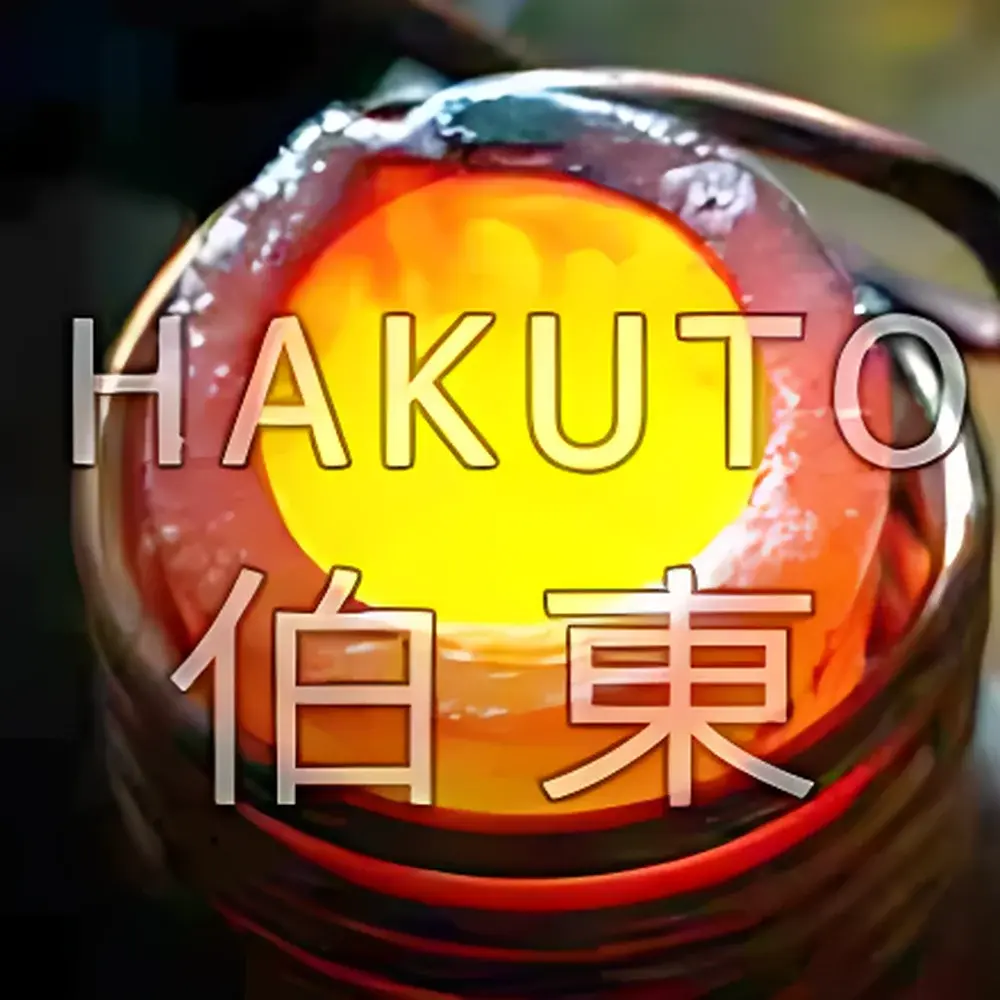
Ambrell EkoHeat Series Induction Melting System
| Brand | Ambrell |
|---|---|
| Origin | USA |
| Manufacturer Type | Industrial Induction Heating System Manufacturer |
| Model | EkoHeat Series (Custom-Configured) |
| Power Rating | 6 kW (typical for lab-scale silicon melting) |
| Operating Frequency | 196 kHz |
| Compliance | CE, UL 508A, RoHS |
| Application Scope | Lab-scale to pilot-scale non-contact induction melting |
| Sample Capacity | 0.7 g to >100 kg (configurable) |
| Crucible Compatibility | Graphite, quartz, ceramic, refractory-lined |
| Thermal Control Precision | ±5 °C (with integrated thermocouple feedback loop) |
| Cooling | Integrated forced-air or optional water-cooling |
| Software Interface | EkoControl™ v4.2 with real-time power/temperature logging and recipe management |
Overview
The Ambrell EkoHeat Series Induction Melting System is an industrial-grade, solid-state radio-frequency (RF) induction heating platform engineered for precise, repeatable, and contactless thermal processing of conductive materials. Operating at a fixed or tunable frequency—commonly 196 kHz for high-resistivity, low-mass samples such as silicon—the system leverages electromagnetic induction principles: an alternating current in the copper induction coil generates a time-varying magnetic field, inducing eddy currents within the electrically conductive charge (e.g., metal powder, ingot, or granules), resulting in resistive (Joule) heating. Unlike resistance or arc furnaces, this method eliminates electrode contamination, minimizes atmospheric interaction, and enables rapid thermal ramp rates (e.g., 1400 °C achieved in 72 seconds for 0.7 g Si in a graphite crucible). Designed for laboratory, R&D, and pilot-line environments, the EkoHeat platform supports both open-air and controlled-atmosphere (N₂, Ar, vacuum-compatible) configurations via modular furnace integration.
Key Features
- Modular RF power architecture: 3–100 kW scalable output with digital IGBT-based inverters ensuring stable frequency tracking and power regulation under dynamic load conditions.
- Dual remote workheads with matched capacitive tuning (e.g., 1.0 μF per channel) enabling simultaneous or independent operation of multiple coils—ideal for parallel sample processing or multi-zone thermal profiling.
- Custom-engineered helical or pancake induction coils fabricated from oxygen-free high-conductivity (OFHC) copper, optimized for specific crucible geometry (e.g., 51.6 mm OD × 25.9 mm H graphite crucible) and material resistivity.
- Integrated closed-loop temperature control using calibrated Type S or C thermocouples embedded in crucible supports or crucible walls, synchronized with real-time power modulation.
- Robust mechanical housing rated IP22, conforming to UL 508A industrial control panel standards; CE-marked for EMC and LVD compliance.
- Thermal insulation compatibility: validated with high-purity alumina fiber blankets (up to 1600 °C service temperature) and low-outgassing ceramic fiber modules for ultra-clean melt environments.
Sample Compatibility & Compliance
The EkoHeat system accommodates a broad spectrum of conductive feedstocks—including elemental metals (Fe, Ni, Pb, Si), intermetallic alloys (Ni-based superalloys), metal powders (for foam sintering or analytical pre-melting), and refractory compounds—when paired with appropriate crucible materials. Graphite crucibles are standard for Si, Fe, and Ni alloy processing due to thermal shock resistance and chemical inertness above 1200 °C; fused quartz or BN-lined vessels are selected for reactive melts (e.g., Ti, Zr). All systems comply with ASTM F2656 (induction heating equipment safety), ISO 13849-1 (PLd functional safety), and support GLP/GMP audit readiness through full traceability of setpoints, dwell times, and thermal profiles. Optional integration with inert gas purging manifolds meets USP and ISO 14644-1 Class 5 cleanroom requirements for high-purity metallurgical testing.
Software & Data Management
EkoControl™ software (v4.2) provides deterministic process orchestration via a Windows-based HMI. Users define multi-step thermal recipes—including ramp rate (°C/s), soak duration, and power ceiling—with automatic impedance matching compensation. All operational parameters—including real-time coil current, voltage, phase angle, and thermocouple-derived temperature—are logged at ≥10 Hz resolution into timestamped .CSV or .TDMS files. The system supports FDA 21 CFR Part 11-compliant electronic signatures, role-based access control, and audit trail generation (user actions, parameter changes, alarm events) for regulated environments. Data export integrates natively with MATLAB, Python (via PySerial), and LabVIEW for advanced statistical process control (SPC) and DOE analysis.
Applications
- Materials science research: Controlled melting of silicon wafers or dopant-loaded powders for crystal growth precursor studies.
- Metallurgical QA/QC: Rapid fusion of nickel-based superalloy coupons prior to spectrographic analysis (OES, ICP-MS).
- Battery component manufacturing: Melting and casting of lead ingots into battery terminals and busbars with minimal oxide formation.
- Thermal simulation: Reproducing industrial-scale heating profiles (e.g., induction skull melting) at gram-scale for kinetic modeling and phase diagram validation.
- Failure analysis labs: Localized remelting of fracture surfaces or inclusion-rich zones for microstructural re-examination without bulk sample distortion.
FAQ
What crucible materials are compatible with the EkoHeat system for silicon melting?
Graphite crucibles are standard for silicon processing up to 1400 °C; high-density isostatically pressed (HIP) graphite with low ash content (<5 ppm) is recommended to prevent carbon contamination.
Can the system operate under inert or reducing atmospheres?
Yes—optional furnace enclosures with gas inlet/outlet ports support continuous N₂, Ar, or forming gas (5% H₂/95% N₂) flow, maintaining dew point ≤ –40 °C for oxide-sensitive melts.
Is remote diagnostics and firmware updates supported?
EkoControl™ includes secure TLS-enabled remote desktop access (customer-authorized) and over-the-air firmware deployment via encrypted USB or Ethernet, compliant with IEC 62443-3-3 SL2 cybersecurity requirements.
How is coil-to-crucible coupling efficiency verified during setup?
Ambrell provides a standardized impedance sweep protocol using the built-in LCR meter function; optimal coupling is confirmed when coil Q-factor exceeds 12 and reflected power remains below 3% at target frequency.
Does the system meet regulatory requirements for pharmaceutical or medical device R&D?
Yes—full 21 CFR Part 11 validation packages, including IQ/OQ/PQ documentation, URS mapping, and change control logs, are available upon request for GxP-aligned installations.



