
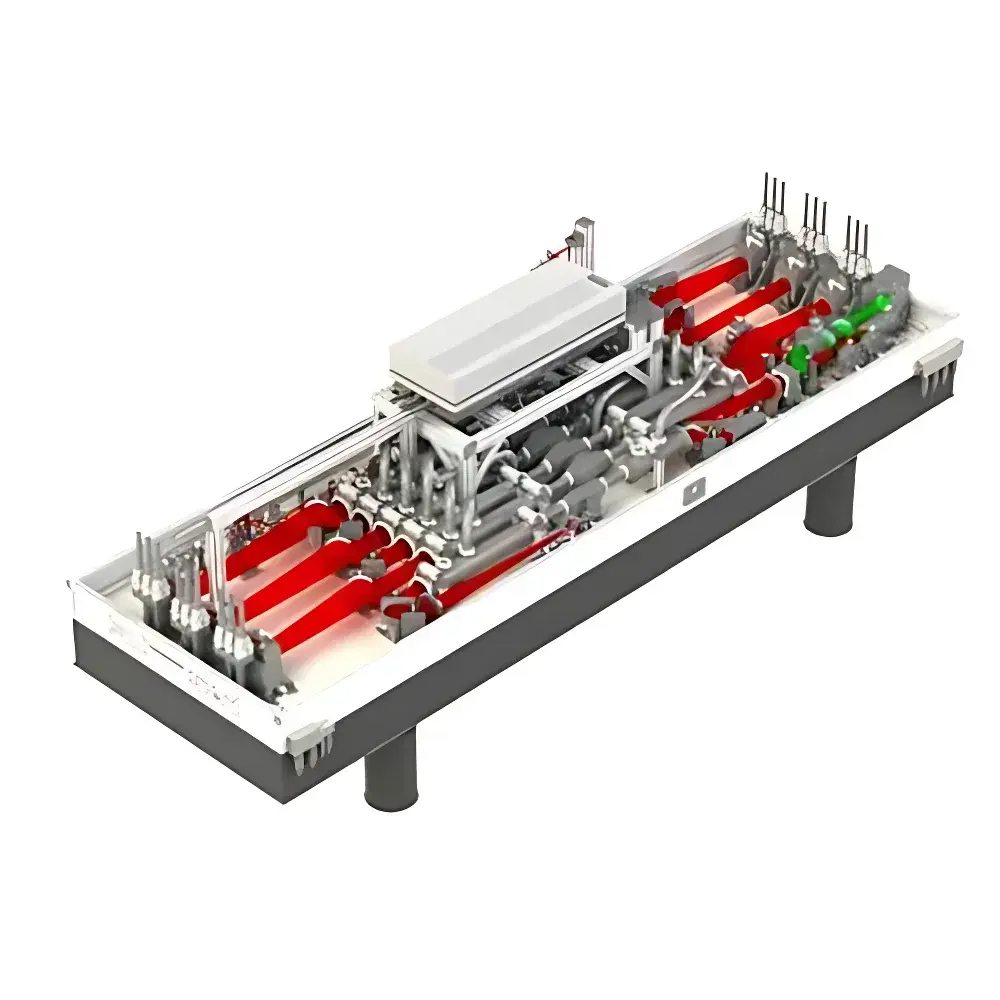
Amplitude Premiumlite High-Repetition-Rate High-Energy Pulsed Laser System
| Brand | Amplitude |
|---|---|
| Origin | France |
| Model | Premiumlite |
| Type | Solid-State Diode-Pumped Disk Amplifier Laser System |
| Output Wavelengths | 1064 nm / 532 nm (YAG), 1053 nm / 527 nm (Glass) |
| Repetition Rate | Up to 10 Hz (YAG), up to 0.1 Hz (Glass) |
| Pulse Energy | Up to 75 J @ 1064 nm (YAG), up to 260 J @ 1053 nm (Glass) |
| Beam Profile | Circular, Super-Gaussian (≥20th order) |
| Beam Diameter | 44 mm ± 2.5 mm (YAG), 80 mm ± 2.5 mm (Glass) |
| Pulse Width | 6 ns ± 2 ns (YAG), 20 ns ± 2 ns (Glass) |
| RMS Pulse Stability | <1% (1064 nm), <1.5% (532 nm) for YAG |
| Pointing Stability | ≤50 µrad |
| Divergence | ≤500 µrad |
| Polarization | Linear or Circular |
| Long-Term Stability | ≤3% p-v (8 h, YAG), ≤5% p-v (8 h, Glass) |
Overview
The Amplitude Premiumlite is a high-energy, high-repetition-rate pulsed laser system engineered for demanding scientific and industrial applications requiring robust nanosecond-scale pulse delivery with exceptional beam quality and long-term stability. Built upon Amplitude’s proprietary Disk Amplifier Module (DAM) architecture, the Premiumlite leverages liquid-cooled thin-disk gain media with backside diode pumping—enabling efficient thermal management and scalable energy extraction. Two distinct configurations are available: the Premiumlite-YAG, based on Nd:YAG crystals, delivers up to 75 J at 1064 nm with repetition rates up to 10 Hz and average power approaching 1 kW; and the Premiumlite-Glass, utilizing Nd-doped phosphate glass, provides up to 260 J per pulse at 1053 nm with lower repetition rates (up to 0.1 Hz), optimized for ultra-high-energy single-shot experiments. Both variants employ a modular master oscillator–power amplifier (MOPA) design, supporting integration with Agilite or Intrepid front-ends for flexible pulse shaping—including variable pulse width, temporal profile control, and precise timing synchronization.
Key Features
- Modular DAM-based architecture enabling straightforward scalability in pulse energy, repetition rate, and average power via LD-pump upgrade paths
- Liquid-cooled thin-disk gain medium with backside diode pumping for superior thermal uniformity and minimal wavefront distortion
- Super-Gaussian beam profile (≥20th order) ensuring near-diffraction-limited focusability and high spatial coherence
- High pulse-to-pulse stability: <1% RMS (1064 nm), <1.5% RMS (532 nm) for YAG; <1.5% RMS (1053 nm), <2.0% RMS (527 nm) for Glass
- Exceptional pointing stability (≤50 µrad) and beam divergence (≤500 µrad), critical for long-path interferometry and pump-probe alignment
- Configurable polarization: linear or circular, with integrated waveplate options for polarization-sensitive experiments
- Sub-nanosecond timing jitter (≤1 ns RMS) for synchronized multi-laser or diagnostic trigger applications
Sample Compatibility & Compliance
The Premiumlite series is designed for compatibility with vacuum-compatible optical tables, high-energy transport optics (including fused silica and CaF₂ components), and large-aperture diagnostics such as pyroelectric energy meters, fast photodiodes, and streak cameras. Its mechanical and electrical interfaces conform to ISO 9001-compliant manufacturing standards and support integration into Class 1000 cleanroom environments. The system meets IEC 60825-1:2014 safety requirements for Class 4 lasers and includes interlock-ready hardware for compliance with local laser safety regulations (e.g., ANSI Z136.1, EN 60825-1). Optional features include FDA 21 CFR Part 11–compliant audit trail logging and GLP/GMP-aligned operational documentation packages for regulated R&D environments.
Software & Data Management
Control and monitoring are executed via Amplitude’s unified Laser Control Suite (LCS), a Windows-based application offering real-time parameter visualization, automated calibration routines, and configurable alarm thresholds. LCS supports remote operation over Ethernet (TCP/IP) and provides SCPI command compatibility for integration into LabVIEW, Python, or MATLAB-based experimental control frameworks. All operational logs—including energy per shot, pulse width, temperature telemetry, and interlock status—are timestamped and exportable in CSV or HDF5 format. Optional firmware modules enable automated drift compensation algorithms and closed-loop energy stabilization using internal photodiode feedback, satisfying stringent reproducibility requirements in metrology-grade applications.
Applications
- Inertial confinement fusion (ICF) target irradiation studies and plasma diagnostics
- High-energy laser-induced breakdown spectroscopy (HE-LIBS) for bulk elemental analysis of refractory materials
- Pump-probe experiments requiring synchronized multi-wavelength excitation (e.g., 1064 nm + 532 nm + harmonics)
- Optical parametric chirped-pulse amplification (OPCPA) front-end pumping
- Large-area laser shock peening (LSP) and surface modification of aerospace alloys
- Calibration of high-dynamic-range radiometric sensors and space-based detector systems
- Nonlinear frequency conversion in KDP, BBO, and LBO crystals under high-fluence conditions
FAQ
What is the maximum achievable average power for the Premiumlite-YAG configuration?
The Premiumlite-YAG delivers up to ~750 W average power (75 J × 10 Hz) at 1064 nm, scalable to >1 kW with optional thermal management upgrades and pump diode enhancements.
Can the Premiumlite-Glass be operated at higher repetition rates?
No—the Glass variant is thermally limited to ≤0.1 Hz due to the lower thermal conductivity of phosphate glass; however, its architecture permits future replacement with cryogenically cooled Yb:YAG disks for intermediate rep-rate scaling.
Is harmonic generation included as standard equipment?
Harmonic generation modules (SHG, THG, FHG) are available as factory-installed options or field-upgradable accessories, with wavelength-specific coatings and phase-matching optimization.
Does the system support external triggering and synchronization?
Yes—standard TTL/PECL trigger inputs and outputs provide sub-nanosecond jitter synchronization with external diagnostics, delay generators, or other laser systems.
What maintenance intervals are recommended for the disk amplifier modules?
Under typical laboratory use, disk modules require inspection every 12 months; full refurbishment is recommended after 5 × 10⁴ shots or 5 years—whichever occurs first—per ISO/IEC 17025 traceable service protocols.






