
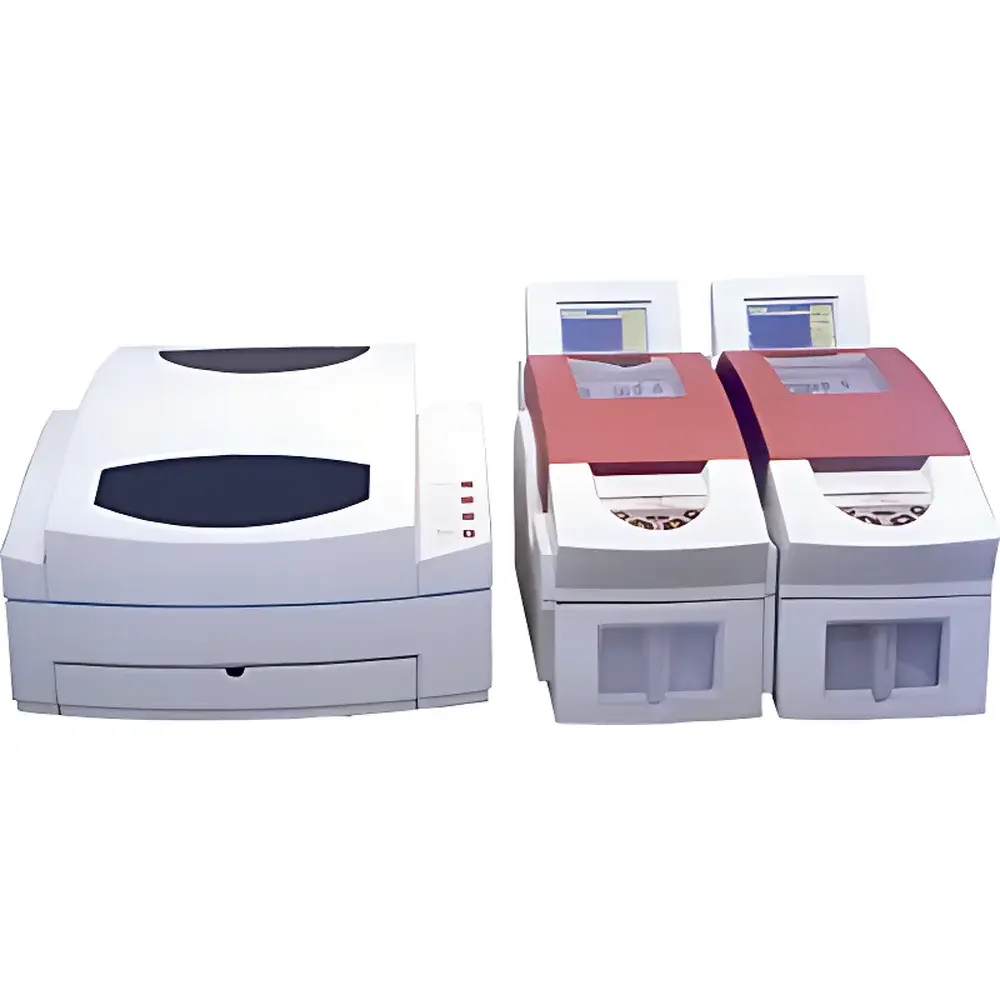
AMS Alliance FUTURA Continuous Flow Analyzer
| Brand | AMS Alliance |
|---|---|
| Origin | France |
| Model | FUTURA |
| Product Type | Continuous Flow Analyzer |
| Wavelength Range | 340–1100 nm |
| Sample Capacity | 200 positions / 5 racks |
| Reagent Positions | 104 or 360 |
| Flow Cell Path Length | 50 mm |
| Light Source | Tungsten-Halogen Lamp |
Overview
The AMS Alliance FUTURA Continuous Flow Analyzer is a high-performance, multi-channel wet-chemistry automation platform engineered for precision, reproducibility, and regulatory compliance in environmental, agricultural, food, and clinical laboratories. Based on segmented continuous flow analysis (CFA) — a mature ISO/ASTM-recognized methodology — the system introduces discrete reaction segments via precisely spaced air bubbles into laminar liquid streams. This segmentation prevents axial diffusion between samples and reagents, ensuring strict temporal control over reaction kinetics, minimizing carryover, and enabling robust quantification at sub-ppb detection limits. Unlike conventional single-channel or shared-pump architectures, the FUTURA implements true channel independence: each analytical channel integrates its own peristaltic pump assembly, optical detector, real-time LCD interface, dedicated reagent drawer, and microprocessor-based controller. This modular design allows concurrent execution of heterogeneous assays — e.g., nitrate by cadmium reduction and phosphate by molybdenum blue — without cross-channel interference, runtime scheduling conflicts, or shared component failure propagation.
Key Features
- True Channel Independence: Each of up to 16 configurable channels operates as a functionally autonomous analyzer — with independent fluidic control, signal acquisition, calibration logic, and error handling — eliminating single-point-of-failure dependencies.
- Hybrid Flow Architecture: Supports both macro-flow (up to 3000 µL/min) and micro-flow (down to 50 µL/min) regimes via three-speed peristaltic pump control, enabling optimization of reagent consumption, reaction time, and sensitivity per method.
- Flexible Sample Introduction: Compatible with two standardized autosamplers: a 104-position rotating carousel (standard) and a 360-position XYZ robotic arm (optional), both supporting alphanumeric sample ID, 2D barcode reading, and programmable vial depth sensing.
- Intelligent Fluid Management: Integrated leak detection (optional), automatic pump tube compression/decompression, air bubble generation and removal (mechanical + photometric + software-synchronized), and valve-controlled reagent selection across up to five independently pressurized reagent reservoirs (200–1000 mL capacity, chemically inert construction).
- Modular Detection Ecosystem: Standard UV-Vis spectrophotometric detection (340–1100 nm, single/dual wavelength, 24-bit ADC, 1.68×10⁷ dynamic range) with optional add-ons including flame photometry, fluorimetry, ion-selective electrodes, long-path fiber-optic flow cells, and integrated UV digestion modules.
Sample Compatibility & Compliance
The FUTURA accommodates aqueous matrices across diverse sectors: surface/groundwater, wastewater, soil extracts, plant digests, tobacco homogenates, fermented beverages, dairy products, and fruit juices. Sample volumes range from 0.5 mL to 100 mL; viscosity tolerance extends to ≤10 cP. All fluid-contact materials (tubing, valves, flow cells) are certified USP Class VI compliant and resistant to common acids, bases, and organic solvents. The system supports full GLP/GMP traceability through audit-ready electronic records, user-access-level permissions, and 21 CFR Part 11–compliant data integrity features when paired with CFMV2 software. Over 1,000 validated methods are published in accordance with ISO 15681 (phosphorus), ISO 11905-1 (nitrogen), ASTM D129 (sulfur), EPA Method 353.2 (nitrate), and AOAC Official Methods™.
Software & Data Management
CFMV2 (Continuous Flow Method Version 2) is the native Windows-based control and data processing suite. It provides method-driven workflow configuration — including injection timing, dilution factors, mixing ratios, stop-flow intervals, and kinetic measurement windows — with drag-and-drop protocol building. Real-time chromatogram visualization, automated baseline correction, peak integration using tangent skim or Gaussian deconvolution, and multi-point calibration with weighting options are standard. Raw data files (.cfm) store full instrument metadata (pump speeds, valve states, temperature logs, lamp intensity) alongside absorbance traces. Export formats include CSV, PDF reports, and LIMS-compatible ASTM E1384 messages. Audit trails record all user actions, parameter changes, and calibration events with timestamps and operator IDs.
Applications
The FUTURA delivers validated performance in regulated testing environments requiring high throughput and metrological rigor. In water quality labs, it quantifies NH₄⁺, NO₂⁻, NO₃⁻, PO₄³⁻, SiO₂, CN⁻, Cl⁻, SO₄²⁻, TOC, alkalinity, and surfactants (MBAS) per ISO and EPA protocols. Soil and plant analysis includes Kjeldahl nitrogen (TKN), CEC, phenolics, reducing sugars, and micronutrients (Zn, Al). Tobacco applications cover nicotine, volatile alkaloids, total cyanide, and carbohydrate profiles. Food and beverage testing spans organic acids (citric, malic, lactic), sugars (glucose, fructose, sucrose), SO₂, alcohol, and antioxidant polyphenols — all with documented repeatability (RSD < 1.5% at 10× LOD) and linearity (r² ≥ 0.9995 over 3–4 orders of magnitude).
FAQ
What is the maximum number of simultaneous analytical channels supported?
The FUTURA chassis supports up to 16 independent channels, each fully configurable with dedicated hardware and software resources.
Can the system perform on-line sample dilution?
Yes — an optional integrated auto-dilutor module enables programmable 1:2 to 1:1000 dilutions with <±0.5% volumetric accuracy.
Is method validation documentation available?
AMS Alliance provides IQ/OQ/PQ templates, ASTM/ISO reference method summaries, and application notes covering >1,000 analyte–matrix combinations.
How is spectral resolution managed across the 340–1100 nm range?
The monochromator uses a holographic grating with fixed slit width; wavelength selection is software-controlled with ±1 nm accuracy and <0.5 nm bandwidth.
Does the system support remote monitoring and diagnostics?
Via Ethernet-connected CFMV2, operators can access real-time status dashboards, receive SNMP alerts, and initiate diagnostic routines from offsite locations.




