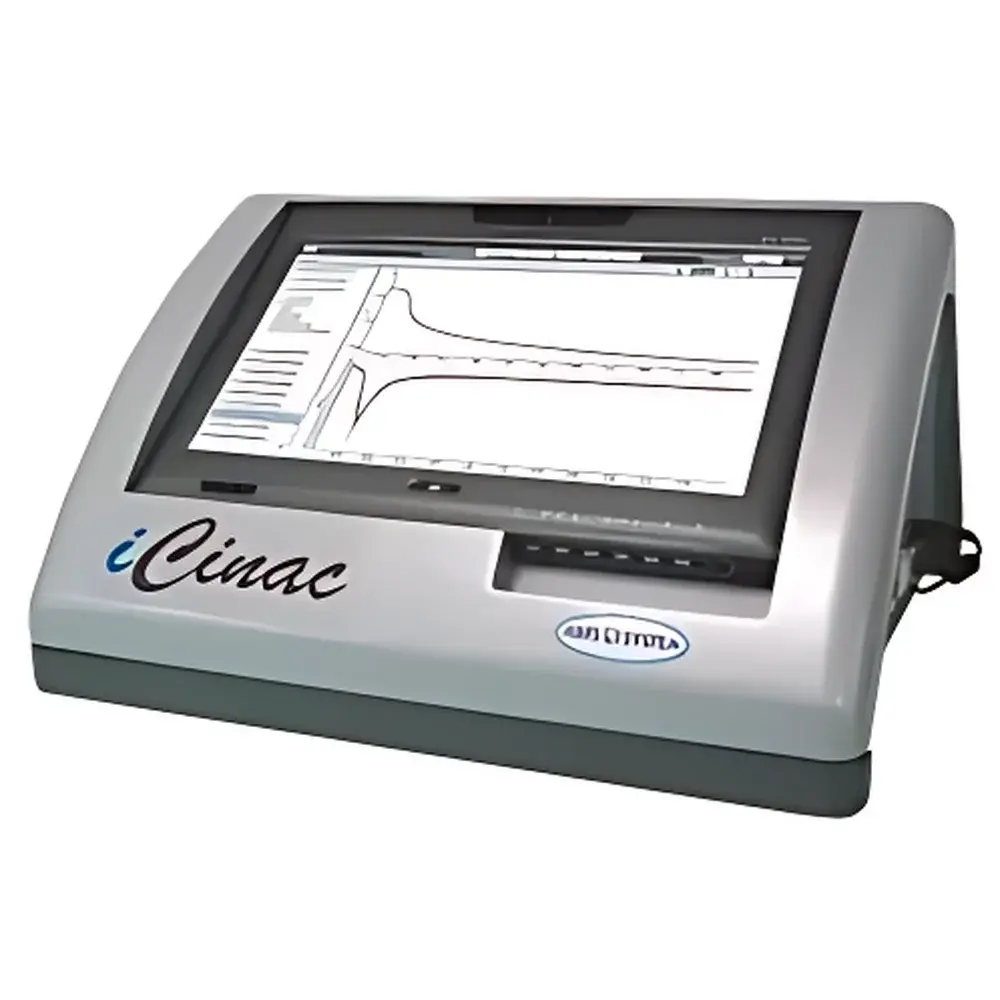
AMS Alliance iCinac Dairy Fermentation Monitoring System
| Brand | AMS Alliance |
|---|---|
| Origin | France |
| Model | iCinac |
| Channel Capacity | 16 or 32 simultaneous channels |
| Measurement Parameters | pH, Temperature (°C), Redox Potential (mV) |
| Power Supply | 110–220 V AC ±15%, 50–60 Hz |
| Dimensions | 510 × 450 × 300 mm (L × W × H) |
| Weight | 11–13 kg |
| Sensor Interface | Digital ISM-compatible multiparameter electrodes (pH/T/Redox) with embedded calibration memory |
| Data Output | 32 configurable outputs (digital + dual analog: 0–10 V / 4–20 mA) |
| Software | iCINAC v5.x with real-time compensation, audit trail, and GLP-compliant data logging |
Overview
The AMS Alliance iCinac Dairy Fermentation Monitoring System is a dedicated, laboratory- and pilot-scale process analytics platform engineered for precise, time-resolved characterization of lactic acid bacterial metabolism during dairy fermentation. Unlike generic online pH meters, the iCinac implements a multi-parameter, multi-channel architecture grounded in electrochemical measurement principles—specifically potentiometric pH sensing, thermistor-based temperature monitoring, and redox potential (Eh) measurement via platinum reference electrodes—all synchronized at sub-minute intervals. Developed in collaboration with INRAE (French National Research Institute for Agriculture, Food and Environment), the system addresses core challenges in starter culture evaluation, process validation, and media optimization. Its primary function is not continuous industrial control but rather high-fidelity kinetic profiling: capturing the full acidification trajectory—including lag phase duration, maximum acidification rate (Vmax), time to target pH (e.g., pH 5.0), and buffering inflection points—to support strain selection, formulation development, and regulatory documentation under GMP/GLP frameworks.
Key Features
- Modular channel configuration: Selectable 16- or 32-channel mainframes, each supporting concurrent acquisition of pH, temperature, and redox potential—no manual sensor swapping or recalibration between parameters.
- ISM-integrated digital electrodes: Metrohm/Mettler Toledo-compatible multiparameter probes embed non-volatile memory chips that store calibration history, electrode ID, and drift diagnostics—enabling automatic recognition and traceable sensor lifecycle management.
- Real-time hardware synchronization: All 32 channels sample simultaneously at user-defined intervals (1 s to 60 min), eliminating inter-channel timing skew critical for comparative kinetics studies.
- 32 programmable output channels: Includes isolated digital I/O plus dual analog outputs (0–10 V DC and 4–20 mA) for closed-loop interfacing with water baths, peristaltic pumps, titrators, or alarm relays—enabling automated stimulus-response experiments.
- Integrated 10.1″ capacitive touchscreen interface: Hosts the native iCINAC software stack; displays live curves, electrode health status, setpoint deviations, and active alarms without requiring external PCs.
- Temperature-programmable incubation simulation: Users define dynamic thermal profiles (e.g., ramp-hold-cool sequences) to replicate industrial vat conditions and isolate thermal effects on acidification kinetics.
Sample Compatibility & Compliance
The iCinac accommodates standard 10–50 mL fermentation vessels (glass, stainless steel, or food-grade polymer) with threaded or magnetic probe mounts. It supports sterile sampling protocols via autoclavable electrode housings and IP65-rated front-panel enclosures. From a regulatory standpoint, the system meets essential requirements for analytical instrument qualification: it provides electronic records with timestamped metadata, operator login tracking, and immutable audit trails compliant with FDA 21 CFR Part 11 Annex 11 expectations. Data export formats (CSV, XML, PDF reports) align with ISO/IEC 17025 documentation standards, and all calibration events are automatically logged with uncertainty estimates per ISO 8655. While not certified for hazardous area use (ATEX/IECEx), its design conforms to IEC 61000-6-2 (immunity) and IEC 61000-6-3 (emissions) for laboratory electromagnetic environments.
Software & Data Management
The iCINAC v5.x software operates natively on the embedded Linux platform and delivers deterministic real-time performance without OS-level latency. Core capabilities include automatic temperature compensation for pH using Nernst equation correction, dynamic buffer capacity estimation from d(pH)/dt vs. pH plots, and feature-point annotation (e.g., “tpH5.0”, “tVmax/2”, “ΔpH0–4h”) with exportable metadata tags. All raw and processed data are stored in encrypted SQLite databases with SHA-256 hash integrity verification. The software supports role-based access control (administrator, analyst, reviewer), electronic signatures for report approval, and scheduled backups to network shares or USB drives. Raw data files retain full sensor-level provenance—including electrode serial numbers, calibration dates, and environmental timestamps—ensuring full traceability for internal audits or regulatory inspections.
Applications
- Starter culture qualification: Quantifying acidification lag time, Vmax, and endpoint pH across Lactococcus, Streptococcus, and Lactobacillus strains under standardized conditions.
- Media optimization: Evaluating the impact of calcium concentration, lactose content, or whey protein ratios on acidification kinetics and buffering capacity.
- Process validation: Generating kinetic fingerprints for batch-to-batch consistency assessment in probiotic yogurt or fermented cheese production.
- Thermal stress testing: Correlating controlled temperature shifts (e.g., 30°C → 37°C → 25°C) with metabolic adaptation signatures in mixed-strain cultures.
- Regulatory dossier preparation: Providing GLP-compliant datasets for EFSA QPS dossiers, USP environmental monitoring validation, or Health Canada Natural Health Products submissions.
FAQ
Can the iCinac be integrated into a SCADA or MES system?
Yes—via Modbus TCP/IP (optional module) or through configurable analog/digital outputs. Raw data streams can be forwarded to historian systems (e.g., Ignition, Siemens Desigo) using standard OPC UA drivers.
Is sensor calibration traceable to NIST standards?
Electrode calibration uses certified buffer solutions (DIN 19266, ASTM E70); the system logs calibration slope, offset, and asymmetry potential—parameters directly comparable to NIST-traceable reference measurements.
Does the system support long-term unattended operation?
It is rated for continuous 24/7 operation at ambient temperatures up to 35°C and relative humidity ≤80% non-condensing. Internal watchdog timers and automatic error recovery prevent data loss during power fluctuations.
How is data integrity ensured during power failure?
The embedded SSD includes journaling file system (ext4) with write-caching disabled; all measurements are committed atomically before timestamping, and last-known-good state is preserved in non-volatile RAM.
Can custom kinetic models be imported or executed within the software?
While iCINAC does not host user-coded algorithms, it exports fully timestamped, parameter-aligned CSV matrices compatible with MATLAB, Python (NumPy/Pandas), or Aspen Custom Modeler for downstream modeling and parameter fitting.