
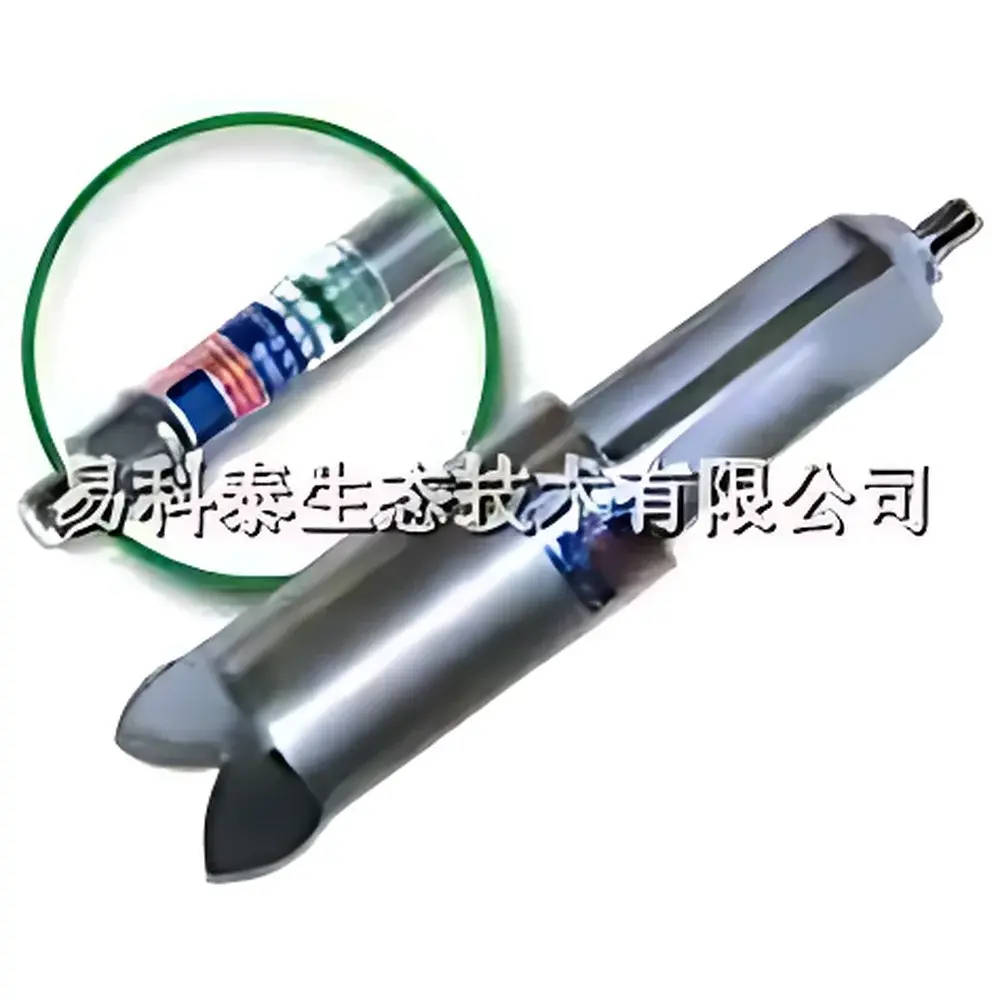
AMS Manual Soil Auger
| Origin | USA |
|---|---|
| Distribution Model | Authorized Distributor |
| Import Status | Imported |
| Model | Manual Soil Auger |
| Pricing | Available Upon Request |
Overview
The AMS Manual Soil Auger is a precision-engineered, hand-operated soil sampling tool designed for reliable, repeatable collection of disturbed soil cores across diverse field conditions. Based on the Couette-type rotational penetration principle—where torque and downward pressure are manually applied via a cross-handle to advance a helical or open-cylinder cutting head—the auger achieves controlled depth penetration without motorized assistance. It operates on mechanical advantage principles, enabling efficient sampling in soils ranging from loose sand and saturated clay to compacted loam and gravel-influenced profiles. Unlike push-tube samplers intended for undisturbed cores, this auger is optimized for high-yield disturbed sampling where bulk composition, moisture content, particle size distribution (PSD), and geochemical screening require representative composite material. Its modular architecture—comprising interchangeable drill bits, extension rods, and ergonomic handles—ensures adaptability to site-specific stratigraphy and regulatory sampling protocols used in environmental site assessments (ESAs), agricultural land evaluation, and landfill post-closure monitoring.
Key Features
- Three-tiered bit architecture: Standard, Stainless Steel, and Signature Series augers—each engineered for distinct soil mechanics and contamination sensitivity requirements.
- Heat-treated high-carbon steel tips with tungsten-carbide hardened cutting edges (Rockwell C58–62) for extended wear life in abrasive or rocky matrices.
- Stainless steel (304/316) cylindrical barrels for corrosion resistance—critical when sampling acid-washed, saline, or hydrocarbon-impacted soils per ASTM D5088 and EPA Method 5035A.
- Modular extension rods with threaded or quick-connect couplings allow sampling depths up to 1.5 m (5 ft) without compromising structural integrity or alignment accuracy.
- Cross-handle design with ergonomic knurling reduces operator fatigue during repetitive torque application; compatible with sliding hammer accessories for fractured bedrock or compacted subsoil.
- Seven specialized bit geometries—including standard, mud, sand, Dutch, rock, flat-bottom, and chisel types—each validated for specific soil rheology and root/fiber interference mitigation.
Sample Compatibility & Compliance
The AMS Manual Soil Auger supports disturbed sampling protocols aligned with ISO 14687 (soil quality — guidance on sampling), ASTM D1586 (standard test method for penetration and sounding tests), and US EPA SW-846 Method 5035B (soil sampling for volatile organic analysis). Its stainless variants meet FDA 21 CFR Part 11 traceability prerequisites when paired with digital field logs, while all models comply with GLP documentation standards for chain-of-custody integrity. The Dutch and Signature Series bits are routinely specified in vineyard and orchard monitoring programs under EU Regulation (EC) No 1107/2009 for pesticide residue profiling. Bit-specific calibration data—including volumetric displacement (20–120 cm³ per 30 cm stroke) and minimum effective torque thresholds—are provided in manufacturer technical bulletins for method validation.
Software & Data Management
While the auger itself is a mechanical instrument, its integration into modern environmental workflows occurs through interoperable digital platforms. Field data collected using the AMS auger—such as GPS-tagged location, depth intervals, soil texture notes, and photo documentation—is structured for ingestion into LIMS systems (e.g., LabWare, Thermo Fisher SampleManager) and GIS-enabled databases (ArcGIS Field Maps, QGIS). AMS provides optional QR-coded bit identification tags and companion mobile apps that auto-populate sample metadata templates compliant with ISO/IEC 17025 audit trails. All accessories—including extension rods and replacement bits—carry serialized identifiers supporting asset tracking and preventive maintenance scheduling per ISO 55001.
Applications
- Pre-construction Phase I ESA investigations requiring stratigraphic screening at multiple depths.
- Agricultural nutrient mapping (N, P, K, pH, OM) across variable-rate fertilizer zones.
- Landfill cover system performance verification—moisture content and compaction density profiling.
- Forensic soil comparison in criminal investigations per ASTM E2926 guidelines.
- Root-zone sampling in perennial crop systems (e.g., viticulture, orchards) using Dutch and Swiss-design bits.
- Geotechnical reconnaissance prior to geophysical survey deployment (GPR, ERT).
FAQ
What distinguishes the Signature Series from Standard augers?
The Signature Series features a 10% larger core volume, reduced-friction helix geometry, and aggressive chisel-tip curvature—enabling faster penetration in dense or fibrous soils while maintaining sample retention integrity.
Can stainless steel augers be used for VOC analysis?
Yes—when cleaned per EPA Method 5035A (acid rinse, methanol purge, nitrogen dry), stainless variants eliminate metallic leaching risks and are approved for volatile organic compound (VOC) and SVOC sampling in regulated environments.
Is calibration required before field use?
No formal calibration is mandated; however, bit sharpness verification, thread integrity checks, and depth-scale validation against NIST-traceable tape measures are recommended prior to each project per ISO/IEC 17025 Section 7.7.
How do I select the correct bit for clay-rich soils?
Use the Mud Bit or Stainless Mud Bit—both feature wide-spaced, laser-cut open cylinders and tapered tips optimized for cohesive soil extrusion without smearing or compression artifacts.
Are extension rods compatible across all series?
Threaded extensions are universally compatible; quick-connect rods require matching interface types (Standard vs. Signature)—cross-series mixing is not recommended due to torque transmission variance.
Related Products







