
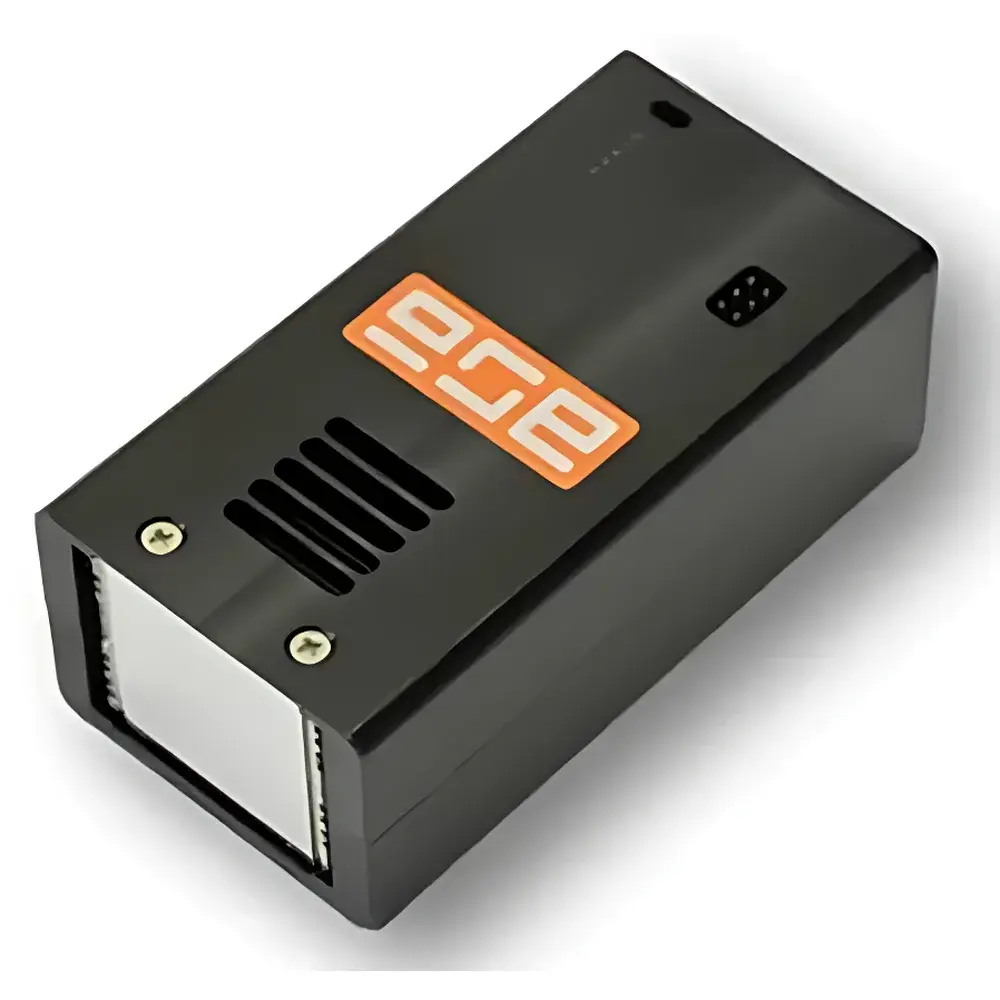

Amsterdam Scientific Instruments LynX T3 or M3 Photon-Counting Hybrid Pixel X-ray Detector
| Brand | Amsterdam Scientific Instruments (ASI) |
|---|---|
| Origin | Netherlands |
| Model | LynX T3 or M3 |
| Pixel Pitch | 55 µm |
| Sensor Options | Si, GaAs, CdTe |
| Readout Speed | Up to >500 MHz (LynX T3), 1800 fps (LynX 1800), 120 fps (LynX 120) |
| Energy Thresholds | 1–8 adjustable thresholds |
| Frame Buffer | On-chip, configurable |
| Compliance | Designed for GLP/GMP-aligned workflows, compatible with ISO/IEC 17025 traceable calibration protocols |
| Software Interface | Native support for EPICS, TANGO, and HDF5-based data streaming |
Overview
The Amsterdam Scientific Instruments LynX T3 or M3 is a high-performance photon-counting hybrid pixel X-ray detector engineered for quantitative, energy-resolved X-ray detection in synchrotron, laboratory, and industrial settings. Based on monolithic bump-bonded semiconductor sensor architectures—typically silicon (Si), gallium arsenide (GaAs), or cadmium telluride (CdTe)—the LynX platform integrates radiation-hardened application-specific integrated circuits (ASICs) directly beneath the sensor layer. This architecture enables true single-photon counting with zero readout noise, sub-pixel spatial resolution, and intrinsic energy discrimination at the pixel level. Unlike integrating detectors, LynX devices operate in event-driven mode: each 55 µm × 55 µm pixel independently records photon arrival time (ToA), deposited energy (ToT), or both—depending on ASIC configuration (Timepix3, Medipix3RX, or Timepix). The LynX T3 variant delivers temporal resolution down to 1.6 ns and sustained frame rates exceeding 500 MHz under synchronized beam conditions, making it suitable for ultrafast pump-probe experiments and free-electron laser (FEL) applications. The LynX 1800 operates in zero-dead-time continuous readout mode at 1800 fps, while the LynX 120 provides robust performance at 120 fps with single-threshold energy discrimination.
Key Features
- Hybrid pixel architecture with 55 µm pitch and scalable active areas (65k to 2M pixels)
- Zero-noise photon counting with per-pixel energy thresholding (1–8 independent thresholds)
- Multiple ASIC options: Timepix3 (time-stamping + energy + position), Medipix3RX (charge summing mode for improved spectral fidelity), and Timepix (ToA/ToT flexibility)
- Selectable sensor materials: Si (standard, optimal for <30 keV), GaAs (enhanced efficiency at 30–60 keV), CdTe (high-Z, effective up to 150 keV)
- Configurable sensor thicknesses: 300 µm (default), 500 µm, or 1000 µm for increased quantum efficiency at higher energies
- Dead-time-free operation in CSM (Charge Summing Mode) and SPM (Single Pixel Mode) for artifact-free spectroscopic imaging
- Native compatibility with EPICS control systems, TANGO device servers, and HDF5-compliant data export for FAIR data principles
Sample Compatibility & Compliance
The LynX series supports non-destructive, dose-efficient imaging across diverse sample classes—from protein crystals and polymer thin films to metal alloys and biological tissues. Its direct conversion design eliminates optical coupling losses and preserves point-spread function integrity, critical for ptychography, grating-based phase-contrast imaging, and time-resolved SAXS/WAXS. Detector configurations comply with ISO 15739:2013 (noise measurement standards) and are routinely deployed in facilities operating under ISO/IEC 17025-accredited quality management systems. While not FDA-cleared as a medical device, LynX detectors meet electromagnetic compatibility (EMC) requirements per EN 61326-1 and are designed for integration into GLP- and GMP-aligned instrumentation where audit trails, user access control, and electronic record integrity are required.
Software & Data Management
ASI provides the LynX Control Suite—a modular, cross-platform application built on Qt and Python bindings—for real-time acquisition, threshold calibration, spectral binning, and geometry correction. All raw event data are streamed in HDF5 format with embedded metadata (exposure time, threshold settings, sensor temperature, beam energy), enabling reproducible reprocessing and long-term archival. Integration with scientific computing environments (e.g., Python via PyFAI, silx, or scikit-image) is supported out-of-the-box. For regulated environments, optional software modules provide 21 CFR Part 11-compliant electronic signatures, role-based access control, and immutable audit logs of all acquisition parameters and post-processing steps.
Applications
- Ptychographic coherent diffraction imaging and grating interferometry
- Time-resolved small- and wide-angle X-ray scattering (TR-SAXS/TR-WAXS)
- Surface diffraction and crystal truncation rod analysis
- Energy-resolved X-ray computed tomography (ER-CT) and K-edge subtraction imaging
- High-throughput inline inspection in semiconductor and battery manufacturing
- Electron microscopy correlation (4D-STEM with X-ray fluorescence mapping)
- Neutron radiography (when coupled with neutron converter layers or microchannel plates)
FAQ
What distinguishes LynX T3 from LynX 1800 in terms of timing capability?
The LynX T3 uses Timepix3 ASIC, enabling simultaneous ToA (time-of-arrival) and ToT (time-over-threshold) measurements with 1.6 ns time resolution and event-driven readout; LynX 1800 uses Medipix3RX and prioritizes high frame rate (1800 fps) and charge-summing accuracy over nanosecond timing.
Can LynX detectors be calibrated for absolute photon flux measurement?
Yes—ASI provides NIST-traceable quantum efficiency curves and offers factory calibration services for absolute detection efficiency across the 5–150 keV range, depending on sensor material and thickness.
Is remote operation supported for synchrotron beamline integration?
Yes—LynX systems implement standard EPICS IOC drivers and support CAMAC, VME, and PCIe interfaces; full remote control and monitoring are enabled via TCP/IP and RESTful APIs.
How is radiation damage mitigated in long-duration experiments?
All LynX sensors undergo proton irradiation hardening during fabrication; operational lifetime exceeds 1012 photons/mm² for Si and 1011 photons/mm² for CdTe under typical beam conditions, with real-time dark current monitoring and temperature stabilization.
Are custom sensor geometries or cooling solutions available?
Yes—ASI offers vacuum-compatible cryostat integration (down to −40 °C), custom PCB layouts, and tiled multi-module assemblies for extended field-of-view applications.






