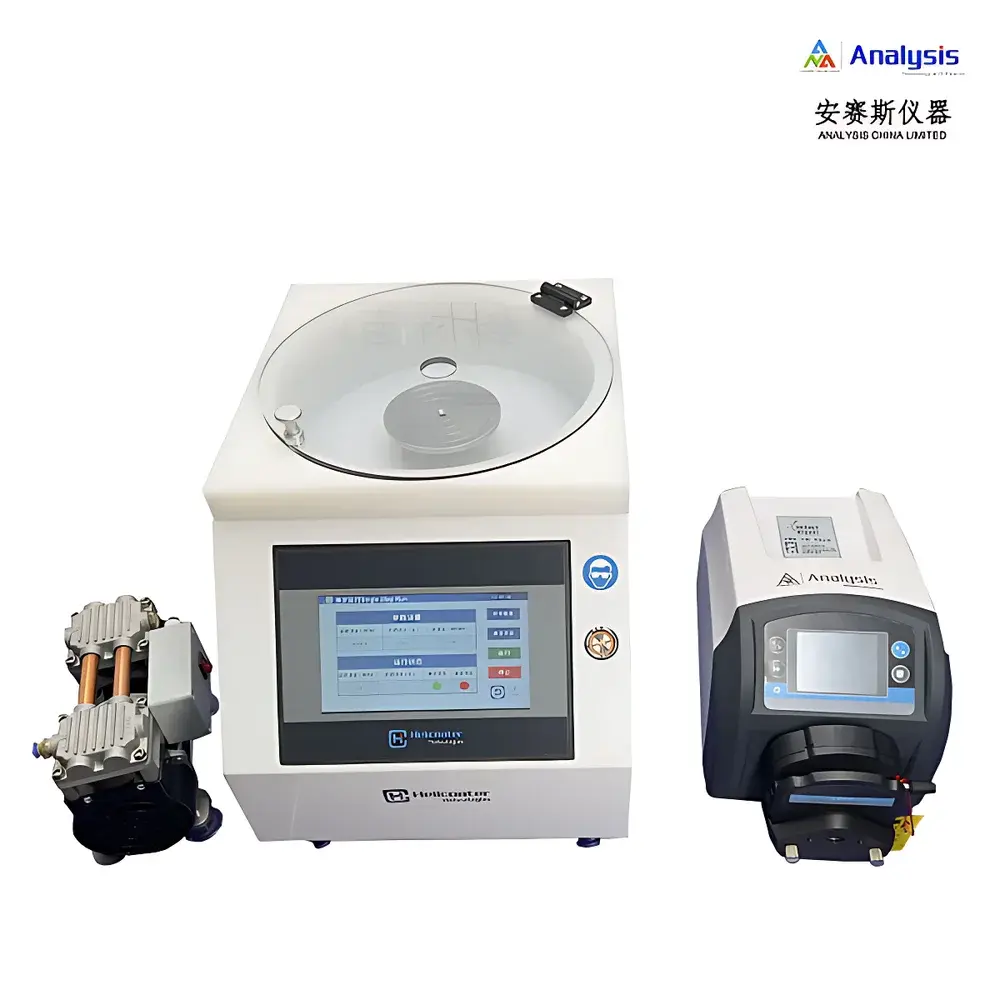
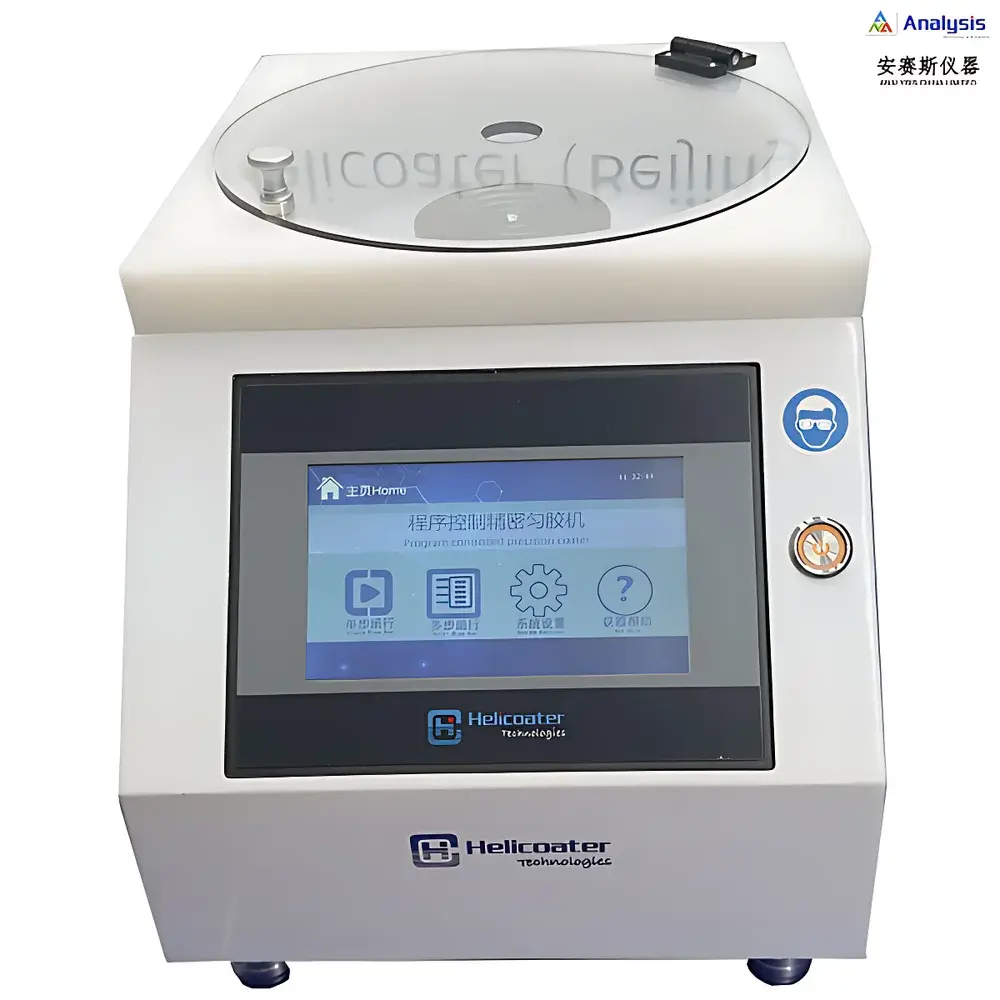
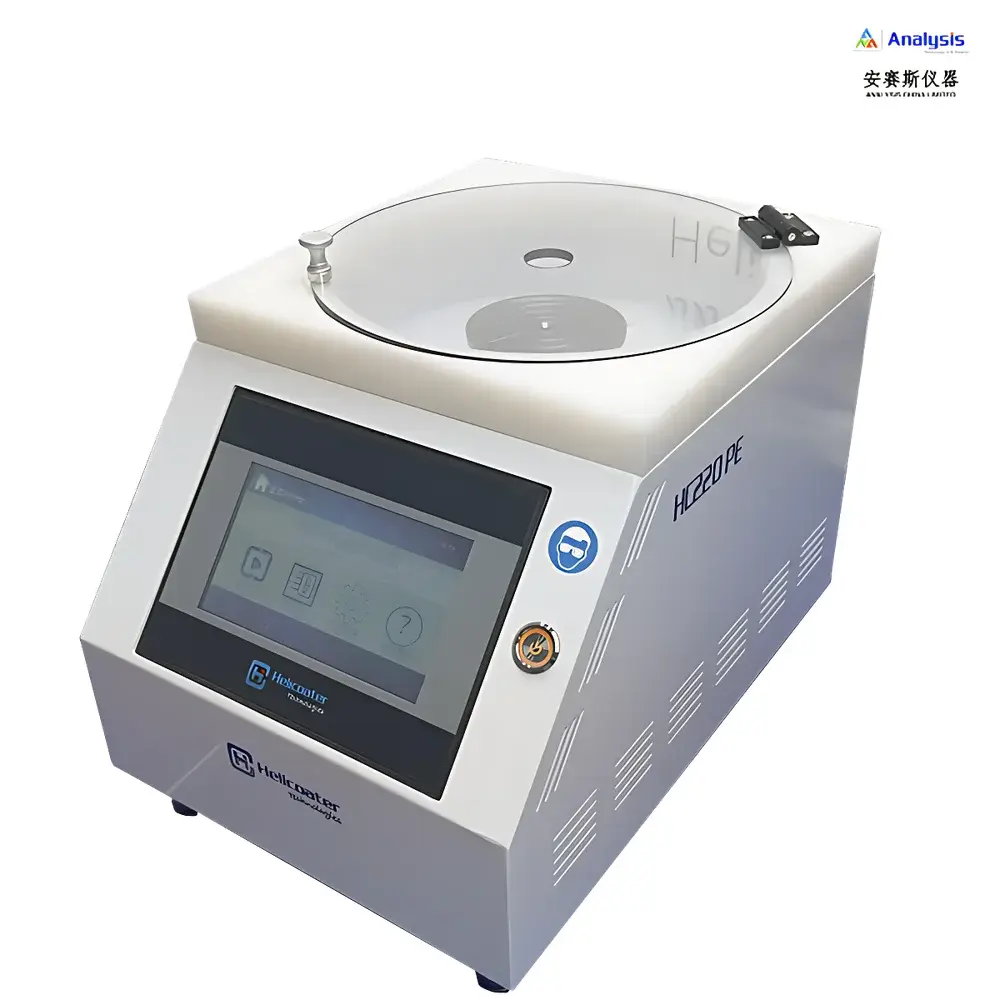
Analysis HC220PE Precision Spin Coater
| Brand | Analysis |
|---|---|
| Origin | Beijing, China |
| Model | HC220PE |
| Maximum Rotation Speed | 0–10,000 rpm |
| Speed Resolution | 0.1 rpm |
| Acceleration Rate | up to 50,000 rpm/s (no-load) |
| Maximum Substrate Diameter | 220 mm |
| Chamber Diameter | 252 mm |
| Programmable Steps | 100 programs × 100 steps each |
| Time Resolution | 0.1 s per step |
| Uniformity | < ±3% (measured over central 150 mm of 150 mm Si wafer, edge exclusion 3 mm) |
| Motor Type | Industrial-grade 400 W servo motor with sealed rotor architecture |
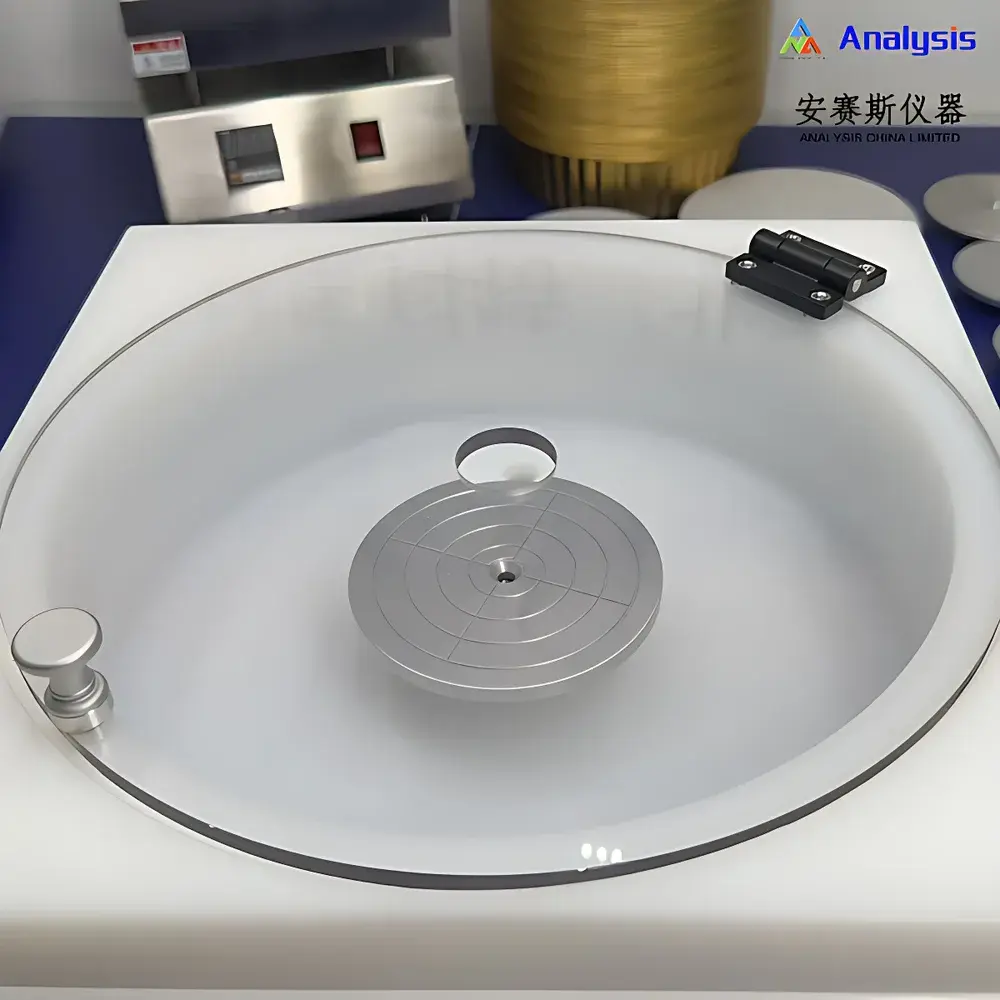
| Chamber Material | HDPE (high-density polyethylene) |
| Enclosure Material | Electropolished stainless steel (316L-grade compatible) |
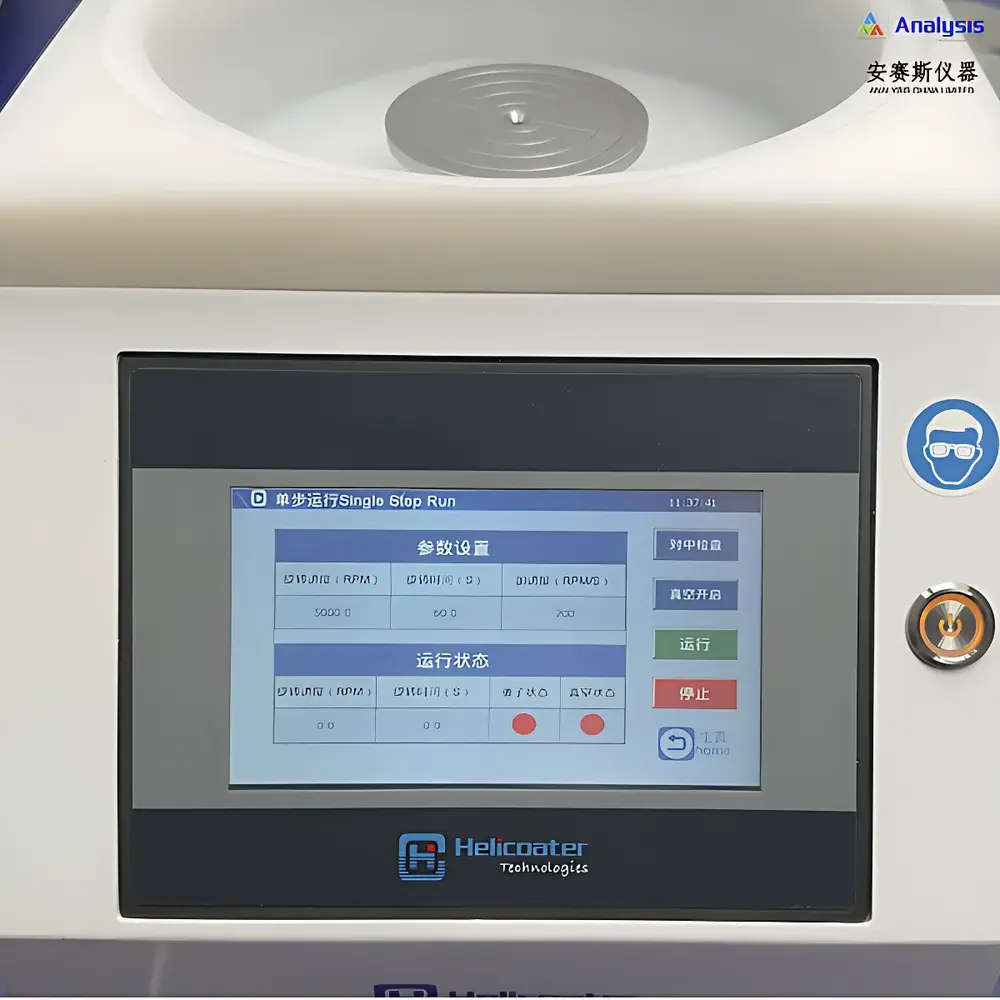
| Control Interface | 7-inch capacitive touchscreen HMI with embedded real-time OS |
| Exhaust Port Location | Bottom-mounted beneath chuck for laminar airflow optimization |
| Lid | Chemically resistant transparent polycarbonate with dual-seal gasket |
Overview
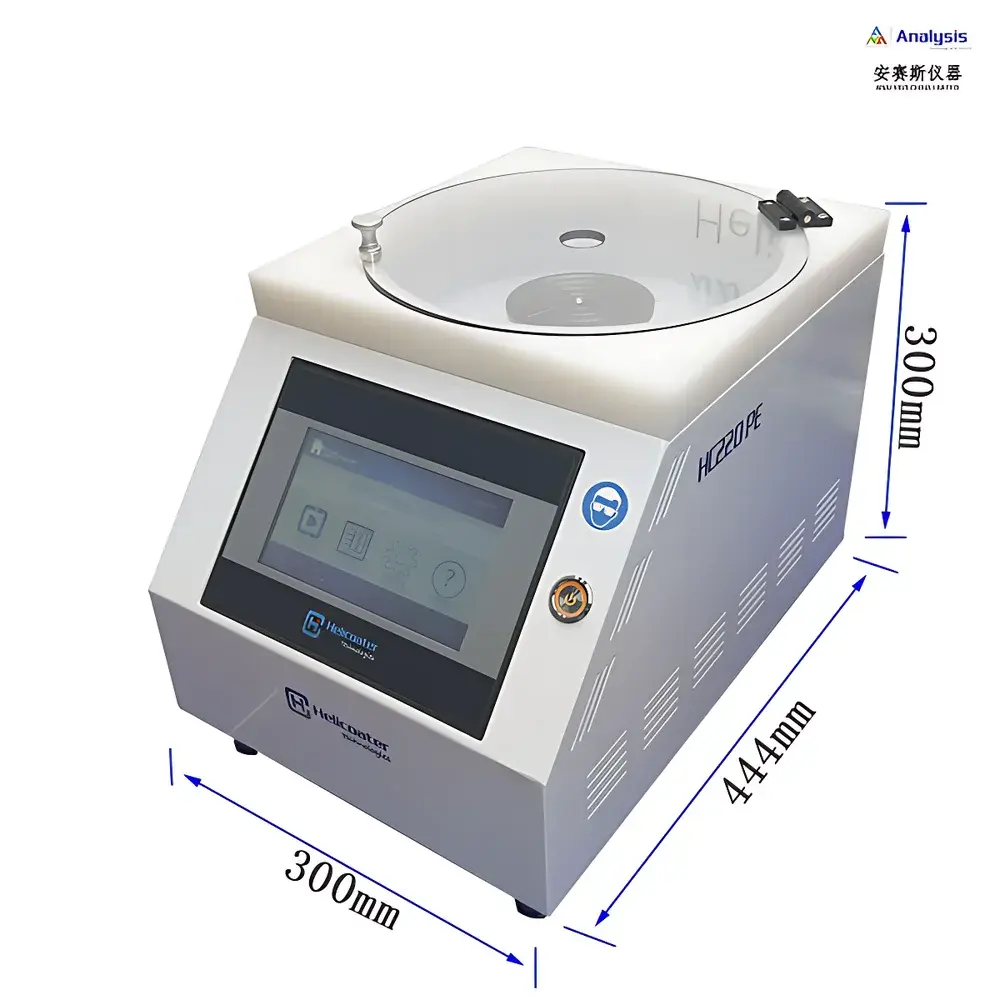
The Analysis HC220PE Precision Spin Coater is an engineered solution for controlled thin-film deposition via rotational fluid dynamics. It operates on the principle of centrifugal force-driven solvent evaporation and viscous thinning: photoresist or functional polymer solutions are dispensed onto a stationary substrate, which is then accelerated to a defined angular velocity and held for a programmable duration. Film thickness is governed by the balance among rotational inertia, liquid viscosity, surface tension, solvent volatility, and substrate wettability—governed empirically by the Meyerhofer and Bosworth models. Designed specifically for R&D and pilot-line semiconductor fabrication, the HC220PE supports substrates up to 220 mm (8-inch equivalent), delivering process reproducibility comparable to full-track lithography systems—without requiring cleanroom-integrated infrastructure. Its compact footprint (444 × 300 × 300 mm) and modular chamber design enable integration into gloveboxes, fume hoods, or Class 1000+ environments.
Key Features
- Industrial 400 W servo motor with optical encoder feedback and hermetically isolated rotor—prevents photoresist infiltration and ensures long-term torque stability under repeated chemical exposure.
- High-fidelity motion control: speed resolution of 0.1 rpm, repeatability < ±1 rpm, and acceleration capability up to 50,000 rpm/s—enabling rapid ramp profiles critical for edge-bead removal and multi-step spin protocols.
- Electropolished 316L stainless-steel enclosure with seamless welds and passivated surface finish—resistant to HF, TMAH, acetone, PGMEA, and other aggressive solvents used in microfabrication.
- HDPE inner chamber (chemical resistance per ASTM D543) with integrated drainage channel and bottom-mounted exhaust port—optimized for laminar vapor extraction and minimized turbulence-induced thickness variation.
- 7-inch industrial touchscreen HMI running a deterministic real-time OS; supports USB export of log files, password-protected parameter locking, and firmware-over-the-air (FOTA) updates.
- Programmable logic: up to 100 stored recipes, each with 100 discrete steps; time resolution 0.1 s; acceleration/deceleration profiles independently configurable per step.
- Chemically inert polycarbonate viewing lid with dual O-ring seal and static-dissipative coating—provides full visual monitoring while containing volatile organic compounds (VOCs) and suppressing aerosol dispersion.
Sample Compatibility & Compliance
The HC220PE accommodates rigid planar substrates from 25 mm to 220 mm diameter—including silicon, fused silica, sapphire, glass, GaAs, and flexible PI/PET foils (with optional vacuum chuck adaptation). Chuck flatness tolerance: ≤5 µm over 200 mm. Vacuum ports conform to ISO-KF16 standard. The system meets CE marking requirements (2014/30/EU EMC Directive, 2014/35/EU LVD Directive) and complies with IEC 61000-6-2/6-3 for industrial electromagnetic immunity and emissions. For regulated environments, audit trails, user access levels, and electronic signature support can be enabled via optional software module compliant with FDA 21 CFR Part 11 Annex 11 principles.
Software & Data Management
Embedded firmware includes built-in data logging of all operational parameters—speed, acceleration, time, temperature (via optional RTD sensor input), and error codes—with timestamping at 100 ms intervals. Logs are stored in CSV format on internal eMMC memory (16 GB) and exportable via USB 2.0 or Ethernet (TCP/IP). Optional PC-based AnalysisSpinControl™ software provides remote monitoring, recipe synchronization across multiple units, statistical process control (SPC) charting (X̄-R, Cpk), and GLP/GMP-compliant report generation with digital signatures. All data fields are immutable post-execution; revision history and operator ID are permanently recorded.
Applications
- Photoresist coating for maskless lithography, MEMS patterning, and nanofabrication prototyping.
- Deposition of PEDOT:PSS, perovskite precursors, quantum dot inks, and conductive polymers in optoelectronic device R&D.
- Preparation of uniform oxide, nitride, and metal-organic framework (MOF) thin films for sensor development.
- QC/QA validation of spin-coating process windows prior to full-track transfer in fab environments.
- Academic research in soft lithography, colloidal self-assembly, and interfacial rheology studies.
FAQ
What substrate sizes does the HC220PE support?
It accepts wafers and planar substrates from 25 mm to 220 mm in diameter; standard chuck configuration is optimized for 100–200 mm Si wafers.
Is vacuum chuck compatibility available for non-silicon substrates?
Yes—optional vacuum chucks with customizable hole patterns and pressure regulation (0–80 kPa) are available for low-stiffness or irregularly shaped samples.
Can the system be integrated into a nitrogen-purged glovebox?
Yes—the unit operates at ambient pressure and features sealed motor housing, chemically resistant gaskets, and external I/O connectors rated IP65.
Does the HC220PE meet ISO 14644-1 Class 5 cleanroom requirements when operated inside a laminar flow hood?
While the instrument itself is not certified as a cleanroom-class device, its stainless-steel construction, zero particulate-shedding chamber, and bottom-exhaust design minimize contamination risk and support operation in ISO Class 5 environments when installed with appropriate air handling.
What maintenance intervals are recommended for long-term reliability?
Motor encoder calibration every 12 months; HDPE chamber inspection for microcracks every 6 months; O-ring replacement annually or after 500 cycles—documented in the included maintenance logbook and tracked via firmware service counter.