
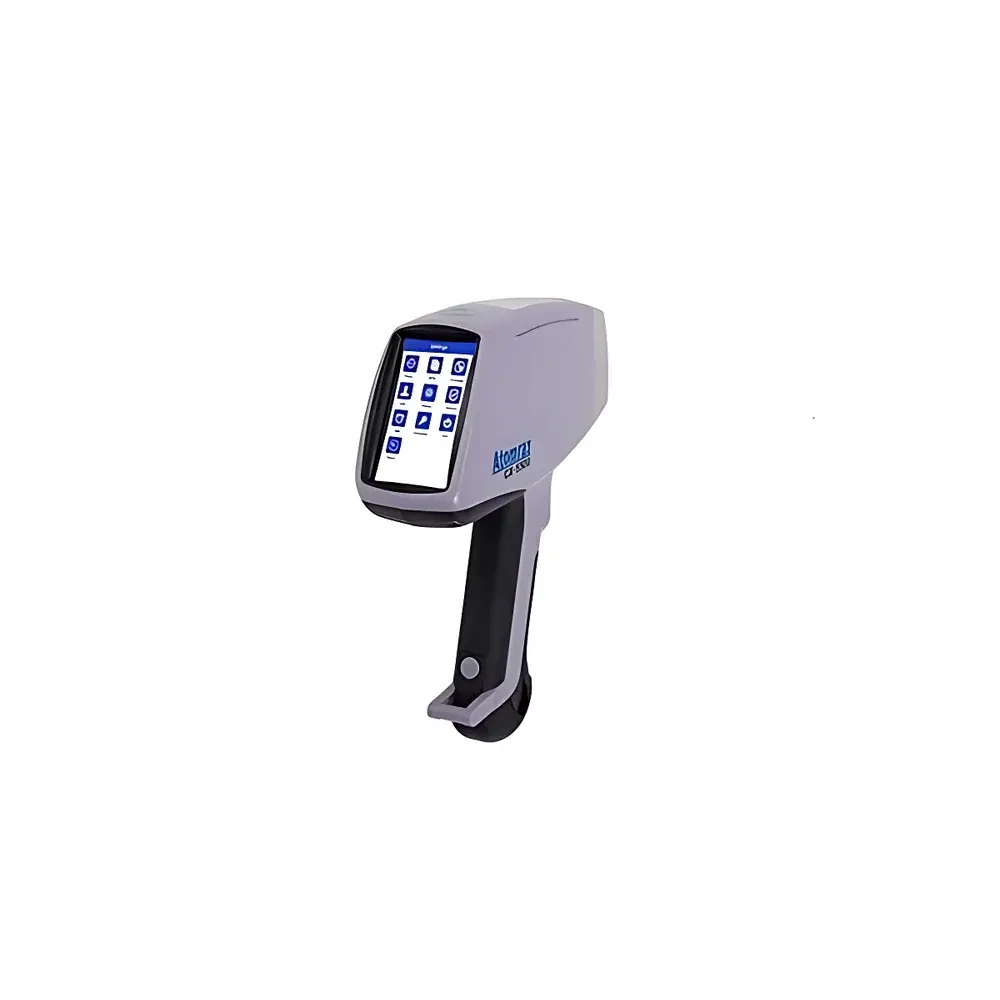
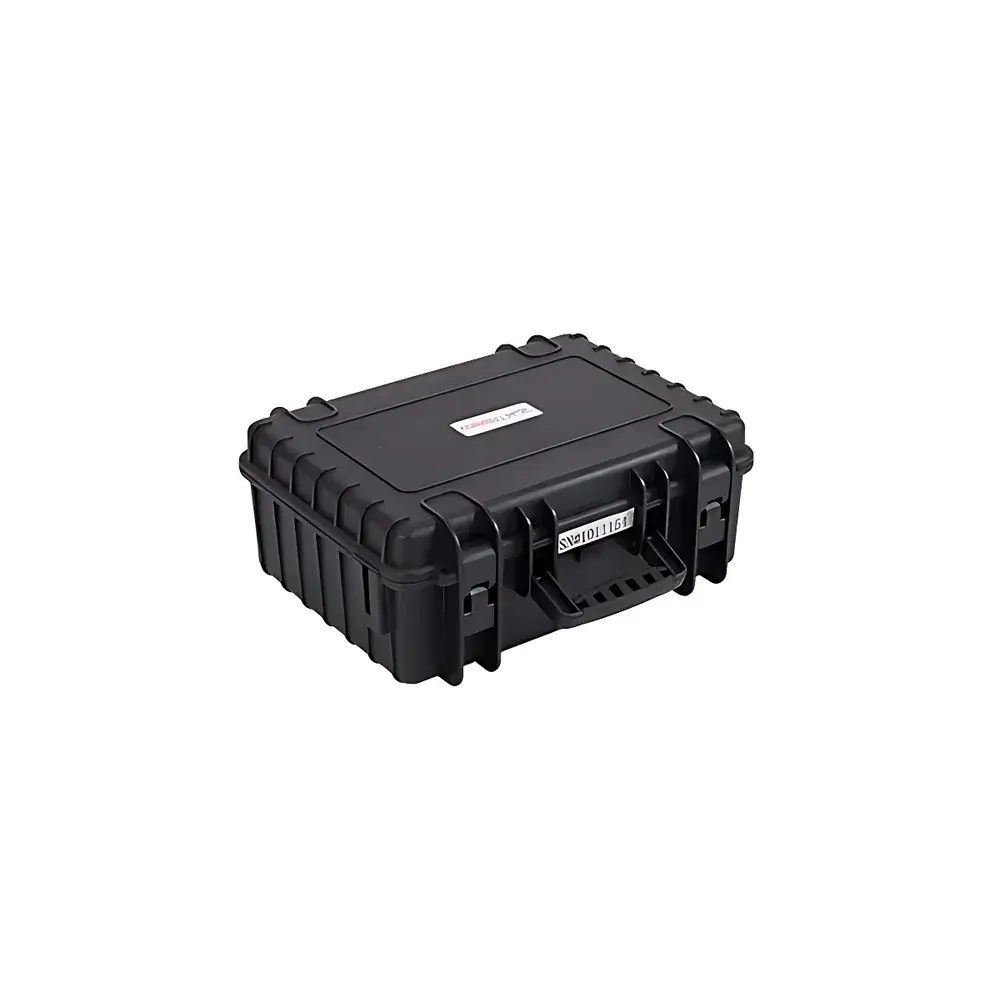
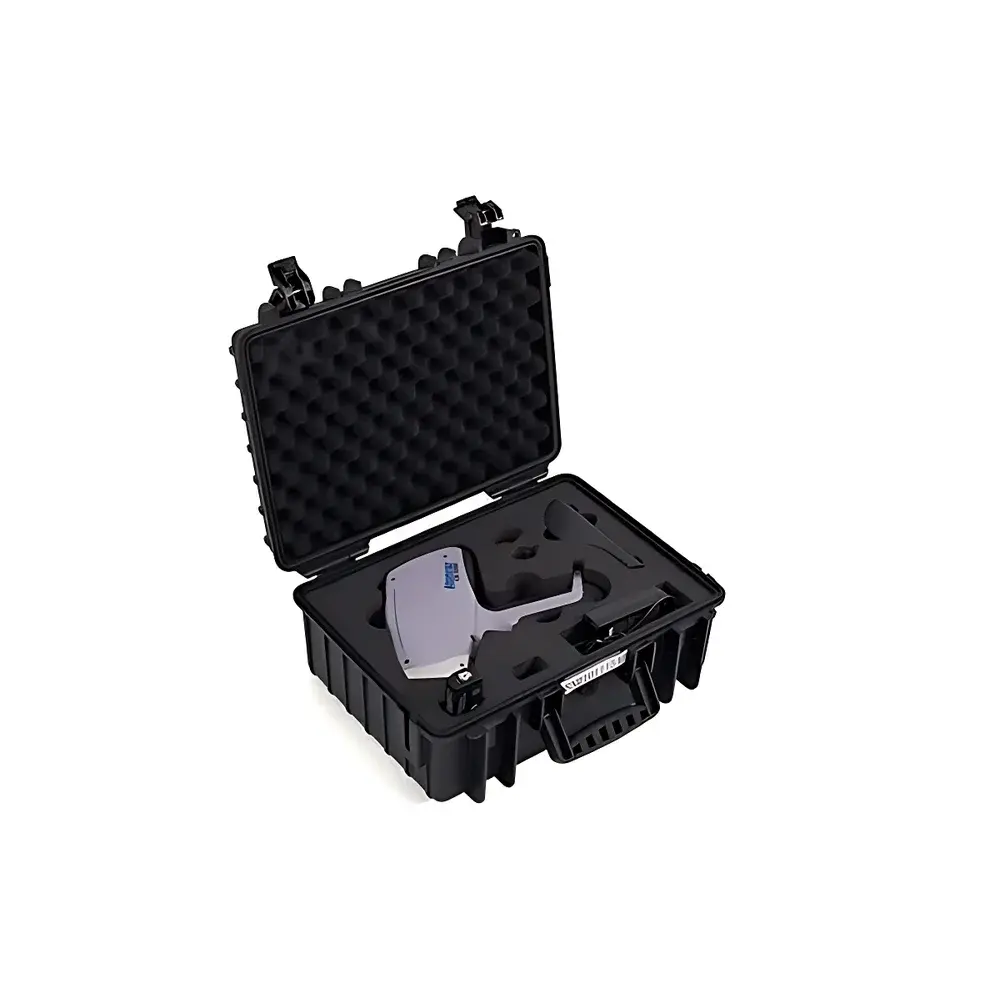
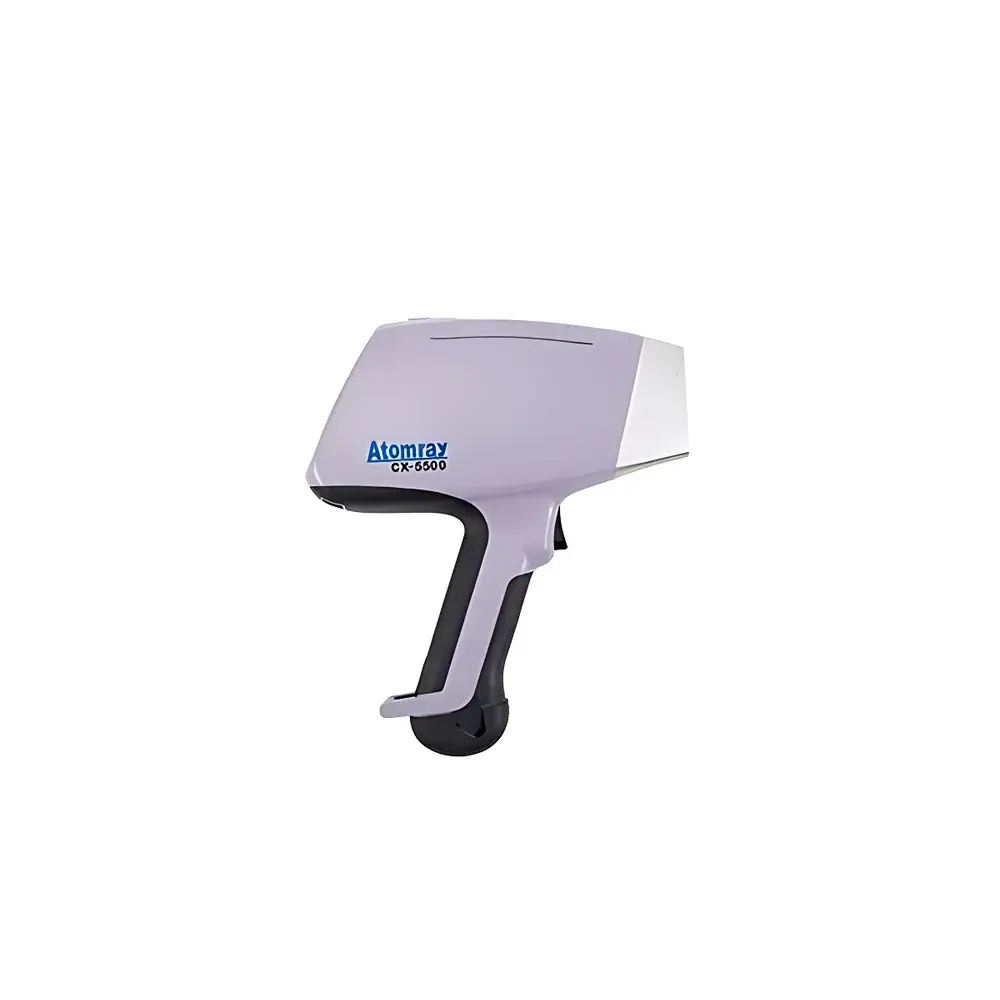
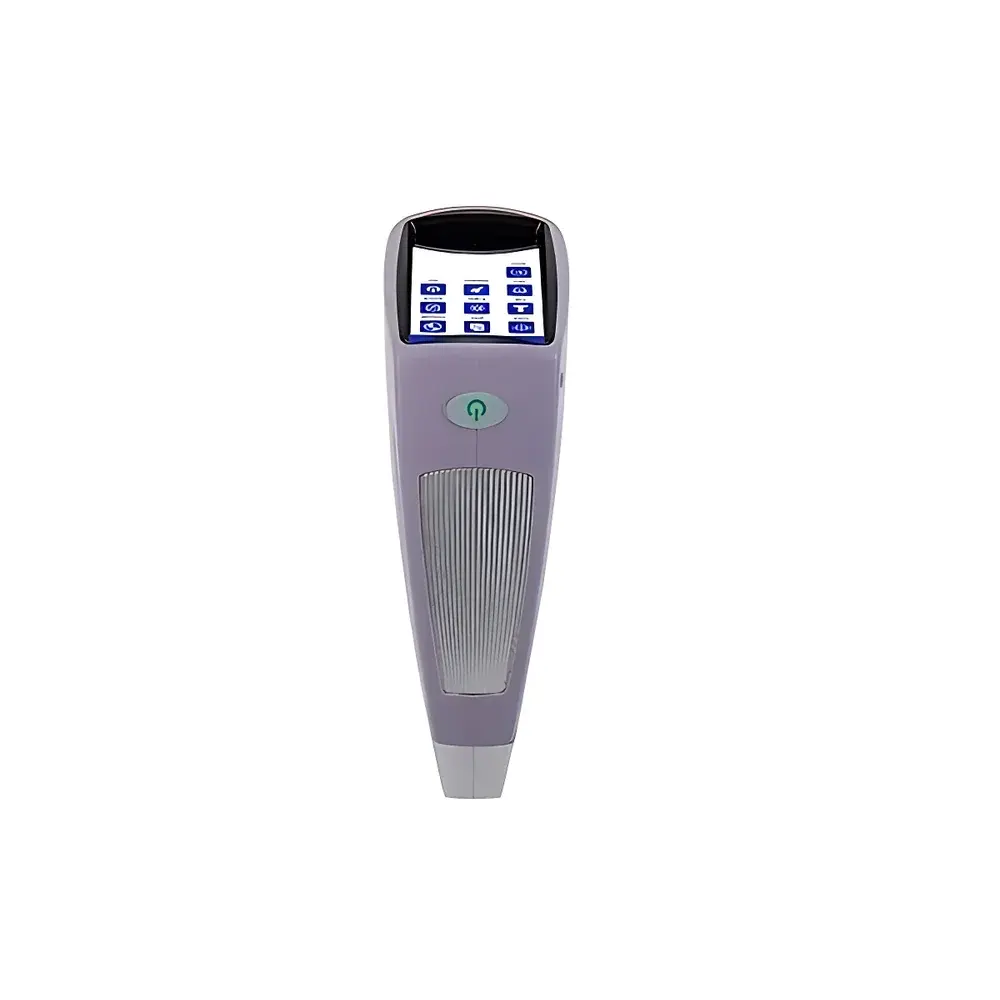
Analytical Instruments Atomray CX-6500 Handheld Energy Dispersive X-Ray Fluorescence (ED-XRF) Spectrometer
| Brand | Analytical Instruments |
|---|---|
| Origin | Jiangsu, China |
| Manufacturer Type | Direct Manufacturer |
| Country of Origin | China |
| Model | Atomray CX-6500 |
| Application | Handheld / Portable |
| Industry-Specific Use | Geological & Mineral Exploration |
| Elemental Range | Mg to U |
| Quantitative Detection Range | 10 ppm – 99 wt% |
| Energy Resolution | <140 eV (at Mn Kα) |
| Repeatability | ≤0.1% RSD (for major elements under controlled conditions) |
| Weight | 1.6 kg (with battery) |
| Dimensions | 254 × 79 × 280 mm (L × W × H) |
| X-ray Tube | Ag anode (standard), optional Au/W/Rh anodes |
| Max. Tube Voltage/Current | 50 kV / 200 µA, fully adjustable |
| Detector | BOOST-type Si-Pin detector (CX-5500 series) |
| Display | 5-inch industrial-grade resistive touchscreen |
| Operating System | Embedded Linux with proprietary analytical software |
| Language Support | English, Chinese, Spanish, French, Russian, Arabic |
| Brightness Control | Ambient-light adaptive auto-brightness |
| Onboard Storage | 32 GB internal flash memory |
| Battery Life | ~8 hours per charge (smart MSBUS battery with real-time SOC monitoring) |
| Connectivity | USB 2.0, Bluetooth 5.0, Wi-Fi 802.11 b/g/n |
| Safety | DoubleBeam™ beam-on-sample interlock system |
| Compliance | Meets IEC 62495 (handheld XRF safety), RoHS, and CE requirements for portable radiation-emitting devices |
Overview
The Analytical Instruments Atomray CX-6500 is a field-deployable handheld energy dispersive X-ray fluorescence (ED-XRF) spectrometer engineered for rapid, non-destructive elemental analysis of geological and mining samples in situ. Based on fundamental XRF physics, the instrument excites atoms in a sample using a micro-focus X-ray tube, inducing characteristic secondary X-ray emission. These emitted photons are resolved by a high-sensitivity BOOST-type Si-Pin detector and processed via pulse-height analysis to generate quantitative elemental profiles. Designed for rugged outdoor use—whether on exploration drill sites, open-pit benches, or core logging facilities—the CX-6500 delivers laboratory-grade precision without requiring sample preparation, grinding, or acid digestion. Its compact form factor (254 × 79 × 280 mm), low mass (1.6 kg with battery), and ergonomic grip enable extended operator use across multi-hour survey campaigns.
Key Features
- Adjustable excitation source: 50 kV / 200 µA microfocus X-ray tube with selectable anode materials (Ag standard; Au, W, Rh optional) to optimize sensitivity across light (Mg–Al) and heavy (Pb–U) elements.
- High-resolution detection: BOOST-type Si-Pin detector with energy resolution <140 eV at Mn Kα (5.9 keV), enabling reliable separation of overlapping peaks such as S Kα/Pb Mα and As Kα/Pb Lα.
- Real-time safety interlock: DoubleBeam™ dual-sensor optical system confirms physical contact with sample surface before X-ray emission, complying with IEC 62495 Class 1 operational safety standards.
- Thermal management architecture: Integrated T-slot passive heat dissipation eliminates active cooling delays—enabling continuous measurement cycles without detector cooldown wait times.
- Smart power ecosystem: MSBUS-enabled intelligent battery with state-of-charge telemetry, hot-swappable design, and compliance with IATA Dangerous Goods Regulations for air transport.
- Multi-modal connectivity: Native support for USB, Bluetooth 5.0, and IEEE 802.11 b/g/n Wi-Fi for remote configuration, firmware updates, and live data streaming to centralized QA/QC dashboards.
Sample Compatibility & Compliance
The CX-6500 is validated for direct analysis of unprepared solid mineral matrices including but not limited to hematite, ilmenite, chalcopyrite, chromite, molybdenite, scheelite, columbite-tantalite, galena, sphalerite, and lateritic nickel ores. It meets ASTM D7212 (standard test method for low-Z element analysis in plastics by ED-XRF), ISO 22082-1 (geological materials—XRF analysis), and supports GLP-aligned workflows through audit-trail-capable software logging. While not FDA 21 CFR Part 11 certified out-of-the-box, its data export architecture (CSV, PDF, Excel) enables integration into validated LIMS environments where electronic signatures and change control are implemented externally.
Software & Data Management
The embedded analytical suite runs on a deterministic Linux kernel and includes spectral deconvolution algorithms based on fundamental parameter (FP) and empirical calibration models. Users may create and store unlimited application-specific calibrations for ore types (e.g., “Iron Ore – High SiO₂” or “Cu-Mo Porphyry”). All measurements include full spectral metadata: acquisition time, tube settings, detector temperature, and ambient humidity/temperature (via onboard sensors). Reports export in PDF or Excel formats with customizable headers (company logo, address, sample ID, batch number, analyst signature field) and embedded spectrum plots. Internal 32 GB NAND storage retains ≥100,000 full-spectrum records with timestamped GPS coordinates when paired with external GNSS modules.
Applications
Field geologists employ the CX-6500 for rapid lithogeochemical screening during reconnaissance mapping and trench sampling. Mining engineers utilize it for real-time grade control at stockpile interfaces and conveyor belt sampling points. Exploration teams deploy it for downhole core scanning—providing immediate feedback on metal tenor prior to lab assay submission. Regulatory agencies apply it for environmental soil screening (As, Cr, Pb, Cd) in legacy mine sites. The Mg–U elemental coverage supports critical mineral assessment (e.g., Li, Co, Ni, REEs via indirect proxies) and refractory element quantification (Zr, Hf, Nb, Ta) in complex pegmatites.
FAQ
Is the CX-6500 suitable for regulatory reporting?
It provides screening-grade data compliant with EPA Method 6200 and ISO 12847 for field-based decision support; however, final compliance reporting requires validation against reference materials and accredited laboratory correlation per jurisdictional requirements.
Can the instrument be calibrated for specific ore types?
Yes—users may develop and validate custom calibrations using certified reference materials (CRMs) traceable to NIST or BAM standards; calibration files are password-protected and version-controlled within the device.
Does the CX-6500 require annual radiation safety certification?
Per national regulations (e.g., NRC 10 CFR 32.22 or China’s HJ 682-2013), handheld XRF devices must undergo initial registration and periodic leakage testing; the CX-6500’s sealed tube design minimizes maintenance frequency but does not exempt users from local licensing obligations.
What is the typical measurement time for reliable detection of trace elements?
At 10 ppm detection limits for Cu in silicate matrix, a 60-second acquisition yields ≤5% relative uncertainty (k=2); shorter dwell times (10–30 s) are sufficient for major-element process control.
How is data integrity ensured during wireless transmission?
All Wi-Fi/Bluetooth transfers use TLS 1.2 encryption; locally stored spectra include SHA-256 checksums to prevent undetected corruption during export or backup operations.






