
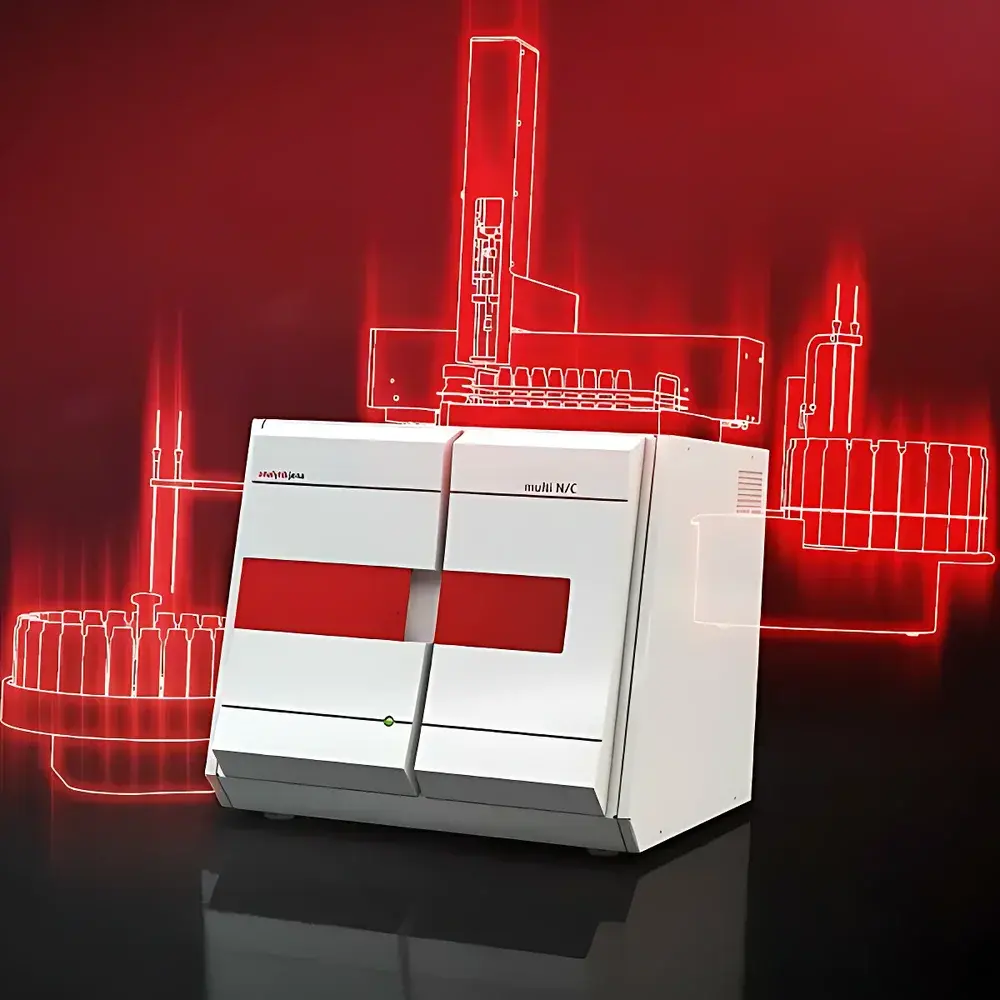
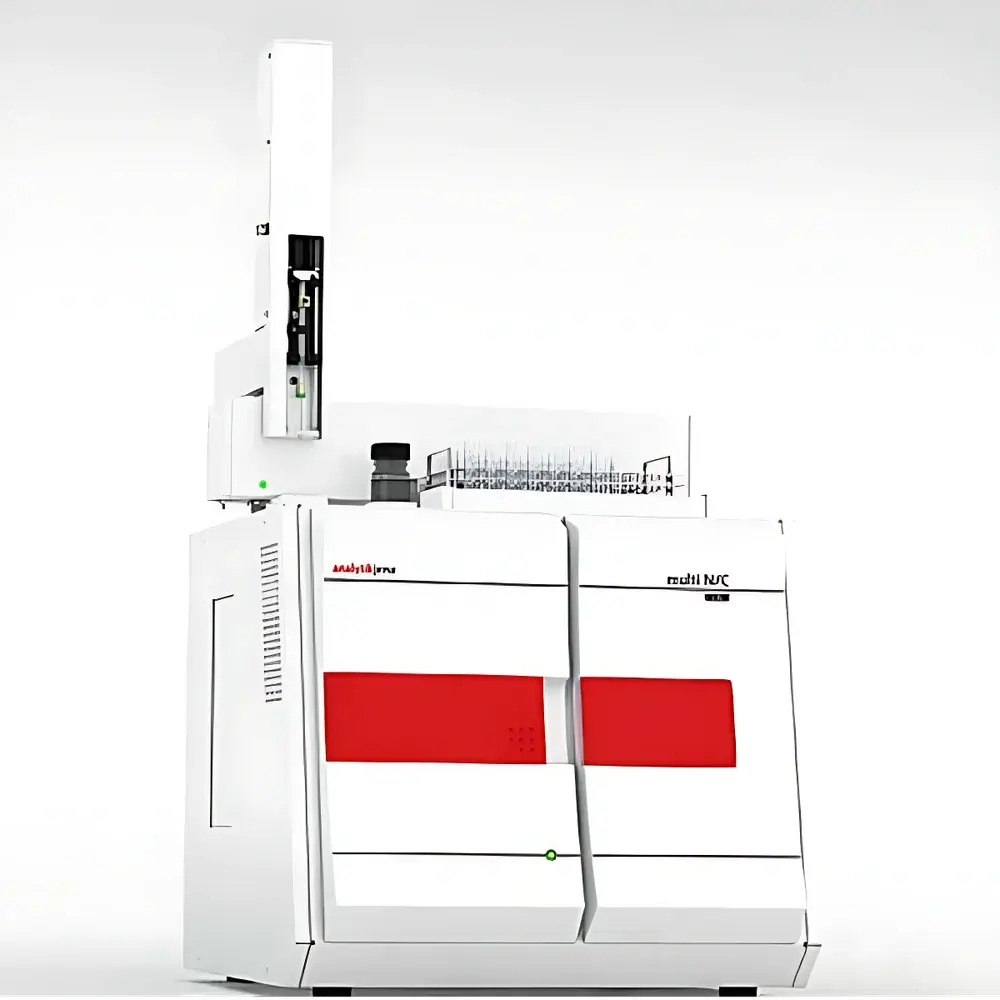
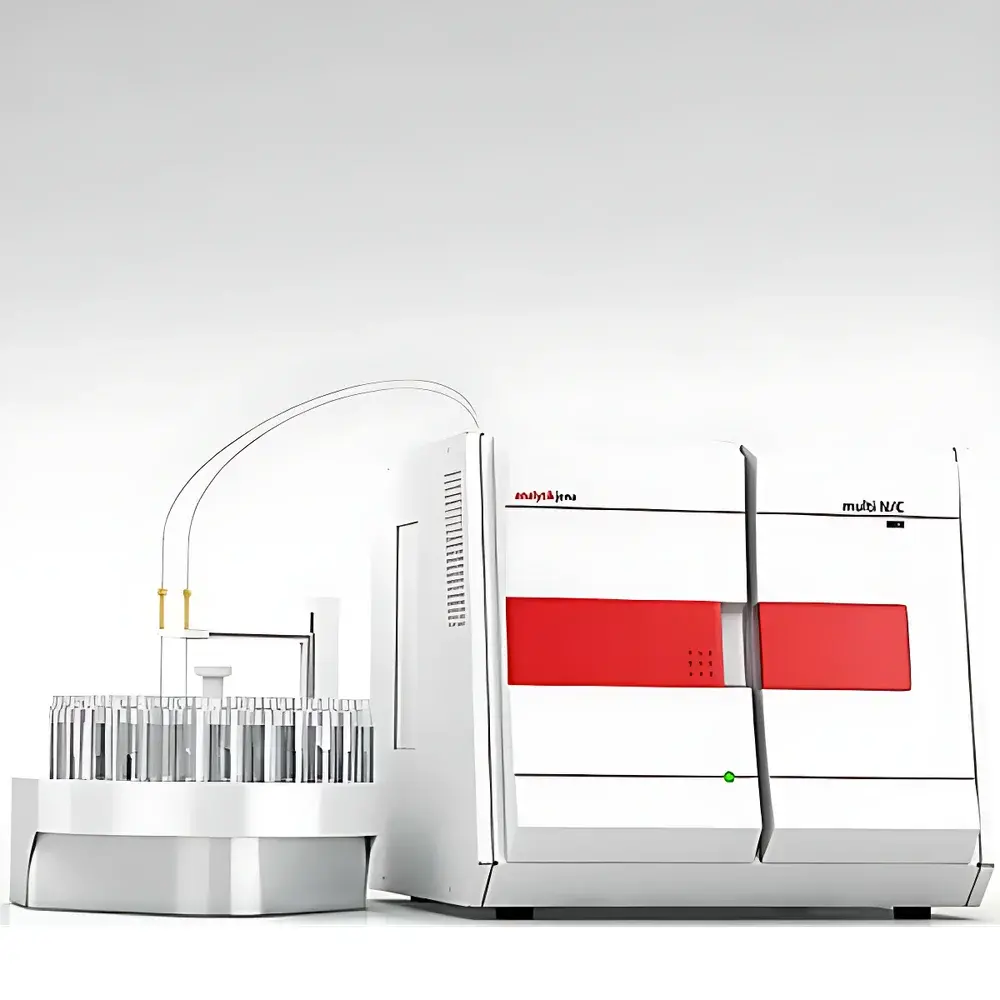
Analytik Jena multi N/C 2100S and 3100 Total Organic Carbon and Total Bound Nitrogen Analyzer
| Brand | Analytik Jena |
|---|---|
| Origin | Germany |
| Model | multi N/C 2100S / 3100 |
| Instrument Type | Laboratory TOC/TNb Analyzer |
| Detection Principle | High-Temperature Catalytic Combustion (up to 1000 °C) and Dual-Wavelength UV Oxidation (185/254 nm) |
| CO₂ Detection | Focused NDIR with Integrated Optics |
| TOC Range | 0–30,000 mg/L (without dilution) |
| Compliance | ASTM D7573, ISO 8245, USP <643>, EN 1484, EPA Method 415.3 & 9060A, DIN 38409-H3 |
Overview
The Analytik Jena multi N/C 2100S and 3100 are high-performance laboratory analyzers engineered for the simultaneous or independent quantification of Total Organic Carbon (TOC), Total Inorganic Carbon (TIC), Non-Purgeable Organic Carbon (NPOC), Dissolved Organic Carbon (DOC), Particulate Organic Carbon (POC), Total Carbon (TC), and Total Bound Nitrogen (TNb). These instruments employ dual oxidation pathways—high-temperature catalytic combustion (up to 1000 °C) and dual-wavelength (185/254 nm) ultraviolet (UV) oxidation—to ensure complete and matrix-independent conversion of organic carbon and nitrogen species into measurable CO₂ and N₂ (or NOₓ, depending on detector configuration). The core detection module features a high-focus non-dispersive infrared (NDIR) sensor with integrated optical focusing, delivering exceptional signal-to-noise ratio across the full 0–30,000 mg/L TOC dynamic range without sample dilution. This architecture eliminates drift-related recalibration needs and ensures long-term stability under continuous operation—critical for regulated environments such as pharmaceutical water monitoring, environmental compliance labs, and semiconductor facility QC.
Key Features
- Dual oxidation capability: Selectable high-temperature catalytic combustion (Pt-coated quartz tube, up to 1000 °C) and/or low-temperature UV/persulfate oxidation (dual-wavelength 185/254 nm reactor with >10,000-hour lamp lifetime)
- Focused NDIR CO₂ detection: Patented optical path design concentrates IR energy onto a micro-sensor element, achieving sub-ppb carbon equivalent sensitivity and linearity over five orders of magnitude
- VITA Flow Management System: Real-time carrier gas pressure and flow compensation ensures stoichiometric injection consistency—even during fluctuations in lab gas supply—enhancing reproducibility for trace-level measurements
- EasyCal automated calibration: Supports multi-point, volume-variable calibration using single-standard solutions; automatically selects optimal calibration range per sample based on signal response
- Modular hardware architecture: Interchangeable liquid autosamplers (up to 120 positions), solid-sample modules (crucible-based, for soils, sludges, sediments), and optional TNb detection configurations (chemiluminescence or thermal conductivity)
- Corrosion-resistant fluidic path: Entire wetted components—including reaction tubes, catalyst beds, and gas lines—are constructed from high-purity quartz, Inconel, and PTFE to withstand aggressive matrices and oxidant residuals
Sample Compatibility & Compliance
The multi N/C 2100S and 3100 support aqueous, digested, and solid-phase samples—including drinking water, wastewater, leachates, groundwater, seawater, pharmaceutical process water (PW, WFI, PWRS), soil extracts, and digested sludge. Its validated method flexibility meets stringent regulatory requirements: ASTM D7573 (combustion TOC), ISO 8245 (organic carbon in water), EN 1484 (water analysis), USP (TOC in purified water), and EPA Methods 415.3 and 9060A. For TNb analysis, the system complies with DIN 38409-H3 and supports GLP/GMP workflows via audit-trail-enabled software (21 CFR Part 11 compliant when deployed with optional security package). All oxidation and detection modules are designed to minimize memory effects and cross-contamination—validated through rigorous blank carryover testing per ICH Q2(R2) guidelines.
Software & Data Management
Control and data acquisition are managed via the instrument-integrated multiWin software—a Windows-based platform supporting method development, sequence programming, real-time chromatogram visualization, and automated report generation. Raw signal traces (CO₂ peak area, baseline offset, retention time) are stored with full metadata (operator ID, timestamp, calibration history, maintenance logs). Data integrity safeguards include electronic signatures, role-based access control, and immutable audit trails. Export formats include CSV, PDF, and XML for LIMS integration. Optional IQ/OQ/PQ documentation packages facilitate installation and operational qualification in regulated laboratories. Firmware updates preserve backward compatibility with legacy methods and calibration files.
Applications
- Environmental monitoring: Routine TOC/TNb profiling of surface water, wastewater effluents, landfill leachate, and contaminated site groundwater
- Pharmaceutical manufacturing: USP -compliant TOC verification of purified water, water for injection (WFI), and clean-in-place (CIP) rinse validation
- Semiconductor industry: Sub-ppb TOC screening of ultrapure process water used in wafer cleaning and photolithography
- Academic and research labs: Method development for complex matrices (e.g., humic-rich waters, biofilm suspensions, digested biosolids)
- Regulatory testing labs: Accredited analysis per ISO/IEC 17025:2017, with documented uncertainty budgets for TOC and TNb measurements
- Industrial pretreatment: Monitoring organic load in influent streams prior to biological treatment or membrane filtration systems
FAQ
What oxidation methods does the multi N/C 2100S/3100 support?
It offers both high-temperature catalytic combustion (up to 1000 °C) and dual-wavelength UV/persulfate oxidation (185/254 nm), selectable per method or run.
Can the same instrument measure both TOC and TNb?
Yes—the 3100 model supports integrated TNb analysis via optional chemiluminescence or thermal conductivity detection; the 2100S is TOC-only but upgradeable.
Is sample dilution ever required?
No—its 0–30,000 mg/L linear TOC range and focused NDIR detector eliminate routine dilution for most environmental and industrial samples.
How is calibration verified over time?
EasyCal enables daily single-point verification using certified KHP or sucrose standards; full multi-point calibration is performed weekly or after maintenance.
Does the system comply with 21 CFR Part 11?
Yes—when configured with the optional Security Package, it provides electronic signatures, audit trails, and user access controls meeting FDA requirements.







