
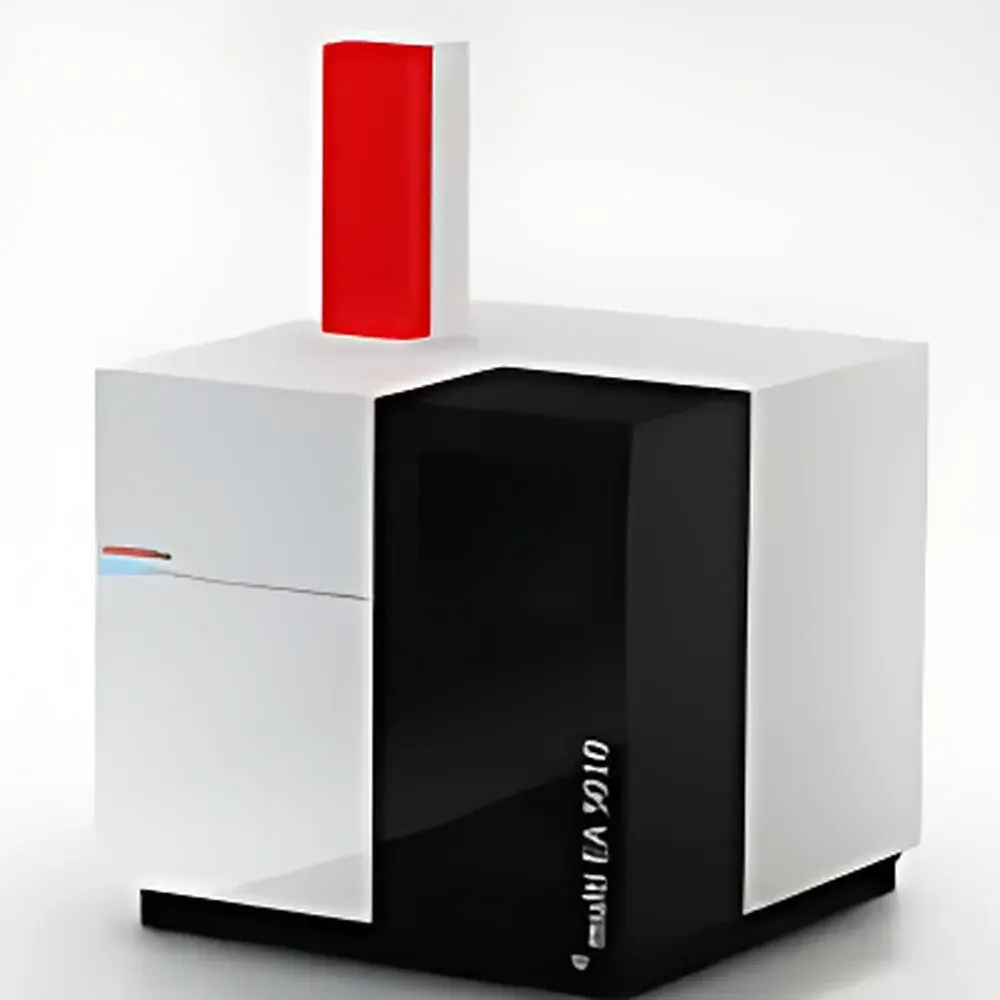
Analytik Jena multi EA 5010 SMPO Elemental Analyzer for Interference-Free Total Sulfur (TS) Determination in Fuels and Refinery Products
| Brand | Analytik Jena |
|---|---|
| Origin | Germany |
| Model | multi EA 5010 SMPO |
| Detection Principle | High-Temperature Combustion Coupled with UV Fluorescence Detection (S) / Chemiluminescence Detection (N) |
| Detection Limits | S: 5 ppb, N: 10 ppb |
| Linear Dynamic Range | 5 ppb – 50,000 ppm (S), auto-ranging |
| Sample Types | Liquid fuels (gasoline, diesel, jet fuel), LPG, LNG, refinery streams, crude oil fractions, aqueous extracts |
| Compliance | ASTM D5453, D7039, D7183, ISO 20846, ISO 20884, UOP 390, IP 520, SH/T 0689, GB/T 11141, EN 15486 |
| Automation | Optional 18-position or 120-position autosamplers |
| Software | EAsy Control v3.x with 21 CFR Part 11 compliance mode, audit trail, electronic signatures, method library, remote monitoring |
| Dimensions | < 0.3 m² footprint (integrated combustion unit, detector, controller, autosampler base) |
| Safety | EAsy Protect real-time system parameter monitoring, HiPerSens high-sensitivity detection module, glove-compatible nano-coated touchscreen |
Overview
The Analytik Jena multi EA 5010 SMPO is a high-precision, high-throughput elemental analyzer engineered specifically for interference-free total sulfur (TS) quantification in complex hydrocarbon matrices—particularly gasoline, diesel, jet fuel, naphtha, LPG, LNG, and refinery process streams. It employs high-temperature catalytic combustion (1150 °C) followed by selective ultraviolet fluorescence (UVF) detection—a physicochemical principle standardized under ASTM D5453 and ISO 20846. The “SMPO” configuration integrates a patented sulfur-specific matrix protection option (MPO), which chemically suppresses nitrogen-derived spectral interferences during UVF measurement—enabling accurate TS determination even in high-nitrogen fuels (e.g., hydrotreated distillates or bio-blends) without manual correction or sample dilution. Unlike generic TOC analyzers, the multi EA 5010 SMPO is not a carbon-focused instrument repurposed for sulfur; it is purpose-built for regulated sulfur compliance testing in petroleum quality control laboratories operating under ISO/IEC 17025, API RP 920, or refinery internal QA protocols.
Key Features
- HiPerSens detection architecture delivering 5 ppb sulfur detection limit and 5 ppb–50,000 ppm linear dynamic range—covering both ultra-trace product certification (e.g., ULSD ≤ 10 ppm) and high-level process stream monitoring (e.g., FCC feedstock ≥ 5,000 ppm)
- SMPO (Sulfur Matrix Protection Option): A thermally stable, catalytically tuned scrubber stage that selectively removes NOx and other nitrogen oxides prior to UVF cell, eliminating cross-sensitivity without compromising sulfur recovery or precision
- Modular autosampling: Configurable from single-position manual injection to 120-position robotic carousel; optional pressurized gas/LPG modules enable direct analysis of volatile samples per ASTM D7039 and UOP 390
- EAsy Protect embedded safety system continuously monitors combustion temperature, O2 flow, quartz furnace integrity, and detector voltage—triggering automatic shutdown and diagnostic logging upon deviation beyond IEC 61000-4-30 tolerances
- Glove-compatible 7-inch capacitive touchscreen with chemical-resistant nano-ceramic coating (tested per ISO 11341 for 72-hr exposure to toluene, xylene, and H2SO4 vapor)
- Zero-user-calibration operation: Factory pre-aligned UVF optical path, self-diagnosing photomultiplier gain stabilization, and auto-optimization of combustion parameters per sample matrix class
Sample Compatibility & Compliance
The multi EA 5010 SMPO accepts liquid hydrocarbons (neat or diluted in xylene/chloroform), liquefied gases (LPG/LNG via cryogenic loop injection), and dissolved sulfur extracts (e.g., oxidative digestion residues). It excludes solid particulates, halogenated solvents (CCl4, CHCl3), and mercury-containing samples without prior removal. All operational modes comply with regulatory method requirements for refinery gate testing and product release: ASTM D5453 (liquid fuels), ASTM D7039 (LPG), ISO 20846 (motor gasoline), and SH/T 0689 (Chinese national standard for diesel). Data integrity meets FDA 21 CFR Part 11 Annex 11 and EU GMP Annex 11 requirements when EAsy Control software is deployed in audit-trail-enabled mode—including role-based access control, electronic signatures, and immutable raw data archiving.
Software & Data Management
EAsy Control v3.x provides method-driven workflow management with >120 pre-validated SOPs—including certified reference material (CRM) calibration curves traceable to NIST SRM 2724c and CRM-121. The software supports GLP-compliant reporting with automatic calculation of recovery (%R), repeatability (RSD), and method blank subtraction. Raw signal chromatograms (fluorescence intensity vs. time), peak integration parameters, and system suitability metrics (e.g., baseline noise < 0.5 mV RMS over 60 s) are stored in vendor-neutral .csv and .pdf formats. Remote diagnostics and method push deployment are enabled via TLS 1.2-secured Ethernet connection; no cloud dependency or third-party hosting is required.
Applications
- Refinery QC labs performing daily TS verification on hydrotreater effluents, reformate, and finished gasoline per ASTM D5453
- Third-party testing laboratories accredited to ISO/IEC 17025 conducting ULSD certification (≤10 ppm S) and marine fuel (ISO 8217) compliance audits
- R&D centers evaluating sulfur retention in novel catalyst formulations using spiked model compounds (e.g., dibenzothiophene in decalin)
- Gas processing facilities quantifying sulfur species in natural gas liquids (NGLs) and sour gas condensates per UOP 390
- Regulatory agencies performing enforcement testing on retail fuel samples under EPA 40 CFR Part 1090 or EU Fuel Quality Directive 2009/30/EC
FAQ
Does the SMPO module require consumables or periodic replacement?
The SMPO catalyst bed is rated for ≥10,000 injections under typical refinery fuel conditions and requires no scheduled replacement; its status is monitored via real-time pressure drop and NOx breakthrough diagnostics.
Can the same instrument analyze both sulfur and nitrogen in one run?
No—the multi EA 5010 SMPO is optimized exclusively for sulfur. For dual-element analysis, the multi EA 5010 N/S dual-detector configuration must be specified at order entry.
Is method validation support provided for laboratory accreditation?
Yes: Analytik Jena supplies IQ/OQ documentation packages, CRM-based validation kits (including ASTM D5453-compliant calibration standards), and on-site method transfer assistance compliant with ISO/IEC 17025 Clause 7.2.2.
What maintenance intervals are recommended for uninterrupted 24/7 operation?
Combustion tube inspection every 3 months; quartz liner cleaning every 500 injections; UVF lamp replacement every 18 months—automatically logged and scheduled via EAsy Protect’s predictive maintenance calendar.
How is carryover addressed for high-sulfur samples (e.g., coker naphtha)?
The system implements programmable post-injection high-purity oxygen purge (≥99.999%) and thermal desorption at 1150 °C, reducing carryover to <0.5% between 500 ppm and 5 ppm samples—verified per ASTM D7183 Annex A2.
Related Products







