
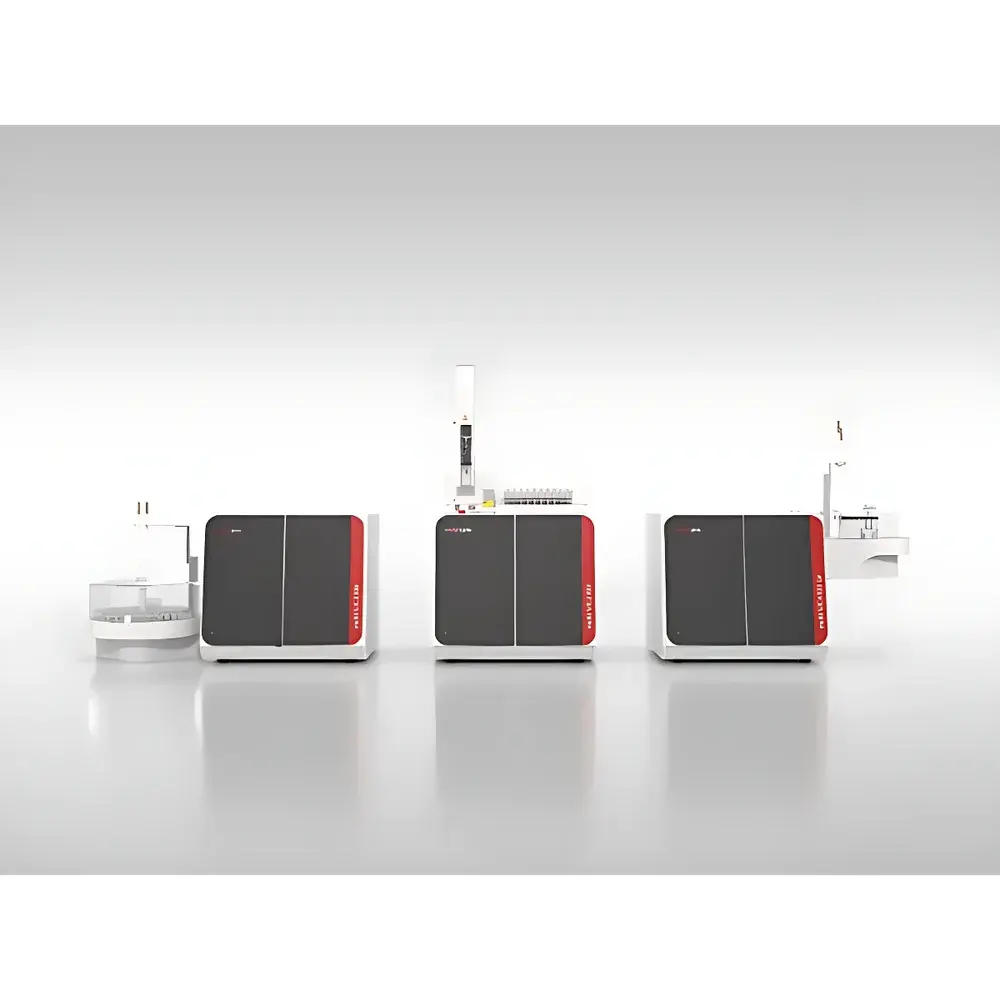
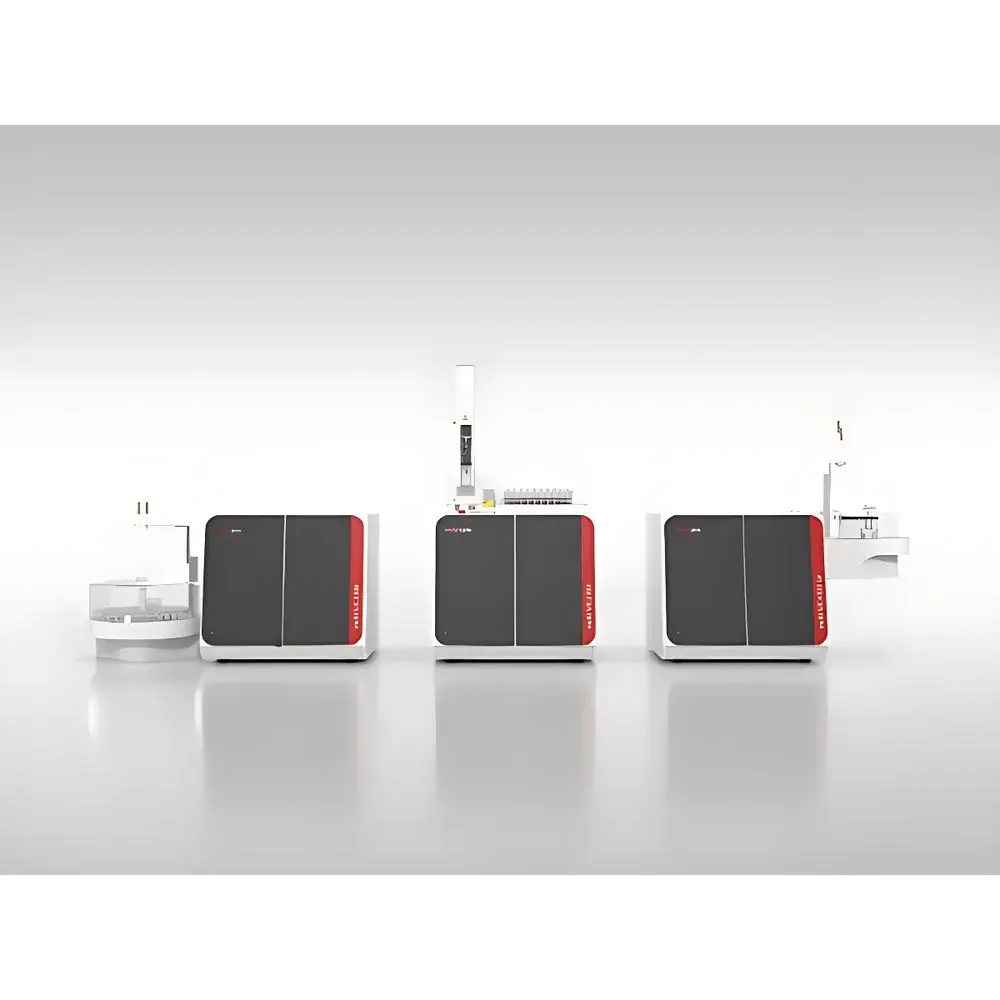
analytikjena multi N/C X300 Total Organic Carbon and Total Nitrogen Analyzer
| Brand | analytikjena |
|---|---|
| Origin | Germany |
| Manufacturer Type | Original Equipment Manufacturer (OEM) |
| Product Origin | Imported |
| Model | multi N/C X300 |
| Instrument Type | Laboratory-based TOC/TN Analyzer |
| Detection Principle | Non-Dispersive Infrared (NDIR) Absorption |
| Oxidation Method | High-Temperature Catalytic Combustion (up to 1000 °C) |
| Measurement Range | 0–30,000 ppm C or N |
| Accuracy | ±2% of reading |
| Resolution | 0.001 ppb |
| Detection Limit | 4 ppb (as C) |
| Repeatability | ≤1% RSD |
| Nitrogen Detection | Chemiluminescence Detector (CLD) and Conductivity Detector (ChD) |
| Calibration | Single-Standard EasyCal™ Protocol |
| Flow Control | VITA™ Variable Intelligent Time-Adaptive Flow Regulation |
| Safety System | SCS™ Self-Checking Safety System |
| Software Compliance | Supports 21 CFR Part 11 audit trails, GLP/GMP data integrity protocols |
Overview
The analytikjena multi N/C X300 is a dual-detection laboratory analyzer engineered for simultaneous, high-precision quantification of total organic carbon (TOC), total nitrogen (TN), total inorganic carbon (TIC), non-purgeable organic carbon (NPOC), purgeable organic carbon (POC), and total bound nitrogen (TNb) in aqueous matrices. It employs two orthogonal detection principles: non-dispersive infrared (NDIR) absorption for carbon species and chemiluminescence detection (CLD) — supplemented by conductivity detection (ChD) — for nitrogen species. Carbon oxidation occurs via high-temperature catalytic combustion at up to 1000 °C, ensuring complete mineralization of refractory organics and particulates; nitrogen conversion is achieved through thermal decomposition followed by NOx detection via CLD. This architecture eliminates cross-interference between C and N channels and supports trace-level analysis without manual dilution across the full 0–30,000 ppm dynamic range.
Key Features
- Patented VITA™ flow regulation technology: dynamically adjusts carrier gas velocity and residence time to optimize detector response stability and signal-to-noise ratio across wide concentration gradients.
- EasyCal™ single-standard calibration: enables full-system calibration using only one certified reference solution, with drift compensation validated over extended operational periods (≥72 h).
- Dual oxidation pathways: high-temperature catalytic furnace (1000 °C) for robust solid/colloidal sample oxidation; optional dual-wavelength UV/persulfate wet-chemical oxidation module for low-temperature, low-maintenance operation.
- SCS™ Self-Checking Safety System: continuously monitors furnace temperature, gas pressure, catalyst status, and CO2 trap saturation — automatically initiating shutdown and alerting if thresholds are exceeded.
- Modular hardware architecture: supports field-upgradable configurations including autosampler integration, acidification/injection modules, and TIC/TOC/NPOC switching valves — all controlled via unified firmware.
- Automated system conditioning: integrated catalyst regeneration cycles, quartz tube cleaning sequences, and IR cell purge routines reduce operator intervention and extend component lifetime.
Sample Compatibility & Compliance
The multi N/C X300 accepts liquid samples ranging from ultrapure water (e.g., pharmaceutical WFI, PW) to wastewater, digested sludge extracts, and saline estuarine samples (up to 50 g/L TDS). Its high-temperature combustion module tolerates suspended solids ≤50 mg/L without clogging. The system complies with ASTM D5903, ISO 8245, USP , and EN 1484 for TOC; and with ISO 11905-1 and DIN 38409-H9 for TN. All data acquisition, storage, and reporting adhere to FDA 21 CFR Part 11 requirements, including electronic signatures, audit trails, and role-based access control. Instrument qualification documentation (IQ/OQ/PQ) templates are provided per GMP/GLP standards.
Software & Data Management
The instrument is operated via the jenaControl™ software suite, a Windows-based platform supporting method development, sequence scheduling, real-time chromatogram visualization, and automated report generation (PDF/CSV/XLSX). Raw detector signals, calibration logs, maintenance records, and user actions are timestamped and cryptographically hashed to ensure data integrity. The software includes built-in algorithms for TOC-to-COD and TOC-to-BOD5 correlation modeling based on matrix-specific empirical coefficients — configurable per sample type and validated against historical lab datasets. Remote diagnostics and firmware updates are supported via secure TLS-encrypted connections.
Applications
- Pharmaceutical water systems: continuous monitoring of purified water (PW), water for injection (WFI), and clean steam condensate per USP and EU Annex 1.
- Environmental laboratories: regulatory compliance testing for EPA Method 415.3, ISO 8245, and national wastewater discharge permits.
- Power generation: boiler feedwater and condensate analysis to prevent corrosion and deposition in steam cycles.
- Academic research: biogeochemical cycling studies requiring parallel TOC/TN ratios in soil leachates, sediment porewaters, and algal cultures.
- Food & beverage QA/QC: verification of cleaning-in-place (CIP) efficacy and rinse water purity in dairy and brewing facilities.
FAQ
What sample volume is required for analysis?
Typical injection volumes range from 20 µL to 100 µL, adjustable via software; autosampler compatibility supports unattended 120-sample runs.
Can the system measure TOC and TN simultaneously in a single run?
Yes — the dual-detector configuration (NDIR + CLD) enables concurrent detection without sequential re-injection or hardware reconfiguration.
Is method validation support available for regulated environments?
Yes — analytikjena provides IQ/OQ/PQ protocols, system suitability test (SST) templates, and 21 CFR Part 11 configuration guidance aligned with FDA and EMA expectations.
How often does the catalyst require replacement?
Under normal use (≤200 injections/day), the platinum-based catalyst maintains performance for ≥12 months; the system logs cumulative furnace hours and alerts at 90% service life.
Does the software support LIMS integration?
Yes — jenaControl™ offers ASTM E1384-compliant HL7 and ASTM E2500-07 compliant ASCII output, plus direct ODBC connectivity for major LIMS platforms.







