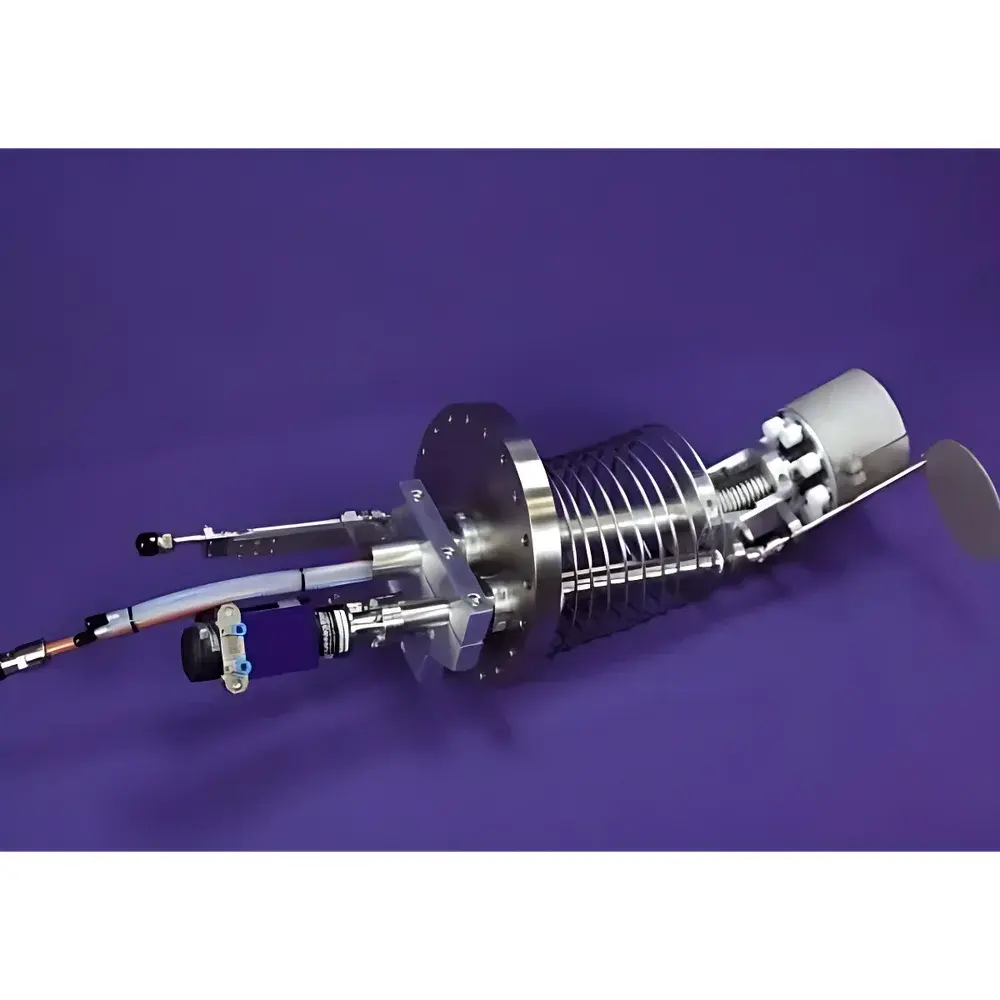
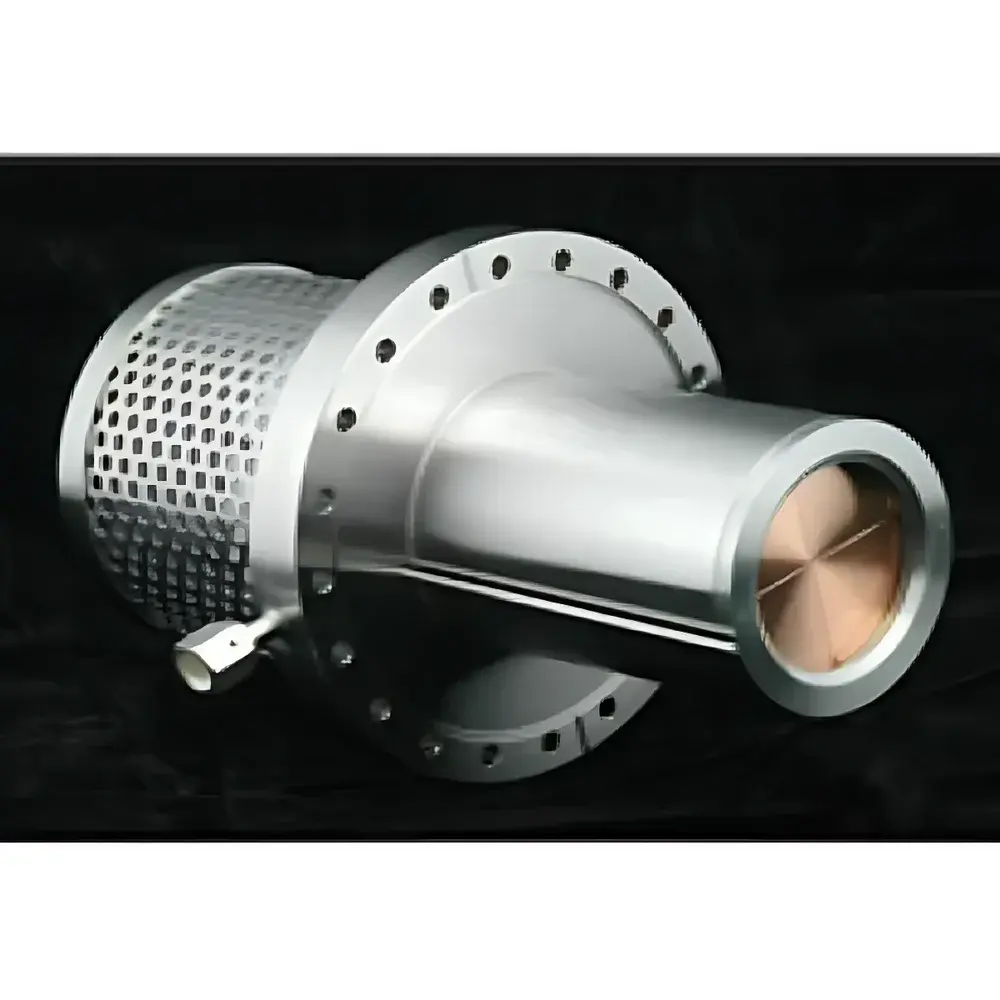
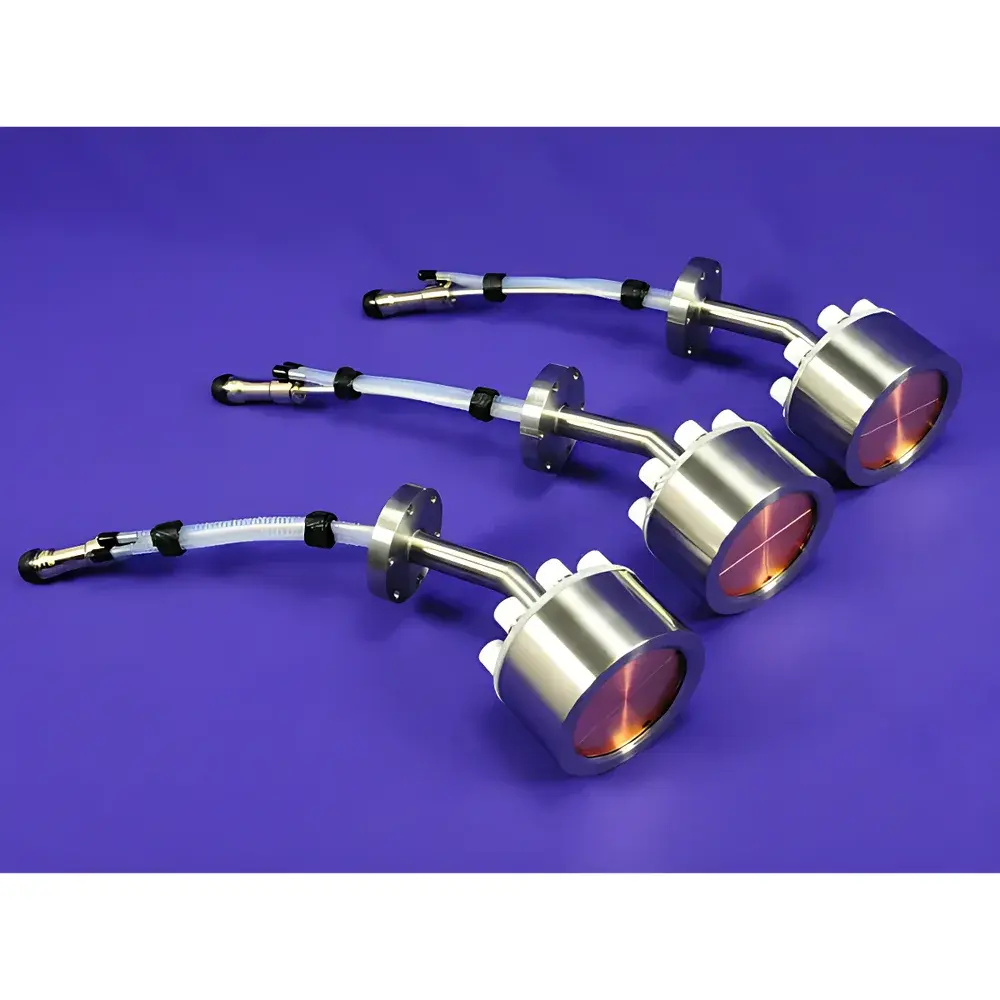
Angstrom Sciences ONYX® High-Temperature Circular Magnetron Sputtering Cathode
| Brand | Angstrom Sciences |
|---|---|
| Origin | USA |
| Manufacturer Type | Authorized Distributor |
| Origin Category | Imported |
| Model | ONYX |
| Pricing | Available Upon Request |
| Operating Temperatures | 200°C, 300°C, 450°C |
| Base Pressure Compatibility | Down to 10⁻⁹ mTorr |
| Insulation | High-Purity Ceramic |
| Sealing | Vacuum-Hermetic Construction |
Overview
The Angstrom Sciences ONYX® High-Temperature Circular Magnetron Sputtering Cathode is an engineered vacuum component designed for reactive and high-rate physical vapor deposition (PVD) systems requiring sustained thermal stability during extended substrate processing. Unlike conventional magnetrons, the ONYX® cathode integrates a circular magnetic array with a thermally robust architecture optimized for continuous operation at elevated cathode temperatures—up to 450°C—without degradation in plasma confinement efficiency or target utilization uniformity. Its operational principle relies on magnetically confined electron trajectories near the target surface, enhancing ionization of sputtering gas (typically Ar or reactive mixtures such as Ar/O₂ or Ar/N₂) and enabling high-density plasma generation under ultra-high vacuum (UHV) conditions down to 10⁻⁹ mTorr. This design is particularly suited for applications where substrate heating is integral to film crystallinity, stress control, or interfacial adhesion—such as epitaxial oxide growth, high-temperature superconductor fabrication, and diffusion-barrier metallization in advanced semiconductor packaging.
Key Features
- Vacuum-hermetic construction with high-purity alumina or aluminum nitride ceramic insulators, rated for continuous thermal cycling between ambient and 450°C
- Circular magnet array geometry ensuring uniform magnetic field distribution across the full target diameter, minimizing racetrack erosion and maximizing target material utilization (>75% typical)
- Integrated water-cooled backing plate compatible with standard CF-150 or ISO-K 200 flange interfaces, supporting integration into multi-cathode UHV cluster tools
- Thermally decoupled electrical feedthroughs minimizing heat conduction to external power supplies and enabling stable DC, pulsed DC, or MF/RF biasing modes
- Modular design compliant with SEMI E10 standards for tool qualification and traceable calibration documentation available upon request
Sample Compatibility & Compliance
The ONYX® cathode supports conductive and semi-conductive targets—including refractory metals (Mo, W, Ta), transition metal oxides (ITO, ZnO, NiO), nitrides (TiN, AlN), and high-melting-point alloys (PtIr, NiCr)—with diameters ranging from 76 mm to 200 mm. It is fully compatible with industry-standard target bonding methods (indium, eutectic solder, or direct brazing) and accommodates both bonded and monolithic target configurations. All materials and surface finishes comply with ASTM F568M Grade 8.8 mechanical fastener specifications and outgassing profiles certified per NASA SP-R-0022A for low-Z contamination environments. The cathode assembly meets electromagnetic compatibility (EMC) requirements outlined in EN 61326-1 for laboratory measurement equipment and is designed to support GLP-compliant process documentation when integrated with validated controller platforms.
Software & Data Management
While the ONYX® cathode itself is a passive hardware component, its performance is fully monitorable and controllable via third-party vacuum system controllers (e.g., MKS Instruments Genie™, INFICON Transpector®, or custom LabVIEW-based DAQ architectures). Real-time parameters—including cathode voltage, discharge current, target temperature (via embedded K-type thermocouple outputs), and chamber pressure—are accessible through analog 0–10 V or digital RS-485/Modbus RTU interfaces. When deployed in FDA-regulated environments, the cathode’s operational history—including thermal soak duration, cumulative sputter time, and over-temperature event logs—can be captured within 21 CFR Part 11–compliant electronic batch records when paired with audit-trail-enabled supervisory software.
Applications
- Growth of thermally stable transparent conducting oxides (TCOs) for next-generation photovoltaics and flexible OLED displays
- Deposition of high-dielectric-constant (high-k) gate stacks (e.g., HfO₂, La₂O₃) requiring precise stoichiometry control under elevated substrate temperature
- Preparation of corrosion-resistant hard coatings (CrN, TiAlN) on turbine blades and medical implants via high-power impulse magnetron sputtering (HiPIMS)
- Research-scale synthesis of complex perovskite thin films (e.g., MAPbI₃, CsPbBr₃) where thermal management directly influences phase purity and grain orientation
- UHV-compatible metallization of graphene and 2D heterostructures without polymer residue or interfacial carbon diffusion
FAQ
What vacuum level is required for optimal ONYX® cathode performance?
The cathode is rated for stable operation down to 10⁻⁹ mTorr; however, optimal sputter yield and film stoichiometry are typically achieved at base pressures ≤5×10⁻⁸ mTorr prior to gas introduction.
Can the ONYX® cathode be used with reactive gases such as O₂ or NH₃?
Yes—its ceramic insulation and passivated stainless-steel housing resist oxidation and nitridation; reactive gas flow must be controlled via mass flow controllers with real-time partial pressure monitoring.
Is target replacement possible without breaking vacuum?
Target exchange requires venting the chamber; the cathode does not support in-situ target swap due to its rigid vacuum-sealed structure and thermal anchoring requirements.
Does Angstrom Sciences provide installation support or process optimization services?
Yes—application engineers offer remote and on-site commissioning assistance, including magnetic field mapping, plasma impedance profiling, and deposition rate calibration against NIST-traceable quartz crystal microbalances.