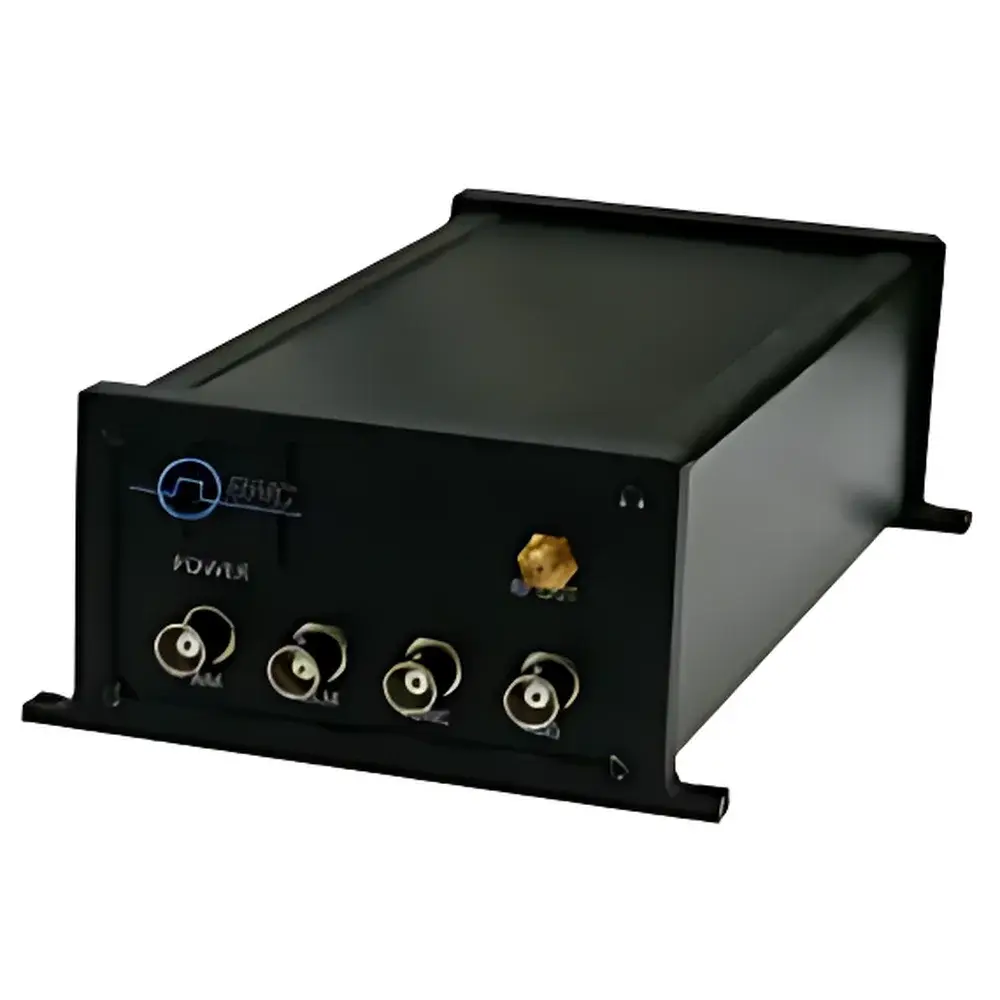
BNC 835-3-M Microwave/Radio Frequency Signal Generator
| Brand | BNC |
|---|---|
| Origin | USA |
| Model | BNC 835-3-M |
| Frequency Range | 0.1 Hz to 50 kHz (AM/Pulse Modulation Rate) |
| Interface Options | LAN, USB, GPIB (optional) |
| Compliance | SCPI-compliant |
| Enclosure | Compact and Rugged Aluminum Chassis |
| Modulation Capabilities | AM, Fast Pulse Modulation |
| Software Support | PC-based Virtual Panel, IVI/SCPI Drivers |
| Application Domain | EMC/EMI Testing, RF Stimulus, OEM Integration |
| Regulatory Context | Designed for use in GLP-aligned lab environments |
Overview
The BNC 835-3-M Microwave/Radio Frequency Signal Generator is a precision benchtop instrument engineered by Berkeley Nucleonics Corporation (BNC), a U.S.-based manufacturer with over four decades of expertise in high-fidelity electronic test equipment for nuclear research, defense systems, and advanced scientific laboratories. Unlike broadband RF synthesizers or microwave vector signal generators, the 835-3-M is purpose-built as a highly stable, low-jitter amplitude-modulated (AM) and pulse-modulated RF stimulus source. Its core architecture centers on a digitally controlled analog modulation engine, delivering exceptional timing fidelity and voltage-level repeatability—critical for applications requiring deterministic triggering, synchronized stimulus-response capture, and repeatable electromagnetic interference (EMI) injection. The unit operates as a master timing reference in multi-instrument test setups, generating precisely timed RF envelopes with sub-microsecond edge transitions. It does not function as a carrier-frequency synthesizer above 50 kHz; rather, it modulates externally supplied or internally derived RF carriers—making it a dedicated modulation controller and pulse shaping platform compatible with external RF amplifiers, antennas, and coupling networks.
Key Features
- Compact, fanless aluminum enclosure engineered for thermal stability and EMI shielding—certified to MIL-STD-810G for shock/vibration resilience
- Modulation rate range from 0.1 Hz to 50 kHz with <10 ns jitter on rising/falling edges, enabling precise emulation of transient RF disturbances
- High-voltage AM output (up to ±10 V into 50 Ω) supporting direct drive of RF power amplifiers without external level shifting
- Fast pulse modulation mode with programmable pulse width (100 ns–10 s), duty cycle (0.001%–99.999%), and burst count (1–65,535 pulses)
- Standard Ethernet (LAN) and USB 2.0 interfaces; optional IEEE-488 (GPIB) for legacy ATE integration
- Fully SCPI-1999 compliant command set—enabling seamless integration into LabVIEW, Python (PyVISA), MATLAB, and TestStand environments
- Onboard nonvolatile memory stores up to 16 user-defined modulation profiles with timestamped configuration recall
Sample Compatibility & Compliance
The BNC 835-3-M is designed for use with standard 50 Ω RF signal paths and integrates directly into electromagnetic compatibility (EMC) test benches per IEC 61000-4-3 (radiated immunity) and IEC 61000-4-6 (conducted immunity). Its modulation timing accuracy and low phase noise floor ensure conformance with test plan requirements for repeatability across multiple test cycles. While not an RF emissions measurement device itself, it serves as a calibrated stimulus source traceable to NIST-traceable calibration standards when used with accredited calibration services. The instrument complies with FCC Part 15 Subpart B (Class A digital device) and CE marking directives (2014/30/EU EMC Directive, 2011/65/EU RoHS). Its firmware architecture supports secure configuration locking and user-access-level controls required under ISO/IEC 17025-accredited laboratory quality management systems.
Software & Data Management
BNC provides a Windows-compatible virtual front panel application with real-time waveform visualization, parameter scripting, and batch sequence generation. Instrument drivers are available for IVI-COM, IVI-C, and SCPI-over-TCP/IP protocols—including native support for Keysight PathWave, NI TestStand Step Types, and Python-based automated test frameworks. All remote commands generate timestamped audit logs with user ID, command string, and execution status—supporting FDA 21 CFR Part 11 compliance when deployed in regulated life science or medical device validation labs. Configuration files (.bncfg) are human-readable JSON structures, enabling version control via Git and integration into CI/CD pipelines for test system deployment.
Applications
- EMC pre-compliance testing: generating calibrated RF modulation envelopes for radiated/conducted immunity stress testing
- OEM integration into automated test equipment (ATE) for semiconductor RFIC characterization and wireless module burn-in
- Time-domain reflectometry (TDR) stimulus synchronization in high-speed digital interconnect validation
- Pulsed RF excitation in MRI gradient amplifier testing and particle accelerator beam diagnostics
- Trigger distribution in multi-channel oscilloscope or digitizer arrays requiring nanosecond-level skew alignment
- Education and research labs requiring reproducible, low-jitter modulation sources for teaching EM theory and instrumentation principles
FAQ
Does the BNC 835-3-M generate RF carrier signals internally?
No—it is a modulation-only instrument. Users must supply an external RF carrier (e.g., from a signal generator or synthesizer) to its RF IN port; the 835-3-M applies AM or pulse modulation to that carrier.
Can it operate standalone without a PC connection?
Yes. All modulation parameters are configurable via front-panel rotary encoder and LCD interface; saved profiles persist through power cycles.
Is calibration documentation provided with shipment?
A factory calibration certificate (traceable to NIST standards) is included. Optional annual recalibration services are available through BNC’s ISO/IEC 17025-accredited service center.
What is the maximum output voltage swing into 50 Ω?
±10 V DC-coupled, with rise/fall times <15 ns (10%–90%) and overshoot <5% under matched load conditions.
How is firmware updated?
Via USB or LAN using BNC’s signed firmware updater utility; updates preserve user configurations and require explicit administrative authorization.