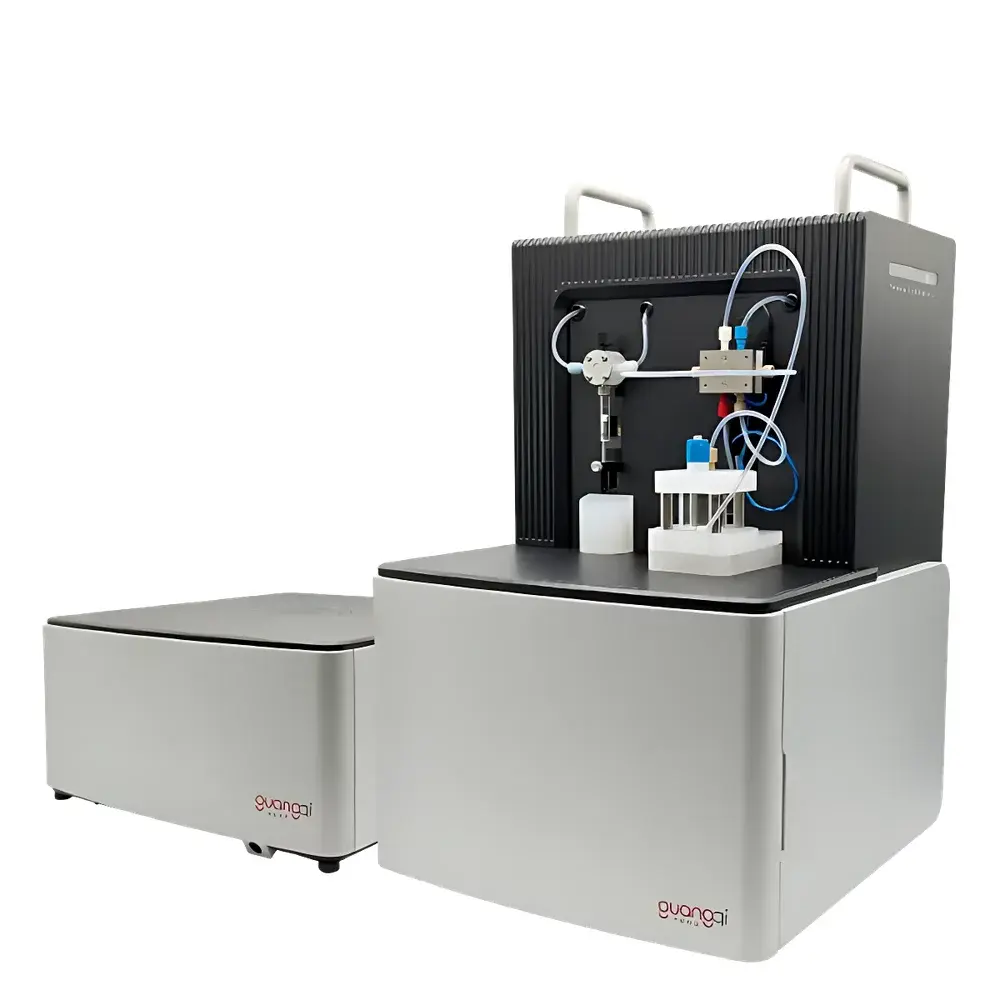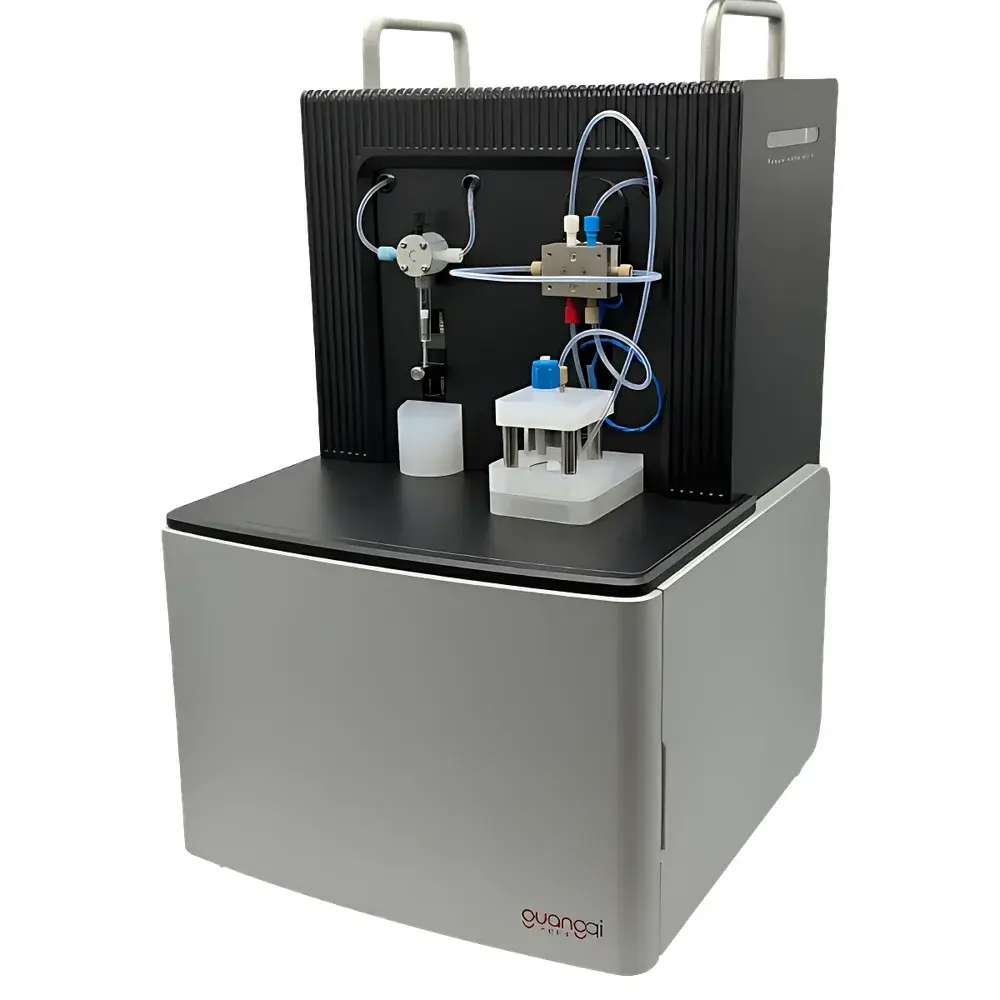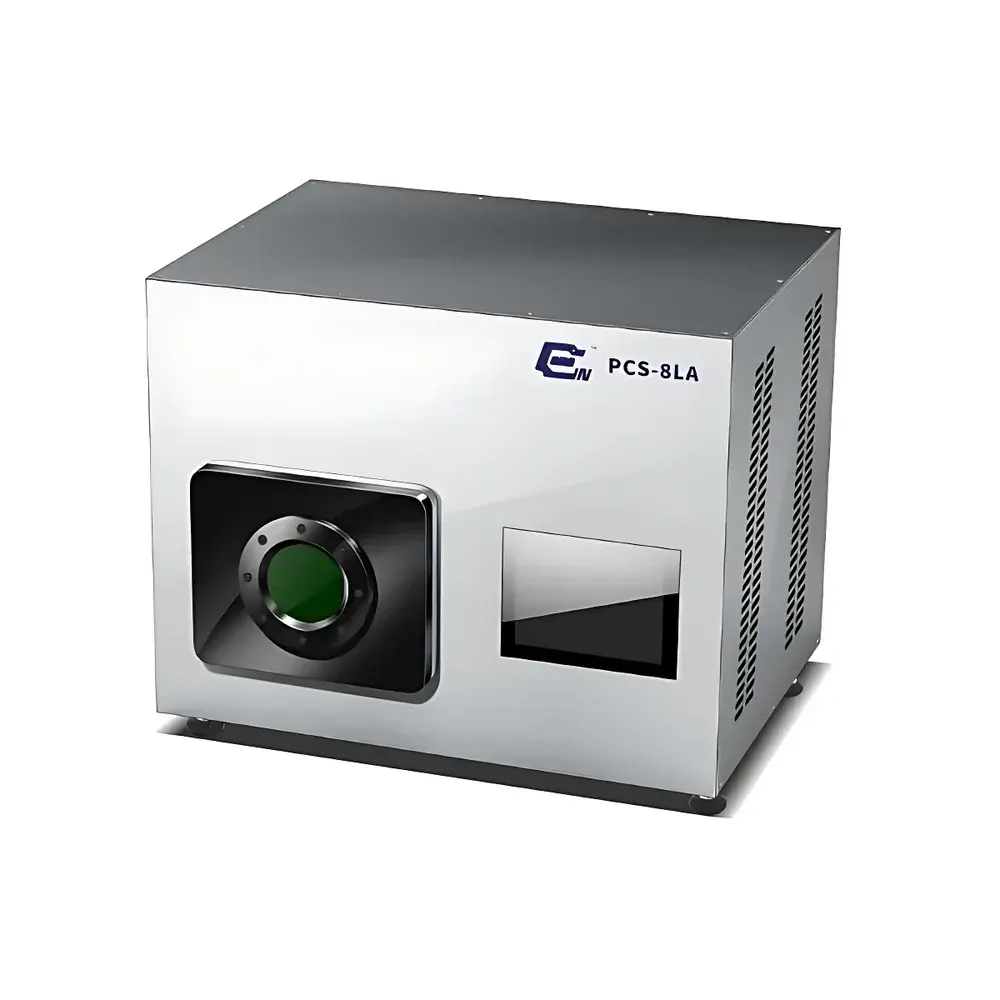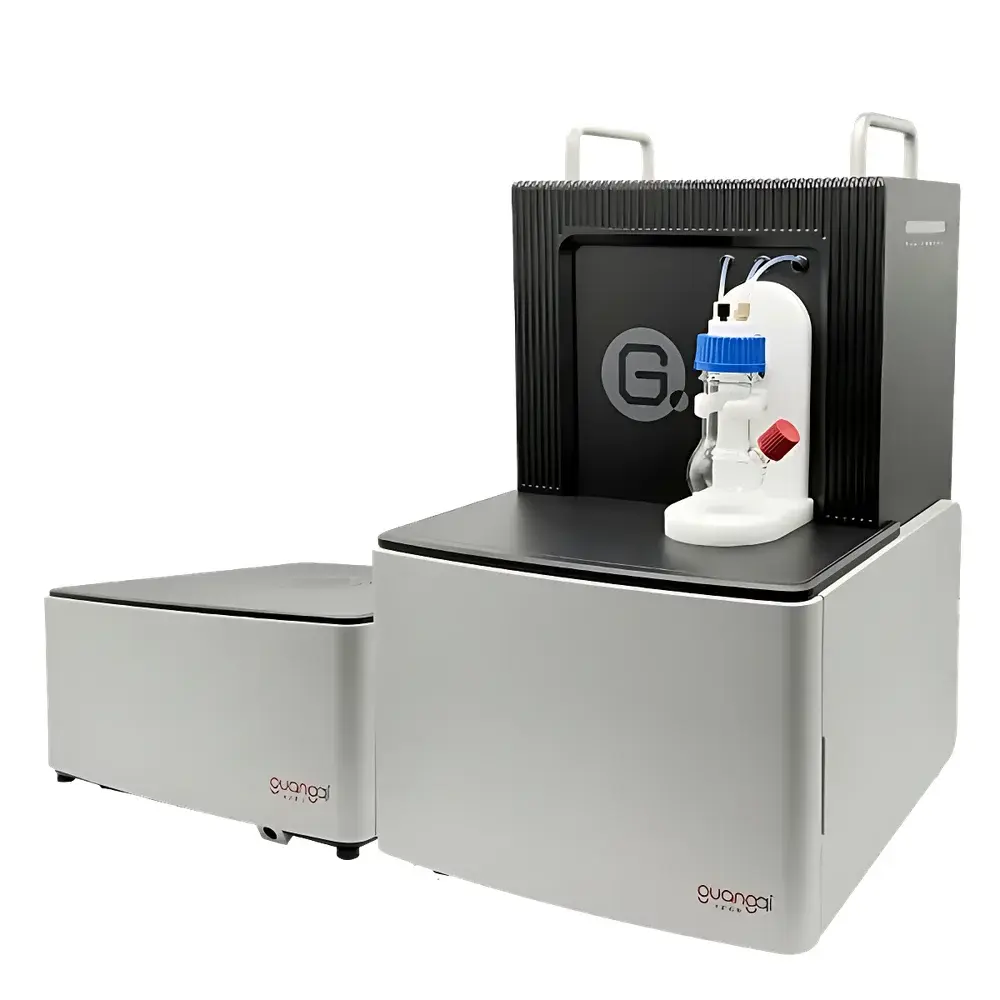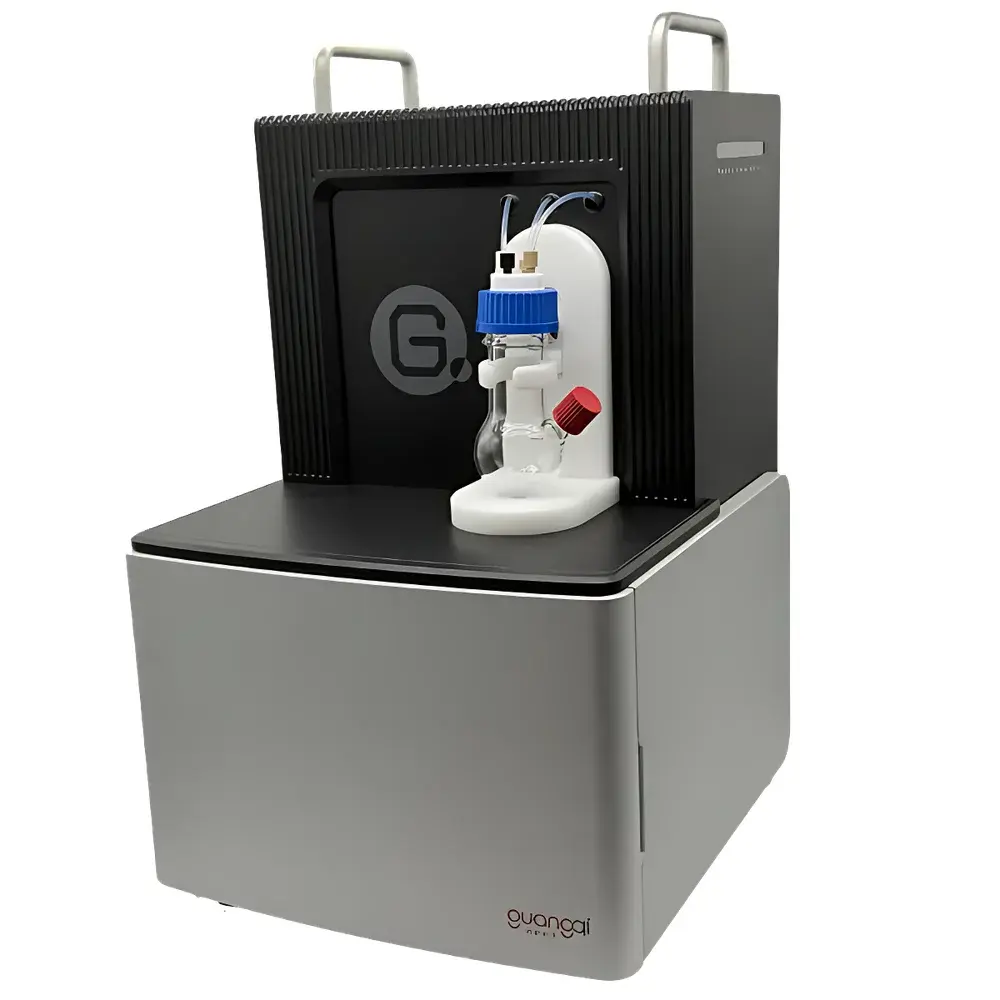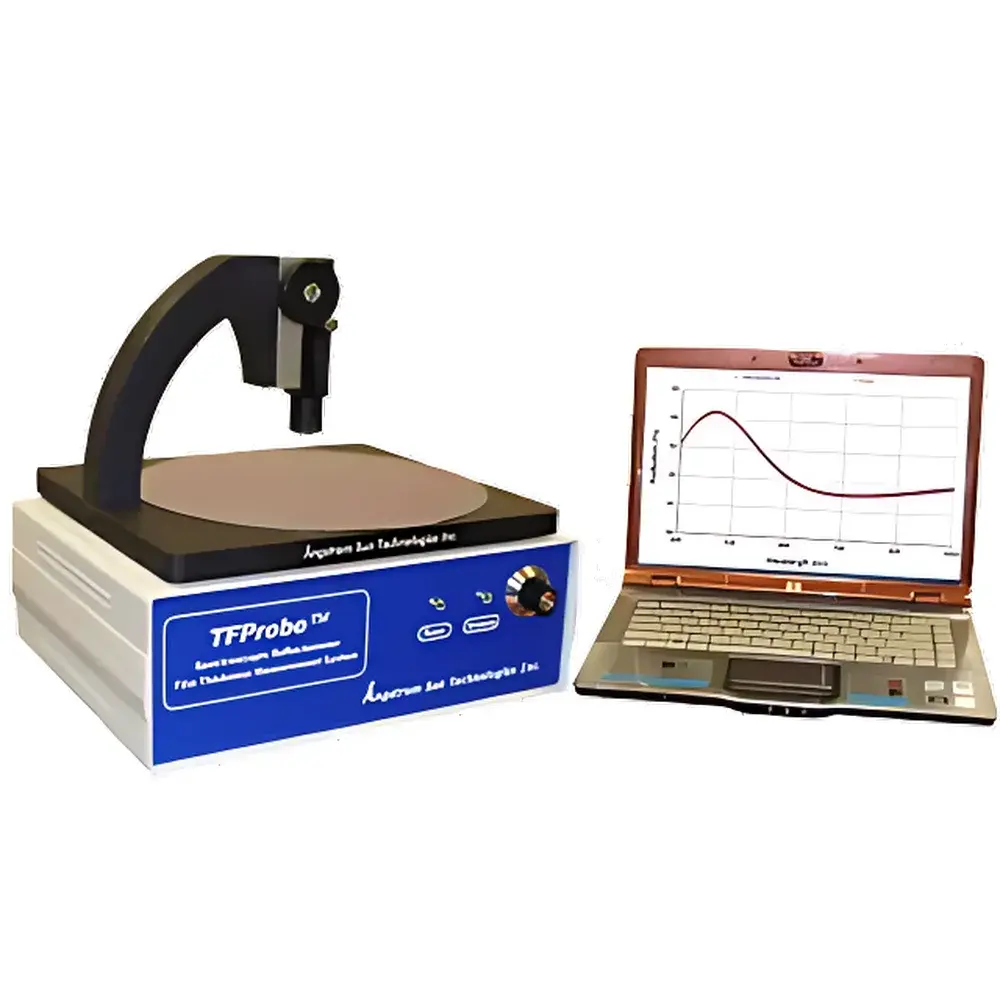
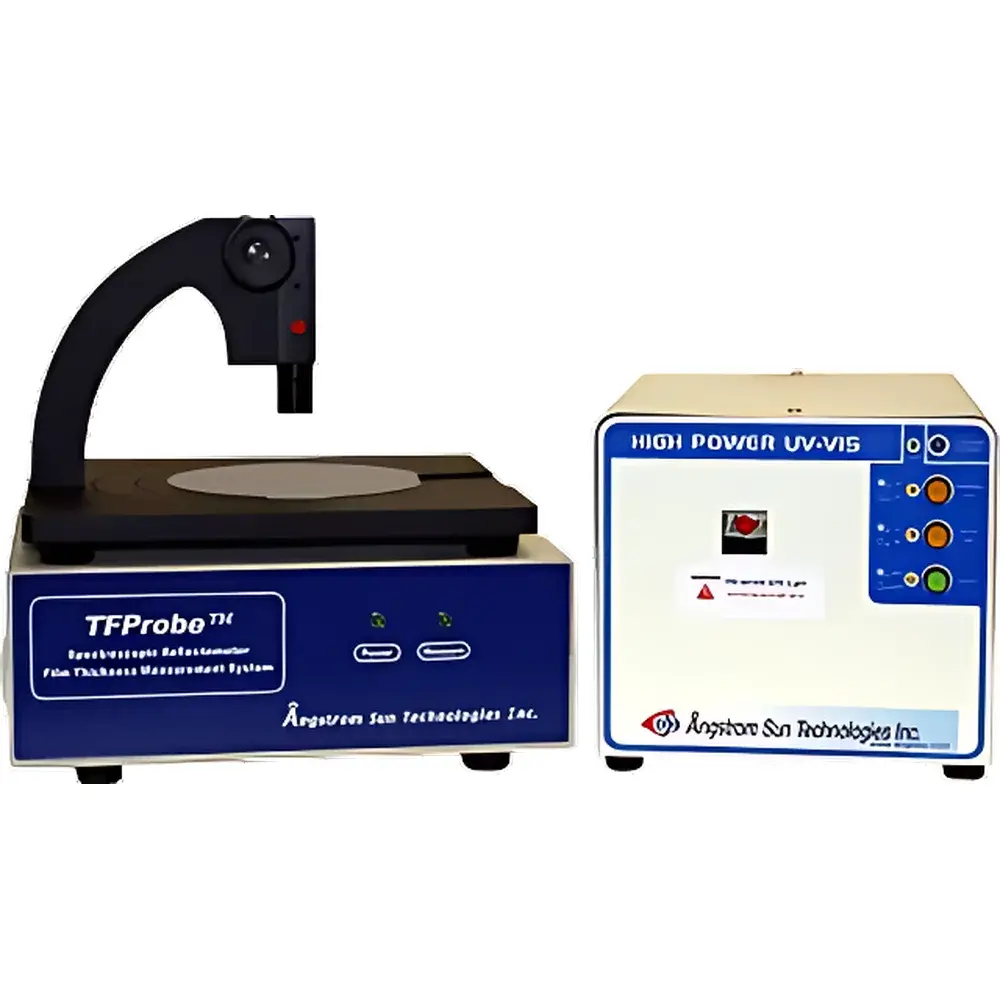
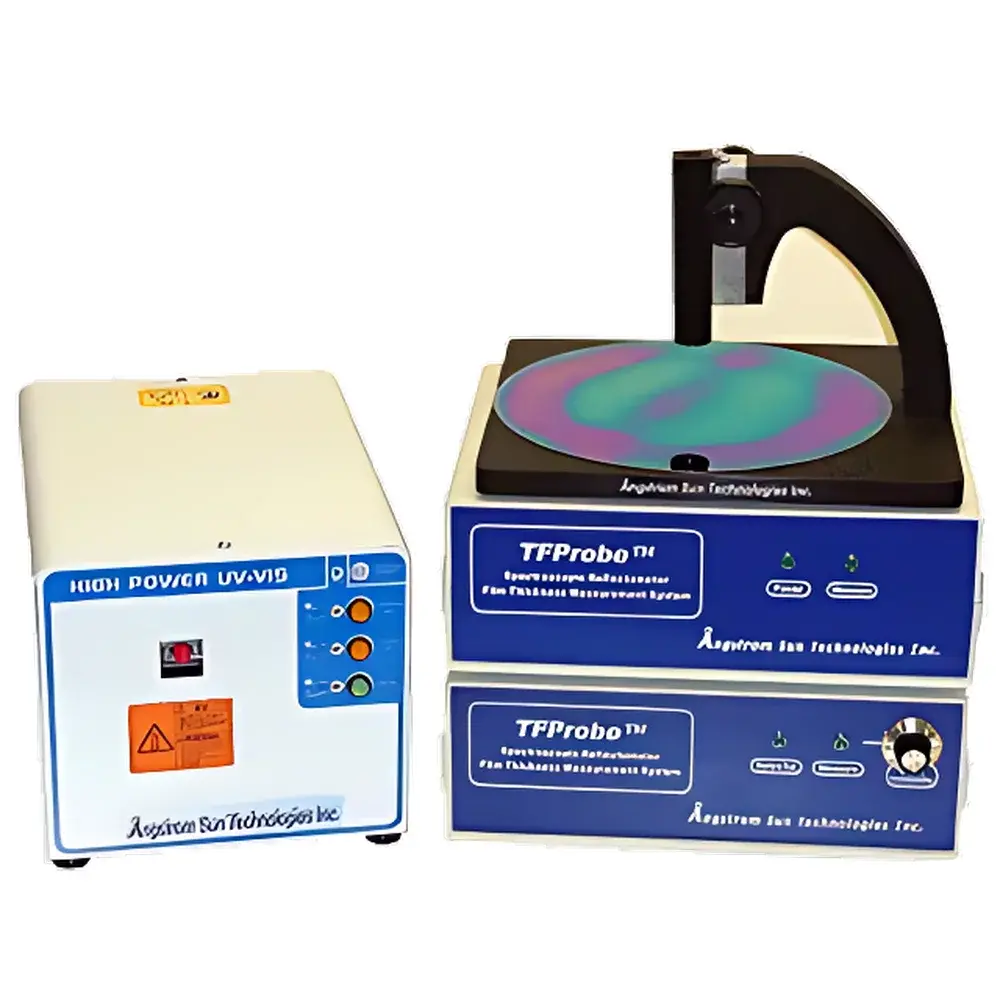
Angstrom Sun SR Series Spectral Reflectometer
| Brand | Angstrom Sun |
|---|---|
| Origin | USA |
| Manufacturer Type | Authorized Distributor |
| Origin Category | Imported |
| Model | SR Series |
| Pricing | Upon Request |
Overview
The Angstrom Sun SR Series Spectral Reflectometer is a precision optical metrology instrument engineered for rapid, non-contact characterization of thin-film structures in semiconductor fabrication, photovoltaics, and optical coating development. Operating on the principle of broadband spectral reflectance measurement at near-normal incidence, the SR Series captures intensity-versus-wavelength response across user-selectable spectral ranges—from visible (VIS) to near-infrared (NIR)—enabling robust modeling of film thickness, refractive index (n), and extinction coefficient (k). Unlike general-purpose spectrophotometers, the SR Series integrates purpose-built optical architecture—including high-stability illumination optics, thermally stabilized array detectors, and calibrated reference channels—to ensure high reproducibility (<0.2% RSD over 8-hour drift test) and traceable measurement uncertainty. Its design prioritizes operational simplicity without compromising metrological integrity, making it suitable for routine QC/QA in production environments as well as exploratory R&D labs requiring fast turnaround on known or low-complexity stack configurations (up to 5-layer models).
Key Features
- Modular spectral coverage: Configurable wavelength ranges spanning 350–1700 nm, with optimized options for telecom bands (O-, E-, S-, C-, L-, U-bands), PV absorber characterization (e.g., CIGS, perovskites), and AR/HR coating validation.
- Array-based detection system enabling full-spectrum acquisition in <10 ms—ideal for real-time process monitoring and inline integration.
- Long working distance (≥25 mm standard) with motorized focus adjustment and large sample stage (up to 200 × 200 mm) accommodating wafers, substrates, and irregular components.
- Multi-mode illumination: Interchangeable broadband sources (tungsten-halogen, deuterium, or supercontinuum) with programmable intensity control and optional polarization filters.
- Native support for transmission, absorption, and angle-resolved reflectance measurements via field-upgradable hardware modules.
- Robust mechanical design compliant with ISO 14644-1 Class 5 cleanroom compatibility; vibration-damped base and ESD-safe enclosure.
Sample Compatibility & Compliance
The SR Series accommodates rigid and semi-rigid substrates including silicon, sapphire, fused silica, glass, and metal-coated wafers (2″ to 8″ diameter), with optional fixtures for curved surfaces (radius ≥5 mm) and patterned structures. It supports both flat and textured films with surface roughness up to 50 nm RMS. All configurations meet ASTM E275–22 (Standard Practice for Calibration of Spectrophotometers) and are compatible with GLP/GMP documentation workflows. Data acquisition and analysis comply with FDA 21 CFR Part 11 requirements when used with TFProbe 3.3’s audit-trail-enabled mode, including electronic signatures, session logging, and immutable result archiving.
Software & Data Management
TFProbe software—available in two validated editions—provides full spectral modeling and database-driven analysis. TFProbe 2.4 (Windows 32/64-bit) delivers intuitive interface navigation, pre-loaded optical constant libraries (e.g., Palik, SOPRA), and support for Cauchy, Sellmeier, and Tauc-Lorentz dispersion models. TFProbe 3.3 extends functionality with advanced fitting algorithms (Levenberg-Marquardt + global optimization), EMA-based nanocomposite modeling, multi-sample batch processing, and API access for LabVIEW and Python integration. Both versions generate ASTM-compliant reports with embedded metadata (instrument ID, calibration date, operator, environmental conditions), exportable in CSV, XML, and PDF formats. Raw spectra and model residuals are stored in HDF5 format for long-term archival and third-party analysis.
Applications
- Semiconductor process control: Thickness and n/k monitoring of SiO₂, SiNₓ, TiO₂, and ALD-grown layers on front-end wafers.
- Photovoltaic R&D: In-line evaluation of CIGS, CdTe, and perovskite absorber layer uniformity during deposition.
- Optical coating QA: Performance verification of anti-reflection (AR), high-reflection (HR), and dichroic filters across telecom wavelengths.
- MEMS/NEMS fabrication: Characterization of sacrificial layers and release etch depth uniformity.
- Research-grade thin-film metrology: Rapid screening of novel 2D materials (MoS₂, WS₂), transparent conductive oxides (ITO, AZO), and plasmonic nanostructures.
FAQ
What is the minimum measurable film thickness with the SR Series?
Typical lower limit is ~1 nm for high-contrast interfaces (e.g., Si/SiO₂), depending on spectral range, signal-to-noise ratio, and model complexity.
Can the SR Series measure rough or patterned surfaces?
Yes—via optional curved-surface adapter and large-spot (>1 mm Ø) illumination configuration; 3D topography correlation requires integration with external profilometry data.
Is TFProbe software validated for regulated environments?
TFProbe 3.3 includes 21 CFR Part 11 compliance features (audit trail, role-based access, electronic signature) and is documented per IQ/OQ protocols upon request.
How does the SR Series differ from spectroscopic ellipsometers?
While ellipsometers provide higher sensitivity to ultra-thin films (<0.5 nm) and anisotropic layers, the SR Series offers superior speed, ease of use, and cost efficiency for routine thickness control of isotropic, single- or few-layer stacks.
Can I upgrade my SR system to ellipsometry capability?
Yes—Angstrom Sun offers field-installable MSP (Micro-Spectrophotometer) and SRM (Spectral Reflectance Mapping) upgrades, and qualified users may trade in SR hardware toward a full SE-400 or EP-500 ellipsometer platform.