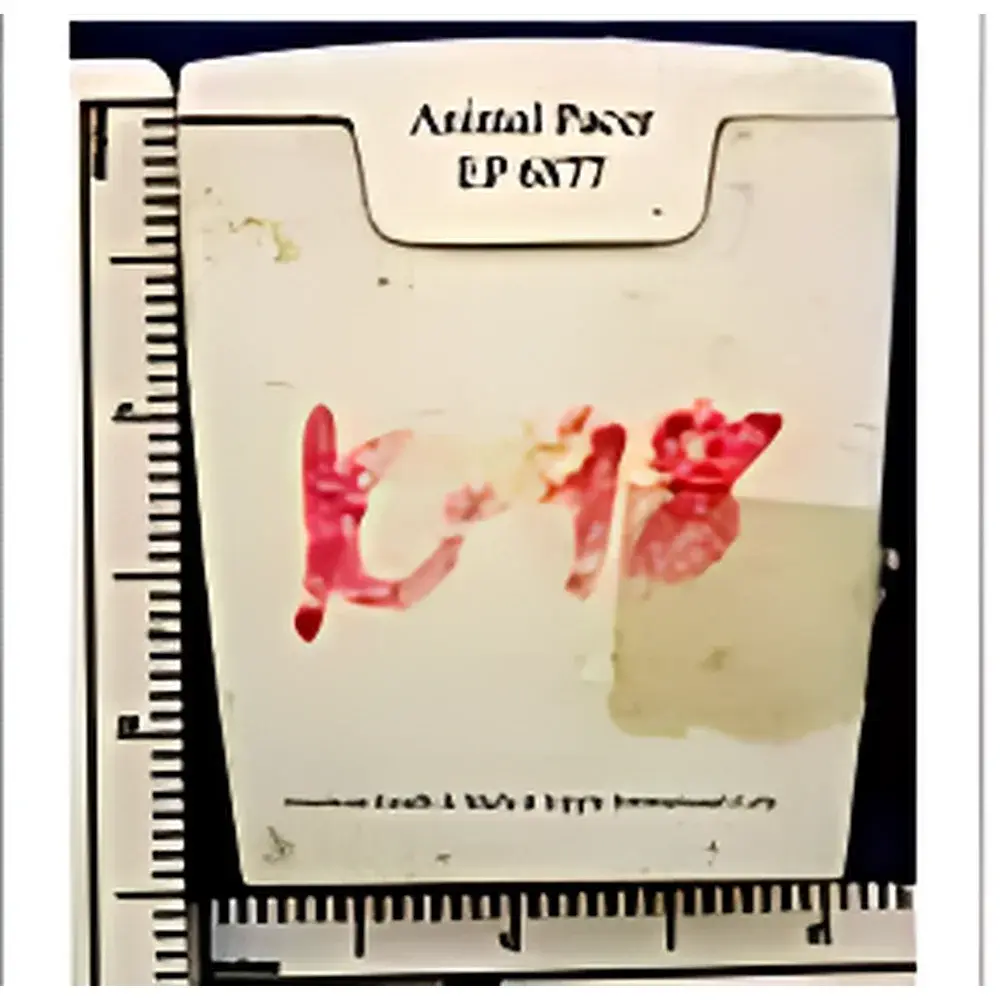
Animal Pacer EP 6877
| [Origin | USA |
|---|---|
| Manufacturer Type | Distributor |
| Origin Category | Imported |
| Model | EP 6877 |
| Price | Upon Request |
| Signal Amplitude Range | 0.8–8.0 VDC |
| Pulse Width Range | 0.2–4.0 ms |
| Pulse Rate Range | 120–460 ppm (500–130 ms interval) |
| Dimensions | 6.0 × 5.3 × 2.1 cm |
| Weight (w/o battery) | 26.0 g |
| Weight (w/ 9 V alkaline battery) | 70.5 g |
| Battery Life | ≥60 days under typical pacing conditions] |
Overview
The Animal Pacer EP 6877 is a compact, implantation-compatible cardiac pacing system engineered specifically for chronic electrophysiological studies in conscious, freely moving small and medium-sized laboratory animals—including rabbits, dogs, and other non-rodent species. Designed in accordance with established principles of transvenous and epicardial myocardial stimulation, the device delivers precisely controlled biphasic or monophasic square-wave pulses to induce and sustain paced rhythms during long-term heart failure modeling, arrhythmia induction, autonomic modulation, and pharmacological intervention studies. Its microcontroller-based architecture ensures stable output parameters independent of battery voltage decay over time—critical for maintaining consistent capture thresholds across multi-week experiments. The EP 6877 operates without external power sources beyond its internal 9 V alkaline battery, eliminating tethering constraints and enabling naturalistic behavioral observation during pacing protocols.
Key Features
- Ultra-compact polyethylene housing (6.0 × 5.3 × 2.1 cm; 26.0 g bare weight) optimized for subcutaneous implantation or external mounting in canine and lagomorph models
- Digitally adjustable pacing parameters: pulse amplitude (0.8–8.0 VDC), pulse width (0.2–4.0 ms), and rate (120–460 ppm), each independently tunable via front-panel rotary controls
- Stable output performance validated over ≥72 days under continuous load testing (100 Ω, 1.0 ms, 300 ppm), with amplitude drift <0.05 V/day until terminal voltage drop below 2.8 VDC
- Included accessories: sterile-compatible myocardial pacing lead with insulated stainless-steel electrodes and 1.2 m extension cable with Luer-lock interface for secure connection to pacing electrodes
- No firmware updates or software drivers required—fully analog control logic ensures deterministic timing and zero latency between command input and pulse delivery
- Compliant with ISO 14971:2019 risk management standards for medical devices used in preclinical research environments
Sample Compatibility & Compliance
The EP 6877 is validated for use in conscious, unrestrained animal models where physiological integrity must be preserved throughout chronic pacing protocols. It has been extensively applied in pacing-induced heart failure (PIHF) models in beagle dogs and New Zealand White rabbits, supporting studies compliant with NIH Guide for the Care and Use of Laboratory Animals and AAALAC International accreditation requirements. While not intended for human use or regulatory submission as a Class III medical device, the system adheres to electromagnetic compatibility (EMC) benchmarks defined in IEC 61326-1 for laboratory equipment. All materials contacting biological tissue meet USP Class VI biocompatibility specifications. Device calibration and functional verification are performed per SOPs aligned with GLP principles, including documented traceability of output parameters using calibrated oscilloscope and precision load resistors.
Software & Data Management
The EP 6877 operates as a standalone analog stimulator and does not require proprietary software, drivers, or computer interfacing. This design eliminates cybersecurity vulnerabilities, software validation burdens, and interoperability constraints common in digitally networked instrumentation. All parameter settings are manually configured and mechanically retained—ensuring reproducibility across repeated experimental sessions without reliance on digital memory or firmware persistence. For integration into larger data acquisition ecosystems (e.g., ADInstruments LabChart, Spike2, or National Instruments DAQ systems), users may record pacing triggers via TTL synchronization output (available upon request with optional accessory module). Audit trails for device usage, battery replacement dates, and calibration verifications should be maintained manually in laboratory notebooks or ELN systems to satisfy institutional GLP/GCP documentation requirements.
Applications
- Chronic pacing-induced heart failure modeling in conscious dogs (≥14 days at 240–280 ppm)
- Acute and subacute ventricular tachyarrhythmia induction in rabbit Langendorff and in vivo preparations
- Assessment of antiarrhythmic drug efficacy under controlled pacing stress
- Autonomic nervous system modulation studies via atrioventricular nodal conduction analysis
- Validation of novel pacing electrode designs and lead-tissue interface stability
- Cardiac resynchronization therapy (CRT) feasibility testing in large-animal dyssynchrony models
FAQ
Is the EP 6877 FDA-cleared for human use?
No. The EP 6877 is strictly designated for preclinical research in animals and is not approved, cleared, or intended for diagnostic or therapeutic use in humans.
What is the recommended battery replacement schedule?
A fresh 9 V alkaline battery is required at the start of each experiment. Under typical pacing conditions (e.g., 240 ppm, 1.0 ms, 5.0 V), battery life exceeds 60 days; however, amplitude should be verified daily using an oscilloscope or calibrated voltmeter to ensure consistent myocardial capture.
Can the EP 6877 be sterilized for implantation?
The device housing is compatible with ethylene oxide (EtO) sterilization. Autoclaving or gamma irradiation is not recommended due to potential damage to internal circuitry and battery compartment seals.
Does the device support demand pacing or sensing functionality?
No. The EP 6877 operates exclusively in fixed-rate (asynchronous) mode. It does not include intrinsic rhythm sensing, refractory period management, or adaptive pacing algorithms.
How is output verification performed prior to animal use?
Output waveform integrity must be confirmed using a 100 Ω dummy load and digital storage oscilloscope, verifying pulse amplitude, width, rate, and rise/fall times against manufacturer specifications before each experimental session.