Animal Treadmill for Rodent Behavioral Studies
| Origin | USA |
|---|---|
| Manufacturer Type | Authorized Distributor |
| Import Status | Imported |
| Model | Animal Treadmill |
| Pricing | Upon Request |
Overview
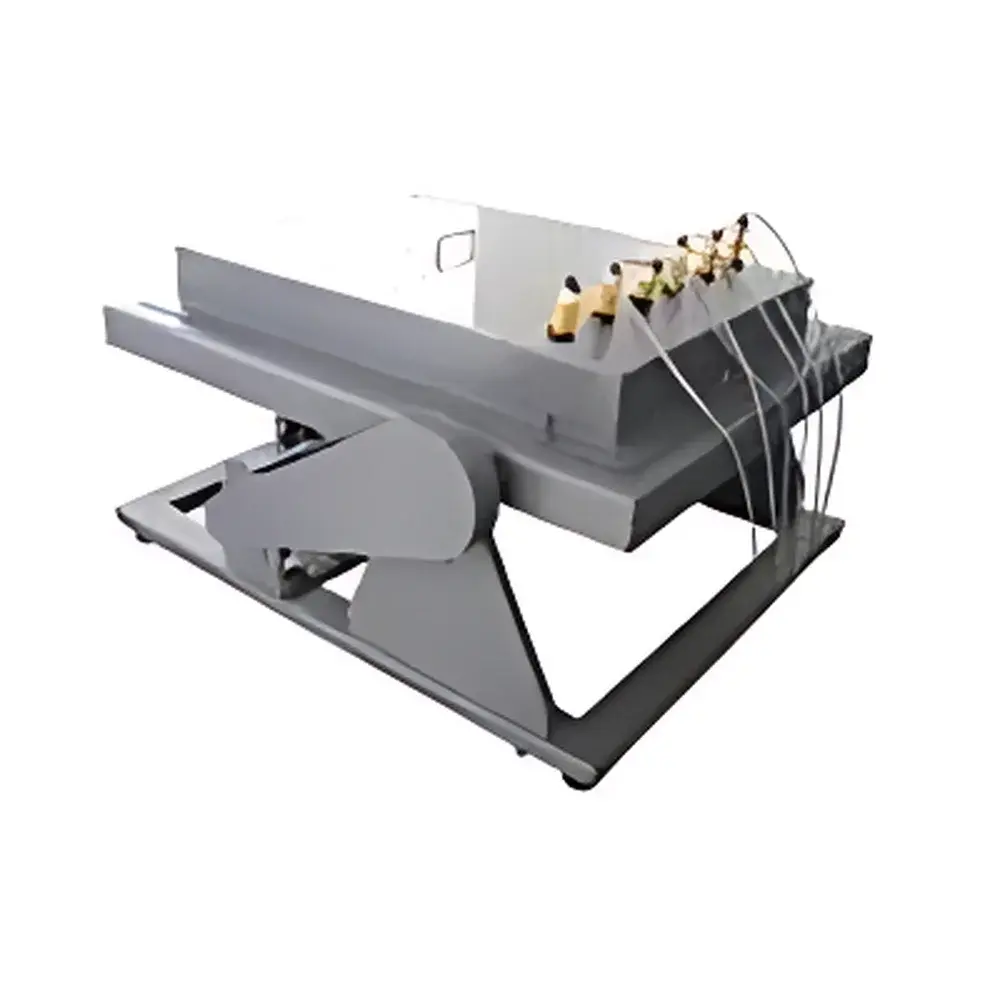
The Animal Treadmill for Rodent Behavioral Studies is a precision-engineered, multi-channel motorized treadmill system designed for standardized assessment of locomotor endurance, fatigue onset, exercise capacity, and voluntary/involuntary running behavior in laboratory rodents—primarily mice and rats. Based on the principle of forced or semi-automated ambulation under controlled biomechanical conditions, the system enables quantitative measurement of time-to-exhaustion (TTE), velocity-dependent performance thresholds, and behavioral response latency. Its modular architecture supports both acute physiological challenge paradigms and longitudinal training protocols, making it suitable for preclinical research in neurology, cardiology, metabolic disease, aging, and pharmacological intervention studies.
Key Features
- Eight independent, optically isolated running lanes—each equipped with a ceiling-mounted infrared beam sensor to detect animal disengagement from the belt surface with millisecond-level temporal resolution.
- Programmable speed control ranging from 0.07 m/s to 2.0 m/s, supporting both constant-velocity and linearly accelerating protocols; acceleration profiles can be user-defined and combined with plateau phases within a single run sequence.
- Dedicated real-time timer per channel, synchronized with beam-break detection logic to record precise time-on-belt duration and automatically terminate trials upon exhaustion or safety threshold breach.
- Optional aversive stimulation module compatible with adjustable foot-shock delivery (via embedded stainless-steel grid floor), enabling operant conditioning paradigms such as avoidance learning or motivational threshold testing.
- Modular enclosure design with transparent acrylic side panels and ventilated top for unobstructed visual observation and integration with external video tracking systems (e.g., EthoVision-compatible setups).
- Robust aluminum frame and low-noise DC motor drive ensure mechanical stability and minimal acoustic disturbance during long-duration experiments.
Sample Compatibility & Compliance
The treadmill accommodates standard adult C57BL/6, BALB/c, Sprague-Dawley, and Wistar rodents (body weight range: 18–50 g for mice; 200–500 g for rats). Each lane features adjustable barrier walls and non-slip belt texture optimized for natural gait mechanics. The system complies with NIH Guide for the Care and Use of Laboratory Animals standards and supports adherence to institutional IACUC protocol requirements. All electrical components meet UL 61010-1 safety certification for laboratory equipment. Data acquisition logs—including timestamps, speed profiles, and beam-break events—are structured to support GLP-compliant documentation workflows when paired with validated software environments.
Software & Data Management
While hardware operation can be conducted via front-panel controls, full experimental control and data export are achieved through optional Windows-based software (v3.2+). The application provides graphical protocol builder, real-time lane status monitoring, automatic event annotation (e.g., “exhaustion,” “recovery pause”), and CSV/TXT export of raw timing and velocity datasets. Audit trails include operator ID, session timestamp, parameter versioning, and modification history—supporting FDA 21 CFR Part 11 readiness when deployed in regulated preclinical development settings. Integration with MATLAB and Python APIs is available for custom algorithm development (e.g., stride cycle analysis, fatigue index derivation).
Applications
- Evaluation of skeletal muscle fatigue resistance in models of muscular dystrophy or mitochondrial myopathy.
- Assessment of dopaminergic function and motor coordination deficits in Parkinson’s disease rodent models.
- Quantification of cardiorespiratory adaptation following chronic exercise training or pharmacologic modulation (e.g., PPARδ agonists).
- Behavioral phenotyping of transgenic lines exhibiting altered anxiety-related locomotion or reward-seeking behavior.
- Validation of neuroprotective or ergogenic compounds in dose-response and time-course studies.
- Standardized stress induction protocol for HPA axis activation profiling (corticosterone kinetics, Fos immunoreactivity mapping).
FAQ
Is the treadmill compatible with simultaneous video-based gait analysis?
Yes—the open-top design and side-mounted optical access allow seamless integration with high-speed cameras and third-party motion capture platforms.
Can speed profiles be modified mid-trial?
No—protocols must be preloaded; however, up to 16 distinct stepwise or ramped sequences can be stored and recalled for rapid experimental iteration.
What safety mechanisms prevent injury during high-speed runs?
Each lane includes an emergency stop button, auto-shutdown upon sustained beam interruption (>2 s), and programmable maximum run duration limits.
Is calibration required before use?
Belt speed accuracy is factory-verified using laser tachometry; users receive a traceable calibration certificate. Annual verification is recommended per ISO/IEC 17025 guidelines.
Does the system support wireless data transmission?
Not natively—data transfer occurs via USB 2.0 interface; Ethernet connectivity is available as an optional upgrade for networked lab environments.
Related Products