
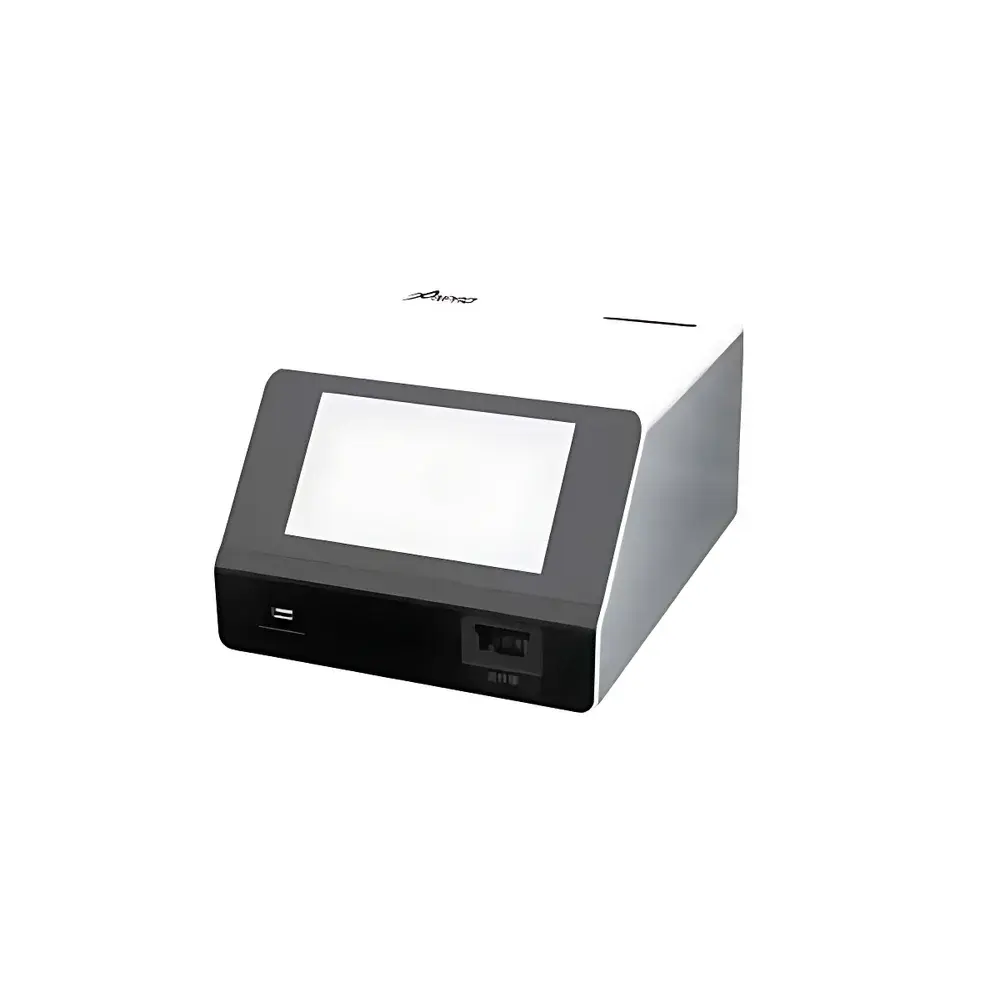
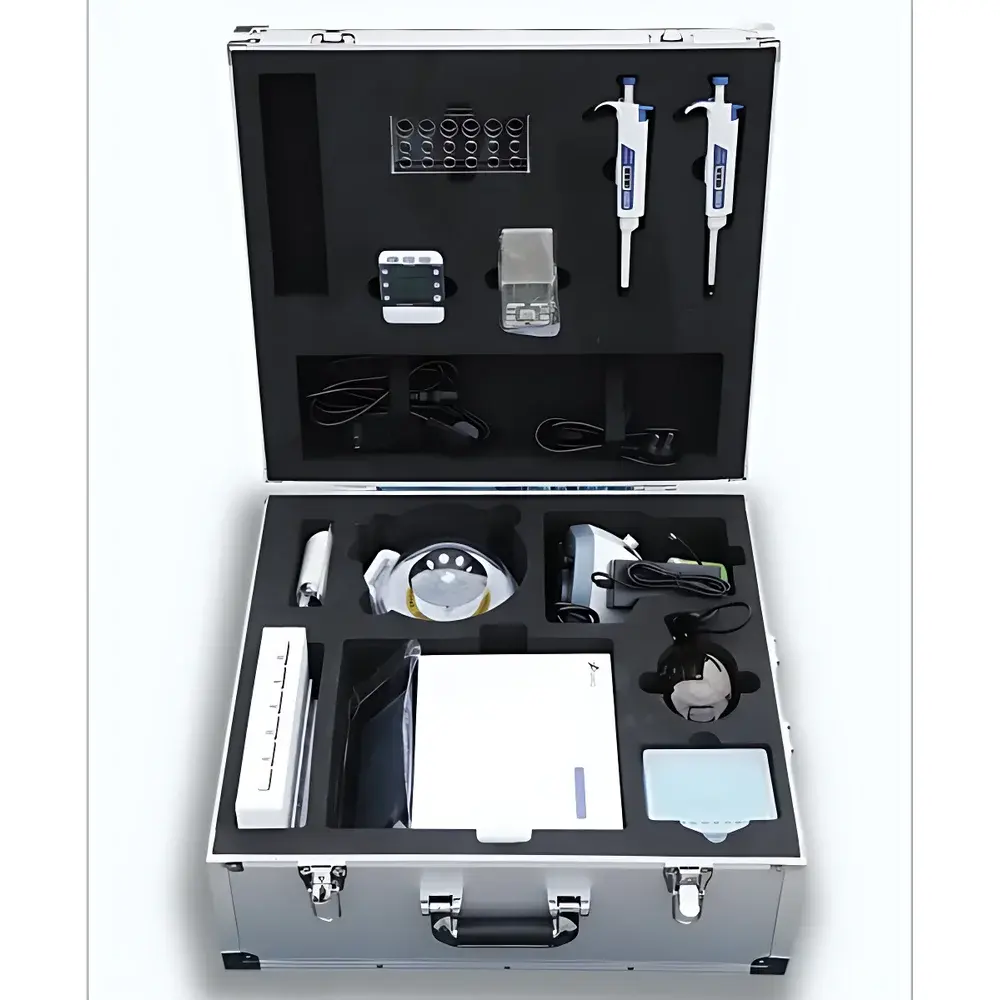
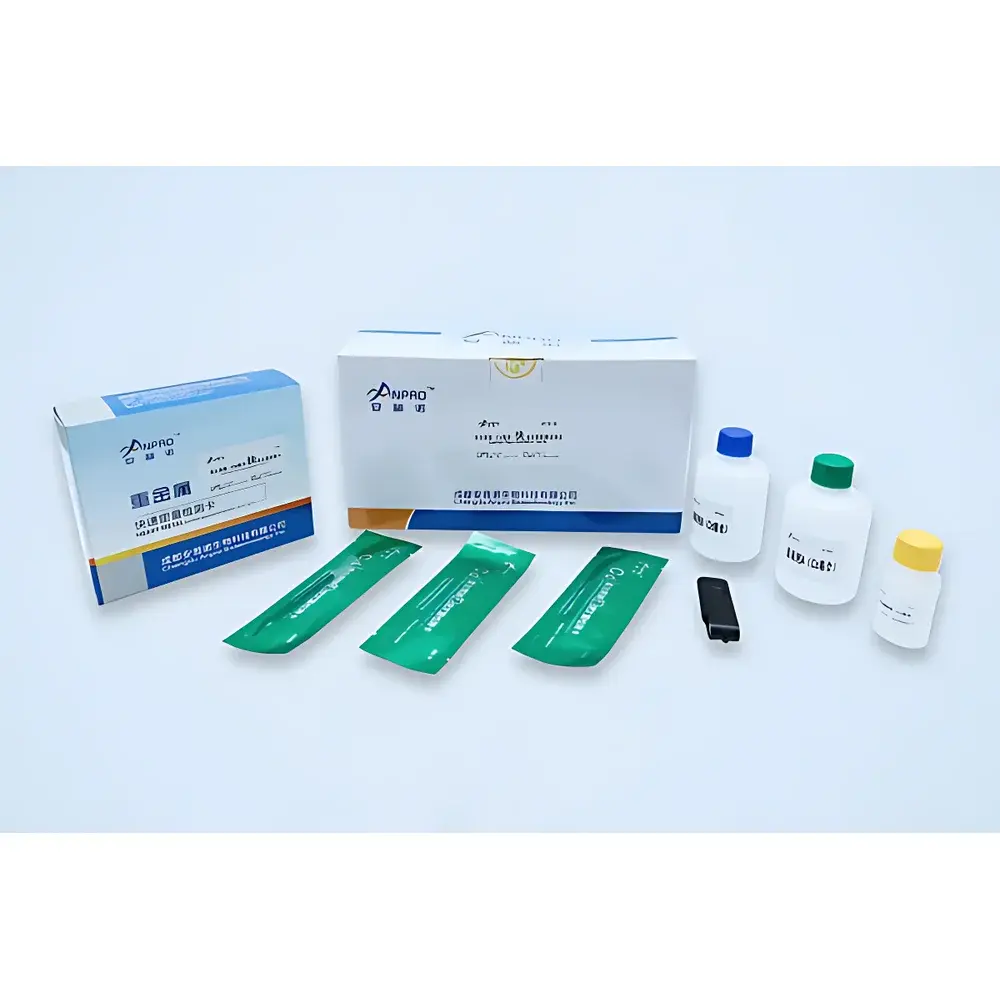
ANPRO SKJ-IA-04 Immuno-Chromatographic Gold Nanoparticle Quantitative Analyzer for Cadmium and Heavy Metals in Cereals and Food Commodities
| Brand | ANPRO |
|---|---|
| Origin | Sichuan, China |
| Manufacturer Type | Direct Manufacturer |
| Regional Classification | Domestic (China) |
| Model | SKJ-IA-04 |
| Price Range | USD 7,000 – 14,000 |
| Functionality | Multi-analyte (Cd, Pb, Cu, Cr) |
| Sample Versatility | Universal for solid and liquid food matrices |
| Optical Detection Wavelength | 410 nm |
| Assay Time per Sample | ≤25 minutes |
| Coefficient of Variation (CV) | ≤0.2% |
| Detection Channels | 6 parallel optical channels |
Overview
The ANPRO SKJ-IA-04 is a benchtop-to-field deployable immuno-chromatographic analyzer engineered for quantitative detection of heavy metal ions—including cadmium (Cd), lead (Pb), copper (Cu), and chromium (Cr)—in cereals, grains, feedstuffs, herbal materials, and other food commodities. It leverages colloidal gold-labeled monoclonal antibody conjugates immobilized on nitrocellulose membranes to enable competitive immunochromatographic binding. Upon sample extraction and dilution, target metal ions compete with immobilized metal–chelate haptens for limited antibody binding sites. The resulting signal intensity—measured via reflectance photometry at 410 nm—is inversely proportional to analyte concentration and calibrated against pre-loaded, instrument-specific standard curves. This platform bridges the gap between rapid screening and laboratory-grade quantification, delivering results traceable to reference methods such as graphite furnace atomic absorption spectroscopy (GFAAS) and ICP-MS, while operating independently of centralized labs or hazardous reagents.
Key Features
- Six-channel simultaneous detection architecture enables throughput of up to six independent samples per assay cycle, reducing total analysis time without compromising inter-channel reproducibility.
- Integrated 410 nm reflectance photometer with temperature-stabilized LED source and high-sensitivity CMOS sensor ensures consistent optical readout across ambient conditions (10–35 °C).
- Pre-calibrated, non-replaceable calibration cartridges store validated standard curves for Cd (0–1 ppm), Pb (0–1 ppm), Cu (0–20 ppm), and Cr (0–5 ppm), eliminating manual standard handling and minimizing operator-induced variability.
- Resistive touchscreen interface (7-inch, 800×480 resolution) supports guided workflow navigation, real-time result visualization, and on-device data review without external computing hardware.
- Onboard thermal printer provides immediate hard-copy documentation compliant with GLP record-keeping requirements; printouts include sample ID, timestamp, channel-specific absorbance values, and calculated concentrations.
- Portable form factor (hand-carry or telescopic handle design) meets IP54 environmental rating for dust and splash resistance, enabling use in grain elevators, feed mills, border inspection posts, and mobile food safety units.
Sample Compatibility & Compliance
The SKJ-IA-04 accepts homogenized, acid-extracted samples from rice, wheat, maize, barley, soybean meal, alfalfa hay, green tea leaves, dried ginseng root, freshwater fish tissue, and leafy vegetables. Extraction protocols follow AOAC Official Method 2019.01 (for Cd/Pb in cereals) and are compatible with ISO 17294-2:2016 for multi-element sample preparation. All test strips are manufactured under ISO 13485-certified cleanroom conditions and validated per CLSI EP12-A2 guidelines for qualitative/quantitative lateral flow assays. Instrument firmware supports audit trail logging (user ID, timestamp, result modification history) aligned with FDA 21 CFR Part 11 electronic record requirements. Performance validation reports are available from the China National Center for Food Safety Risk Assessment (CFSA) and the Grain Quality Supervision and Inspection Center of Sichuan Province.
Software & Data Management
Embedded Linux-based firmware includes local data storage (≥10,000 test records) with automatic timestamping and GPS-assisted geotagging (via optional Bluetooth GNSS module). Data export options include USB mass storage (CSV), Bluetooth 5.0 (to Android/iOS tablets), and LTE-enabled cloud synchronization to ANPRO Cloud Platform—compatible with LIMS interfaces via HL7 v2.5 and RESTful API endpoints. Customizable reporting templates support regulatory submission formats required by GB 2762-2022 (Chinese National Standard for Contaminants in Foods) and EU Commission Regulation (EC) No 1881/2006. Firmware updates are delivered via signed OTA packages with SHA-256 verification.
Applications
- Pre-harvest and post-harvest monitoring of Cd accumulation in paddy rice fields and wheat belts using soil-plant bioavailability correlation models.
- Routine surveillance of imported feed ingredients at port-of-entry laboratories to verify compliance with Chinese import permit thresholds (e.g., Cd ≤ 0.1 mg/kg in compound feed).
- Verification testing in GMP-certified food processing facilities to confirm absence of cross-contamination during shared milling or blending operations.
- Field-deployed triage of suspect batches during foodborne illness investigations where heavy metal exposure is suspected (e.g., rice-based infant cereals, traditional herbal formulations).
- Supporting third-party certification bodies conducting HACCP plan validation for heavy metal control points in cereal supply chains.
FAQ
What regulatory standards does the SKJ-IA-04 support for heavy metal quantification in food?
It aligns with GB 2762-2022 (China), EU No 1881/2006, and Codex Alimentarius GSFA limits for Cd and Pb in cereals; method validation follows AOAC 2019.01 and ISO/IEC 17025:2017 competency criteria.
Can the instrument be used without internet connectivity?
Yes—full operation, calibration, data storage, and printing function offline; cloud sync occurs only when network is available.
Is operator training required to achieve stated repeatability (≤0.2% CV)?
Minimal training is needed; standardized extraction kits and pictorial SOPs reduce skill dependency; CV performance assumes adherence to supplied sample prep protocol.
How often must calibration cartridges be replaced?
Each cartridge supports ≥500 tests and is automatically deactivated upon expiration or full usage; replacement requires no recalibration due to embedded digital signature authentication.
Does the system support custom assay development for additional metals or matrices?
ANPRO offers OEM assay development services under NDA; current platform architecture supports integration of new hapten–antibody pairs validated per ICH Q5E comparability guidelines.






