
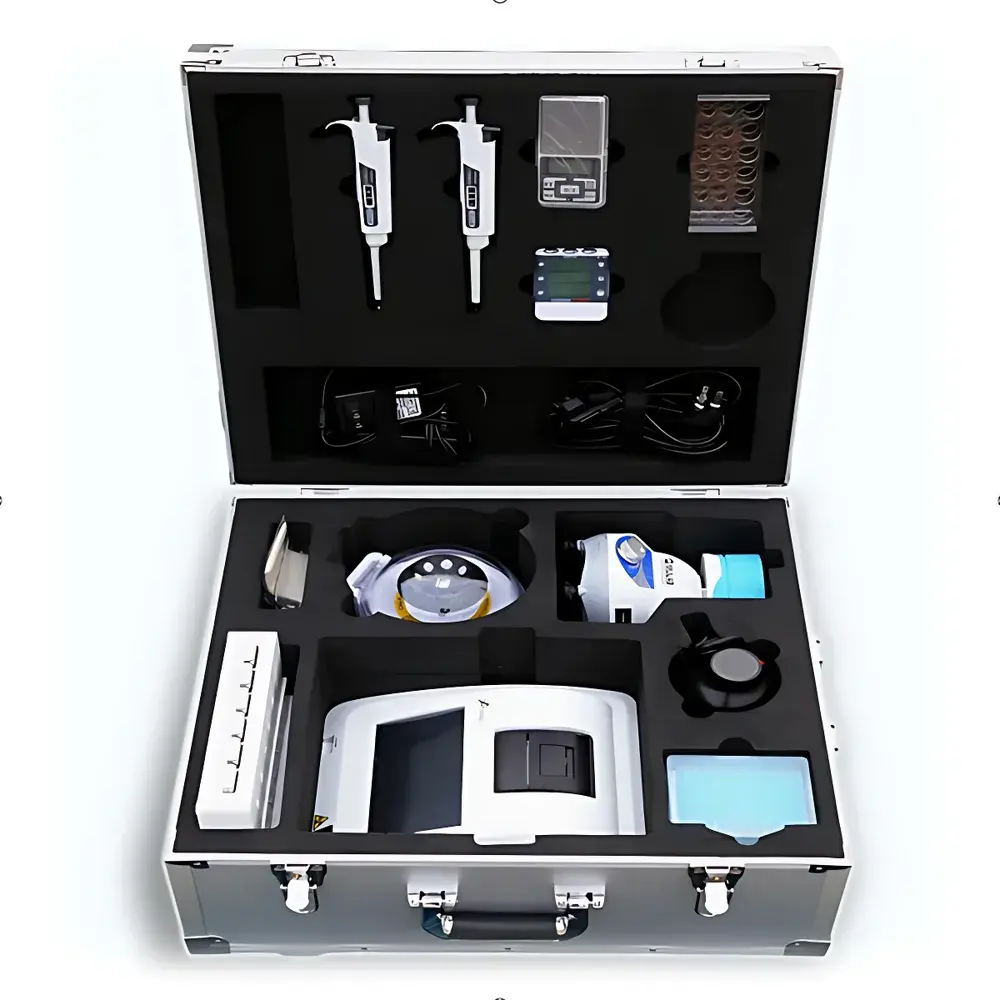
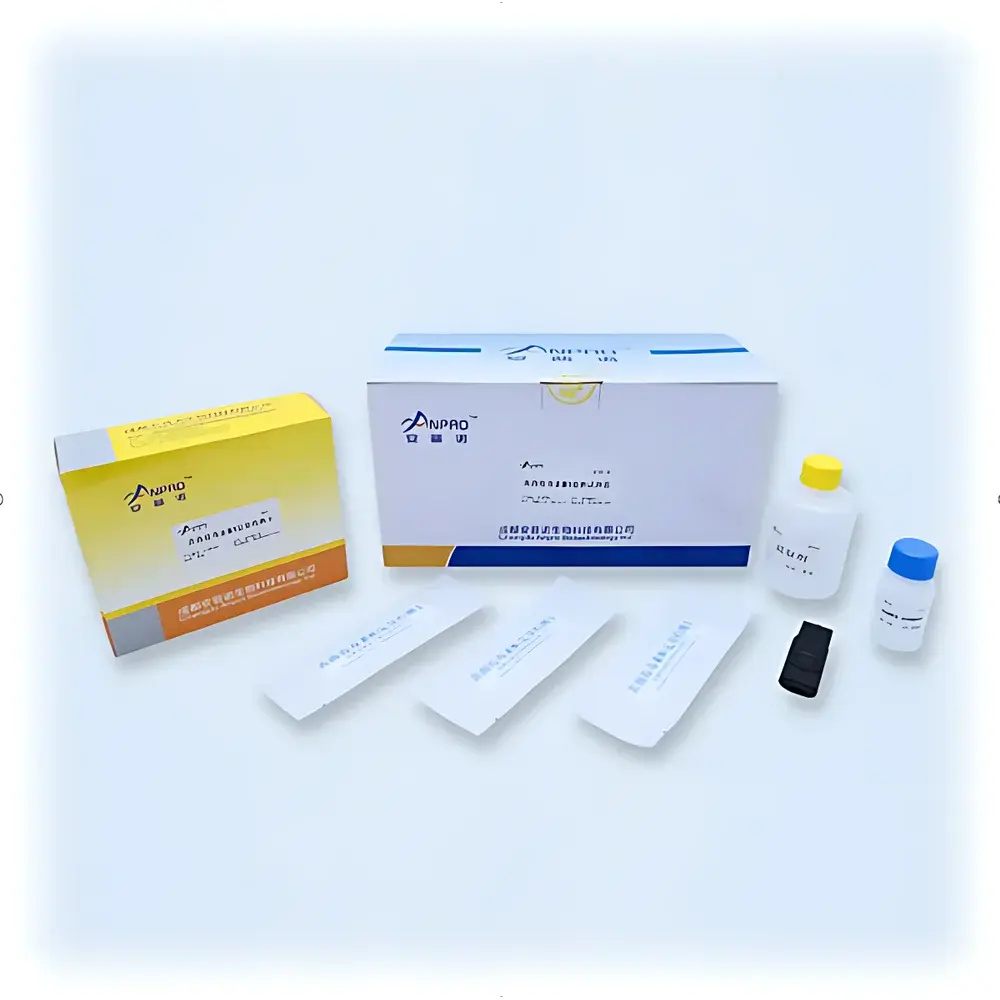
ANPRO SKJ-IA-Z Mycotoxin Rapid Quantitative Analyzer for Aflatoxins in Traditional Chinese Medicinal Materials
| Brand | ANPRO |
|---|---|
| Origin | Sichuan, China |
| Manufacturer Type | Direct Manufacturer |
| Regional Classification | Domestic (China) |
| Model | SKJ-IA-Z |
| Instrument Category | Aflatoxin Analyzer |
| Detection Principle | Immunochromatographic Colloidal Gold Assay |
| Display | 7-inch Capacitive Touchscreen |
| Test Format | Single-use, individually packaged lateral flow test strips |
| Storage Condition | Ambient Temperature |
| Detection Time | ≤8 min per assay |
| LOD | 1 ppb |
| Quantitative Range | 2–150 ppb for AFB₁ and Total Aflatoxins (B₁+B₂+G₁+G₂) |
| Regulatory Alignment | Compliant with 2015 Edition of Chinese Pharmacopoeia (ChP), Section on Aflatoxin Testing for 19 TCM materials |
Overview
The ANPRO SKJ-IA-Z Mycotoxin Rapid Quantitative Analyzer is a dedicated, field-deployable instrument engineered for the precise, quantitative detection of aflatoxin B₁ and total aflatoxins (B₁ + B₂ + G₁ + G₂) in traditional Chinese medicinal (TCM) materials. It implements a validated immunochromatographic colloidal gold assay—fully aligned with the analytical requirements specified in the 2015 Edition of the Chinese Pharmacopoeia (ChP). Per ChP monographs, 19 TCM species—including Chenpi (Citrus reticulata peel), Jangcan (Bombyx batryticatus), Taoren (Prunus persica seed), and Yuanzhi (Polygala tenuifolia root)—are subject to mandatory aflatoxin testing, with regulatory limits set at ≤5 μg/kg for AFB₁ and ≤10 μg/kg for total aflatoxins. The SKJ-IA-Z delivers quantitative results within ≤8 minutes per sample without requiring laboratory infrastructure, cold-chain reagent handling, or certified operator training—making it suitable for decentralized quality control across cultivation sites, processing facilities, wholesale markets, and regulatory inspection units.
Key Features
- Quantitative lateral flow analysis using proprietary colloidal gold–antibody conjugates with integrated reflectance photometry
- Onboard calibration via pre-programmed standard curves—eliminates manual standard handling and minimizes biosafety risk
- 7-inch capacitive touchscreen interface with intuitive, icon-driven workflow navigation in English and Simplified Chinese
- Integrated thermal printer for immediate hard-copy reporting compliant with GLP documentation standards
- Single-use, individually sealed test strips—stable at ambient temperature (15–30 °C) for ≥18 months; no refrigeration required
- Simultaneous six-channel detection capability with independent optical readout per strip
- Instrument validation data demonstrates correlation coefficient (r²) ≥0.995 versus reference HPLC-FLD methods across the 2–150 ppb range
Sample Compatibility & Compliance
The SKJ-IA-Z is optimized for aqueous extracts prepared from powdered TCM matrices following standardized extraction protocols (e.g., immunoaffinity column cleanup or solvent-based extraction per ChP General Chapter 2351). Validated sample types include dried fruit kernels (e.g., Semen Persicae, Semen Coicis), fermented insect-derived materials (e.g., Bombyx batryticatus), and resinous herbal tissues (e.g., Radix Polygalae). All assay procedures adhere to the method validation principles outlined in ICH Q2(R2) and are compatible with internal QC requirements under GMP Annexes for herbal drug manufacturing. The system supports audit-ready data retention—including operator ID, timestamp, lot number, and raw optical density values—for traceability in FDA 21 CFR Part 11–aligned environments when paired with optional networked data export.
Software & Data Management
Firmware v3.2 includes embedded data management tools supporting CSV export via USB port and optional Wi-Fi module (ANPRO-WiFi-Kit). Each result file contains: test ID, sample ID, assay date/time, operator code, strip lot number, measured concentration (ppb), pass/fail status against ChP thresholds, and confidence interval (±8% CV at 10 ppb). Audit logs record all user actions—including curve updates, calibration resets, and firmware modifications—with immutable timestamps. Software architecture complies with ISO/IEC 17025:2017 clause 7.7.1 for measurement traceability and supports integration into LIMS platforms via HL7-compatible API (available under enterprise licensing).
Applications
- Routine screening of incoming raw TCM materials at GMP-compliant decoction piece manufacturers
- Field verification during harvest and post-drying storage to mitigate mycotoxin accumulation risks
- Regulatory surveillance by provincial drug administration agencies conducting market surveillance programs
- Quality assurance in hospital pharmacy herbal dispensing units prior to clinical use
- Method transfer support for laboratories transitioning from qualitative rapid tests to quantitative compliance-grade workflows
FAQ
Does the SKJ-IA-Z meet Chinese Pharmacopoeia 2015 requirements for aflatoxin testing?
Yes—the assay protocol, limit definitions, and validation metrics are fully harmonized with ChP General Chapter 2351 and monograph-specific acceptance criteria.
Can the instrument quantify individual aflatoxins (B₁, B₂, G₁, G₂) separately?
No—it provides two quantitative outputs: AFB₁ concentration and total aflatoxin (B₁+B₂+G₁+G₂) concentration, consistent with ChP reporting requirements.
Is external calibration required before each batch of tests?
No—factory-loaded standard curves are stored in non-volatile memory; users perform only a single blank strip scan before initiating analysis.
What sample preparation method is recommended?
Refer to ANPRO Application Note APN-TCM-04: extraction using 70% methanol/water, centrifugation, dilution, and optional immunoaffinity column cleanup per ChP guidance.
How is instrument performance verified over time?
A built-in diagnostic mode runs daily optical self-checks; annual verification against NIST-traceable aflatoxin reference standards (CRM-AF-101) is recommended.






