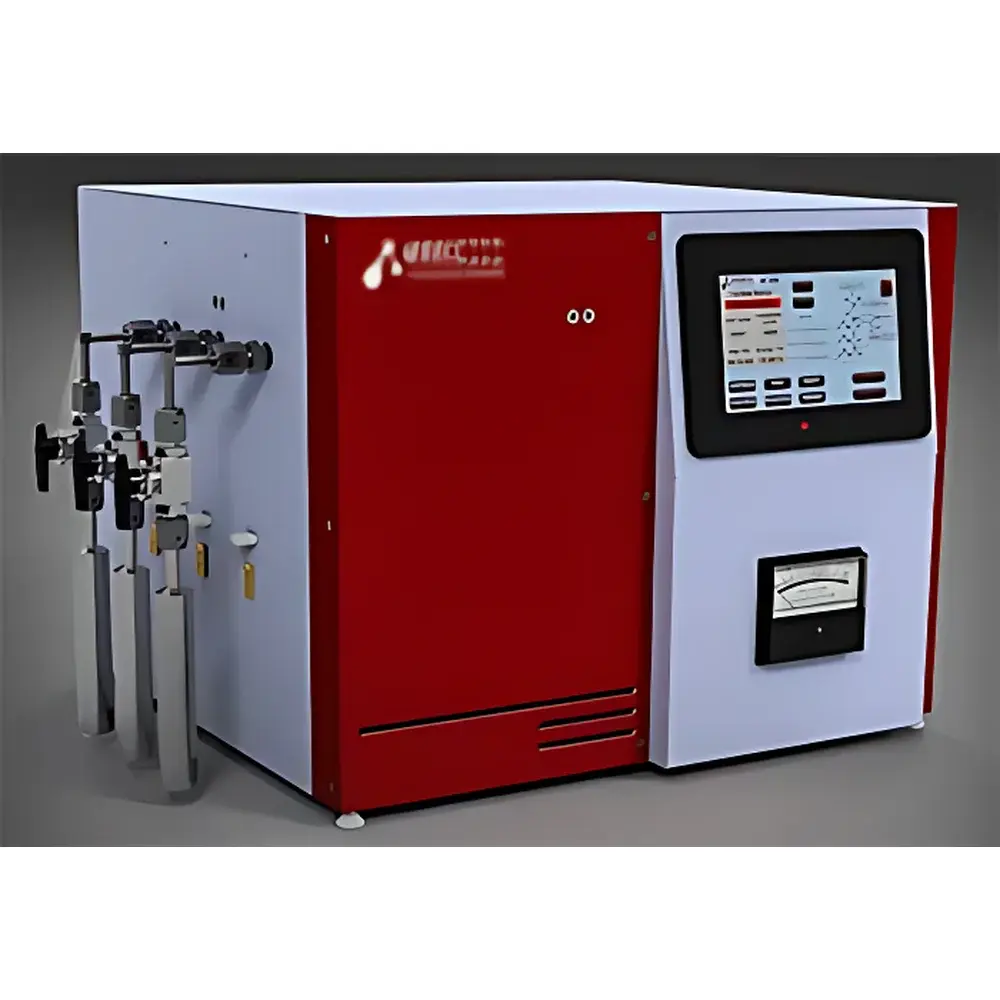
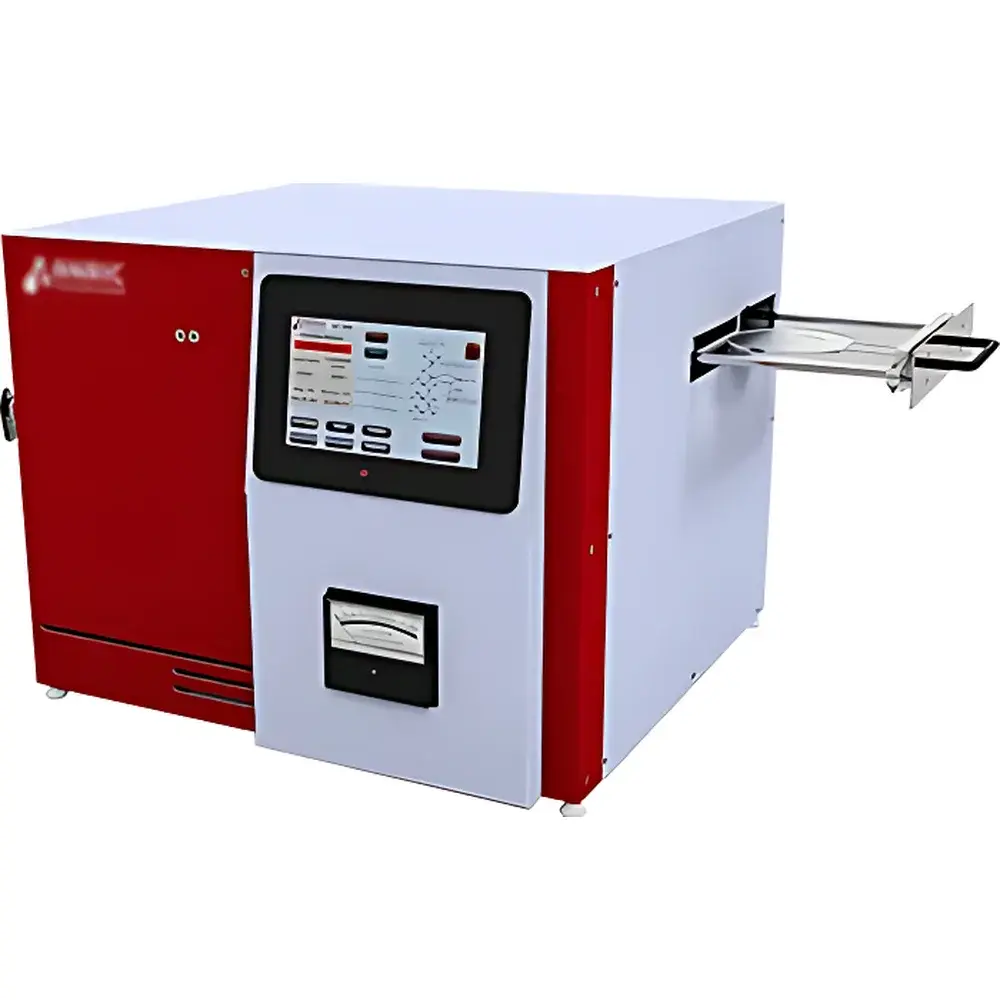
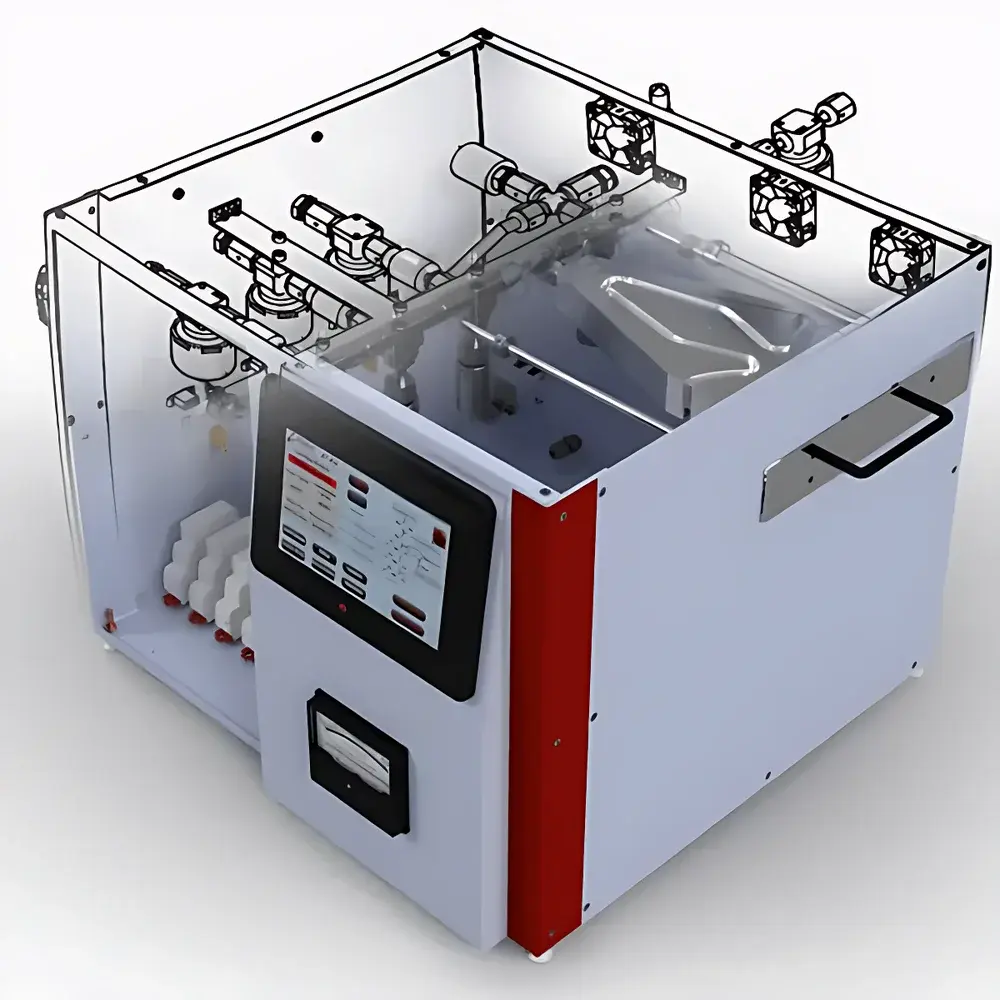
Anric AT Desktop Atomic Layer Deposition System
| Brand | Anric |
|---|---|
| Origin | USA |
| Manufacturer Type | Authorized Distributor |
| Origin Category | Imported |
| Model | AT |
| Substrate Size | 4–6 inch |
| Process Temperature Range | RT to 350 °C |
| Precursor Channels | 5 |
| Weight | 50–70 kg |
| Dimensions (W × H × D) | 50 cm × 75 cm × 75 cm |
| Thickness Uniformity | ±1% |
Overview
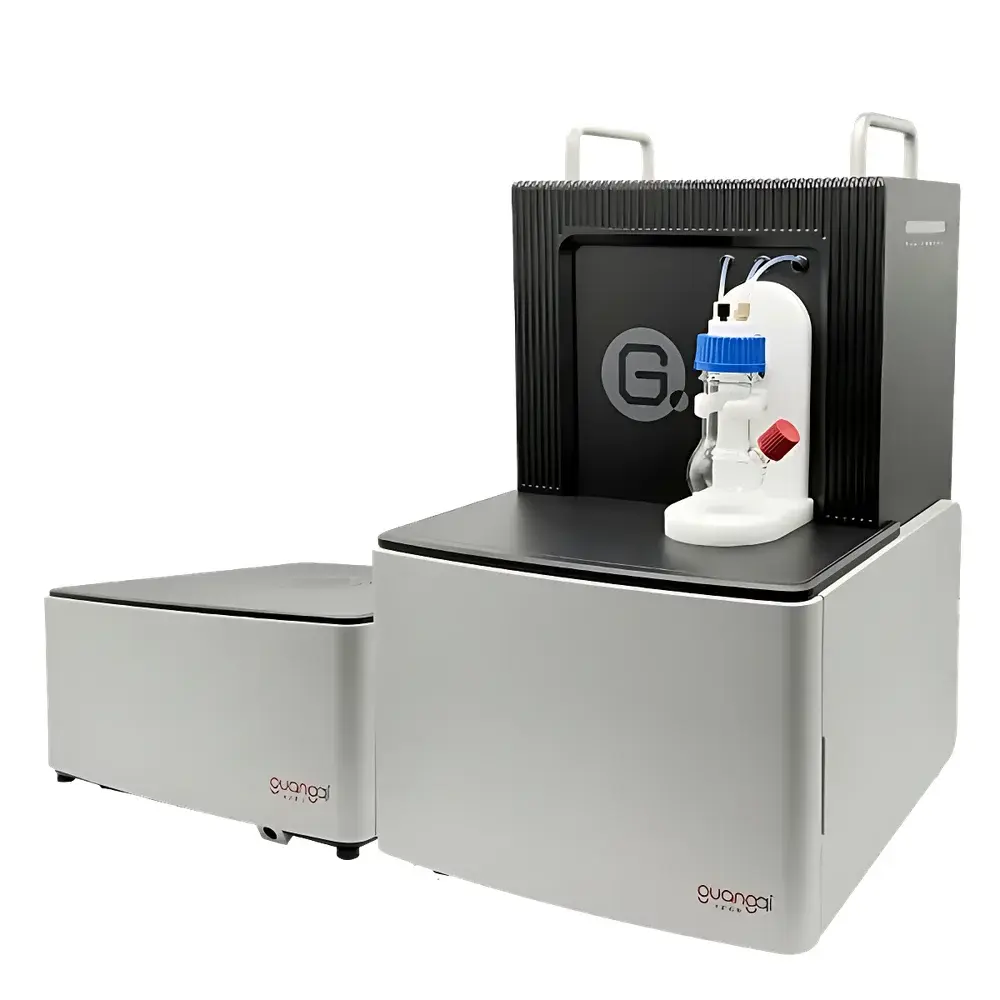
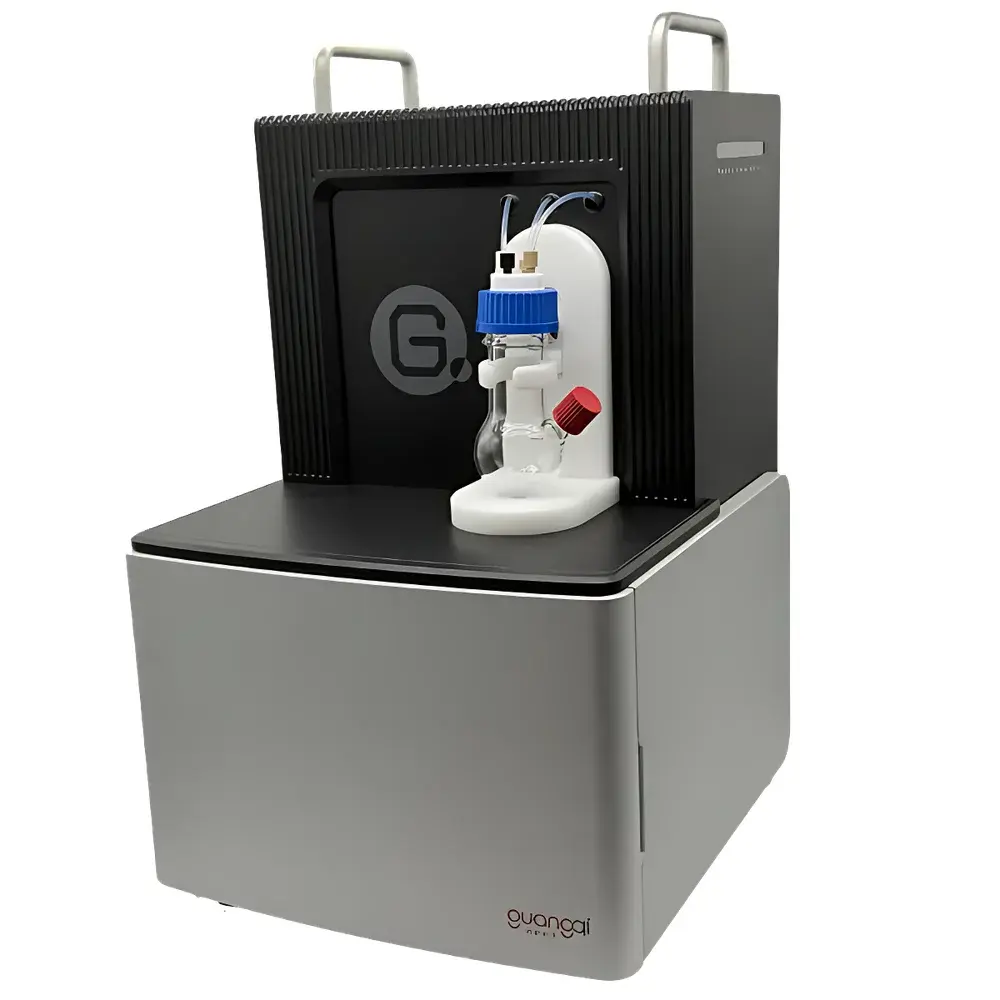
The Anric AT Desktop Atomic Layer Deposition (ALD) System is a compact, research-grade thin-film synthesis platform engineered for precision, repeatability, and laboratory integration. Based on the foundational principles of self-limiting surface reactions—where sequential, pulsed exposures of gaseous precursors yield atomic-level control over film thickness and composition—the AT system enables monolayer-by-monolayer growth under precisely regulated thermal and pressure conditions. Designed in close collaboration with Dr. Philippe de Rouffignac, former Lead Thin-Film Process Scientist at Harvard University’s Center for Nanoscale Systems (CNS), the system reflects over a decade of iterative refinement in academic ALD process development. Its first installation at CNS in 2015 established a benchmark for benchtop ALD usability; since then, it has supported more than 1,500 researcher-hours across universities and national labs worldwide. The AT system operates within a fully enclosed, stainless-steel reaction chamber optimized for low-volume gas consumption, minimal precursor waste, and rapid thermal stabilization—critical attributes for R&D environments where material efficiency, process transparency, and regulatory traceability are paramount.
Key Features
- Research-optimized vacuum chamber: accommodates substrates up to 6-inch diameter (standard 4-inch configuration); chamber volume minimized to reduce purge time and precursor usage
- Independent temperature control: reactor zone (RT–350 °C) and precursor delivery lines (RT–150 °C) each feature calibrated PID loops with ±0.5 °C stability
- Five independently programmable precursor inlet channels with mass flow controllers (MFCs) and heated vaporization zones
- Base pressure <1×10⁻⁶ Torr; operating pressure range: 0.1–1.5 Torr, digitally regulated via capacitance manometer and throttle valve
- Touchscreen PLC interface with real-time parameter logging, recipe versioning, and user-access level management (operator/engineer/admin)
- Integrated ozone generator option (10–100 g/h O3) for metal-oxide and high-k dielectric deposition (e.g., Al2O3, HfO2)
- Glovebox-compatible footprint and feedthrough design (electrical, pneumatic, vacuum) for inert-atmosphere integration
- Preloaded, validated process recipes—including thermal ALD cycles for Al2O3, TiN, SiO2, ZnO, and Ta2O5—with adjustable pulse/purge times and temperature ramp profiles
Sample Compatibility & Compliance
The AT system supports rigid and planar substrates including silicon wafers (4″/6″), sapphire, quartz, glass, and patterned MEMS devices. It is compatible with conductive, semiconductive, and insulating surfaces—enabling conformal coating of high-aspect-ratio nanostructures (e.g., trenches >20:1, nanowires, porous anodized alumina). All hardware and software components comply with CE electromagnetic compatibility (EMC) and low-voltage directives. The control architecture supports audit-ready data integrity per FDA 21 CFR Part 11 requirements when configured with optional electronic signature modules and timestamped log archiving. Process records—including chamber pressure traces, temperature profiles, MFC setpoints, and cycle counters—are exportable in CSV and HDF5 formats for GLP/GMP-aligned reporting. The system meets ISO 14644-1 Class 5 cleanroom compatibility standards when operated inside laminar-flow enclosures or gloveboxes.
Software & Data Management
Control is executed via a deterministic real-time PLC running custom firmware with sub-second I/O response. The graphical HMI provides synchronized waveform visualization of all process parameters during deposition—enabling immediate detection of anomalies such as incomplete purging or precursor condensation. Recipe libraries support hierarchical organization (project → material → structure), with SHA-256 checksum verification for version control. Raw sensor data (pressure, temperature, flow) is logged at 10 Hz and archived with metadata (user ID, timestamp, recipe hash, calibration certificate ID). Optional cloud synchronization enables cross-lab method sharing while maintaining local data sovereignty. Export functions include batch reporting for uniformity analysis (XRR/XRF correlation templates included) and automated PDF generation of deposition certificates compliant with internal QA protocols.
Applications
The AT system serves as a primary tool in semiconductor process development, nanomaterial functionalization, and advanced device prototyping. In microelectronics, it deposits gate oxides (HfO2, Al2O3), diffusion barriers (TiN, TaN), interconnect seed layers (Cu, Ru), and MIM capacitor dielectrics (SrTiO3, Ta2O5). In optoelectronics, it enables anti-reflective and moisture-barrier coatings for OLEDs and perovskite solar cells. In nanotechnology, it functionalizes MOFs, coats nanopores in track-etched membranes, passivates quantum dot surfaces (ZnSe, GaAs), and forms tunnel junctions in spintronic devices. For MEMS, it applies hydrophobic (SiNx) or anti-stiction (Al2O3) films on microcantilevers and RF resonators. Its ability to deposit elemental metals (W, Mo, Ta), nitrides, oxides, and ternary compounds (TiSiN, InGaP) under identical platform conditions facilitates direct comparative studies of interfacial kinetics and nucleation behavior.
FAQ
What substrate sizes does the AT system support?
Standard configuration accommodates 4-inch wafers; optional chamber insert enables 6-inch substrate processing without hardware modification.
Can the system be integrated into a nitrogen-purged glovebox?
Yes—the system features front-panel feedthroughs for power, Ethernet, vacuum, and gas lines, and its footprint (50 × 75 cm) fits standard glovebox antechambers.
Is ozone generation built-in or optional?
Ozone generation is an optional add-on module; it integrates seamlessly with the main control system and shares the same safety interlocks and pressure monitoring.
How is process reproducibility ensured across users and labs?
Each recipe includes embedded calibration offsets, purge time validation routines, and automatic chamber conditioning cycles—ensuring consistent nucleation and growth rates independent of operator experience.
Does the system support remote monitoring and troubleshooting?
Yes—via secure TLS-encrypted VNC access and diagnostic port forwarding; remote sessions are logged and require two-factor authentication.