
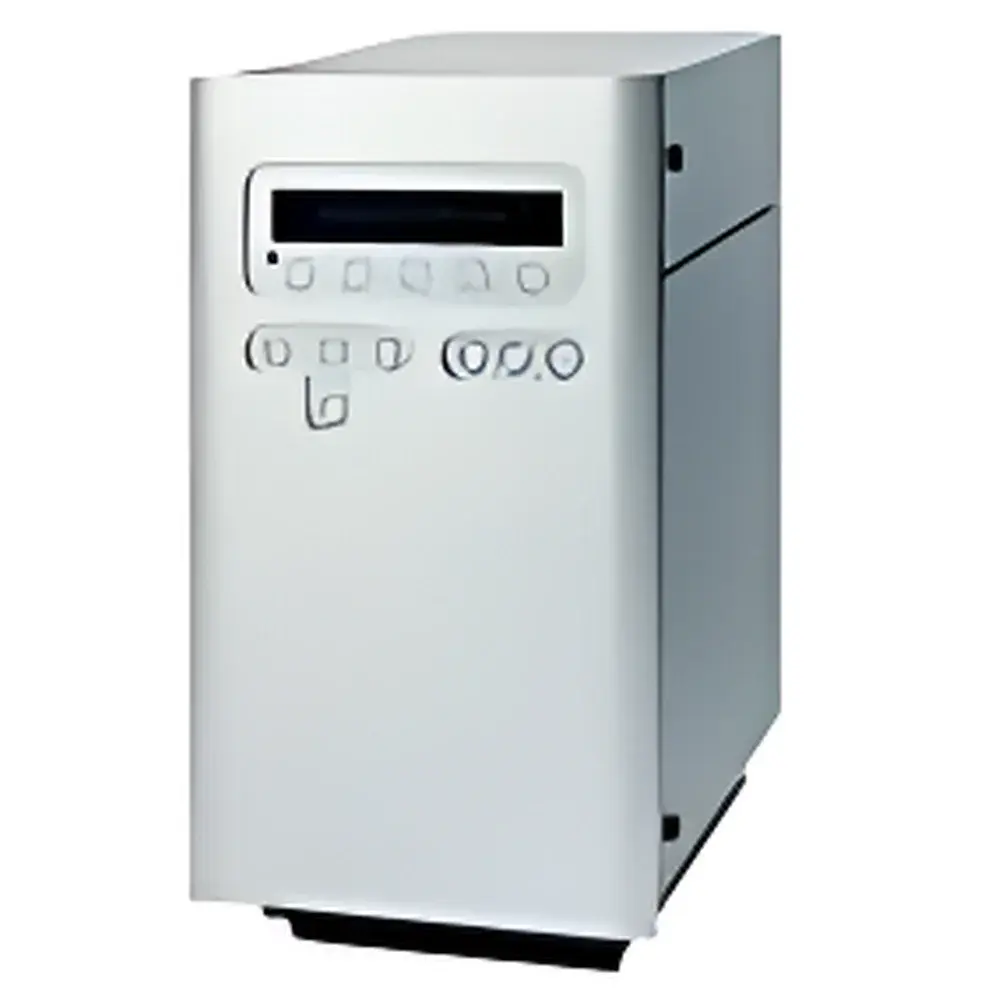
Antec DECADE II Electrochemical Detector (ECD)
| Brand | Antec |
|---|---|
| Origin | Netherlands |
| Model | DECADE II |
| Detector Type | Electrochemical Detector (ECD) |
| Operating Modes | DC, Pulse, and Scan |
| Digital Filter Range | 0.5–0.001 Hz (1–2–5 decade steps) |
| Potential Range | ±2.00 V |
| Faraday Column Oven Dimensions | H 37 cm |
| Temperature Range | Ambient +7 °C to 45 °C |
| Temp. Stability | ±0.1 °C |
| Flow Cell Types | Central Jet Wall-Flow Cell & Conventional Thin-Layer Cell |
| Electrode Configurations | SCC, DCC, TCC, QCC |
Overview
The Antec DECADE II Electrochemical Detector (ECD) is a precision-engineered analytical instrument designed for high-sensitivity, selective detection of electroactive compounds in liquid chromatography applications. Built upon over two decades of Antec’s leadership in HPLC-ECD system development, the DECADE II implements fundamental amperometric and voltammetric detection principles—measuring current generated at a working electrode under controlled potential—enabling quantitative analysis of species such as catecholamines, nitroaromatics, phenols, thiols, and other redox-active analytes. Its architecture integrates detector electronics, electrochemical flow cell, and temperature-stabilized Faraday column oven into a single compact unit, minimizing signal drift and environmental interference. As a core component of Antec’s ALEXYS™ and ROXY™ platforms, the DECADE II supports both standalone HPLC-ECD workflows and advanced hyphenated techniques—including online EC-MS coupling—where electrochemical pretreatment simulates physiologically relevant redox transformations prior to mass spectrometric identification.
Key Features
- Three operational modes—DC amperometry, pulsed amperometric detection (PAD), and linear sweep/staircase voltammetry—enable method flexibility across diverse analyte classes and matrix complexities.
- Advanced Digital Filter (ADF) with continuously adjustable cutoff frequencies from 0.5 Hz down to 0.001 Hz (in 1–2–5 decade increments), significantly suppressing low-frequency noise while preserving true signal kinetics and improving limit of detection (LOD) by up to 3× versus conventional analog filtering.
- Integrated Faraday column oven (37 cm height) maintains precise thermal control (±0.1 °C) between ambient +7 °C and 45 °C, accommodating both analytical columns and electrochemical flow cells within a shielded electromagnetic environment to eliminate stray capacitance and static-induced artifacts.
- Two interchangeable flow cell designs: the Central Jet Wall-Flow Cell delivers enhanced mass transport efficiency and improved signal stability for standard and capillary HPLC columns; the conventional thin-layer cell allows rapid electrode exchange and compatibility with custom or legacy electrode configurations.
- Modular electrode architecture supports four control channel variants—SCC (Single Channel Control), DCC (Dual Channel Control), TCC (Triple Channel Control), and QCC (Quadruple Channel Control)—enabling simultaneous multi-potential detection, background subtraction, or real-time redox state monitoring.
Sample Compatibility & Compliance
The DECADE II is compatible with aqueous and partially organic mobile phases commonly used in reversed-phase, ion-pair, and hydrophilic interaction liquid chromatography (HILIC). It supports standard stainless-steel, PEEK, and fused-silica tubing interfaces and operates reliably under flow rates ranging from 0.1 to 2.0 mL/min. All electrochemical components comply with IEC 61010-1 safety standards for laboratory electrical equipment. When deployed in regulated environments (e.g., pharmaceutical QC or clinical research labs), the detector’s PC-controlled operation—paired with Antec’s ChronoSoft™ acquisition software—supports audit-trail generation, user access control, and electronic signature functionality aligned with FDA 21 CFR Part 11 and EU Annex 11 requirements. System validation documentation adheres to ASTM E2656 (Standard Guide for Validation of Chromatographic Methods) and ISO/IEC 17025 principles for testing laboratories.
Software & Data Management
Control and data acquisition are fully managed via ChronoSoft™, Antec’s native Windows-based software platform. ChronoSoft provides real-time visualization of current vs. time or potential waveforms, automated method sequencing, baseline correction algorithms, and integrated peak integration using tangent skim and valley-to-valley methodologies. Raw data are stored in vendor-neutral .csv and .txt formats, facilitating import into third-party chemometric tools (e.g., MATLAB, SIMCA, or Python-based SciPy workflows). The software architecture supports seamless integration with major HPLC data systems—including Agilent ChemStation, Waters Empower, and Thermo Chromeleon—via ASCII command protocols or OEM API extensions. All parameter changes, calibration events, and hardware status logs are timestamped and archived for GLP/GMP traceability.
Applications
- Neurotransmitter profiling in cerebrospinal fluid and plasma (e.g., dopamine, serotonin, norepinephrine) using isocratic RP-HPLC with tri-electrode PAD.
- Environmental monitoring of nitroaromatic explosives (TNT, RDX) and chlorophenols in groundwater via gradient HPLC-ECD with post-column reduction.
- Pharmaceutical impurity testing per ICH Q2(R2), including oxidative degradation product quantification in APIs containing catechol or hydroquinone moieties.
- Food safety analysis of sulfites, ascorbic acid, and polyphenols in beverages and plant extracts without derivatization.
- Online electrochemical pretreatment coupled to LC-MS for generating stable redox metabolites—such as quinone–imine intermediates—from drug candidates during ADME studies.
FAQ
Is the DECADE II compatible with non-Antec HPLC systems?
Yes—the detector features universal analog and digital I/O interfaces (0–1 V, RS-232, USB) and accepts TTL trigger signals from any commercial HPLC pump or autosampler.
Can the Central Jet Wall-Flow cell be used with capillary columns (e.g., 0.3 mm ID)?
Yes—its low-dead-volume design (≤150 nL) and optimized laminar flow profile ensure efficient mass transfer and minimal band broadening even at sub-μL/min flow rates.
Does the Faraday oven support active cooling below ambient temperature?
No—it operates in heating-only mode from ambient +7 °C to 45 °C, which covers optimal temperature ranges for most ECD applications involving enzymatic or adsorption-sensitive electrodes.
What electrode materials are supported out-of-the-box?
Standard configurations include glassy carbon, platinum, gold, and boron-doped diamond working electrodes, paired with Ag/AgCl or reversible hydrogen electrode (RHE) references; custom electrode assemblies can be integrated via standardized 3-mm pin connectors.
Is method transfer possible between different DECADE II channel variants (e.g., SCC to DCC)?
Yes—ChronoSoft stores method files independently of hardware configuration; channel-specific parameters auto-adjust based on detected module type during initialization.






