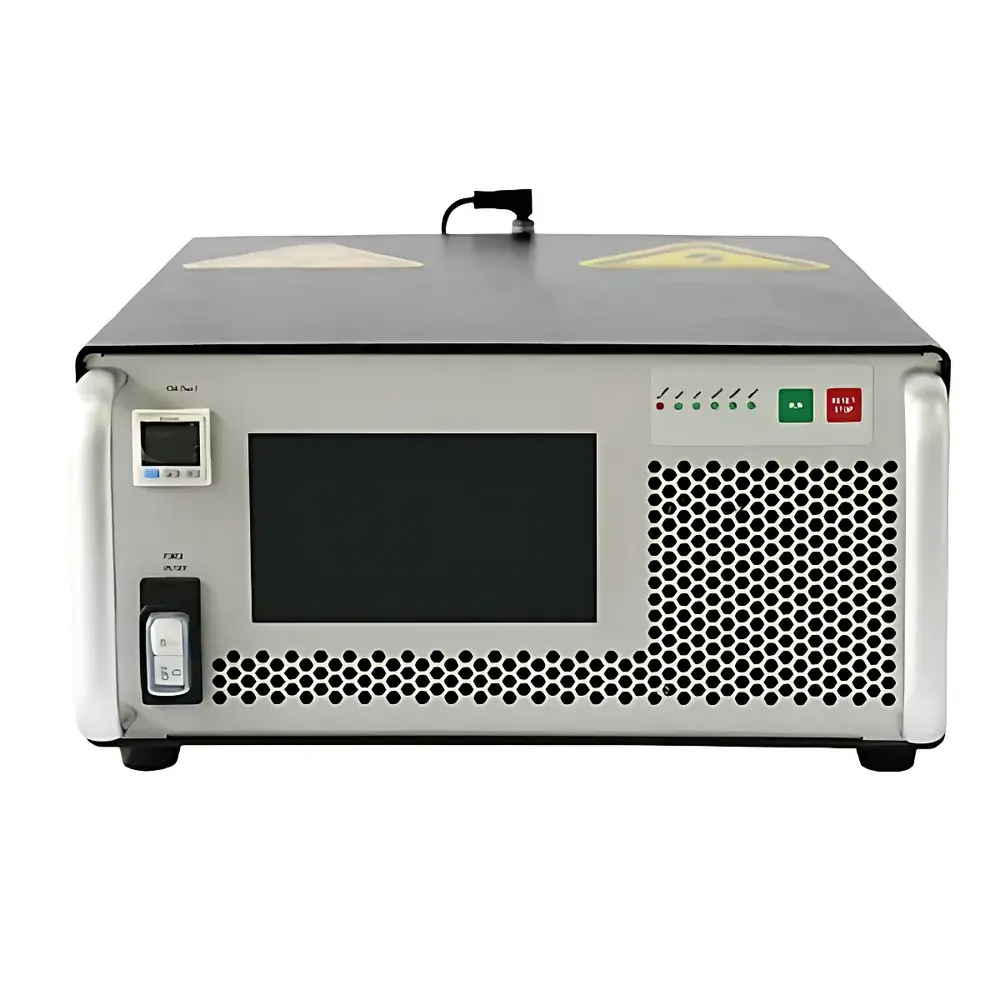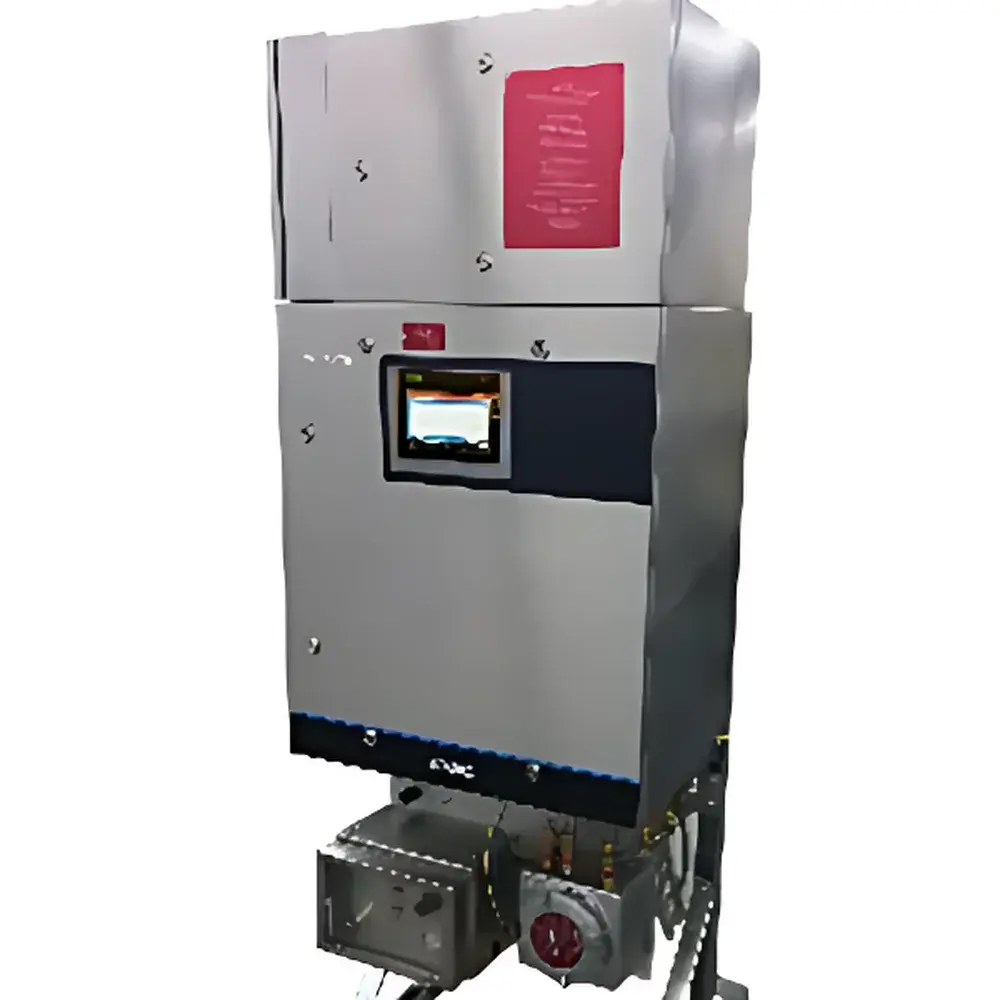
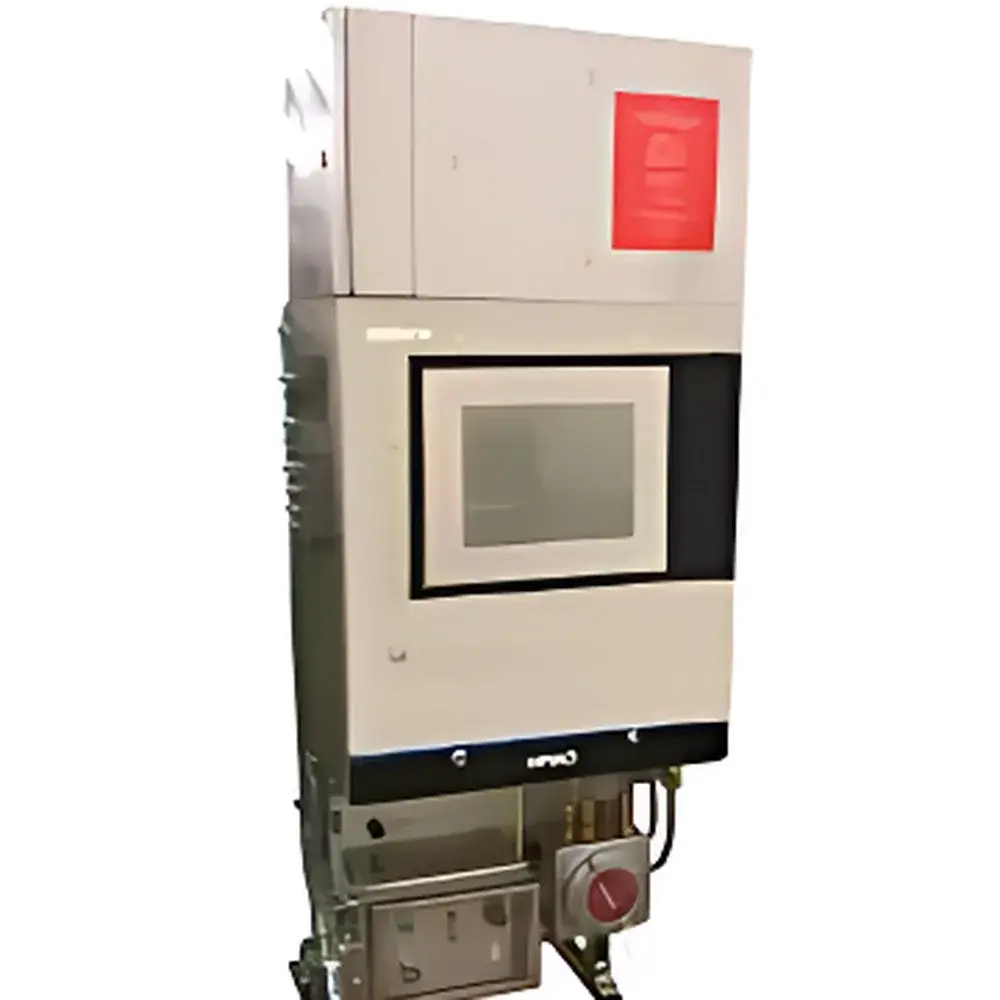
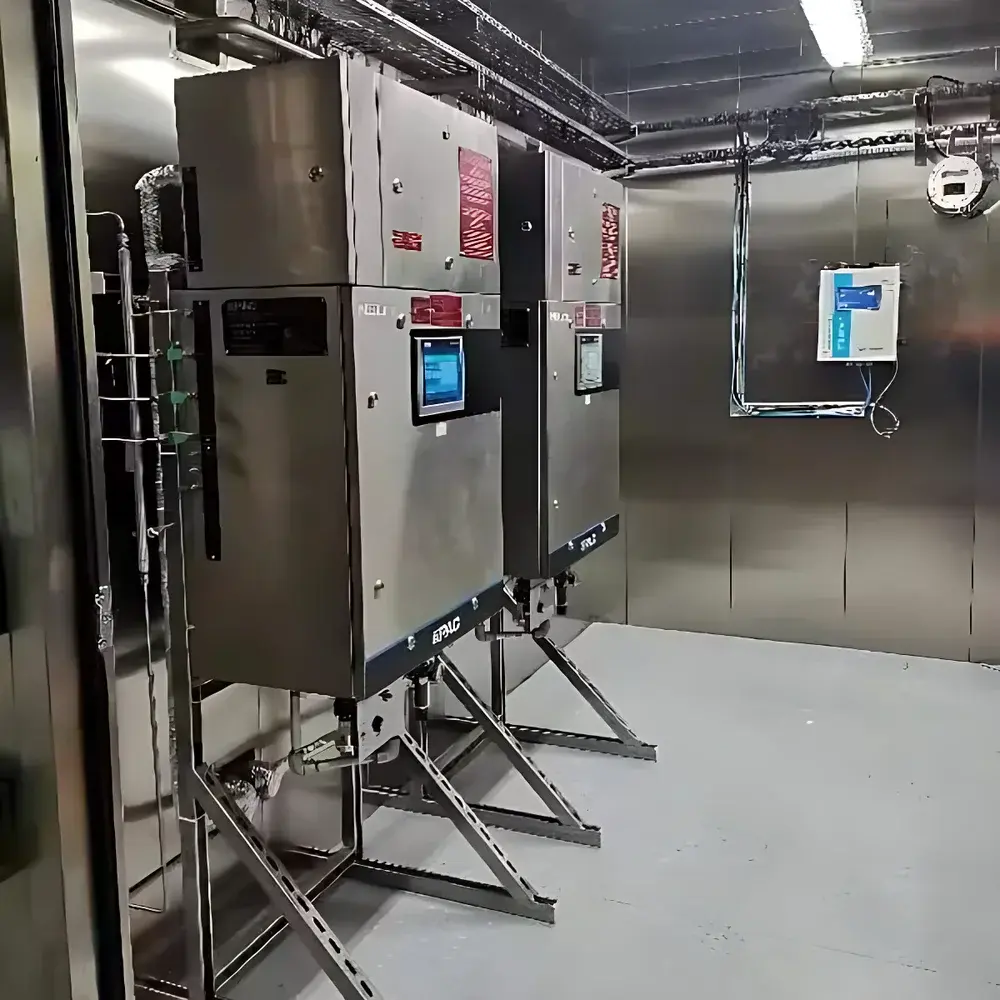
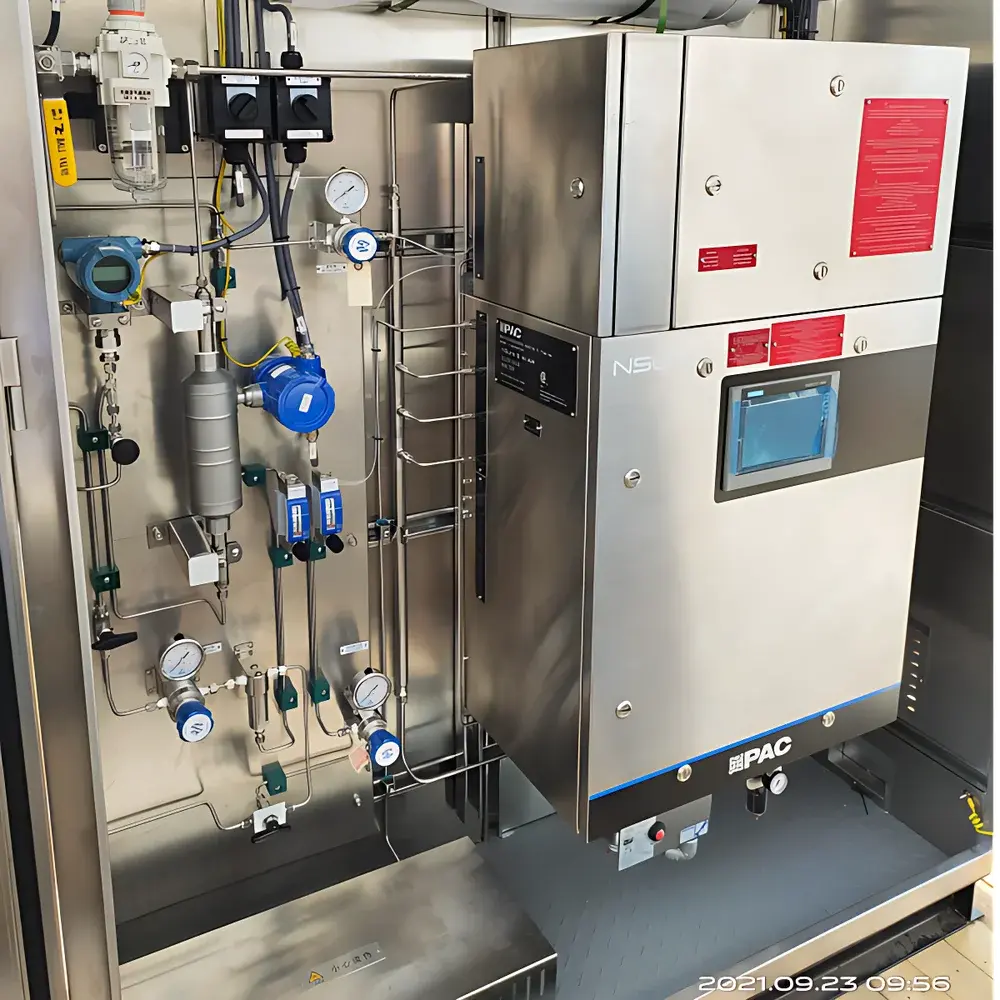
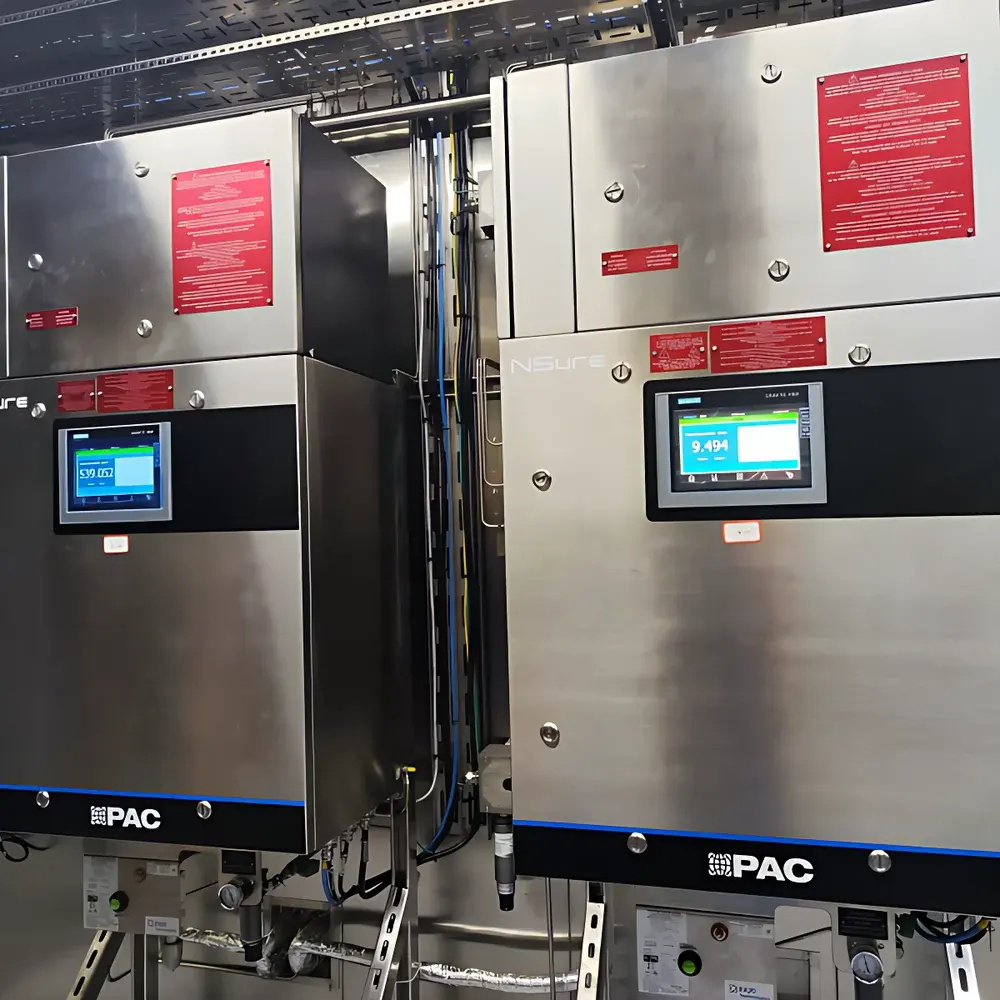
Antek by PAC NSure Online Total Sulfur Analyzer
| Brand | Antek by PAC |
|---|---|
| Origin | USA |
| Manufacturer Type | Authorized Distributor |
| Product Category | Imported |
| Model | NSure |
| Price Range | USD 70,000 – 140,000 (FOB) |
| Detection Principle | Ultraviolet Fluorescence (UVF) |
| Compliance | ASTM D5453, D6667, SH/T 0689, ISO 20846, GB/T 11060.8 |
| Measurement Range | 0–8000 ppm total sulfur |
| Repeatability | ≤1% RSD |
| Cycle Time | 1–5 min (typ. 3 min) |
| Accuracy | ≤1% FS |
| Output | 4–20 mA analog + fault alarm |
| Enclosure Rating | NEC Class 1 Div 2 Groups A, B, C, D / ATEX Zone 1 Ex db ib px b IIC T4 Gb |
| Sample Phase | Liquid or gas |
| Max Inlet Pressure | 400 psig |
| Max Inlet Temp | 100 °C |
| Sample Filtration | ≥0.5 µm |
| Carrier Gas | Instrument air (99.975%, 50 psig, 5–15 cc/min) |
| Combustion Air | Instrument air (99.975%, 50 psig, 350–500 cc/min) |
| Power | 230 VAC, 6.5 A, 50–60 Hz, 1500 W |
| Operating Ambient | 0–40 °C |
| Display | 7″ Siemens industrial touchscreen HMI |
| Cooling | Integrated Peltier-cooled UVF detector |
| Dryer | Membrane-type water removal module |
| Flow Control | Electronically regulated mass flow controllers |
| Architecture | Modular single- or dual-stream configuration |
| DCS Interface | 3/4″ NPT(F) with explosion-proof junction box and sealed conduit entries |
| Communication Protocol | RS-458 Modbus RTU (standard) |
Overview
The Antek by PAC NSure Online Total Sulfur Analyzer is an industrial-grade, continuous process analyzer engineered for real-time quantification of total sulfur in liquid and gaseous hydrocarbon streams. It employs ultraviolet fluorescence (UVF) detection—a well-established, ASTM-validated technique—based on high-temperature catalytic combustion followed by selective SO2 fluorescence measurement. In the combustion zone (typically >1000 °C), all organic and inorganic sulfur species—including H2S, mercaptans, sulfides, disulfides, thiophenes, benzothiophenes, and dibenzothiophenes—are quantitatively oxidized to sulfur dioxide (SO2). The resulting gas stream passes through a membrane dryer to remove residual water vapor, eliminating quenching effects from H2O and CO2. The dried effluent enters a UV-excited fluorescence chamber where SO2 molecules absorb photons at ~190–230 nm and emit characteristic fluorescence at ~300–400 nm. A narrow-band optical filter isolates this emission, and a photomultiplier tube (PMT) converts photon flux into a proportional analog current. This signal is linearly correlated to sulfur concentration across a dynamic range spanning 20 ppb to 8000 ppm—enabling precise monitoring of ultra-low-sulfur diesel (ULSD), refinery feedstocks, natural gas, and petrochemical intermediates under demanding process conditions.
Key Features
- True online operation with fully automated sample introduction, combustion, drying, detection, and calibration—requiring no bottled H2 or O2; instrument air serves as carrier, combustion, pneumatic, and purge gas.
- Peltier-cooled UVF detector ensures thermal stability of PMT gain and spectral response, delivering long-term baseline reproducibility and minimizing drift over extended unattended runs.
- Integrated membrane dryer removes >99.9% of combustion-generated water prior to detection—preventing acid formation, optical fouling, and signal suppression in the fluorescence cell.
- Modular architecture supports seamless field upgrade from single-stream to dual-stream (sulfur + nitrogen) configuration without hardware replacement.
- Siemens 7-inch industrial touchscreen HMI provides intuitive access to method setup, calibration verification, alarm thresholds, diagnostic logs, and real-time chromatogram-like trend visualization.
- Electronically regulated mass flow controllers maintain precise, repeatable gas flows across varying line pressure—critical for stoichiometric combustion and detector sensitivity consistency.
- Explosion-proof enclosure certified to NEC Class 1 Division 2 Groups A, B, C, D and ATEX Zone 1 Ex db ib px b IIC T4 Gb for safe deployment in hazardous area classifications common in refineries and chemical plants.
Sample Compatibility & Compliance
The NSure accepts both liquid and gaseous samples within defined physical limits: inlet pressure up to 400 psig (dependent on application-specific pressure regulation), temperature up to 100 °C, and particulate filtration to ≥0.5 µm. It complies with globally recognized standards for sulfur analysis—including ASTM D5453 (light hydrocarbons), ASTM D6667 (gaseous fuels), SH/T 0689 (diesel and gasoline), ISO 20846 (petroleum products), and GB/T 11060.8 (natural gas). Its design adheres to GLP-aligned data integrity principles: full audit trail of calibration events, user actions, and system diagnostics; timestamped raw signal storage; and configurable 4–20 mA output with independent fault signaling. Optional CLND-based total nitrogen analysis (per ASTM D4629, EN 12225, DIN 38409-27) extends its utility to nitrogen-speciation-critical applications such as catalyst poisoning assessment and fuel denitrification validation.
Software & Data Management
The embedded control firmware implements deterministic real-time scheduling for combustion timing, gas switching, and signal integration. All operational parameters—including furnace ramp profiles, UV lamp intensity, PMT high-voltage settings, and flow setpoints—are programmable via the touchscreen interface and persist across power cycles. Historical measurement data (concentration, cycle time, lamp hours, detector voltage, gas pressures) are stored locally for ≥30 days and exportable via USB or Modbus RTU (RS-485) to DCS/SCADA systems. Alarm states—including low flow, high temperature, calibration deviation, and detector saturation—are logged with timestamps and severity codes. No proprietary software installation is required on host systems; standard Modbus register mapping enables direct integration with Emerson DeltaV, Honeywell Experion, Yokogawa CENTUM VP, and Siemens PCS7 environments.
Applications
The NSure is deployed across upstream, midstream, and downstream hydrocarbon value chains. Typical use cases include continuous monitoring of desulfurized naphtha and kerosene in hydrotreater overheads; real-time verification of sulfur removal efficiency in amine units and Merox treaters; compliance assurance for pipeline-quality natural gas (per GPA 2261); ULSD certification at blending terminals; and feedstock screening for FCC and hydrocracker units. Its robustness and low maintenance footprint also support environmental emissions monitoring—such as sulfur recovery unit (SRU) tail gas analysis—and quality control in biofuel production (e.g., FAME and HVO), where trace sulfur can impact catalyst lifetime and final product specification adherence.
FAQ
What detection technology does the NSure employ for total sulfur analysis?
It uses ultraviolet fluorescence (UVF) following high-temperature oxidative combustion—fully compliant with ASTM D5453 and related international standards.
Can the NSure analyze both sulfur and nitrogen in the same sample stream?
Yes—when equipped with the optional chemiluminescence (CLND) nitrogen module, it delivers concurrent total sulfur and total nitrogen results using a shared combustion furnace and dual-detector architecture.
Is hydrogen or oxygen gas required for operation?
No—only clean, dry instrument air is needed for carrier, combustion, pneumatic, and purge functions, reducing infrastructure complexity and safety risk.
How is data integrity ensured for regulatory reporting?
All calibrations, alarms, and analytical events are timestamped and stored with user identification; the system supports 21 CFR Part 11–compliant audit trails when integrated with validated third-party LIMS or DCS platforms.
What maintenance intervals are recommended for routine operation?
Lamp replacement every 12–18 months; membrane dryer cartridge every 6–12 months depending on sample moisture load; annual verification of flow controllers and temperature sensors per ISO/IEC 17025–aligned procedures.