
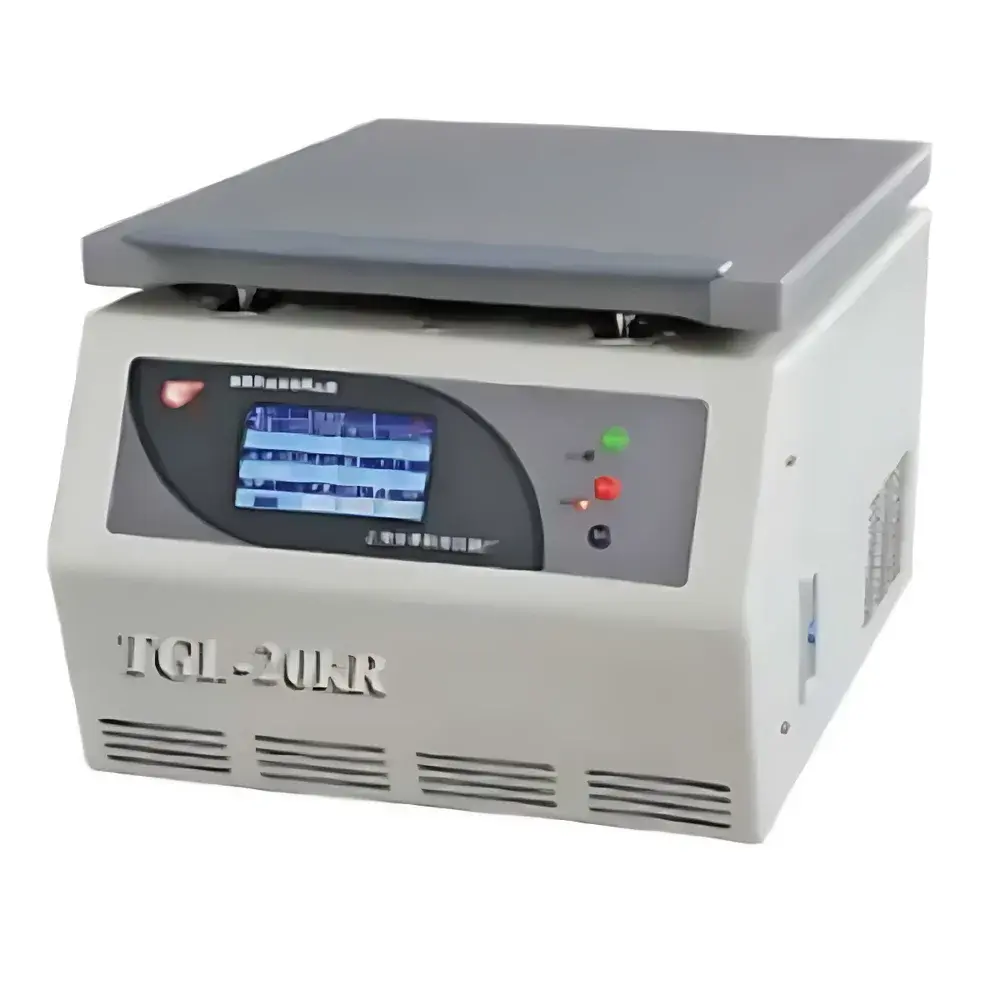
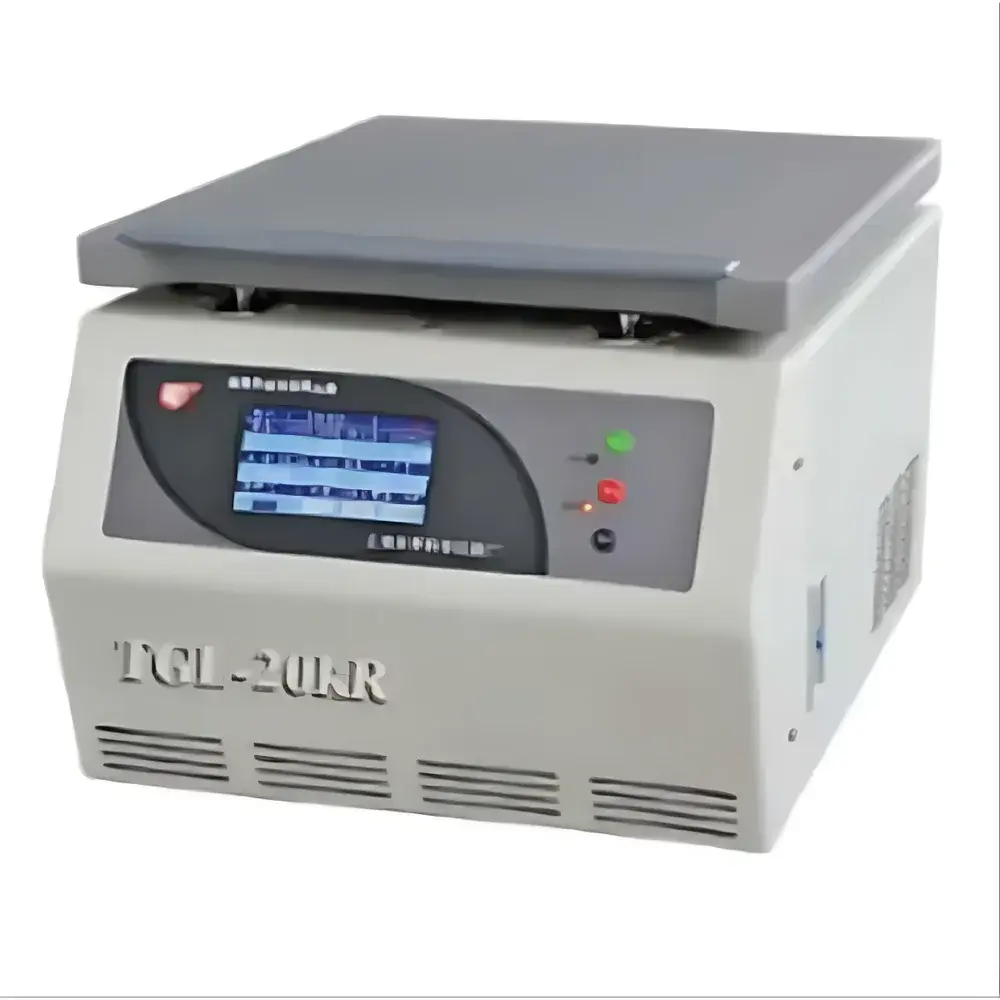
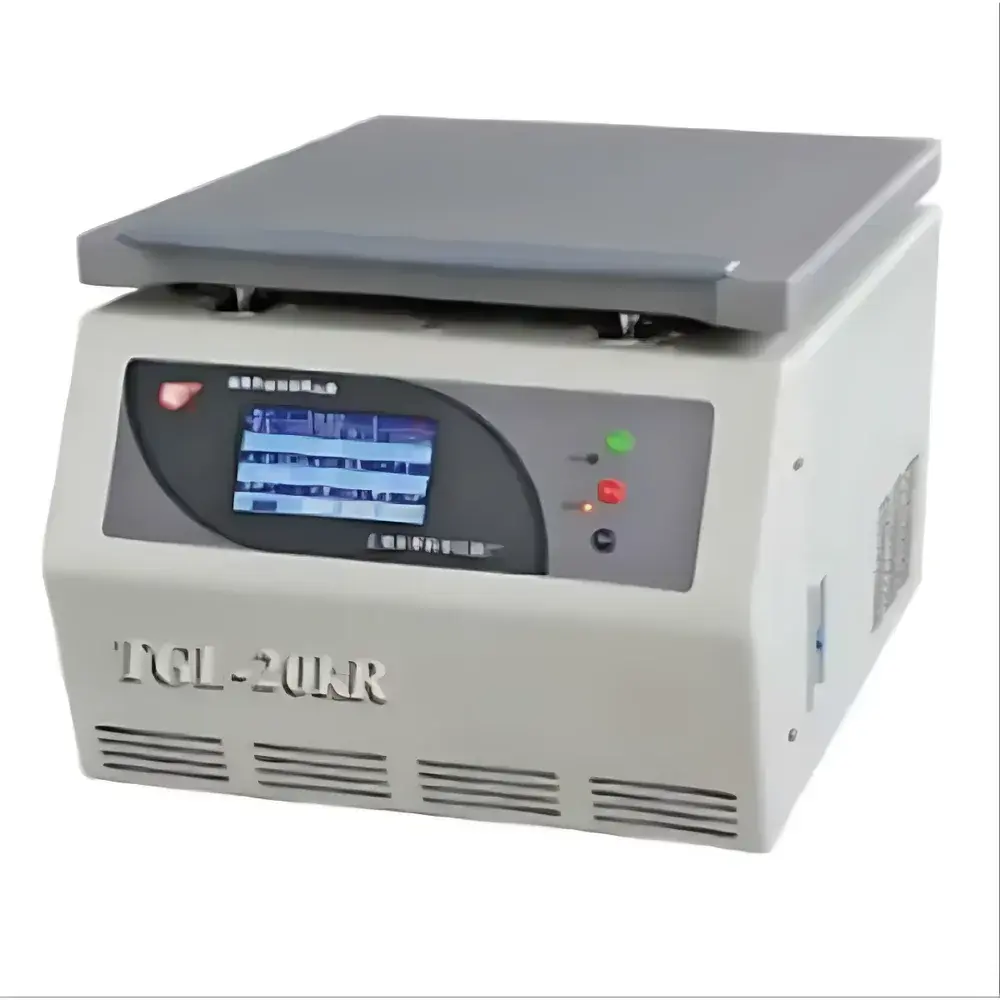
AnTing TGL-20kR High-Speed Refrigerated Benchtop Centrifuge
| Brand | AnTing |
|---|---|
| Origin | Shanghai, China |
| Model | TGL-20kR |
| Type | Benchtop Refrigerated Centrifuge |
| Speed Range | 0–20,000 rpm |
| Max RCF | 29,068 ×g |
| Max Capacity | 100 mL × 4 (Angle Rotor) |
| Temperature Range | −20 °C to +30 °C |
| Temp. Accuracy | ±2 °C |
| Timer Range | 0–99 min |
| Power Supply | 220 V, 50 Hz, 1500 W |
| Dimensions (L×W×H) | 700 × 500 × 395 mm |
| Weight | 85 kg |
| Rotor Configurations | 1.5/2 mL × 12 |
| Control System | Frequency-Controlled Motor with Touchscreen Interface |
| Safety | Electronic Door Lock, Rotor Recognition (via Configuration), Over-Speed & Over-Temp Protection |
Overview
The AnTing TGL-20kR is a high-performance refrigerated benchtop centrifuge engineered for precision separation of biological, biochemical, and pharmaceutical samples under controlled thermal conditions. Operating on the principle of sedimentation acceleration via rotational force, it delivers reproducible RCF (Relative Centrifugal Force) up to 29,068 ×g at its maximum speed of 20,000 rpm—enabling efficient pelleting of subcellular organelles, viruses, macromolecular complexes, and precipitated nucleic acids. Its integrated refrigeration system maintains sample integrity by stabilizing temperature between −20 °C and +30 °C (±2 °C accuracy), critical for heat-sensitive analytes such as enzymes, antibodies, and RNA. Designed for laboratory environments where floor space is constrained yet performance and thermal control are non-negotiable, the TGL-20kR combines robust mechanical architecture with intuitive touchscreen operation and compliance-ready safety features.
Key Features
- Frequency-controlled brushless motor ensures stable speed regulation, low vibration, and extended service life—critical for long-duration runs and high-precision applications.
- Intelligent touchscreen interface supports multi-step programmable protocols, real-time parameter monitoring (speed, RCF, time, temperature), and password-protected user profiles.
- Five interchangeable angle rotors included (1.5/2 mL × 12, 10 mL × 12, 50 mL × 6, 100 mL × 4, 1.5 mL × 30), enabling seamless adaptation across sample volumes and density gradients without hardware modification.
- Electronic door lock with automatic rotor recognition prevents operation with incompatible or unbalanced configurations, reducing risk of mechanical failure and ensuring adherence to ISO 22870 and CLSI EP25-A2 safety guidelines.
- Active cooling system with independent compressor and pre-cooling function allows rapid temperature stabilization prior to run initiation—minimizing thermal drift during sensitive separations.
- Structural housing fabricated from reinforced engineering polymer composites provides high rigidity-to-weight ratio (85 kg total mass), dampening operational noise and enhancing stability at maximum speeds.
Sample Compatibility & Compliance
The TGL-20kR accommodates standard polypropylene, polycarbonate, and stainless-steel centrifuge tubes (1.5–100 mL), including conical-bottom and sealed variants suitable for BSL-2 containment workflows. Its temperature-controlled chamber meets requirements for cold-chain preservation during cell lysate clarification, plasma fractionation, and exosome isolation. The unit conforms to IEC 61010-1:2010 for electrical safety and incorporates dual thermal cutoffs and overspeed protection aligned with EN 61000-6-3 electromagnetic compatibility standards. While not certified for GMP production environments out-of-the-box, its audit-trail-capable touchscreen log (timestamped start/stop, rotor ID, parameters) supports GLP-compliant documentation when integrated into validated laboratory information management systems (LIMS).
Software & Data Management
The embedded control firmware records all run metadata—including rotor type, speed profile, temperature setpoint, elapsed time, and fault events—in non-volatile memory. Data export is supported via USB port in CSV format for traceability and post-run analysis. Optional PC-based software (available separately) enables remote monitoring, batch protocol scheduling, and automated report generation compliant with FDA 21 CFR Part 11 requirements—specifically supporting electronic signatures, audit trails, and data integrity controls when deployed in regulated QC/QA settings.
Applications
- Preparative isolation of mitochondria, nuclei, and microsomes from mammalian tissue homogenates.
- Clarification of bacterial and yeast lysates prior to protein purification or plasmid extraction.
- Cold centrifugation of serum/plasma samples for clinical biomarker assays requiring minimal protease activity.
- Concentration of viral vectors and extracellular vesicles in gene therapy development pipelines.
- Routine quality control of colloidal suspensions, nanoparticle dispersions, and emulsion stability testing in materials science labs.
FAQ
What is the maximum RCF achievable with the 50 mL × 6 angle rotor?
The 50 mL × 6 rotor achieves a maximum RCF of 27,000 ×g at 20,000 rpm.
Does the TGL-20kR support rotor auto-identification?
Yes—the touchscreen interface detects installed rotor type via mechanical coding and adjusts allowable speed/temperature limits accordingly.
Can the centrifuge maintain −20 °C during continuous operation?
It sustains −20 °C setpoint under typical load conditions; ambient temperature ≤25 °C and adequate ventilation are required for sustained low-temperature performance.
Is the device compatible with third-party rotors?
Only AnTing-certified rotors are supported to ensure mechanical balance, thermal compatibility, and safety interlock functionality.
How is data integrity ensured for regulatory submissions?
Run logs include immutable timestamps, operator ID (if configured), and parameter verification; optional software adds 21 CFR Part 11–compliant electronic signatures and change history tracking.



