
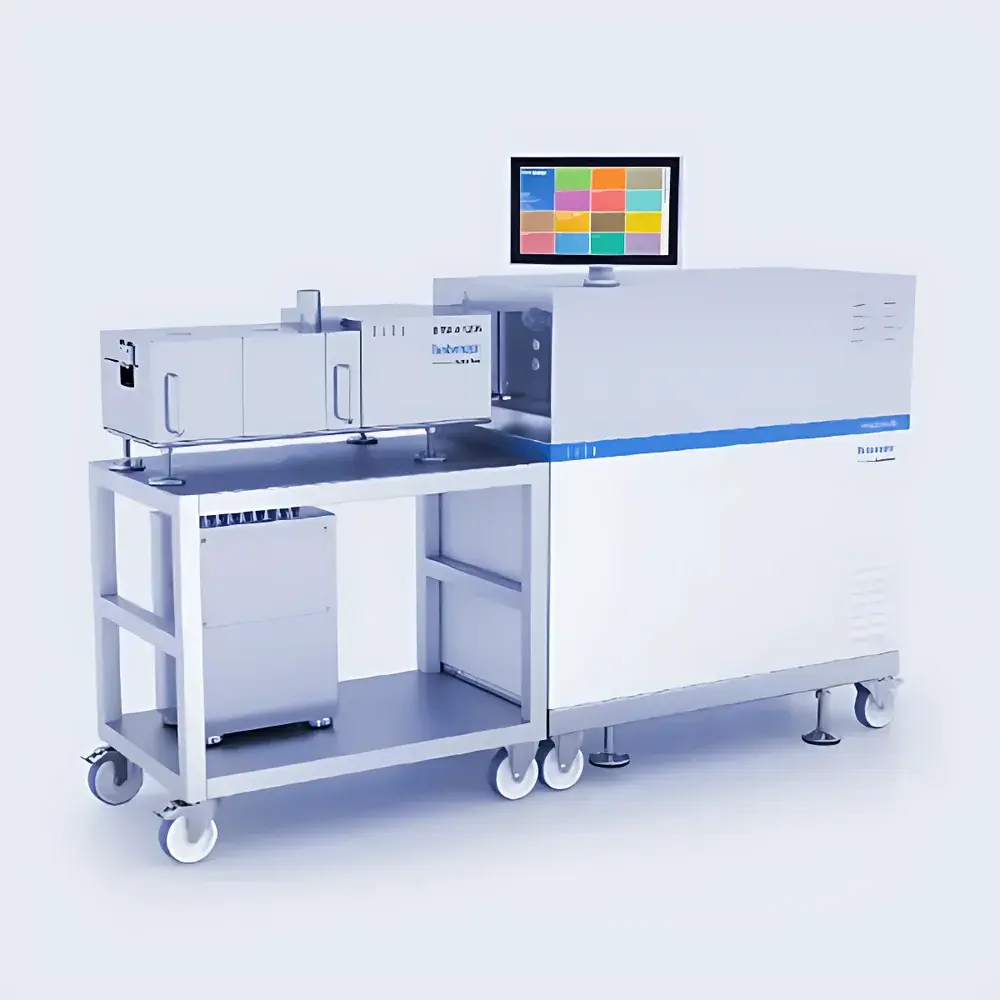
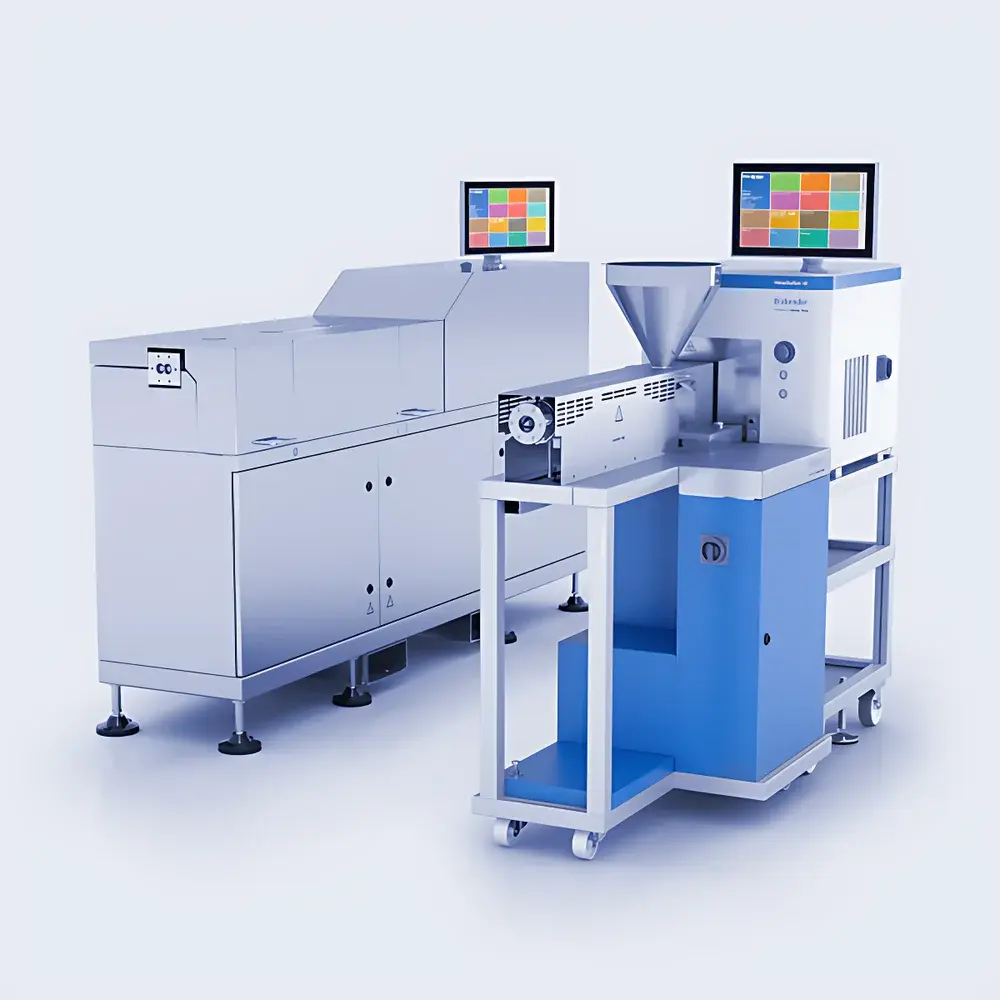
Anton Paar Brabender TwinLab Twin-Screw and Single-Screw Extruder System
| Brand | Anton Paar Brabender |
|---|---|
| Origin | Germany |
| Model | TwinLab |
| Configuration | Modular Twin-Screw / Single-Screw / Batch Mixer |
| Drive Unit | MetaStation |
| Control Software | MetaBridge |
| Temperature Range | Up to 500 °C |
| Throughput Range | 0.05–100 kg/h |
| Screw Diameter Options | 19 mm, 25 mm, and scalable modular configurations |
| Barrel Design | Split-barrel with removable liners |
| Material Compatibility | Liquids, powders, granules, high-abrasive & high-corrosive compounds |
| Compliance | Designed for GLP/GMP-aligned workflows, data audit trail capable (21 CFR Part 11–ready architecture) |
| Data Export | CSV, PDF, email-integrated reporting |
Overview
The Anton Paar Brabender TwinLab is a modular, measurement-integrated extrusion platform engineered for precision rheological and process characterization in polymer development, compounding R&D, and pilot-scale formulation validation. Unlike conventional laboratory extruders, the TwinLab operates on a dual principle: it functions both as a process simulator—reproducing industrial twin-screw extrusion dynamics at lab scale—and as an in-line analytical instrument, capturing real-time, synchronized process variables including torque, melt pressure, barrel zone temperatures, drive load, and mass flow rate. Its core architecture leverages Couette-type shear flow mechanics within precisely temperature-controlled, split-barrel zones, enabling quantitative correlation between material microstructure evolution (e.g., dispersion, degradation, crystallinity) and dynamic processing parameters. The system is purpose-built for materials scientists, formulation engineers, and QC/QA teams requiring traceable, reproducible extrusion data under controlled thermal–mechanical histories—critical for regulatory submissions, DOE-based optimization, and scale-up predictability.
Key Features
- Modular MetaStation drive unit supporting interchangeable configurations: co-rotating twin-screw extrusion, single-screw extrusion (e.g., 19/25 mm variants), and batch mixing—without hardware reconfiguration.
- Split-barrel design with quick-release, wear-resistant alloy liners (custom H13/modified tool steels) rated for continuous operation up to 500 °C and resistant to abrasive fillers (e.g., glass fiber, CaCO₃) and corrosive additives (e.g., halogenated flame retardants).
- Integrated sensor suite delivering synchronized, time-stamped acquisition of torque (±0.5% FS), pressure (0–400 bar), temperature (−20 to 500 °C, ±0.5 °C), and motor load—sampled at ≥10 Hz for transient event capture.
- MetaBridge control software with deterministic real-time OS, providing ISO/IEC 17025-aligned calibration logging, user-level access controls, electronic signatures, and configurable audit trails compliant with FDA 21 CFR Part 11 requirements.
- Scalable throughput range from 0.05 kg/h (micro-compounding) to 100 kg/h (pilot production), covering formulations from thermoplastics and elastomers to biopolymers and reactive systems.
Sample Compatibility & Compliance
The TwinLab accommodates heterogeneous feedstocks—including hygroscopic resins, solvent-based pastes, masterbatches, nanocomposites, and highly viscous thermoset prepolymers—via gravimetric or loss-in-weight feeding modules (optional). Its barrel geometry supports grooved and smooth-bore configurations; optional die assemblies include capillary, strand, and flat-film dies with integrated pressure transducers. All wetted parts comply with USP Class VI and EU 10/2011 food-contact regulations where applicable. The system architecture meets the foundational requirements for GLP (OECD Principles) and GMP (ICH Q5, Q7) environments, particularly when deployed with MetaBridge’s full audit trail mode, secure user authentication, and immutable raw data storage (HDF5 binary format with SHA-256 checksums).
Software & Data Management
MetaBridge is a cross-platform, browser-accessible application built on a client-server architecture with TLS 1.3 encryption and role-based permissions. It enables remote monitoring, parameter scripting (Python API available), and automated report generation—including comparative overlay of multiple extrusion runs, derivative analysis of torque vs. temperature profiles, and statistical process control (SPC) charting. Raw datasets are stored with metadata tags (operator ID, material lot, ambient conditions, calibration certificates), and export formats include ASTM E1447-compliant CSV, ISO 10303-21 STEP AP242 for CAE integration, and encrypted PDFs with digital signatures. Data synchronization occurs via secure cloud proxy or on-premise NAS—no vendor lock-in or proprietary file dependencies.
Applications
- Polymer formulation screening: quantifying filler dispersion quality, plasticizer migration kinetics, and thermal stability thresholds via torque hysteresis analysis.
- Recycled polymer valorization: assessing viscosity decay, gel content, and contaminant-induced degradation during reactive extrusion.
- Pharmaceutical hot-melt extrusion (HME): mapping solubility enhancement windows for amorphous solid dispersions using real-time melt homogeneity indices.
- Food-grade extrusion R&D: optimizing starch gelatinization profiles and protein denaturation kinetics under shear–temperature coupling.
- Electrochemical material processing: dispersing conductive carbon networks in solid polymer electrolytes while monitoring percolation onset via conductivity–torque correlation.
FAQ
Can TwinLab data be used for regulatory submissions (e.g., FDA, EMA)?
Yes—when operated under MetaBridge’s 21 CFR Part 11–compliant mode with enabled audit trail, electronic signatures, and validated calibration protocols, TwinLab-generated data meet ALCOA+ principles (Attributable, Legible, Contemporaneous, Original, Accurate) required for CMC sections of IND/NDA filings.
Is hardware modification required to switch between twin-screw and single-screw modes?
No—the MetaStation drive unit automatically detects connected screw configuration via embedded RFID tags in screw elements and adjusts torque limits, speed profiles, and thermal zoning accordingly.
How is cleaning validated after processing abrasive compounds?
The split-barrel design allows visual inspection of liner wear and screw surface integrity; optional borescope integration and post-cleaning torque baseline verification ensure repeatability across campaigns.
Does Anton Paar Brabender offer application-specific screw designs?
Yes—custom screw geometries (e.g., kneading blocks for dispersion, reverse elements for devolatilization, conveying elements for low-viscosity melts) are available with mechanical drawings and FEA stress reports upon request.
Can TwinLab interface with third-party LIMS or MES systems?
Yes—via RESTful API and OPC UA server (IEC 62541), enabling bidirectional data exchange with LabWare LIMS, Siemens Opcenter, or custom enterprise platforms without middleware licensing.






