
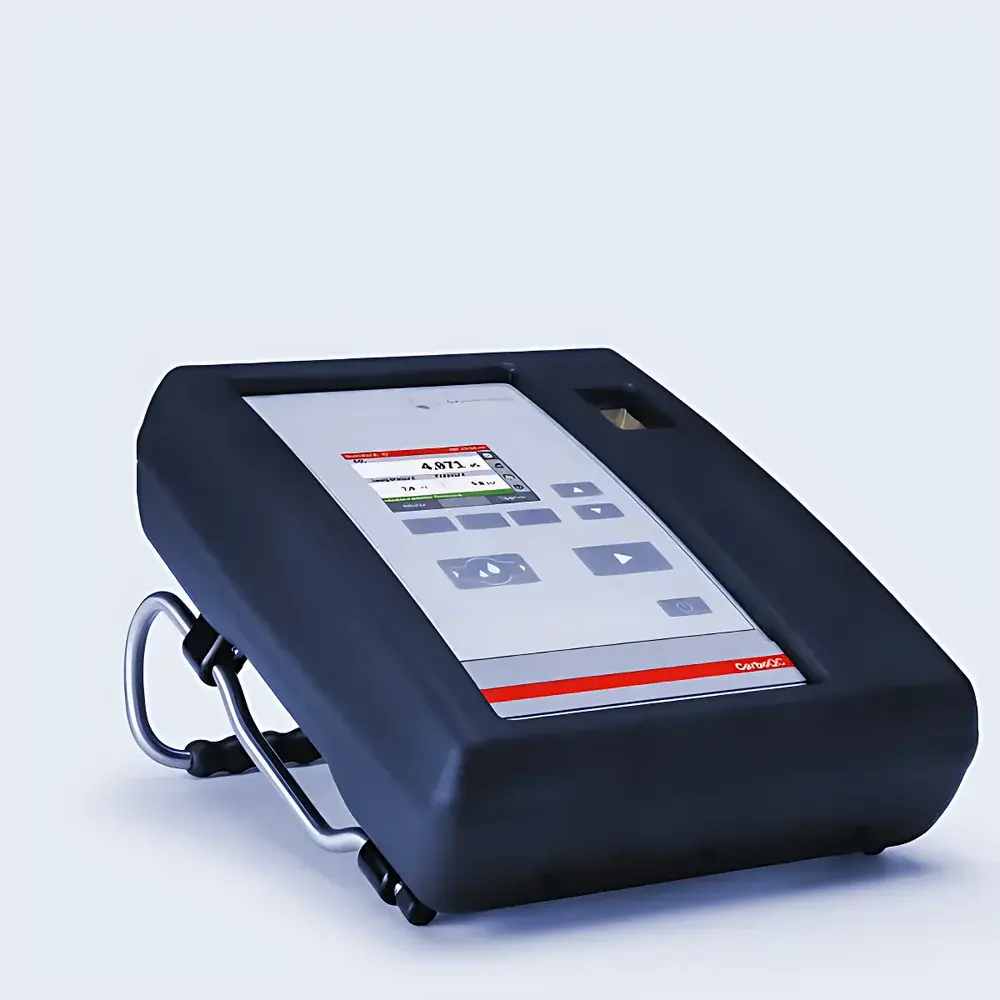
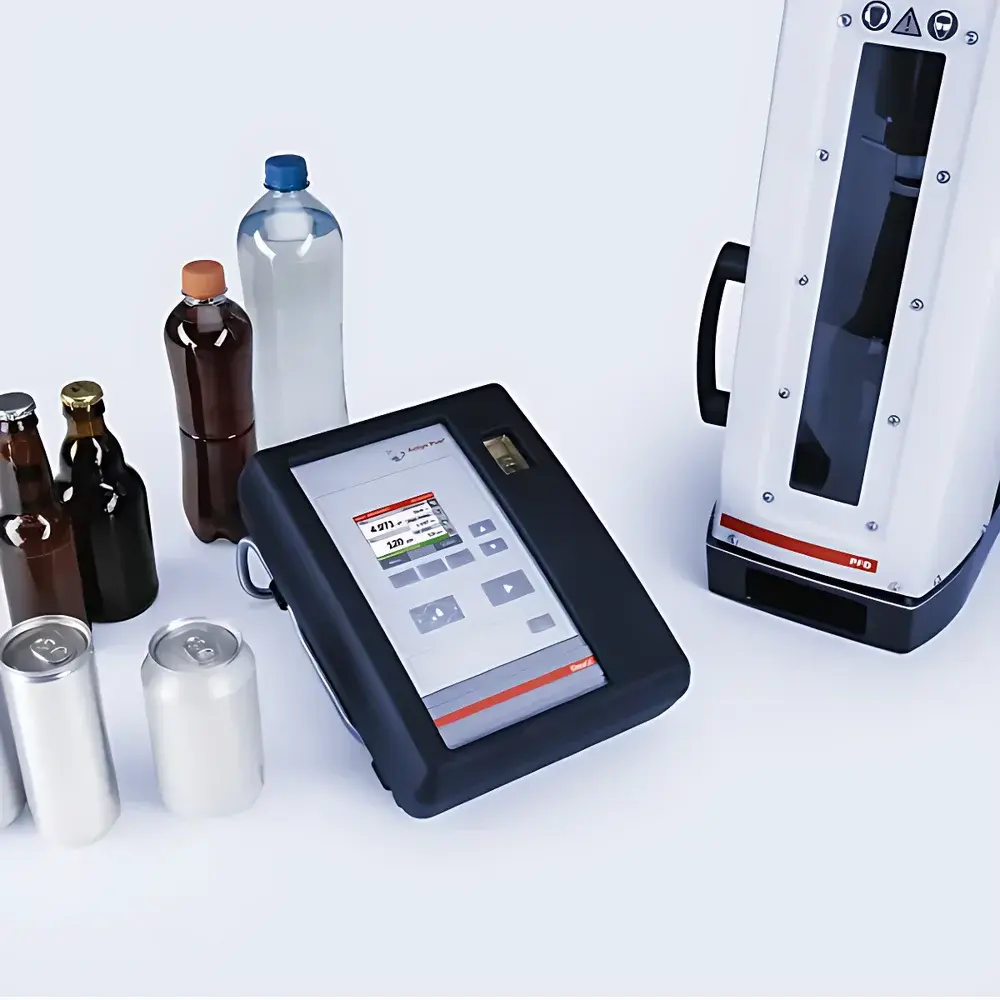
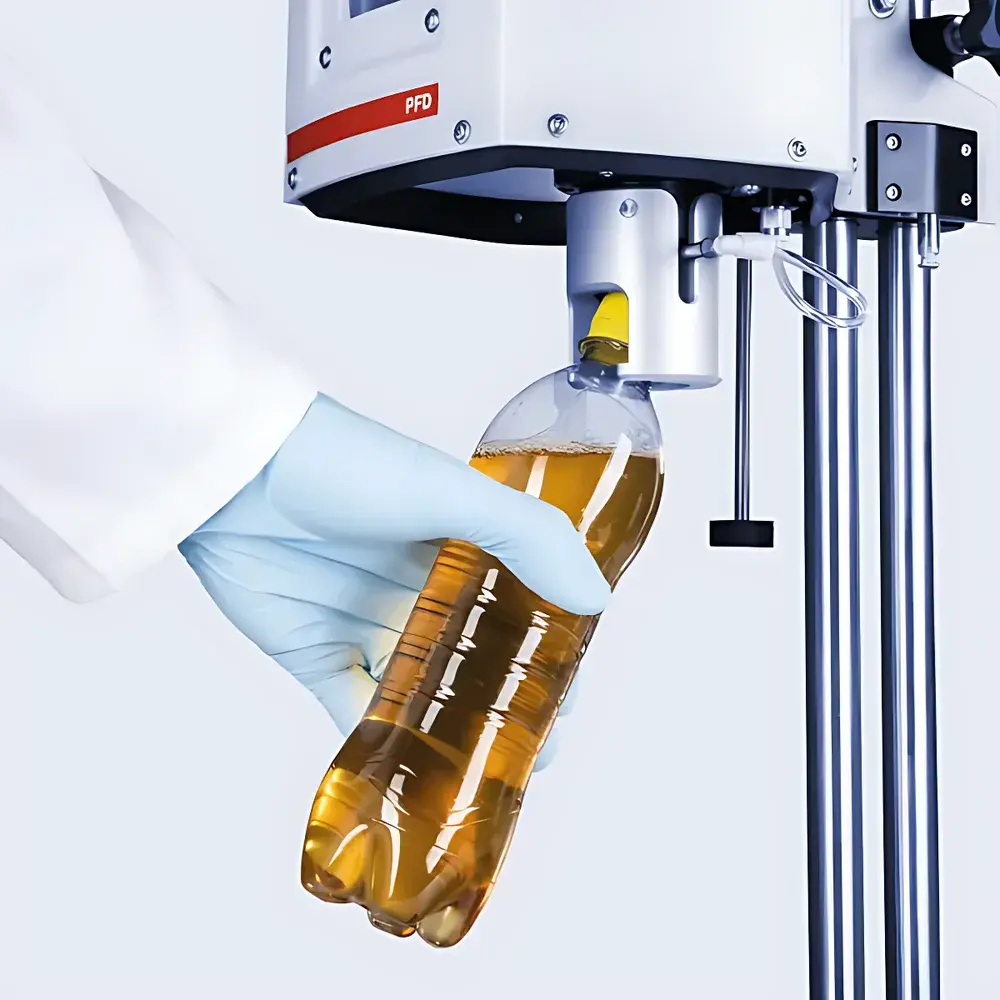
Anton Paar CarboQC / CboxQC / OxyQC At-line CO₂ & Dissolved Oxygen Analyzer for Beverage Quality Control
| Brand | Anton Paar |
|---|---|
| Origin | Austria |
| Manufacturer Type | Original Equipment Manufacturer (OEM) |
| Product Category | Imported Instrument |
| Model Series | CarboQC, CboxQC, OxyQC (At-line Configuration) |
| Measurement Time | 2–3 min per sample |
| Dimensions (L × W × H) | 258 mm × 201 mm × 170 mm |
| Weight | 2.6 kg |
| Data Storage Capacity | Up to 500 measurement datasets |
| Sample Volume | 150 mL |
| CO₂ Range | 0–12 g/L (0–6 vol%) at 30 °C |
| Dissolved O₂ Range | 0–4 ppm |
| Temperature Range | −3 °C to 30 °C |
| Pressure Range | 0–10 bar |
| CO₂ Repeatability (s.d.) | ±0.005 vol% |
| O₂ Repeatability (s.d.) | ±2 ppb |
| O₂ Response Time (t₉₈%) | 20 s at 25 °C |
| Pressure Accuracy | ±0.01 bar |
| CO₂ Accuracy (s.d.) | ±0.05 vol% |
| O₂ Accuracy (s.d.) | ±4 ppb |
| Power Supply | AC 100–240 V, 50/60 Hz |
| Interfaces | 1 × USB (PC), 1 × RS-232 (printer or AP-SoftPrint) |
Overview
The Anton Paar CarboQC, CboxQC, and OxyQC series constitute a family of at-line analyzers engineered for precise, simultaneous quantification of carbon dioxide (CO₂) and dissolved oxygen (O₂) in alcoholic and non-alcoholic beverages—including beer, soft drinks, sparkling water, and cider. These instruments operate on two distinct, metrologically validated physical principles: multi-volume expansion gas extraction for CO₂ determination and fluorescence quenching for dissolved O₂ detection. Unlike conventional headspace gas chromatography or electrochemical sensors, the CarboQC/CboxQC eliminates interference from co-dissolved gases (e.g., N₂, SO₂, ethanol vapor) through patented volumetric expansion control under isothermal conditions—ensuring trace-level CO₂ accuracy independent of beverage composition or residual gas matrix. The OxyQC employs a solid-state optical sensor with ruthenium-based luminophore immobilized in a sol-gel matrix, delivering stable, drift-free O₂ response with minimal photobleaching and no membrane replacement. All units are factory-calibrated against NIST-traceable reference standards and comply with ISO 20461:2020 (carbonation analysis in beverages) and ASTM D5129–18 (dissolved oxygen in low-conductivity liquids), supporting GLP-compliant laboratory workflows and real-time process monitoring.
Key Features
- Patented multi-volume expansion technology for CO₂ measurement—eliminates cross-sensitivity to nitrogen, oxygen, and sulfur dioxide without chemical reagents or carrier gas.
- Fluorescence lifetime-based O₂ sensor with t₉₈% < 20 s at 25 °C and long-term stability exceeding 12 months without recalibration.
- Integrated pressure-compensated temperature-controlled measurement chamber with magnetic stirring—prevents bubble formation and ensures homogeneous sample equilibration.
- At-line capable design: rear-mounted ball valve enables pressurized sampling up to 10 bar, maintaining CO₂ integrity during transfer from production lines.
- Single-button operation automates rinse, fill, equilibration, and measurement—no operator-dependent timing or manual valve actuation.
- Ruggedized housing with IP54-rated enclosure, rubberized grip, detachable shoulder strap, and glove-friendly keypad for use in wet, cold, or high-humidity environments.
- Onboard data logger stores up to 500 complete datasets including CO₂ (g/L and vol%), O₂ (ppb), temperature (°C), absolute pressure (bar), and timestamp.
Sample Compatibility & Compliance
The CarboQC/CboxQC/OxyQC platform supports direct analysis of unpreserved, unfiltered, and carbonated liquids across pH 2.5–5.5 and alcohol content up to 12% v/v. It is validated for use with pasteurized and unpasteurized beer, PET-bottled sodas, stainless-steel kegged lagers, and glass-bottled mineral waters. All models meet CE marking requirements under the EU Machinery Directive 2006/42/EC and Electromagnetic Compatibility Directive 2014/30/EU. For regulated environments, the systems support audit trails via AP-SoftPrint software compliant with FDA 21 CFR Part 11 (electronic records and signatures) when used with user authentication and electronic signature modules. Calibration verification using high-purity nitrogen and deionized water satisfies ISO/IEC 17025:2017 clause 7.7 (monitoring of calibration status) and USP (instrument qualification).
Software & Data Management
AP-SoftPrint serves as the dedicated instrument control and data management suite, enabling remote configuration, method validation, and automated report generation (PDF/CSV). The software calculates Total Package Oxygen (TPO) directly from measured dissolved O₂, headspace O₂ (via optional gas phase module), and package geometry inputs—fully aligned with ASBC Method Beers-32A and EBC Analytica 9.32. Data export includes full metadata (operator ID, instrument serial number, environmental conditions), raw sensor traces, and uncertainty estimates derived from built-in statistical models. USB and RS-232 interfaces allow integration into MES/SCADA systems via Modbus RTU protocol. Firmware updates are delivered via signed binary packages with SHA-256 checksum verification to ensure integrity and traceability.
Applications
- Final product release testing in brewery QC labs—verifying CO₂ saturation levels within ±0.05 vol% tolerance prior to packaging.
- In-process monitoring during bottling/filling—using Filling Check function to detect pressure drop anomalies indicating seal failure or CO₂ loss.
- Stability studies tracking O₂ ingress over shelf life under accelerated aging conditions (e.g., 37 °C/75% RH).
- Raw material screening—assessing CO₂ carryover from fermentation tanks or O₂ contamination in CO₂ supply lines.
- Regulatory submission support—generating audit-ready datasets for BRCGS, SQF, and FSSC 22000 certification audits.
- Research applications in sensory science—correlating dissolved gas profiles with foam stability, flavor oxidation markers (e.g., trans-2-nonenal), and perceived mouthfeel.
FAQ
Can the CboxQC measure CO₂ and O₂ simultaneously in a single sample injection?
Yes—the CboxQC performs sequential CO₂ and O₂ quantification within one 150 mL sample draw, with automatic chamber purge and sensor stabilization between measurements.
Is zero-point calibration required before each measurement session?
No—factory calibration remains stable for ≥6 months under normal operating conditions; however, daily verification using nitrogen-sparged deionized water is recommended per ISO 20461 Annex B.
Does the system require consumables such as membranes or electrolytes?
No—the O₂ sensor is solid-state and maintenance-free; the CO₂ module contains no replaceable parts, eliminating recurring consumable costs.
How is measurement repeatability verified during routine operation?
Built-in statistical engine computes real-time standard deviation across consecutive measurements and flags deviations exceeding ±0.005 vol% (CO₂) or ±2 ppb (O₂) for operator review.
Can the instrument be integrated into an existing LIMS environment?
Yes—via AP-SoftPrint’s ODBC-compliant database interface or direct CSV export with configurable field mapping for seamless ingestion into LabVantage, Thermo Fisher SampleManager, or custom SQL-based LIMS.






