
Anton Paar Cora 5001 Fiber In-situ Raman Spectrometer
| Brand | Anton Paar |
|---|---|
| Origin | Austria |
| Manufacturer Type | Manufacturer |
| Origin Category | Imported |
| Model | Cora 5001 Fiber |
| Instrument Type | Portable/Handheld Raman Spectrometer |
| Spectral Range | 100–3500 cm⁻¹ |
| Spectral Resolution | 6–9 cm⁻¹ |
| Spatial Resolution | 1 µm (lateral), 1 µm (axial) |
| Minimum Wavenumber | 100 cm⁻¹ |
| Spectral Reproducibility | < 0.5 cm⁻¹ |
Overview
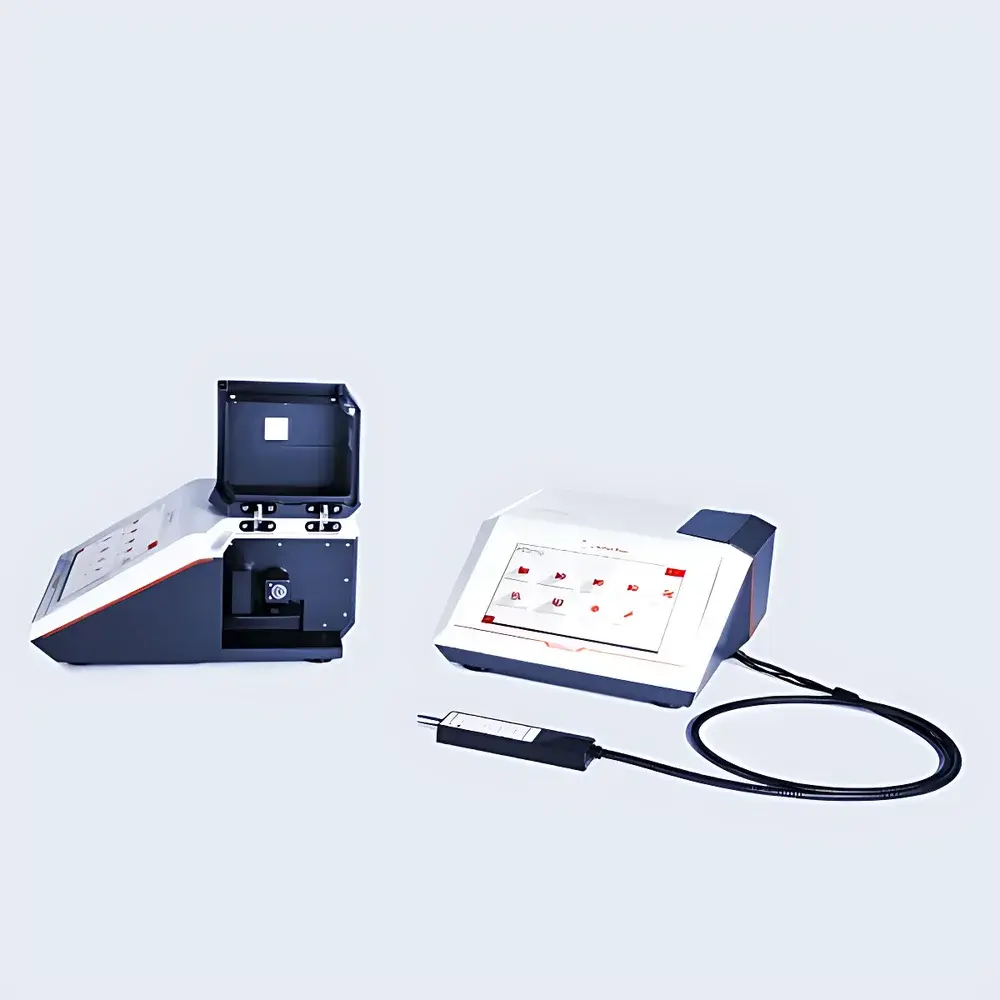
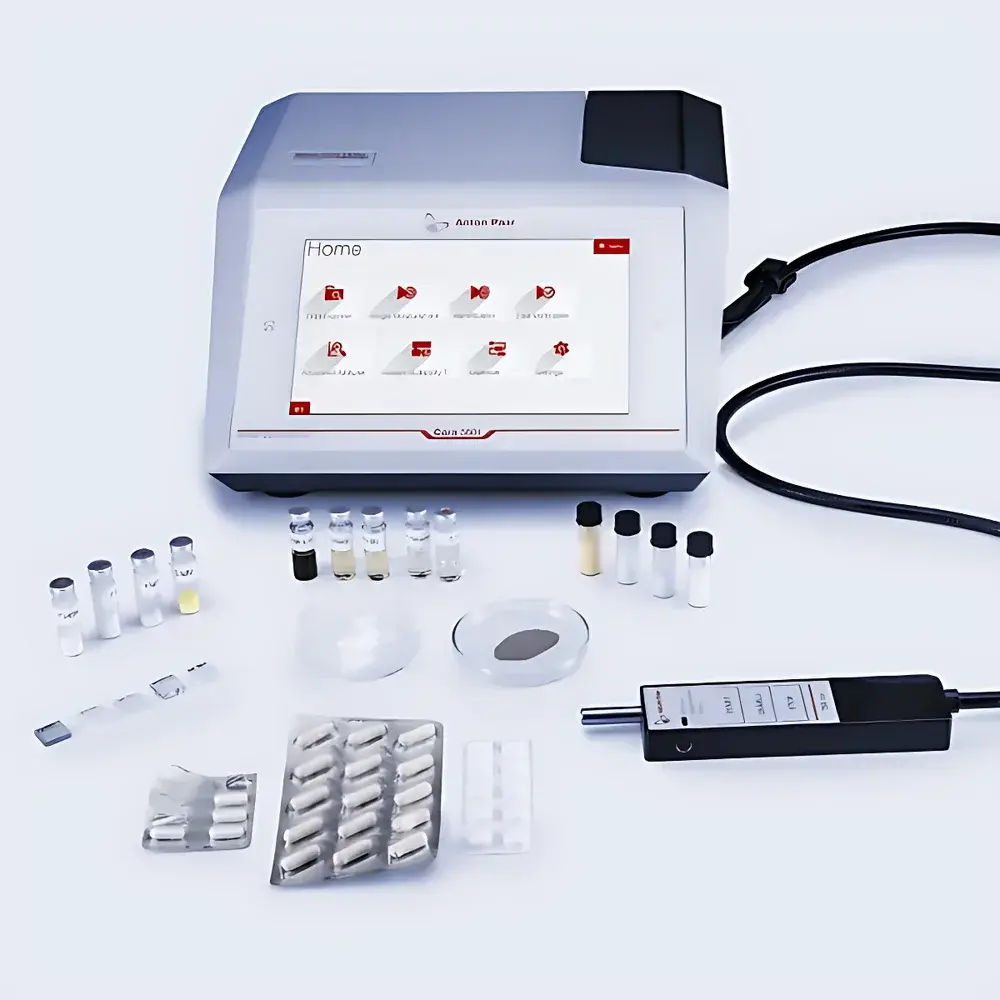
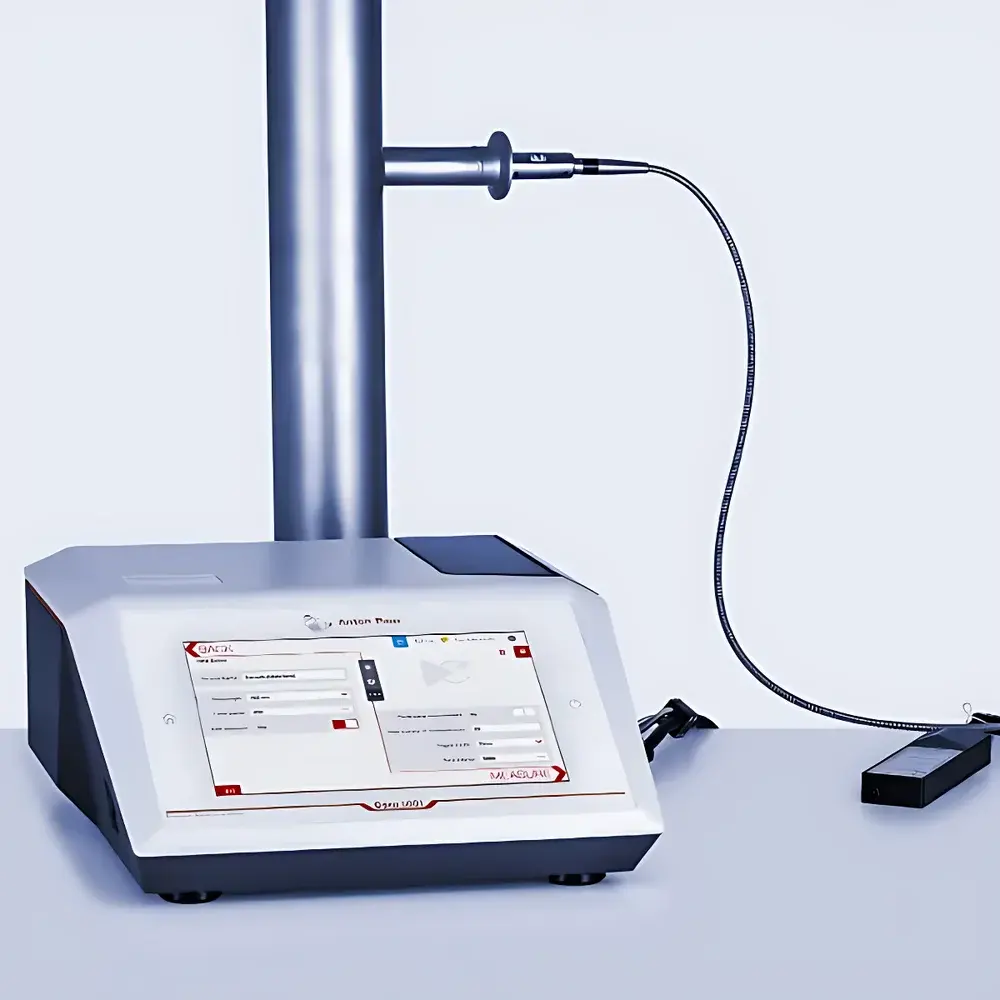
The Anton Paar Cora 5001 Fiber is an in-situ Raman spectrometer engineered for real-time, non-destructive molecular identification and process monitoring in industrial, pharmaceutical, and research environments. Operating on the principle of inelastic light scattering—where monochromatic laser excitation induces vibrational mode shifts in chemical bonds—the instrument delivers rapid, label-free chemical fingerprinting with high spectral fidelity. Unlike benchtop systems requiring sample extraction or preparation, the Cora 5001 Fiber enables direct optical interrogation through fiber-coupled probes, supporting measurements across transparent windows, immersion into reactors, or contact with solids and powders under ambient or controlled process conditions. Its compact footprint, integrated 10-inch touchscreen interface, and optional lithium-ion battery (>1.5 h runtime) facilitate deployment in laboratories, cleanrooms, pilot plants, and warehouse settings—without reliance on fixed infrastructure.
Key Features
- Fiber-optic coupling architecture enabling flexible probe placement: compatible with nine standardized Raman probes—including immersion, flow-cell, high-temperature, and pressure-rated variants—for operation in harsh chemical, thermal, or mechanical environments.
- Dual-wavelength configuration (e.g., 532 nm + 785 nm) with independent optical paths and dedicated detectors—eliminating need for manual realignment or recalibration during wavelength switching; mitigates fluorescence interference across diverse sample classes (e.g., organics, carbon nanomaterials, oxides, APIs).
- High-stability spectral performance: spectral reproducibility < 0.5 cm⁻¹ (verified per ASTM E2529), calibrated via automated software-based wavelength referencing using internal standards.
- Robust optical design: f/2 transmission spectrometer with volume phase grating (VPG) optics and thermally stabilized CCD (2048 px) or InGaAs (256 px) detectors—optimized for signal-to-noise ratio across low- and high-wavenumber regions.
- Laser safety compliance: Fiber variant classified as IEC 60825-1 Class 3B; integrated interlock logic and beam shutter control ensure operator protection during routine operation and maintenance.
Sample Compatibility & Compliance
The Cora 5001 Fiber accommodates heterogeneous sample states—including liquids, slurries, suspensions, powders, gels, and solid surfaces—without physical contact or vacuum requirements. Its fiber-probe interface supports measurements through quartz, sapphire, or borosilicate glass reactor windows (≥1 mm thickness), enabling in-line reaction monitoring in stirred-tank reactors, microreactors, and microwave synthesis units. From a regulatory standpoint, the system meets critical requirements for GxP environments: software adheres to ALCOA+ principles (Attributable, Legible, Contemporaneous, Original, Accurate), supports 21 CFR Part 11-compliant electronic signatures, role-based user access control, audit-trail logging (with timestamped metadata and operator annotations), and SQL-backed data persistence ensuring long-term integrity and traceability.
Software & Data Management
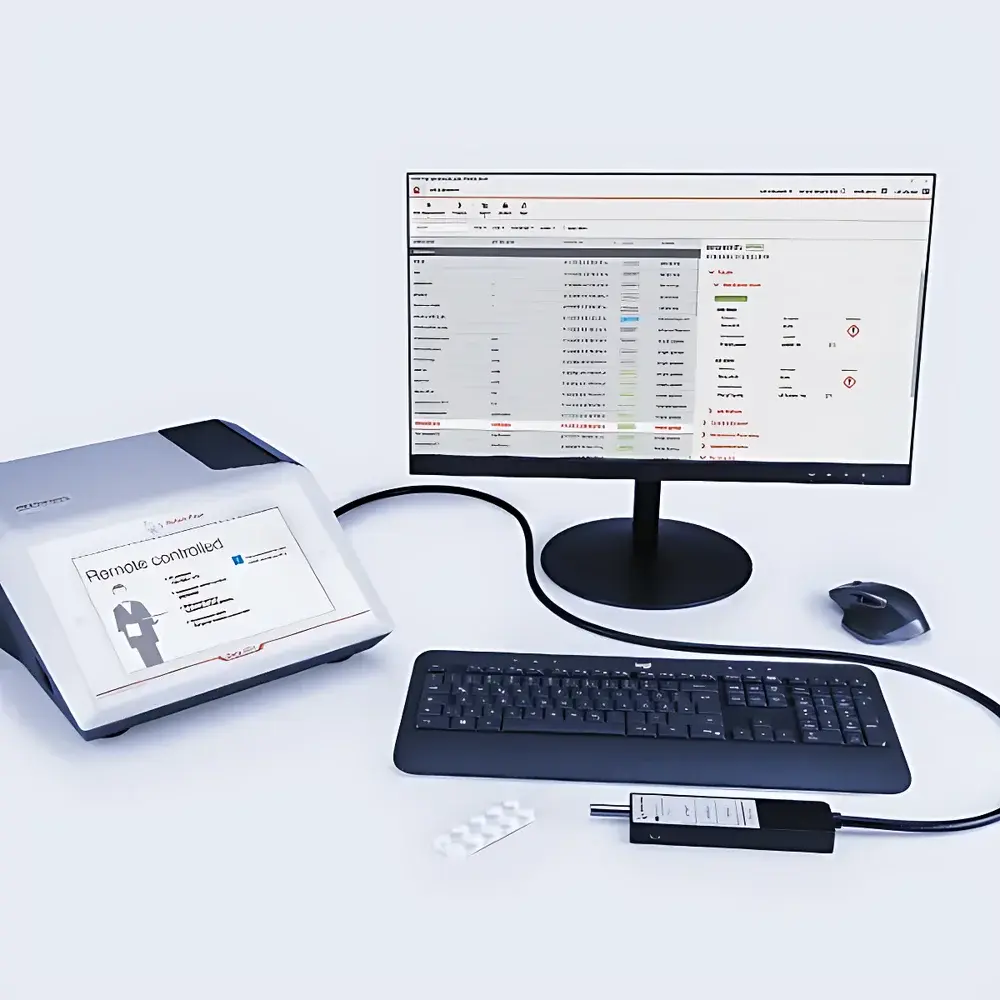
Anton Paar Spectroscopy Suite provides a unified desktop platform for method development, acquisition, processing, and reporting. The interface features guided workflows—reducing operator training time and minimizing procedural variability—while granting administrators full control over reference library curation (including vendor-supplied, custom-built, and third-party spectral databases). All spectra are stored in a secure, relational SQL database with version-controlled method files and immutable raw-data archiving. Advanced search filters support retrieval by batch ID, timestamp, operator, or spectral similarity metrics. Export options include .csv, .txt, .spc, .aps, .png, and .pdf formats—ensuring interoperability with LIMS, MES, and statistical process control (SPC) platforms.
Applications
- Real-time reaction kinetics monitoring: tracking intermediate formation, endpoint detection, and polymorph transitions in API synthesis and crystallization processes.
- In-line quality assurance: verifying raw material identity, detecting counterfeit pharmaceuticals, and confirming excipient compatibility in blend uniformity studies.
- Materials science: characterizing graphene layer count, defect density in CNTs, oxidation states in battery cathodes, and phase evolution in catalysts under operando conditions.
- Process analytical technology (PAT): integration into automated control loops via RESTful API for closed-loop feedback—enabling dynamic adjustment of temperature, residence time, or reagent dosing based on spectral trend analysis.
- Field-deployable forensics and hazardous material screening: rapid identification of unknown solids, liquids, or residues in environmental, customs, or emergency response scenarios.
FAQ
What safety certifications does the Cora 5001 Fiber meet?
It complies with IEC 60825-1 (Class 3B laser product) and carries CE marking for electromagnetic compatibility (EMC) and low-voltage directive (LVD) conformity.
Can the instrument be integrated into existing automation infrastructure?
Yes—via a documented RESTful API supporting JSON payloads, enabling bidirectional communication with DCS, SCADA, or LabVIEW systems for scheduled acquisitions, spectral upload, and real-time alerting.
Is spectral calibration traceable to NIST standards?
Wavelength calibration is performed using certified reference materials (e.g., silicon, cyclohexane); documentation includes uncertainty budgets aligned with ISO/IEC 17025 guidelines.
How is data integrity ensured during extended unattended operation?
Continuous checksum validation, automatic backup to network shares, and write-once-read-many (WORM) archival policies prevent unauthorized modification or deletion of raw spectral records.
What probe options support high-temperature measurements?
Anton Paar offers HT-Fiber probes rated up to 300 °C and HP-HT variants capable of operation at 200 bar and 250 °C—compatible with autoclaves, hydrothermal reactors, and extrusion lines.



