
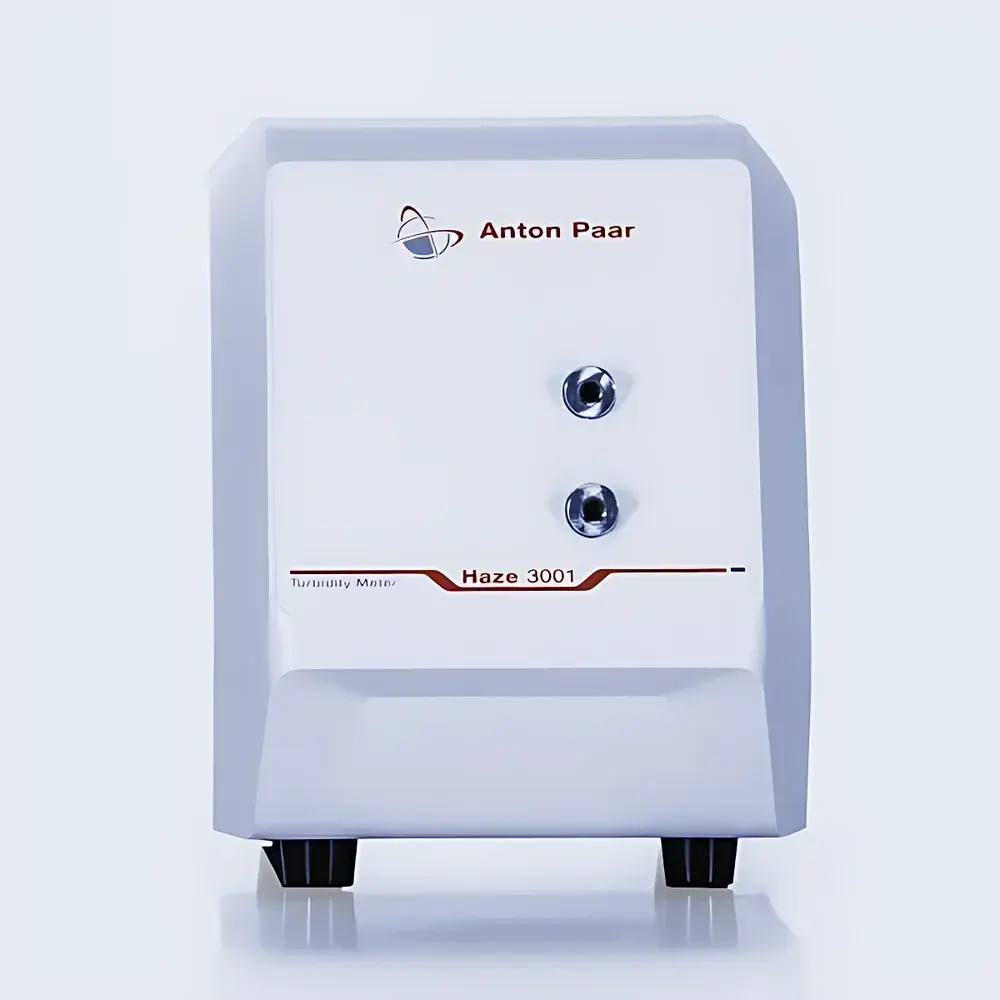
Anton Paar Haze 3001 Turbidimeter
| Brand | Anton Paar |
|---|---|
| Origin | Austria |
| Manufacturer Type | Original Equipment Manufacturer (OEM) |
| Origin Category | Imported |
| Model | Haze 3001 |
| Form Factor | Benchtop / Laboratory |
| Measurement Range | 0–400 NTU |
| Resolution | 0.01 NTU |
| Operating Ambient Temperature | 15–35 °C |
Overview
The Anton Paar Haze 3001 Turbidimeter is a precision optical instrument engineered for accurate, traceable, and reproducible turbidity measurement in liquid samples—specifically optimized for quality assurance in beverage production, including beer, wine, and spirits. It operates on the internationally recognized ratio method (ISO 7027-1:2016), performing simultaneous detection of transmitted light at 0° and scattered light at 25° and 90°. This multi-angle photometric approach compensates for particle size distribution effects, eliminating bias from polydisperse suspensions and ensuring robustness across varying sample matrices. Integrated Peltier-controlled thermostating enables temperature-stabilized measurements within the cell (±0.1 °C), critical for detecting cold-induced haze formation—such as chill haze in beer or protein-tannin complexes in wine—thereby supporting microbial and colloidal stability assessments early in the production workflow.
Key Features
- Triple-angle optical detection (0° transmission, 25° forward scatter, 90° side scatter) compliant with ISO 7027-1:2016 for ratio-based turbidity quantification
- Peltier-regulated sample cell with precise thermal control (15–35 °C ambient; cell temp adjustable within 0–40 °C range)
- High-resolution detection down to 0.01 NTU across full 0–400 NTU dynamic range
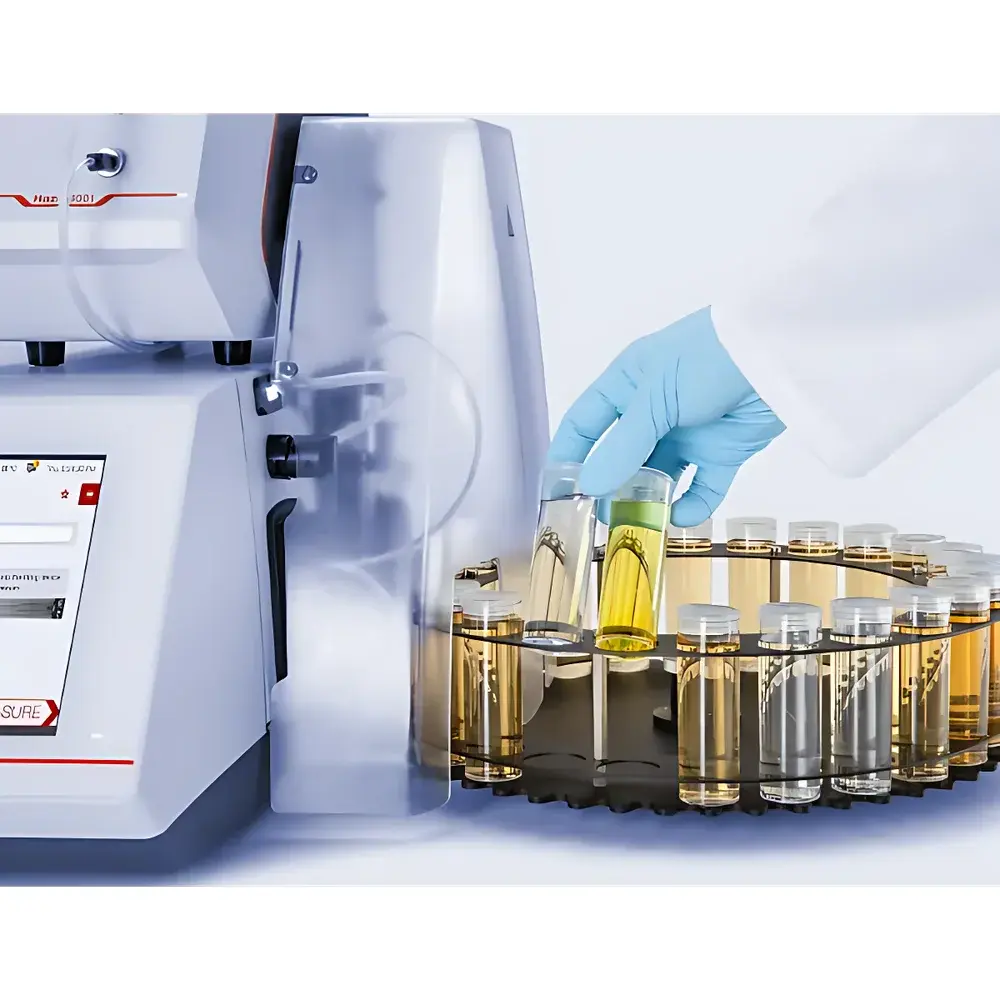
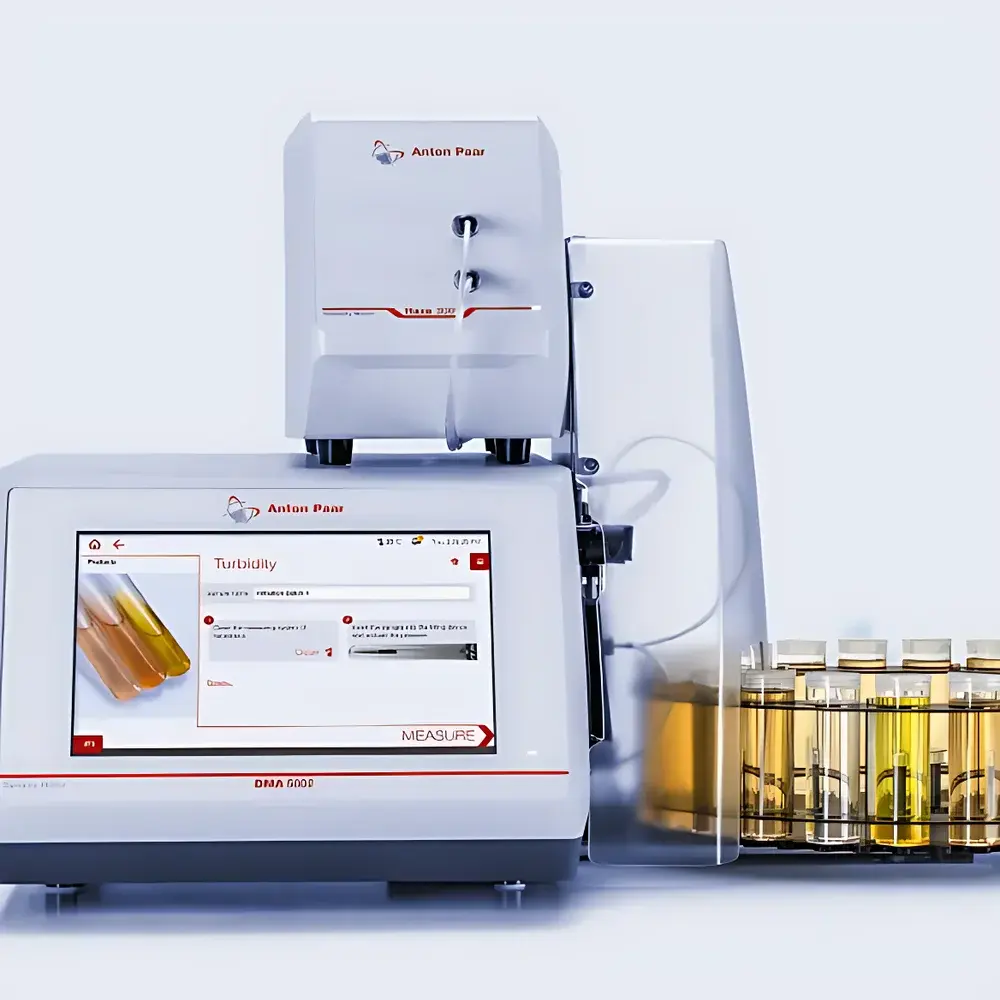
- Benchtop form factor with compact footprint and ergonomic sample handling for routine QC labs
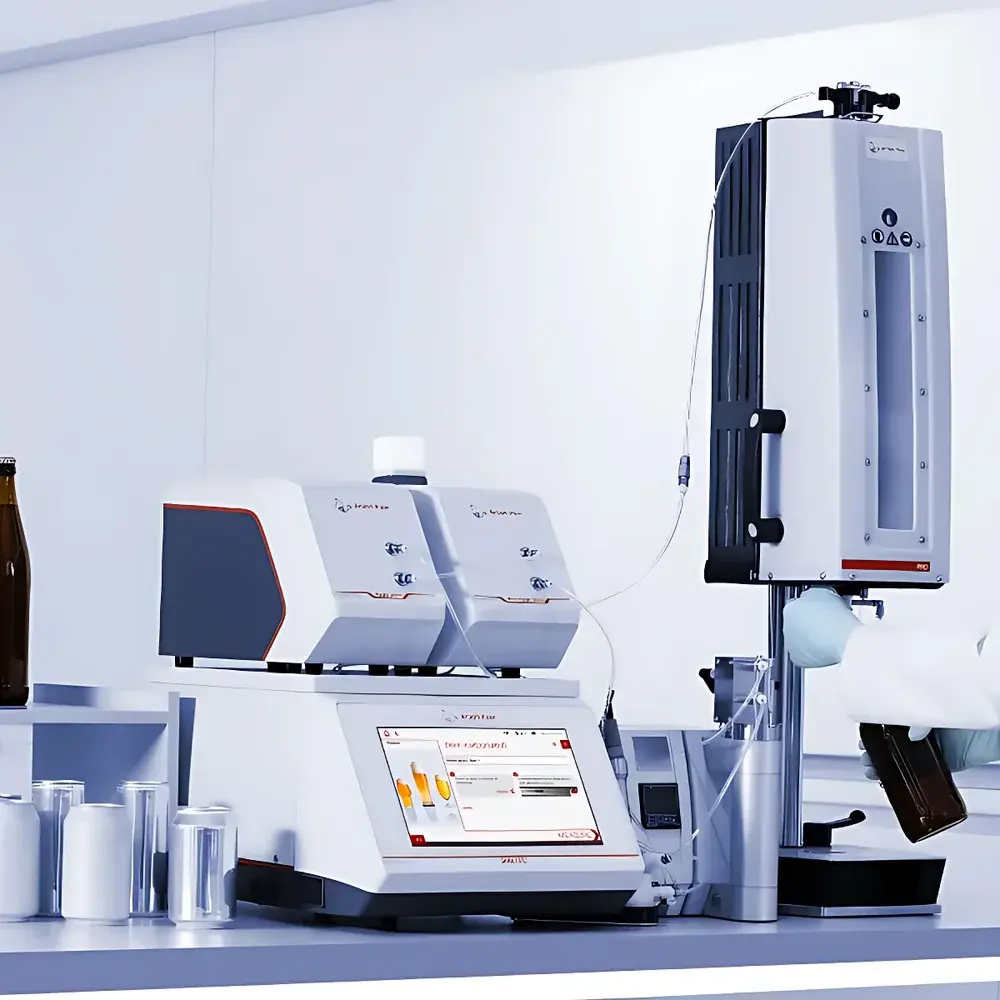
- Modular architecture designed for seamless integration into Anton Paar’s broader measurement ecosystem (e.g., with SAXS, rheometry, or density modules via unified software platform)
- Automatic calibration verification using NIST-traceable formazin or polymer standards; user-defined calibration protocols supported
Sample Compatibility & Compliance
The Haze 3001 accommodates standard 10 mm or 20 mm pathlength cuvettes (quartz or high-grade optical glass), enabling direct analysis of clarified, filtered, or unfiltered beverages without dilution in most cases. It meets regulatory expectations for method validation under GLP and GMP frameworks, with full audit trail capability—including operator ID, timestamp, calibration history, and raw photodetector signal logs—aligned with FDA 21 CFR Part 11 requirements when used with Anton Paar’s certified software suite. Instrument performance is verified against ASTM D6505 (Standard Test Method for Turbidity of Water) and EN ISO 7027-1 for drinking water and process liquids, while its application-specific protocols are validated per industry guidelines from the European Brewery Convention (EBC) and International Organisation of Vine and Wine (OIV).
Software & Data Management
Controlled via Anton Paar’s unified LabX™ software platform, the Haze 3001 supports centralized method management, automated report generation (PDF/CSV/XLSX), and real-time data synchronization with LIMS or MES systems. All measurement parameters—including temperature setpoint, integration time, averaging cycles, and angle-weighting coefficients—are fully configurable and stored with metadata. Electronic signatures, role-based access control, and immutable data archiving ensure compliance with ISO/IEC 17025 and pharmaceutical QA workflows. Raw intensity values from all three detectors are retained for post-acquisition reprocessing, facilitating root-cause analysis of haze development kinetics.
Applications
- Chill haze monitoring in lager and pilsner production (EBC Method 8.12)
- Filtration efficiency validation pre- and post-membrane filtration in wine clarification
- Stability assessment of distilled spirits during chill filtration and aging
- Colloidal stability screening of fruit juices and ready-to-drink (RTD) beverages
- Process troubleshooting of yeast flocculation, protein precipitation, or tannin aggregation
- Release testing of final products against internal specifications or OIV Annex 1A limits
FAQ
Does the Haze 3001 comply with ISO 7027-1:2016?
Yes—the instrument implements the ratio method using calibrated photodiodes at 0°, 25°, and 90°, satisfying all optical and algorithmic requirements defined in ISO 7027-1:2016.
Can it measure samples below 0.1 NTU with confidence?
With its 0.01 NTU resolution and low-noise detector array, the Haze 3001 provides statistically reliable readings down to 0.05 NTU under controlled lab conditions; detection limit is validated per ICH Q2(R2) guidelines.
Is temperature control limited to the sample cell only?
Yes—the Peltier element regulates only the measurement cell. Ambient temperature must remain within 15–35 °C to ensure system thermal equilibrium and long-term photometric stability.
How is calibration traceability maintained?
Calibration uses formazin or polymer-based standards certified to NIST SRM 2134 or equivalent; certificate of calibration includes uncertainty budget and drift assessment over 12 months.
Can the Haze 3001 be operated standalone without LabX software?
Basic measurements and manual calibration are possible via the built-in touchscreen interface; however, full compliance functionality, data integrity, and advanced reporting require LabX v3.12 or later.



