
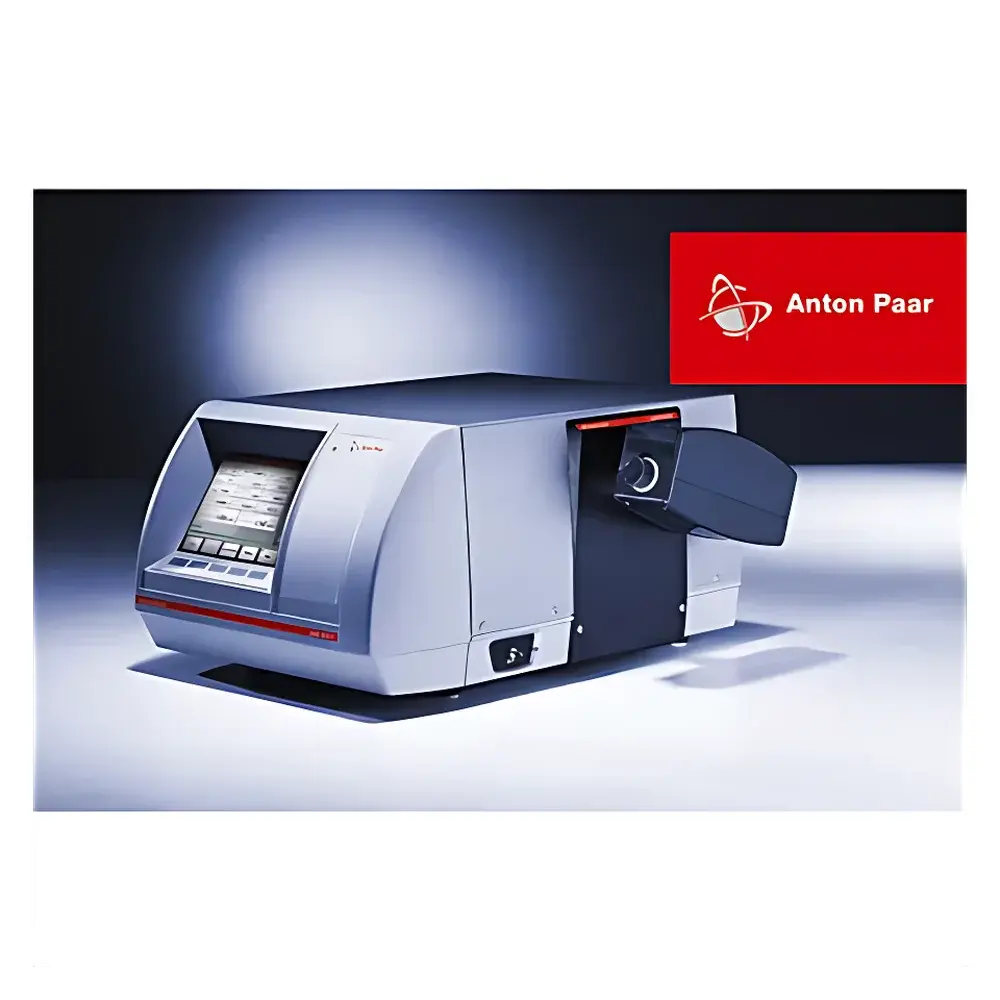
Anton Paar Lovis 2000 M/ME Automated Micro Falling-Ball Viscometer
| Brand | Anton Paar TriTec (formerly CSM, Switzerland) |
|---|---|
| Origin | Switzerland |
| Model | Lovis 2000 M/ME |
| Viscosity Range | 0.3–10,000 mPa·s |
| Repeatability | < 0.1 % |
| Reproducibility | < 0.5 % |
| Ball Fall Time Range | 0–250 s (up to 1000 s with extended mode) |
| Time Resolution | 0.001 s |
| Temperature Control Range | +5 to +100 °C |
| Temperature Stability | ±0.005 °C |
| Temperature Accuracy | < ±0.02 °C |
| Sample Volume | 0.1–0.8 mL |
| Power Supply | 100–240 V, 50–60 Hz, 190 VA |
| Dimensions (L×W×H) | 482 × 420 × 231 mm |
| Weight | 17 kg |
Overview
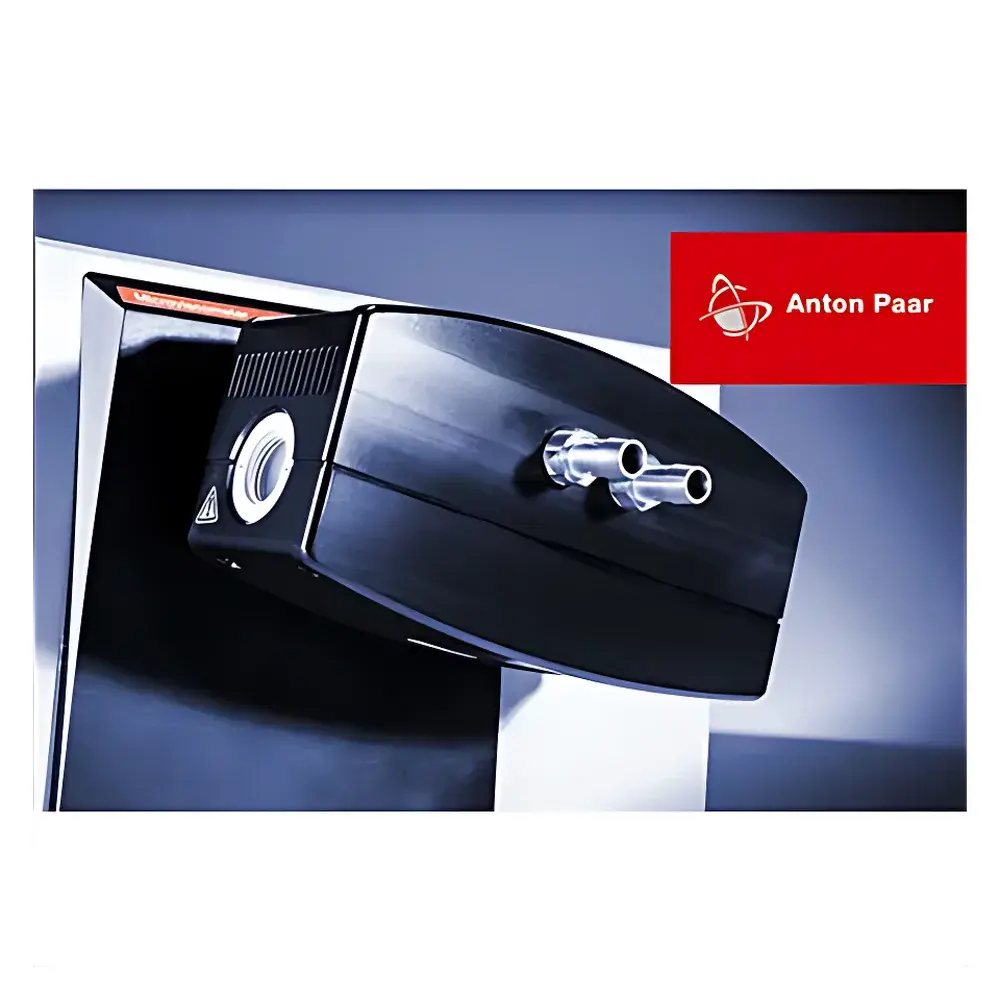
The Anton Paar Lovis 2000 M/ME is an automated micro falling-ball viscometer engineered for high-precision dynamic viscosity measurement of low-to-medium viscosity liquids using the classical Stokes’ law principle. It operates by monitoring the terminal velocity of a calibrated spherical ball as it descends under gravity through a vertically oriented, temperature-controlled capillary tube filled with sample fluid. This method—standardized in DIN 53015 and ISO 12058—provides absolute viscosity values without calibration against reference fluids, ensuring traceable, first-principles-based metrology. The instrument is specifically designed for laboratories requiring minimal sample consumption, strict thermal control, and compliance with regulated environments including pharmaceutical, food & beverage (e.g., wort and beer per MEBAK guidelines), and biotechnology applications. Its fully enclosed measurement cell eliminates air–sample interaction, mitigating oxidation, evaporation, or contamination risks—critical for volatile solvents, biological fluids (e.g., plasma), and shear-sensitive formulations.
Key Features
- Micro-volume operation: Measures viscosity from just 0.1 mL of sample—ideal for precious, hazardous, or limited-availability materials.
- Variable capillary tilt angle: Enables precise adjustment of effective gravitational shear stress and shear rate, allowing method optimization across diverse fluid classes (Newtonian and mildly non-Newtonian).
- Integrated Peltier temperature control: Delivers exceptional thermal stability (±0.005 °C) and accuracy (< ±0.02 °C) over a wide range (+5 to +100 °C), supporting temperature-dependent rheological profiling.
- Self-calibrating optical detection system: High-speed photodiode array captures ball transit time with 0.001 s resolution; all calibration routines—including ball density, capillary geometry, and timing offsets—are executed automatically during startup and routine maintenance.
- Standalone touchscreen interface: 7-inch full-color capacitive display enables complete instrument control, method setup, real-time data visualization, and report generation—no external PC required.
- Modular integration capability: Compatible with Anton Paar’s automated sample handling systems (e.g., RoboVisc), and can be synchronized with DMA M density meters, DSA M sound velocity analyzers, pH, and turbidity modules for multi-parameter characterization from a single injection.
Sample Compatibility & Compliance
The Lovis 2000 M/ME accommodates a broad spectrum of Newtonian and quasi-Newtonian liquids, including aqueous solutions (wort, milk serum, sugar syrups), organic solvents, polymer solutions (dilute to semi-concentrated), surfactant micellar systems, ink formulations, plasma derivatives, and liquid crystal precursors. Its sealed measurement architecture ensures compatibility with volatile, hygroscopic, or oxygen-sensitive samples. Regulatory compliance includes adherence to FDA 21 CFR Part 11 requirements for electronic records and signatures—supporting audit trails, user access control, and data integrity protocols essential for GLP and GMP environments. Instrument validation documentation aligns with ISO/IEC 17025 and ASTM D445 (for kinematic viscosity correlation where applicable). MEBAK-compliant methods are preloaded for standardized wort and beer viscosity assessment in brewing QA/QC workflows.
Software & Data Management
The embedded firmware runs on a deterministic real-time OS, enabling consistent measurement cycle execution and timestamped metadata capture (temperature, ambient pressure, ball ID, capillary ID, tilt angle, and environmental logs). Data export supports CSV, PDF, and XML formats with configurable metadata fields. Optional PC-based RheoCompass™ software extends functionality with advanced statistical analysis (e.g., Arrhenius and WLF modeling), batch reporting, SPC charting, and LIMS integration via ASTM E1384 or HL7 protocols. All electronic records include immutable audit trails meeting ALCOA+ principles—ensuring attributable, legible, contemporaneous, original, accurate, complete, consistent, enduring, and available data throughout its lifecycle.
Applications
- Food & Beverage: Routine QC of wort viscosity for malt quality prediction; monitoring syrup consistency in confectionery; assessing stability of dairy emulsions and plant-based beverages.
- Pharmaceuticals & Cosmetics: Viscosity verification of extraction solvents, tinctures, and topical gels; release testing of ophthalmic solutions and injectables per USP & Ph. Eur. monographs.
- Chemicals & Polymers: Characterization of solvent–polymer interactions; screening of molecular weight trends via intrinsic viscosity estimation; QC of specialty coatings and adhesives.
- Clinical & Biotech: Plasma viscosity screening in hemorheology studies; quality control of cell culture media and buffer solutions.
- Electronics & Advanced Materials: Viscosity profiling of liquid crystal alignment layers and photoresist formulations under controlled thermal conditions.
FAQ
What physical principle does the Lovis 2000 M/ME use to determine viscosity?
It applies Stokes’ law in a controlled capillary environment, calculating dynamic viscosity from the measured terminal velocity of a falling sphere, corrected for buoyancy, wall effects, and fluid inertia.
Can the instrument measure non-Newtonian fluids?
It provides reliable results for weakly shear-thinning or shear-thickening fluids when operated at fixed, well-defined shear rates—achieved via adjustable capillary tilt—but is not intended for full flow-curve characterization.
Is external computer hardware required for operation?
No—the integrated touchscreen interface supports full standalone operation, including method creation, measurement execution, data review, and report export.
How is temperature uniformity ensured across the capillary?
A dual-zone Peltier system actively controls both the upper and lower capillary sections, minimizing axial thermal gradients and ensuring isothermal measurement conditions.
What sample preparation steps are necessary prior to analysis?
Samples must be degassed (if volatile or viscous) and filtered (≤5 µm) to prevent ball trajectory deviation; no dilution or pre-conditioning is required for most standard applications.



