
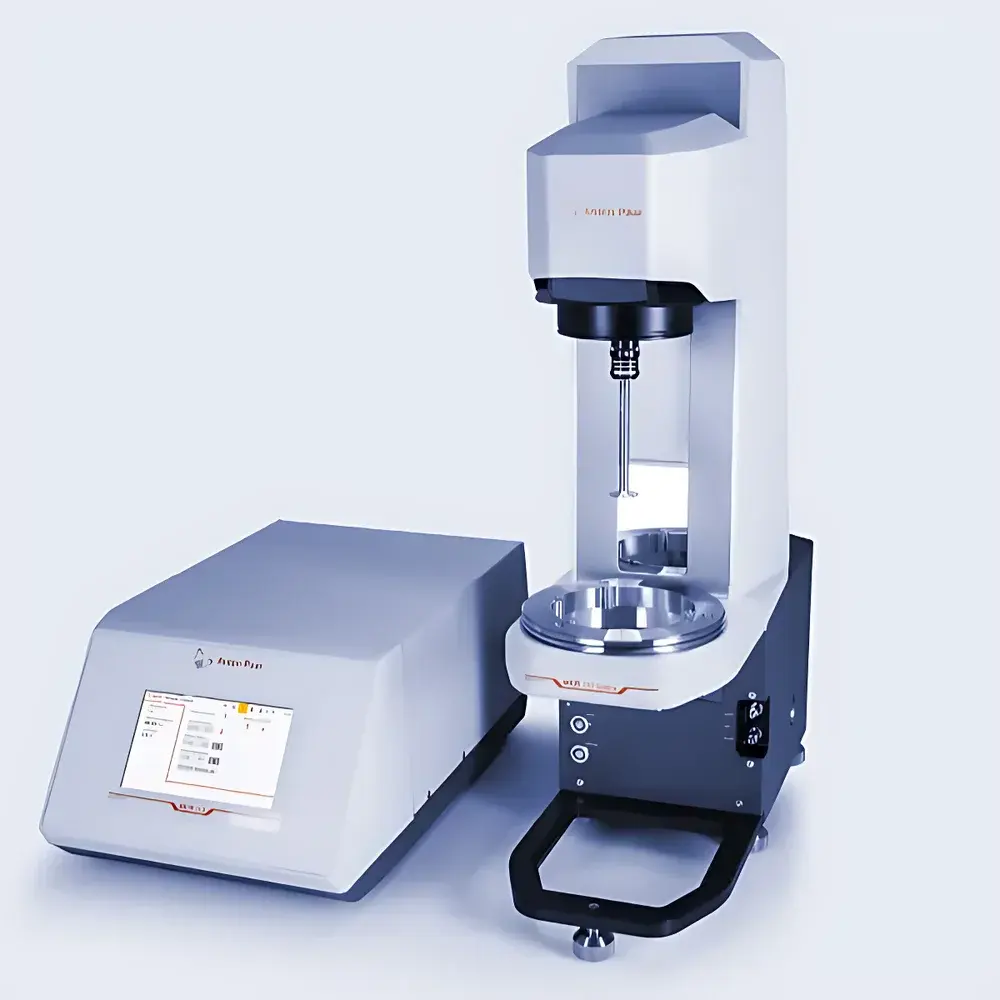
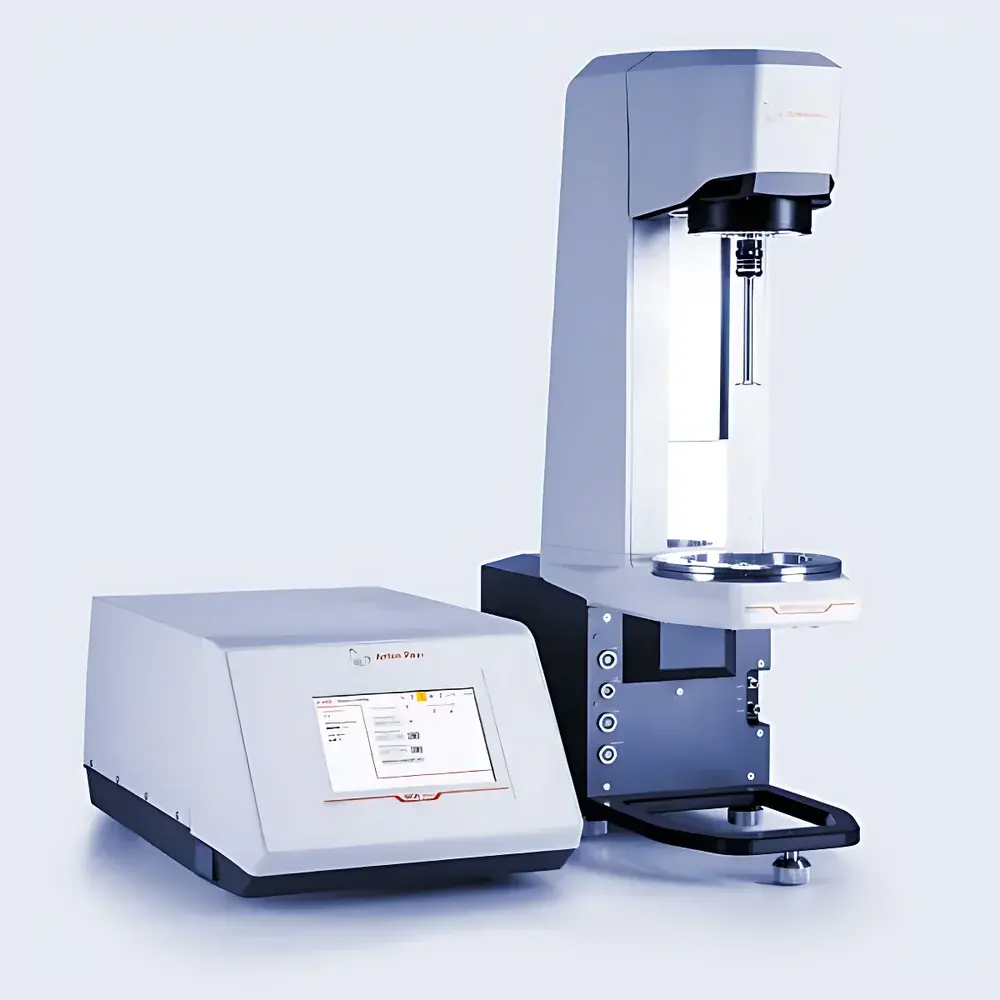
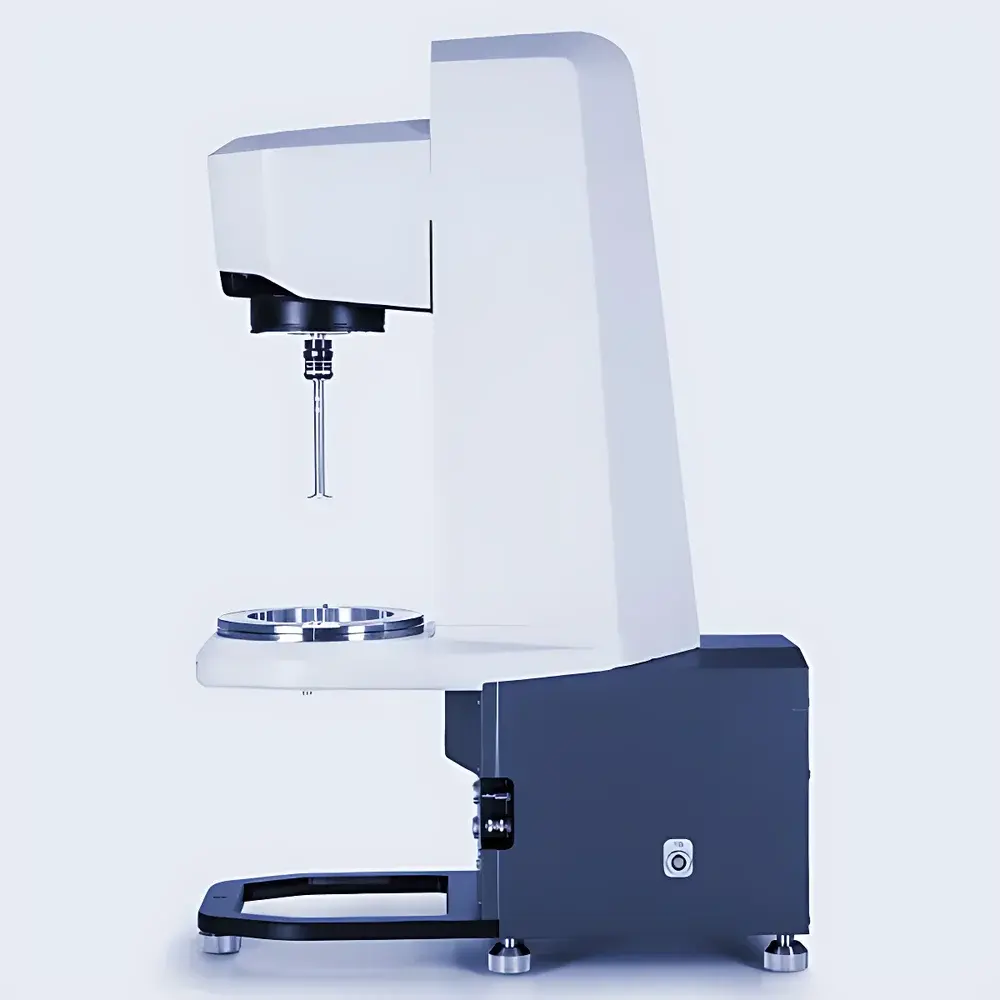
Anton Paar MCR 703 Multidrive Space Rheo-Optics System with Confocal Microscopy Integration
| Brand | Anton Paar |
|---|---|
| Origin | Austria |
| Manufacturer Type | Original Equipment Manufacturer (OEM) |
| Origin Category | Imported |
| Model | MCR 703 Multidrive Space + Rheo-Optics Module |
| Instrument Type | Rotational Rheometer |
| Sample Type | High-Viscosity Fluids |
| Sample State | Liquid |
| Motor Bearing | Precision Porous Carbon Air Bearing |
| Frequency Range | 2 × 10⁻⁸ – 200 Hz |
| Minimum Rotational Speed | 0 rpm |
| Maximum Torque | 230 mNm |
| Maximum Rotational Speed | 6000 rpm |
| Torque Resolution | <1 nrad |
Overview
The Anton Paar MCR 703 Multidrive Space Rheo-Optics System is a modular, high-precision rotational rheometer engineered for advanced in situ and operando microstructural characterization of complex fluids and soft matter. It integrates seamlessly with commercial confocal laser scanning microscopes (CLSM) to enable real-time, spatially resolved correlation between macroscopic rheological response—governed by controlled shear, oscillatory, or extensional deformation—and nanoscale structural evolution. This coupling leverages the fundamental principles of Couette flow geometry and interferometric torque transduction, allowing quantitative measurement of viscosity, viscoelastic moduli (G′, G″), yield stress, thixotropy, and time-dependent recovery—all while simultaneously capturing dynamic morphological changes at sub-micrometer resolution. Designed specifically for research-grade laboratories in academia and industry, the system supports temperature-controlled environments up to 300 °C and inert-atmosphere operation (e.g., N₂ or Ar purged gloveboxes), ensuring compatibility with oxygen-sensitive biomaterials, reactive polymers, and thermally responsive hydrogels.
Key Features
- Modular Rheo-Optics Platform: Dedicated flange-mounted configuration with maximized vertical working space beneath the lower plate—optimized for CLSM objective access and long-working-distance optics integration.
- MultiDrive Technology: Dual independent drive units (motor and transducer) eliminate mechanical coupling errors; enables true normal force control, zero-torque start-up, and ultra-low-frequency oscillation down to 2 × 10⁻⁸ Hz.
- Air-Bearing Architecture: Precision porous carbon air bearings deliver frictionless rotation, exceptional angular resolution (<1 nrad), and long-term stability—critical for low-shear-rate measurements and creep recovery studies.
- Independent Electronics Enclosure: Compact, remotely mounted electronics unit allows installation in confined spaces, gloveboxes, or shielded enclosures without compromising signal integrity or thermal management.
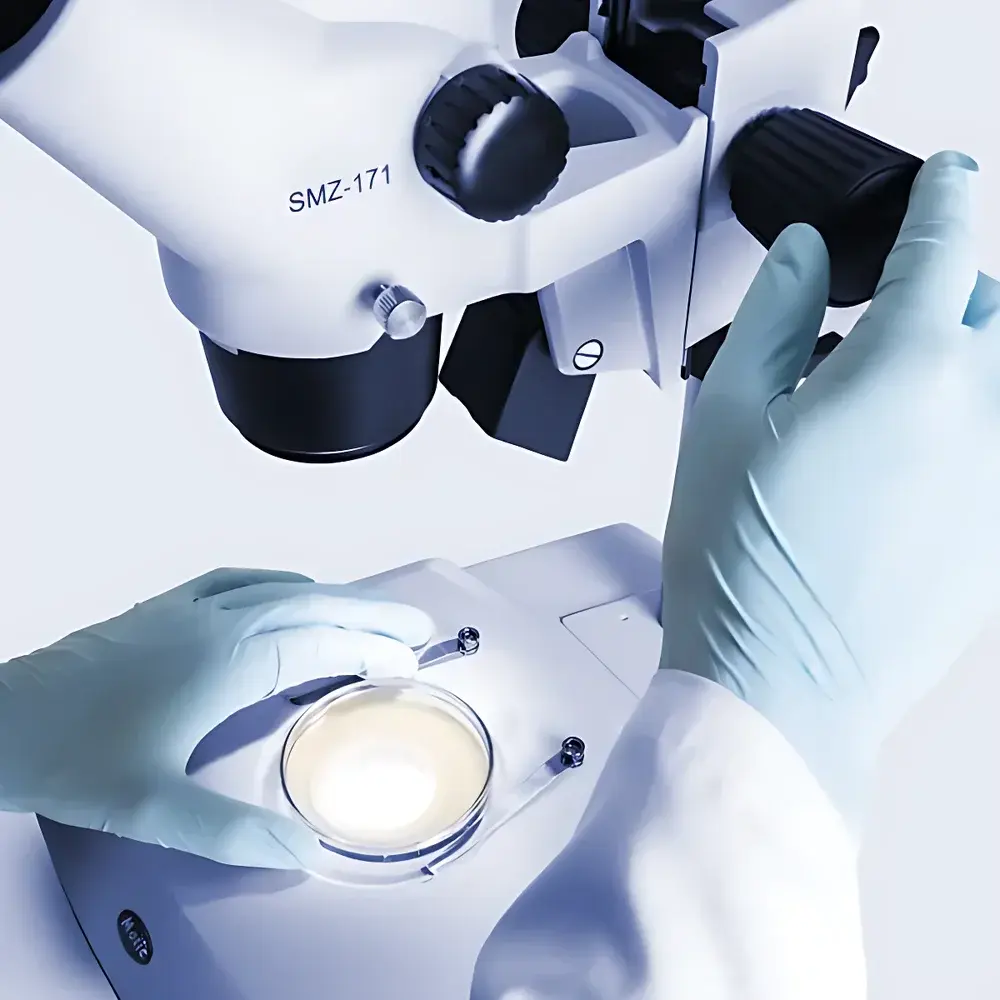
- Full Compatibility with Commercial CLSM Systems: Supports integration with major platforms (e.g., Zeiss LSM, Leica SP, Nikon A1R) via standardized mechanical interfaces, synchronized triggering, and TTL/USB-based data handshake protocols.
Sample Compatibility & Compliance
The system accommodates liquid-phase samples with viscosities ranging from dilute colloidal dispersions to highly structured gels and pastes. Its parallel-plate, cone-and-plate, and cup-and-bob geometries support sample volumes from 20 µL to several milliliters, while temperature control (−40 °C to 300 °C) and environmental sealing ensure reproducible testing under physiologically relevant or industrially stringent conditions. The platform complies with ISO 6721 (plastics — determination of dynamic mechanical properties), ASTM D4440 (standard test method for rheological properties of polymer melts), and supports GLP/GMP-aligned workflows through audit-trail-capable software logging. All hardware interfaces meet CE, UL, and RoHS directives; optional configurations include FDA 21 CFR Part 11–compliant electronic signatures and user-access controls.
Software & Data Management
RheoCompass™ software provides unified control of both rheological and optical subsystems, enabling synchronized acquisition, time-stamped metadata tagging, and co-registered data export (e.g., .csv for rheology + .lsm/.czi for microscopy). Advanced scripting (Python API) supports automated experiment sequences—including ramped shear histories followed by static imaging intervals—and batch processing of multi-dimensional datasets. Raw torque, strain, and temperature signals are recorded at ≥1 kHz sampling rate, while microscope triggers are timestamped with microsecond precision. Data files adhere to FAIR principles (Findable, Accessible, Interoperable, Reusable), with embedded calibration certificates, instrument configuration logs, and user-defined experimental annotations.
Applications
- Biomedical Soft Matter: Real-time tracking of fibrin network formation under shear, cell-laden hydrogel degradation kinetics, and mechanotransduction responses in 3D tissue scaffolds.
- Colloidal Science: In situ observation of particle aggregation/disaggregation during oscillatory shear, jamming transitions in dense suspensions, and interfacial rearrangement in Pickering emulsions.
- Materials Development: Structure–property mapping of stimuli-responsive polymers (e.g., thermo- or pH-triggered sol–gel transitions), crystallization onset in supersaturated solutions, and filler network dynamics in nanocomposites.
- Food & Pharma: Microstructural basis of mouthfeel in structured liquids, stability assessment of protein-based delivery systems, and gelation mechanisms in oral dispersible films.
FAQ
Can I use my existing confocal microscope with the MCR 703 Space?
Yes—the system is designed for third-party CLSM integration. Anton Paar provides mechanical interface kits, synchronization hardware, and application engineering support to ensure seamless interoperability.
Is vacuum or inert-gas operation supported?
Yes. The electronics enclosure can be located outside gloveboxes or sealed chambers, while the rheometer head features gas-tight sample compartments compatible with N₂, Ar, or CO₂ purging.
What temperature range is achievable during combined rheo-optical experiments?
Standard Peltier modules cover −40 °C to 200 °C; high-temperature furnace options extend to 300 °C with active cooling compensation to maintain optical path stability.
How is data synchronization between rheology and microscopy achieved?
Hardware-level TTL pulses trigger image acquisition at defined strain/time points; software synchronizes timestamps using a common system clock with sub-millisecond accuracy.
Are there validated SOPs or regulatory templates available for GxP environments?
Yes—Anton Paar offers IQ/OQ documentation packages, 21 CFR Part 11 add-ons, and pre-validated test protocols aligned with USP , ISO/IEC 17025, and ASTM E2500 standards.



