
Anton Paar MCR 703 Space MultiDrive Advanced Rotational Rheometer
| Brand | Anton Paar |
|---|---|
| Origin | Austria |
| Manufacturer Type | Original Equipment Manufacturer (OEM) |
| Origin Category | Imported Instrument |
| Model | MCR 703 Space MultiDrive |
| Instrument Type | Rotational Rheometer |
| Sample Viscosity Range | High-Viscosity Liquids |
| Sample State | Liquid |
| Motor Bearing | Precision Porous Carbon Air Bearing |
| Temperature Range | −160 °C to 1000 °C |
| Minimum Angular Velocity | 0 rad/s (0 rpm) |
| Maximum Angular Velocity | 628 rad/s (6000 rpm) |
| Maximum Torque | 230 mNm |
| Torque Resolution | 0.05 nNm |
Overview
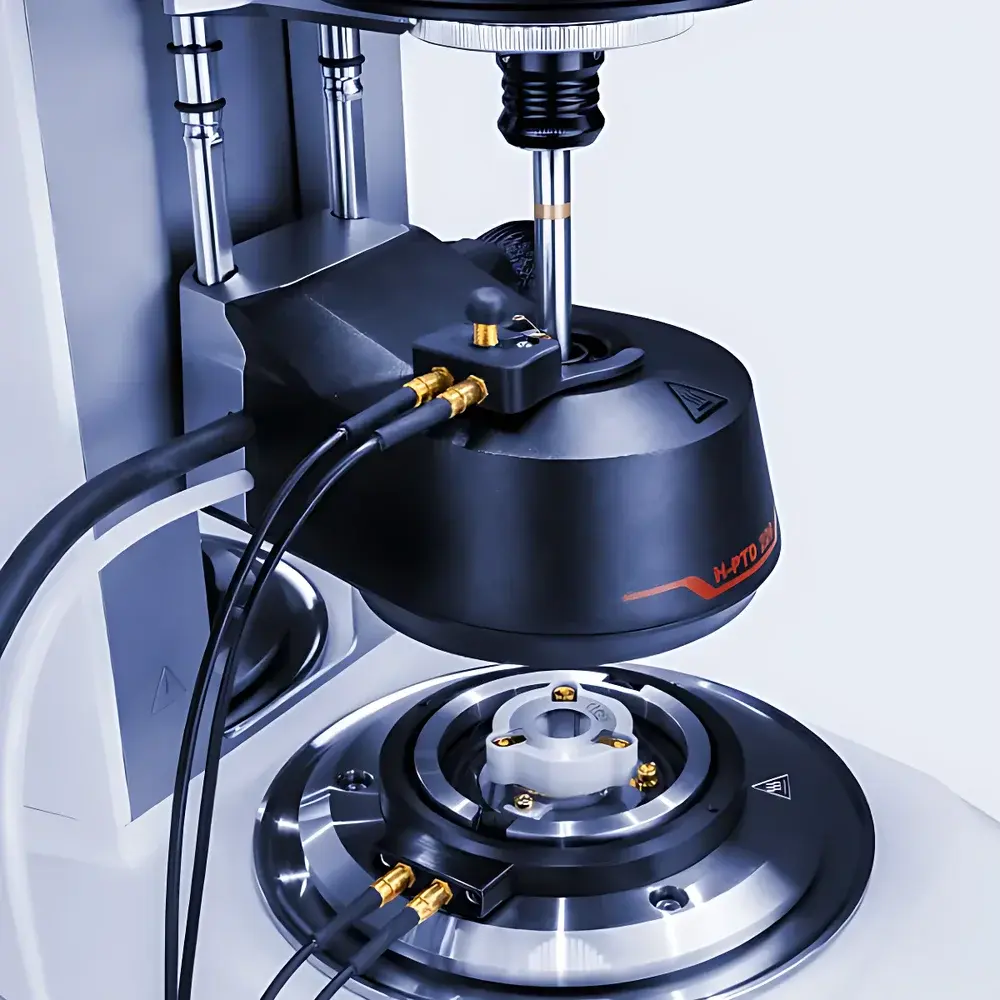
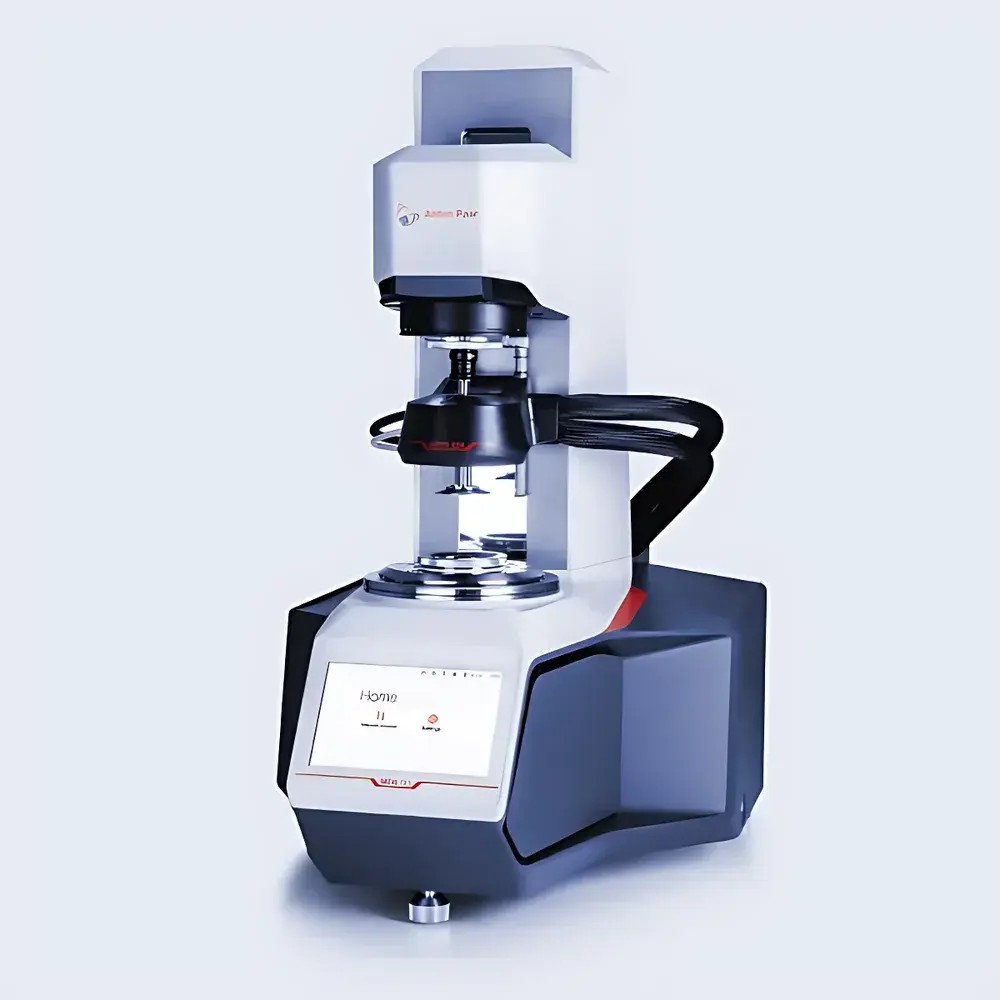
The Anton Paar MCR 703 Space MultiDrive is a modular, high-performance rotational rheometer engineered for fundamental and applied research in complex fluid and soft solid characterization. It operates on the principle of controlled shear deformation—applying defined rotational or oscillatory motion to a sample confined between geometrically defined measuring systems (e.g., parallel plates, cone-plate, or concentric cylinders)—and precisely quantifying the resulting torque, normal force, and angular displacement. Its dual-electronically commutated (EC) motor architecture enables three distinct operational modes: Controlled Motor Torque (CMT), Separated Motor and Transducer (SMT), and counter-rotating motion mode—each optimized for specific rheological regimes including transient response, large-amplitude oscillatory shear (LAOS), stress relaxation, startup flows, and extensional deformation via UXF fixtures. The instrument’s design integrates high-fidelity torque sensing (0.05 nNm resolution), sub-nanoradian angular resolution (<1 nrad), and active thermal management to ensure metrological stability across extreme temperature ranges (−160 °C to 1000 °C), making it suitable for cryogenic polymer processing studies, high-temperature ceramic slurry analysis, and thermoset curing kinetics under inert atmospheres.
Key Features
- Dual EC motor system enabling simultaneous torque generation and measurement—supporting CMT, SMT, and counter-rotation configurations for maximal experimental flexibility.
- Precision porous carbon air bearing with integrated 360° capacitive non-contact normal force sensor—ensuring zero mechanical hysteresis and long-term calibration stability.
- TruStrain real-time position control technology for accurate strain imposition during oscillatory and transient tests, compliant with ISO 6721-10 and ASTM D7175 standards.
- Expandable DMA capability via interchangeable linear actuator: supports tensile, bending, compression, and torsional dynamic mechanical analysis—including axial-torsional coupled testing for Poisson’s ratio determination.
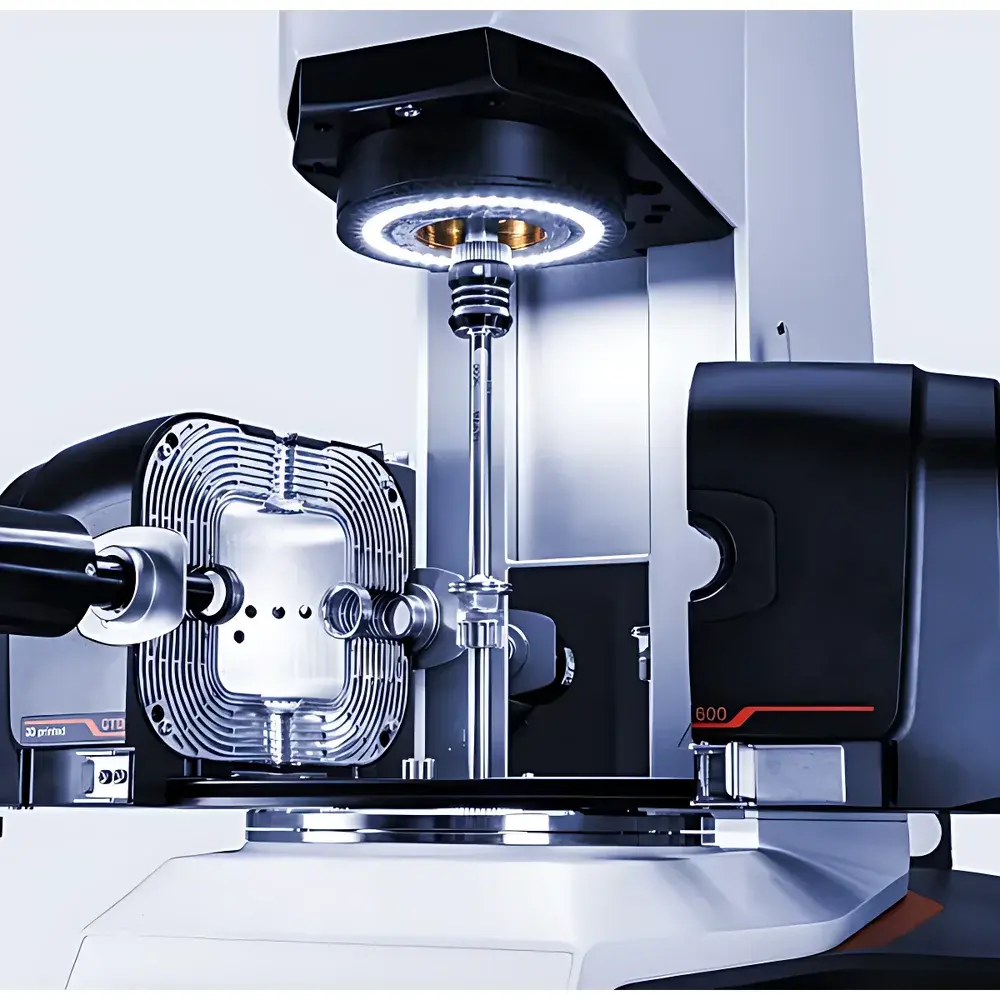
- Open-frame mechanical architecture (Space MultiDrive variant) with unobstructed working volume—facilitating integration with external instrumentation such as confocal microscopes, Raman spectrometers, or environmental chambers.
- Toolmaster™ auto-recognition and QuickConnect™ one-hand coupling—enabling rapid, error-free attachment of over 200 compatible measuring systems, temperature units (Peltier, liquid nitrogen, furnace), and specialized accessories (e.g., UV-curing, solvent trap, electro-rheology).
Sample Compatibility & Compliance
The MCR 703 Space MultiDrive accommodates liquid, paste, gel, melt, and semi-solid samples with viscosities spanning >10⁹ mPa·s. Its wide gap resolution (0.0625 µm) and programmable normal force control (0.001–50 N) support delicate biological hydrogels, nanoparticle suspensions, and thermally sensitive formulations. The instrument meets essential regulatory requirements for quality-controlled environments: full audit trail functionality, electronic signature support, and data integrity features aligned with FDA 21 CFR Part 11 and EU Annex 11. All firmware and RheoCompass™ software modules are validated per GLP/GMP guidelines, and temperature calibration traceability complies with ISO/IEC 17025-accredited procedures. Optional glovebox integration allows operation under N₂ or Ar atmospheres—critical for air-sensitive battery electrolytes or reactive organometallic systems.
Software & Data Management
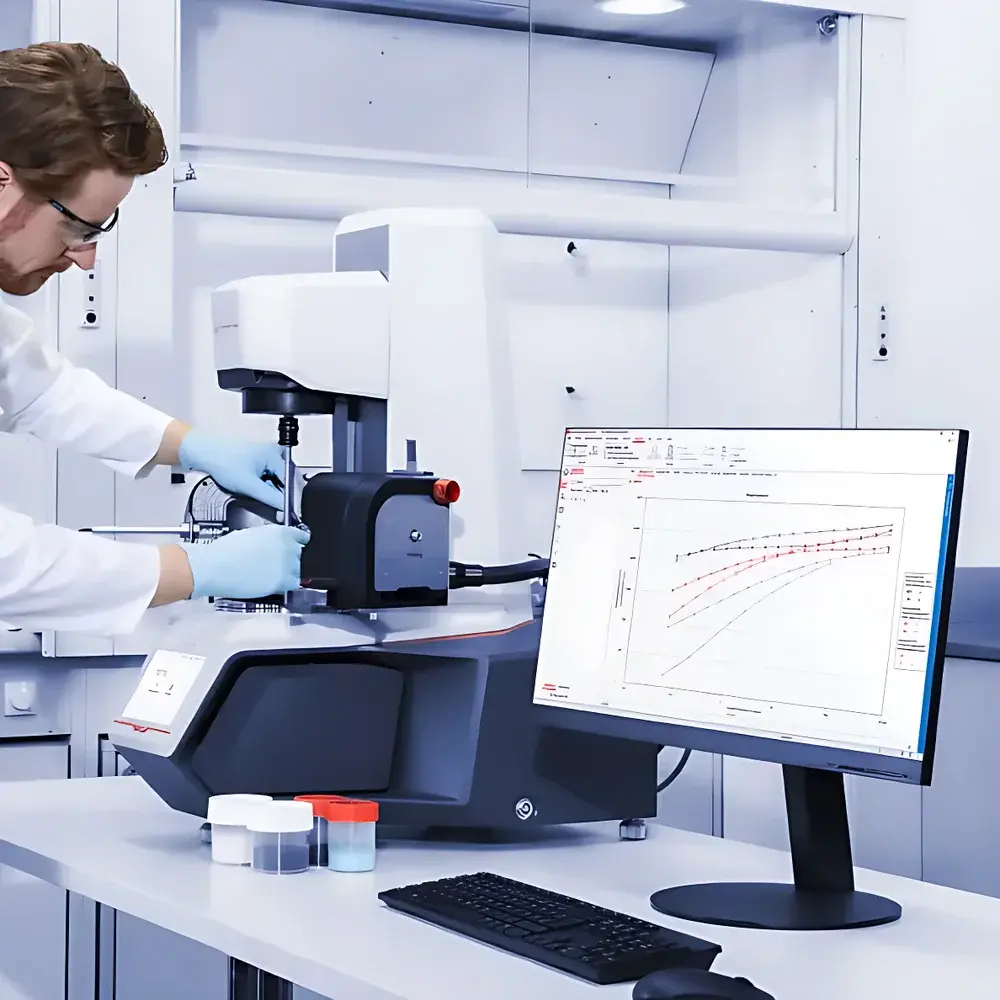
RheoCompass™ v4.x provides unified control, real-time visualization, and advanced post-processing for rotational, oscillatory, extensional, and DMA experiments. Its scripting engine (Python API) enables automated method sequencing, adaptive frequency sweeps, and LAOS Fourier transform analysis (FT-rheology). Raw torque, strain, and temperature data are stored in vendor-neutral HDF5 format with embedded metadata (timestamp, operator ID, instrument configuration, calibration history). Export options include CSV, Excel, and universal .rhe formats compatible with third-party modeling tools (e.g., MATLAB, Python SciPy, COMSOL Multiphysics). Built-in report generators produce PDF outputs conforming to internal SOP templates or external submission standards (e.g., journal supplementary data, regulatory dossiers).
Applications
- Structure-property relationships in polymer melts and nanocomposites under large-strain deformation.
- Yield stress and thixotropic recovery kinetics of drilling fluids and cementitious suspensions.
- Time-temperature superposition (TTS) and viscoelastic master curve construction for elastomers.
- In situ rheo-optical studies combining shear flow with fluorescence microscopy or small-angle X-ray scattering (SAXS).
- Dynamic mechanical spectroscopy of fiber-reinforced composites and anisotropic hydrogels.
- Curing behavior of epoxy resins and photopolymers monitored via oscillatory time sweeps under UV irradiation.
FAQ
What distinguishes the MCR 703 Space MultiDrive from the standard MCR 703 MultiDrive?
The Space MultiDrive variant features a reconfigured mechanical layout with reduced footprint width (300 mm vs. 453 mm) and open lateral access—optimized for co-location with auxiliary instruments and glovebox integration.
Can this rheometer perform true uniaxial extensional measurements?
Yes—when equipped with the UXF universal extensional fixture and operated in counter-rotation mode, it achieves Hencky strains exceeding 8 and measures extensional viscosity down to sub-nN·m torque levels.
Is compliance with ISO 16770 and ASTM D2196 verified for this model?
All rotational and oscillatory measurement protocols implemented in RheoCompass™ are validated against ISO 16770 (rotational rheometry) and ASTM D2196 (viscosity of paints) reference methods using NIST-traceable standard oils.
How is temperature calibration maintained across the full −160 °C to 1000 °C range?
Each temperature module (cryostat, Peltier, furnace) undergoes individual calibration using certified reference materials (e.g., indium, zinc, aluminum melting points), with continuous drift compensation via integrated Pt100 sensors and closed-loop feedback.
Does the system support automated method transfer between labs?
Yes—via RheoCompass™ Method Exchange Format (.rmf), which packages instrument configuration, sequence logic, and analysis parameters into a single portable file, ensuring reproducibility across globally distributed MCR platforms.



