
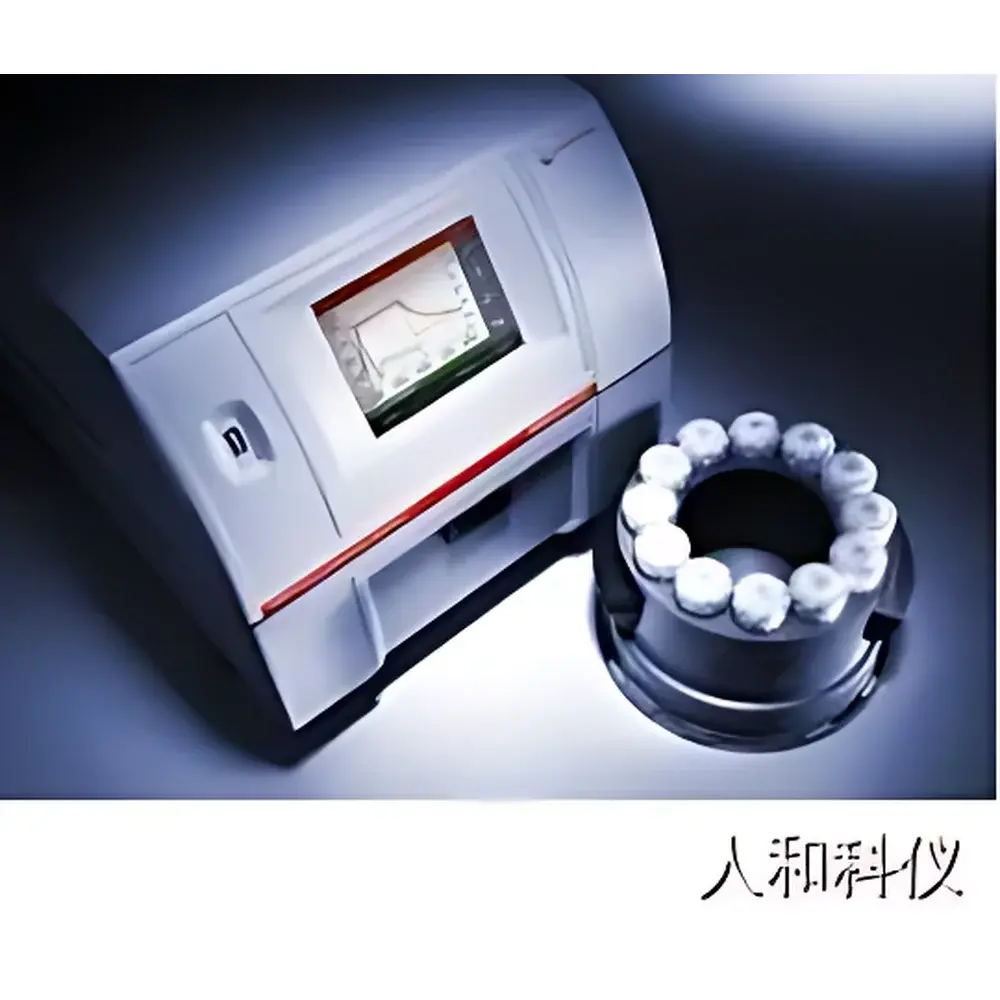
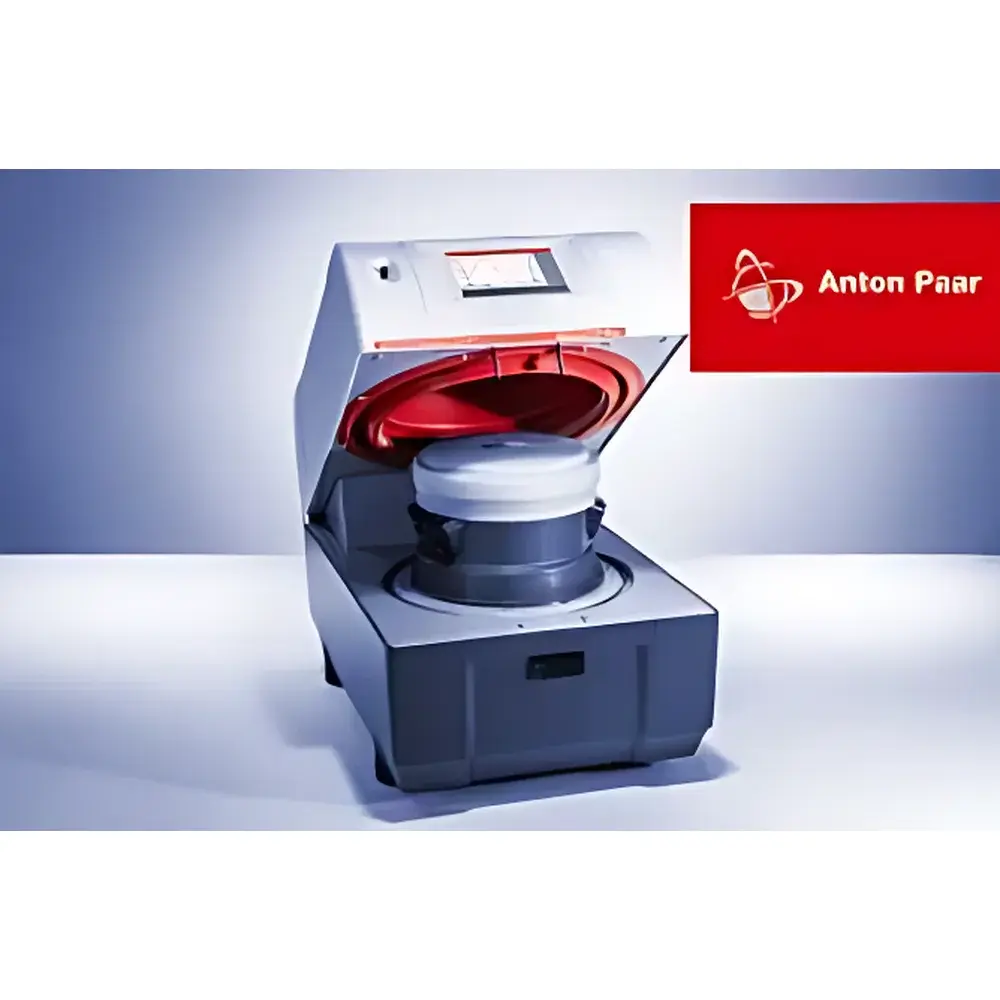
Anton Paar Multiwave GO Plus Microwave Digestion System
| Brand | Anton Paar |
|---|---|
| Country of Origin | Austria |
| Model | Multiwave GO Plus |
| Cavity Class | Industrial-grade |
| Sample Capacity | 12 samples per run |
| Microwave Source | Industrial Magnetron |
| Max Temperature | 260 °C / 300 °C (depending on vessel type) |
| Max Pressure | 2200 psi |
| Cooling Time (12-position rotor, 180 °C → 70 °C) | ≤8 min (EPA-compliant) |
Overview
The Anton Paar Multiwave GO Plus is an industrial-grade microwave digestion system engineered for high-throughput, reproducible sample preparation in accredited analytical laboratories. It employs a patented Directional Multi-Mode Cavity (DMC) architecture—distinct from conventional single-mode or multi-mode systems—which dynamically optimizes microwave field distribution based on real-time detection of installed rotor positions and solvent volume per vessel. This adaptive energy coupling ensures uniform thermal delivery across heterogeneous sample loads without manual tuning or cavity mode-stirring hardware. The system operates on the fundamental principle of controlled dielectric heating: microwave energy (2450 MHz) induces molecular rotation in polar solvents (e.g., HNO₃, HCl, HF), generating localized thermal energy that drives oxidative decomposition of organic matrices and dissolution of inorganic lattices under elevated temperature and pressure. Designed for compliance with regulatory digestion protocols—including EPA Methods 3015A, 3051A, and 3052—the Multiwave GO Plus delivers trace-element–level recoveries while minimizing blank contributions and analyte volatility losses.
Key Features
- Directional Multi-Mode Cavity (DMC): A single industrial magnetron delivers focused energy distribution across up to 12 vessels simultaneously—achieving single-mode efficiency with multi-mode scalability.
- TURBO Heating & Cooling Architecture: Integrated forced-air cooling unit, ventilated rotor with finned vessel holders, and exhaust management reduce post-digestion cooling time to ≤8 minutes (180 °C → 70 °C), meeting EPA Method 3051A timing requirements.
- SmartVent Intelligent Pressure Control: A three-component, tool-free vessel sealing system with HF-resistant PTFE/ETFE/PFA construction. Each vessel features independent pressure sensing and passive overpressure release—enabling real-time pressure monitoring, automatic venting above user-defined thresholds, and precise correlation between pressure rise and exothermic reaction onset.
- Compact Industrial Footprint: Full microwave generation, cavity, cooling, and exhaust handling integrated into a benchtop enclosure occupying <0.5 m²—optimized for space-constrained QC labs and GLP-compliant environments.
- Preloaded Regulatory Methods: Factory-installed method libraries aligned with ASTM D4309, EN ISO 15587-2, USP /, ICH Q3D, ChP 2321, and multiple EPA, GB, HJ, and EU directives—reducing method development time and validation burden.
Sample Compatibility & Compliance
The Multiwave GO Plus supports diverse sample matrices including environmental soils/sediments, food and feedstuffs, polymers, catalysts, geological materials, metal alloys, pharmaceutical excipients, and cosmetic formulations. Its pressure-rated vessels accommodate both open-vessel leaching (e.g., EN 13656, EN 13804) and closed-vessel digestion protocols. The system meets mechanical and electromagnetic safety standards per IEC 61000-6-3 and IEC 61000-6-4. All digestion methods are traceable to ISO/IEC 17025–accredited workflows and support full audit trails required under FDA 21 CFR Part 11 and EU Annex 11 when paired with Anton Paar’s MAS software suite. Vessel chemistry complies with USP elemental impurity testing requirements for Category 1–3 elements (As, Cd, Hg, Pb, Ir, Os, Pd, Rh, Ru, Sb, Se, Tl, V).
Software & Data Management
Controlled via Anton Paar’s MAS (Microwave Automation Software), the Multiwave GO Plus provides role-based user access, electronic signature support, and automated report generation compliant with GLP/GMP documentation standards. Method files include embedded metadata (operator ID, timestamp, calibration status, vessel lot numbers), and all parameter changes are logged with immutable timestamps. Software logs meet ALCOA+ principles (Attributable, Legible, Contemporaneous, Original, Accurate, Complete, Consistent, Enduring, Available) and support 21 CFR Part 11–compliant electronic records when deployed with validated IT infrastructure. Raw sensor data (temperature, pressure, power, time) is exported in CSV or XML format for integration with LIMS or statistical process control platforms.
Applications
- Environmental analysis: Total recoverable metals in soil, sludge, and airborne particulates (EPA 3052, EN 13657)
- Food safety: As, Cd, Pb, and Hg quantification in infant formula, cereals, and seafood (GB 5009.11–2023, EN 13806)
- Pharmaceutical quality control: Elemental impurity screening per ICH Q3D and USP /
- Geochemical exploration: Rare earth element (REE) extraction from silicate rocks (ISO 14083, ASTM D5688)
- Polymer additives: Catalyst residue analysis in polyolefins and engineering thermoplastics (EN 13805)
- Metallurgical QA/QC: Alloy composition verification and inclusion analysis (EN 13656, ISO 15764)
FAQ
What safety certifications does the Multiwave GO Plus hold?
The system complies with CE marking requirements (2014/30/EU EMC Directive, 2014/35/EU Low Voltage Directive), IEC 61010-1 for laboratory equipment safety, and IEC 61000-6-3/6-4 for electromagnetic compatibility.
Can the system digest fluoride-containing samples?
Yes—vessels are constructed from multilayer fluoropolymer composites (PTFE inner, ETFE barrier, PFA outer) resistant to hydrofluoric acid up to 200 °C and 1500 psi, enabling safe digestion of silicates, ceramics, and glass matrices.
Is method transfer possible from other microwave platforms?
MAS software supports import of common method formats (e.g., .mwf, .xml) and includes conversion wizards for legacy methods from CEM, Milestone, and Berghof systems—subject to validation per ISO/IEC 17025 Clause 7.2.2.
How is temperature measured during digestion?
Each vessel is monitored via fiber-optic temperature sensors (non-metallic, immune to microwave interference) with ±0.5 °C accuracy at 200 °C, referenced against NIST-traceable calibration curves stored in the MAS database.
Does the system support unattended overnight operation?
Yes—integrated safety interlocks, real-time pressure/temperature deviation alerts, and automatic power cutoff upon abnormal thermal ramping enable secure unattended runs for extended batch processing.
Related Products



