
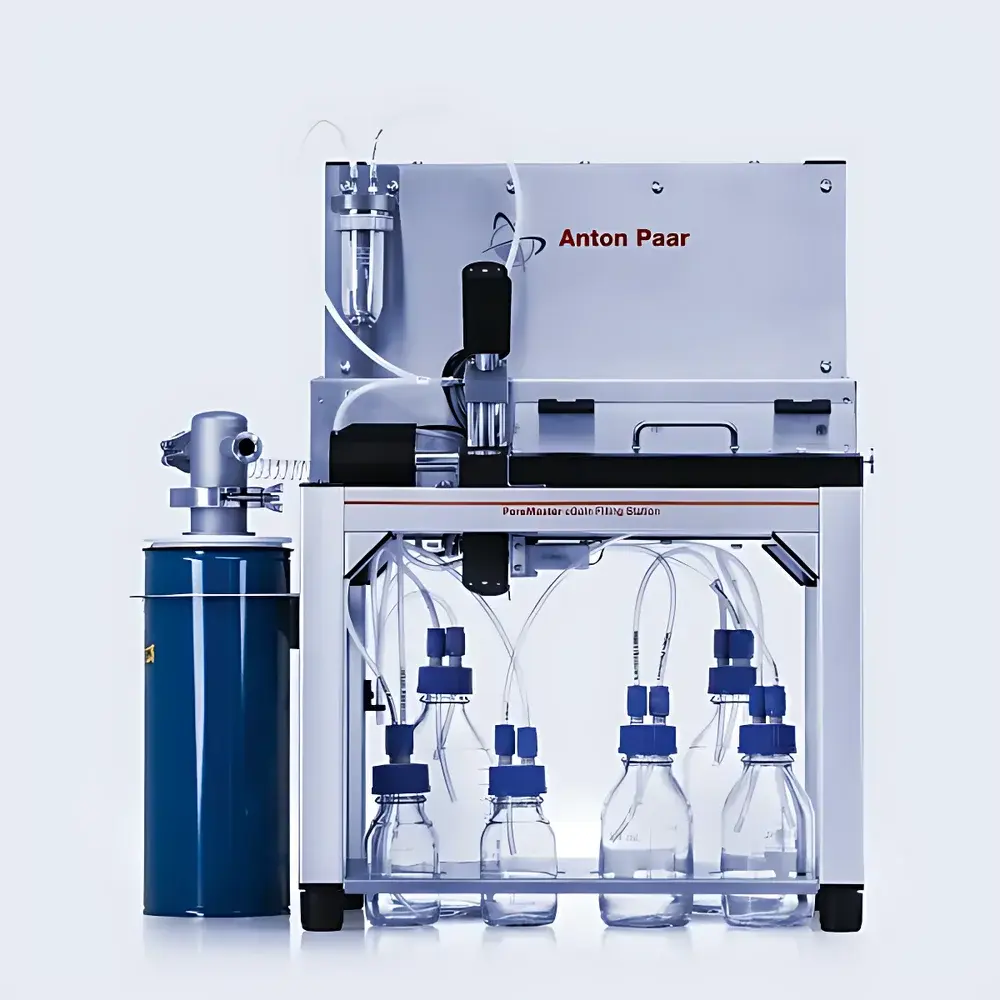
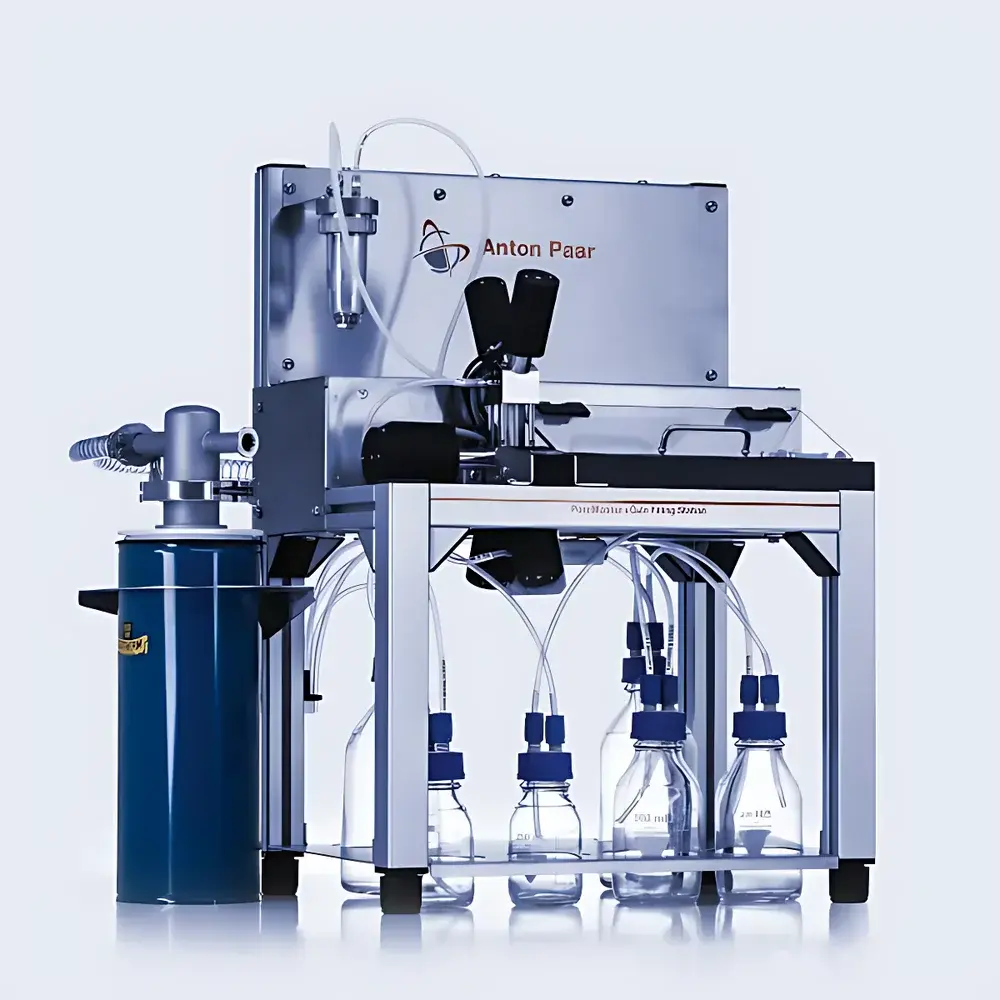
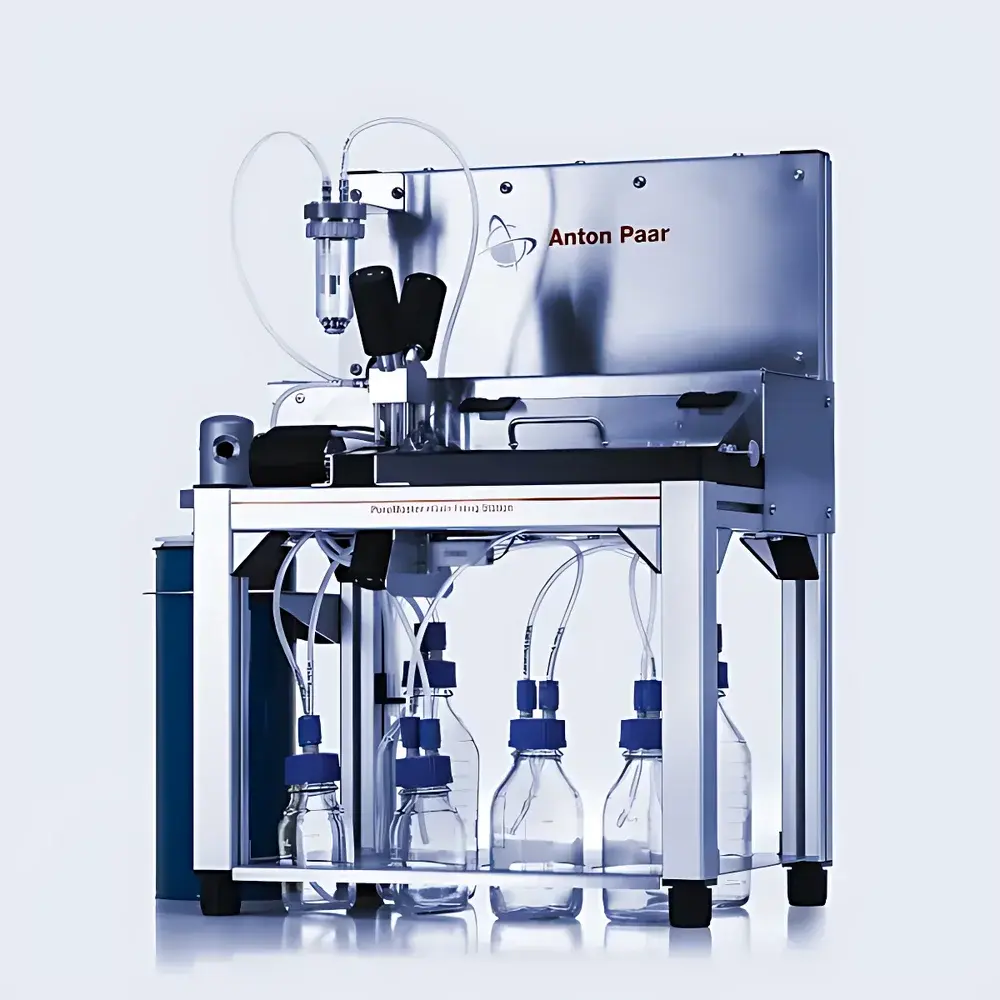
Anton Paar PoreMaster eGaIn Filling Station
| Brand | Anton Paar |
|---|---|
| Origin | Austria |
| Manufacturer Type | Manufacturer |
| Origin Category | Imported |
| Model | PoreMaster eGaIn Filling Station |
| Instrument Type | Specific Surface Area and Pore Size Analyzer |
| Principle | Static and Dynamic Mercury Intrusion Analogue (eGaIn-based) |
| Compatibility | Designed exclusively for Anton Paar PoreMaster main units and P-type penetrometers (0.5 mL × 1.5 in) |
| Safety Compliance | Mercury-free operation, ISO/IEC 17025-aligned workflow support, GLP-ready data handling |
Overview
The Anton Paar PoreMaster eGaIn Filling Station is the world’s first mercury-free filling solution engineered for high-precision pore size distribution and specific surface area analysis via liquid intrusion methodology. Unlike conventional mercury intrusion porosimetry (MIP), which relies on toxic elemental mercury as the intruding fluid, this station utilizes a eutectic gallium–indium alloy (eGaIn) — a non-toxic, low-melting-point liquid metal with well-characterized surface tension (≈ 700 mN/m at 30 °C), density (≈ 6.44 g/cm³), and negligible vapor pressure. The system operates on the fundamental Washburn equation principle, where capillary pressure (P) relates to pore diameter (d) via P = −4γ cosθ / d, enabling quantitative pore size distribution from 0.003 µm to 400 µm with reproducible intruding fluid behavior. Designed as a dedicated auxiliary module for Anton Paar PoreMaster main instruments, the eGaIn Filling Station replaces hazardous mercury handling protocols without compromising measurement fidelity, resolution, or traceability — establishing a new benchmark for sustainable materials characterization in R&D, quality control, and regulatory-compliant laboratories.
Key Features
- Mercury-free operation: Eliminates occupational exposure risks, hazardous waste generation, and specialized ventilation requirements associated with traditional MIP.
- Integrated eGaIn conditioning: Maintains alloy in a non-oxidized, non-wetting state through inert gas purging and surface-passivated stainless-steel fluid pathways, ensuring consistent interfacial properties across repeated fill cycles.
- P-type penetrometer compatibility: Precision-fills standard 0.5 mL × 1.5 inch penetrometers used across the PoreMaster platform, guaranteeing mechanical and volumetric alignment with calibrated pressure transducers and thermal expansion compensation algorithms.
- Automated self-cleaning cycle: Uses ultra-pure nitrogen purge and sequential vacuum evacuation to remove residual eGaIn traces between fills, minimizing cross-contamination and extending component service life.
- Recyclable fluid management: Supports full recovery and reconditioning of used eGaIn alloy via integrated filtration and degassing — reducing consumables cost by up to 65% over multi-year instrument deployment.
- Modular integration: Mounts directly onto PoreMaster base units via standardized mechanical and electrical interfaces; requires no software license upgrade or firmware modification.
Sample Compatibility & Compliance
The PoreMaster eGaIn Filling Station is validated for use with solid porous materials including ceramics, catalysts, pharmaceutical excipients, battery electrode coatings, aerogels, and geological cores. It supports both standard and custom penetrometer geometries compliant with ASTM D4404 and ISO 15901-1 guidelines for liquid intrusion analysis. While eGaIn eliminates mercury-specific hazards, the system retains full alignment with Good Laboratory Practice (GLP) and current Good Manufacturing Practice (cGMP) documentation requirements. Audit trails, user access logs, and electronic signatures are natively supported through PoreMaster’s embedded software architecture, meeting FDA 21 CFR Part 11 readiness criteria when deployed with validated configurations. All eGaIn handling procedures adhere to EU REACH Annex XIV exemptions and OSHA HCS 2012 labeling standards.
Software & Data Management
Operation is fully integrated into Anton Paar’s PoreMaster Control Suite v4.2+, providing synchronized calibration logging, real-time fill volume verification, and automatic correction for temperature-dependent eGaIn density shifts (±0.001 g/cm³ per °C). Raw intrusion curves are exported in ASTM E1491-compliant .csv format, with metadata tags covering batch ID, operator, ambient conditions, and eGaIn lot traceability. The software enforces version-controlled method templates, supports IQ/OQ/PQ protocol generation, and exports audit-ready PDF reports containing raw data plots, derivative pore distribution histograms, and cumulative intrusion summaries — all timestamped and digitally signed.
Applications
- Characterization of hierarchical porosity in lithium-ion battery cathode materials under inert atmosphere processing conditions.
- Quality assurance of spray-dried pharmaceutical powders where mercury contamination risk precludes regulatory submission.
- Accelerated aging studies of cementitious composites using repeatable, non-degrading intrusion media.
- Development of metal–organic frameworks (MOFs) requiring trace-metal-free analysis environments to preserve structural integrity.
- Environmental geochemistry labs transitioning from legacy MIP systems while maintaining historical dataset comparability via NIST-traceable eGaIn calibration standards.
FAQ
Is the eGaIn Filling Station compatible with legacy PoreMaster models?
Yes — it supports all PoreMaster GT, Auto, and Advanced series instruments manufactured from 2018 onward, provided they run firmware v3.7.2 or higher.
Does eGaIn require special storage or handling outside the instrument?
No — the alloy is supplied in sealed, argon-flushed vials and remains stable at ambient temperature for ≥24 months; no refrigeration or glovebox handling is required.
Can pore size results obtained with eGaIn be directly compared to historical mercury-based data?
Yes — when using identical penetrometer geometry, pressure ramp profiles, and surface tension correction models, inter-method correlation coefficients exceed r² = 0.998 for pores >0.01 µm.
What maintenance intervals are recommended for the filling station?
Daily nitrogen purge verification, quarterly calibration of the fill-volume sensor against gravimetric standards, and annual replacement of the eGaIn contact seal kit — documented in the included PM checklist.
Is third-party validation data available for regulatory submissions?
Anton Paar provides an ICH Q5D-aligned validation package including precision, accuracy, robustness, and specificity assessments per USP , available under NDA upon request.



