
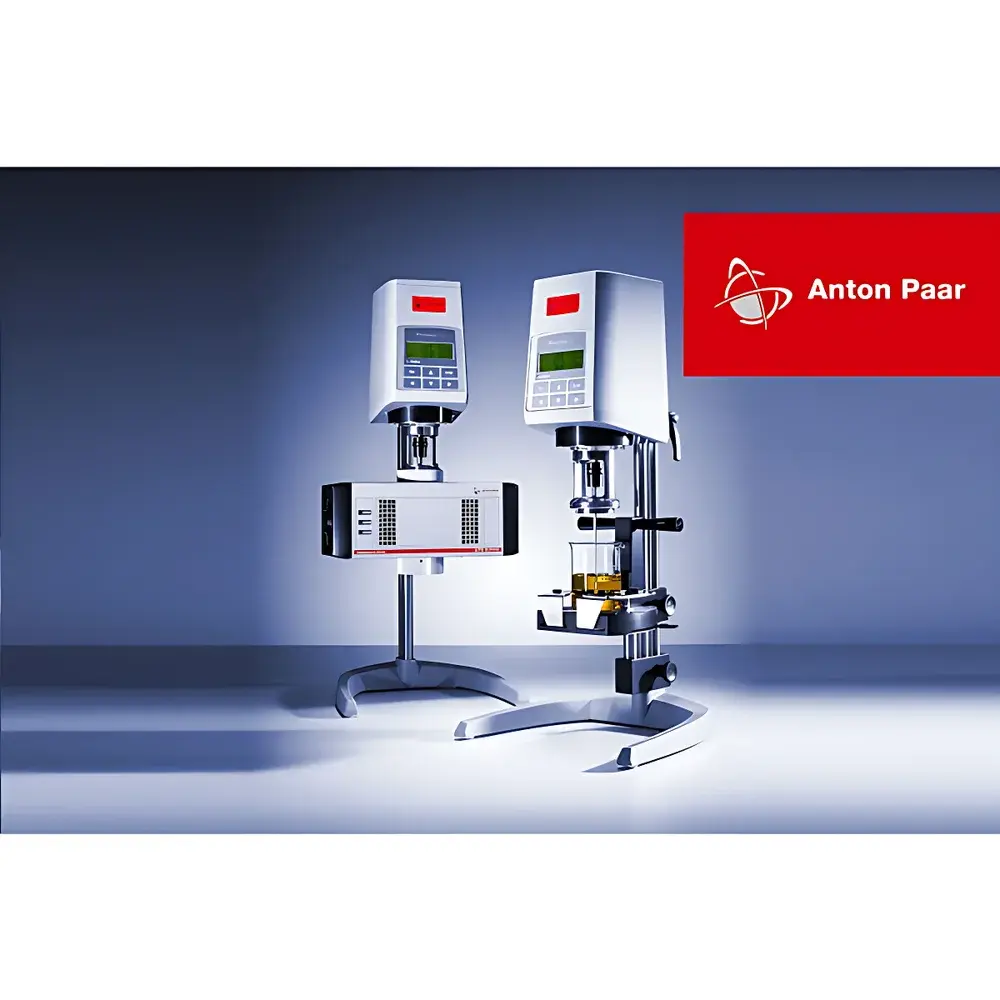
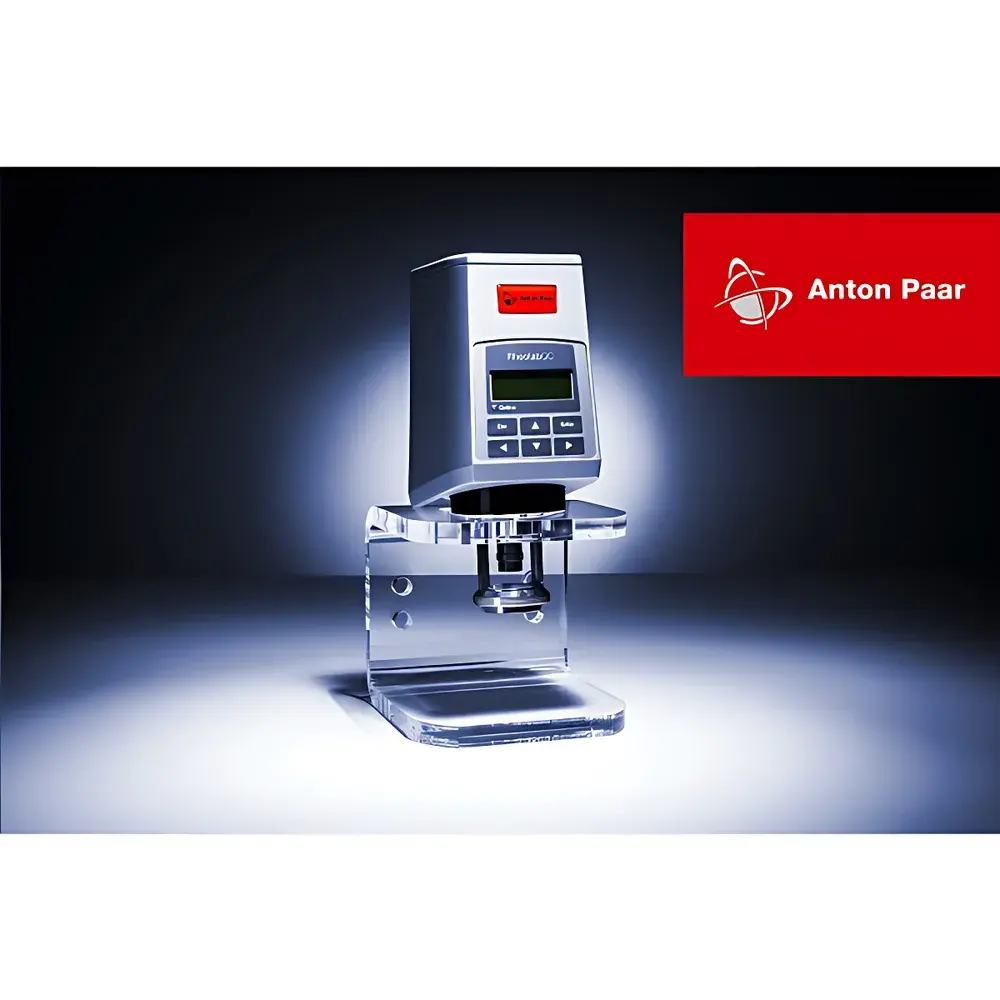
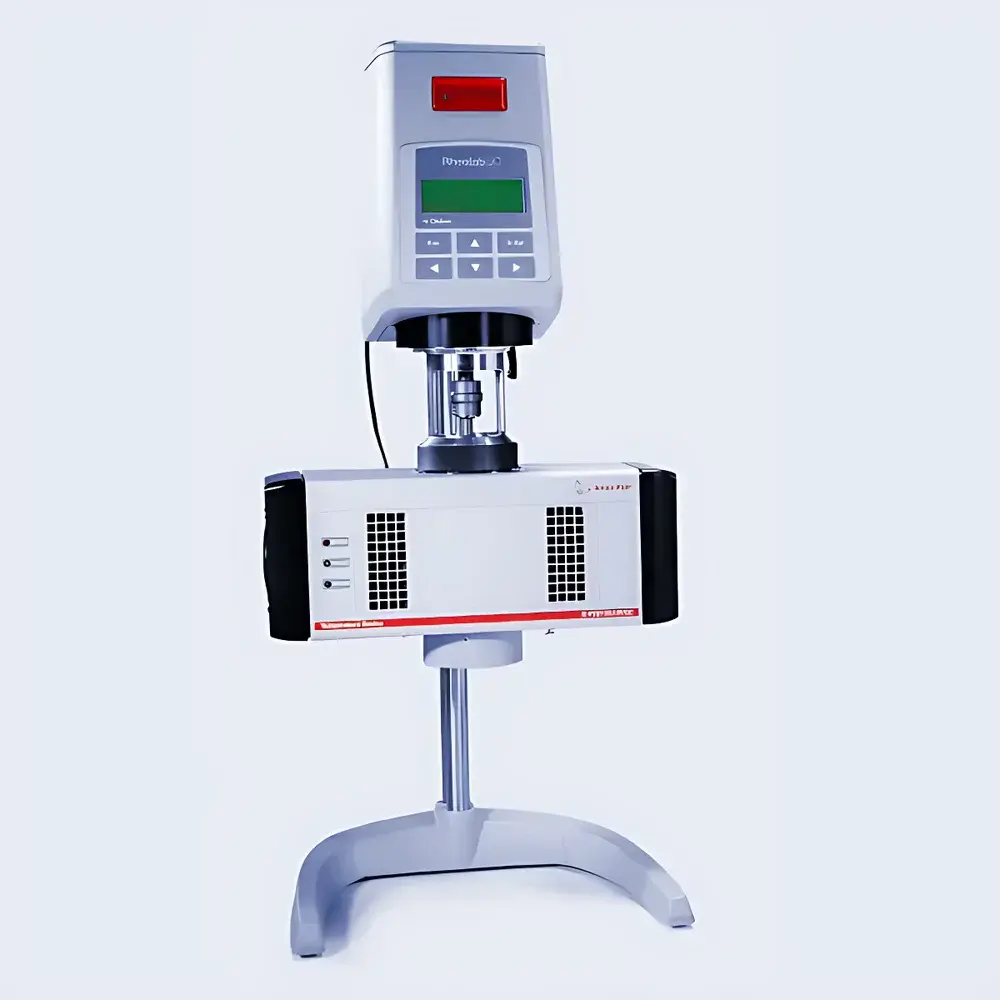
Anton Paar RheolabQC Rotational Viscometer
| Brand | Anton Paar |
|---|---|
| Origin | Germany |
| Manufacturer Type | Original Equipment Manufacturer (OEM) |
| Product Category | Imported Instrument |
| Model | RheolabQC |
| Instrument Type | Benchtop Rotational Viscometer |
| Operating Environment | Ambient Temperature |
| Viscosity Range | 1 – 10⁹ mPa·s |
| Temperature Range | −20 to +180 °C |
| Speed Range | 0.01 – 1500 rpm |
| Torque Range | 0.25 – 75 mN·m |
| Shear Stress Range | 0.5 – 3×10⁴ Pa |
| Shear Rate Range | 0.01 – 4000 s⁻¹ |
| Angular Displacement Resolution | 2 µrad |
Overview
The Anton Paar RheolabQC is a high-precision, benchtop rotational viscometer engineered for routine quality control and applied rheological characterization in industrial and research laboratories. Based on the Searle principle—where torque is measured on a rotating bob immersed in a stationary sample—the instrument delivers robust, reproducible viscosity and shear-dependent flow behavior data under controlled mechanical and thermal conditions. Its design integrates a high-resolution encoder and a fast-response synchronous EC motor, enabling accurate control of both stress and strain modes. The RheolabQC serves as a foundational tool for quantifying non-Newtonian behavior—including yield stress, thixotropy, structural breakdown/recovery, and time-dependent deformation—across diverse formulations where flow stability, application performance, and processability are critical.
Key Features
- Dual operational modes: Controlled Shear Stress (CSS) and Controlled Shear Rate (CSR), supporting both steady-state and transient rheological protocols.
- Toolmaster™ auto-recognition system: All measuring systems—including concentric cylinder, double-gap, and vane geometries—are automatically identified by the instrument and software, with geometry-specific parameters loaded without manual input.
- High dynamic range: Capable of measuring from low-viscosity liquids (1 mPa·s) to highly structured pastes and gels (up to 10⁹ mPa·s), depending on selected geometry and test configuration.
- Extended temperature capability: Integrated Peltier or external circulation thermostat compatibility enables precise temperature control from −20 °C to +180 °C, supporting ASTM D445, ISO 3219, DIN 53019, and DIN 54453-compliant measurements.
- Onboard memory and standalone operation: Stores up to 100 pre-programmed methods and 50,000 data points; supports direct printer output or seamless export to PC-based software via USB or Ethernet.
- Sub-microradian angular resolution (2 µrad): Ensures high fidelity in low-torque, low-shear-rate regimes essential for yield stress determination and structural recovery analysis.
Sample Compatibility & Compliance
The RheolabQC accommodates a wide spectrum of sample types—from low-viscosity solvents and emulsions to high-yield-stress suspensions, polymer melts, and thermosetting pastes. Standard geometries include ISO 3219/DIN 53019-compliant concentric cylinders and DIN 54453-certified double-gap systems optimized for heterogeneous dispersions. Optional vane and cone-plate accessories extend applicability to fragile gels and sediment-prone slurries. The instrument meets GLP/GMP documentation requirements when used with compliant software; audit trails, electronic signatures, and 21 CFR Part 11–ready data handling are supported through optional RheoCompass™ software modules.
Software & Data Management
RheoCompass™ software provides intuitive method setup, real-time visualization, and automated report generation. It supports multi-step protocols (e.g., three-interval thixotropy tests), temperature ramps, oscillatory sweeps (via optional add-on), and yield stress determination using multiple algorithms (e.g., Herschel–Bulkley, Casson, Bingham). Raw torque, speed, temperature, and time data are stored in open-format ASCII or proprietary .rhd files. Export options include CSV, PDF, and Excel-compatible formats. Data integrity is reinforced through version-controlled method libraries, user access levels, and timestamped metadata—critical for regulated environments in pharmaceutical, food, and coatings manufacturing.
Applications
- Coatings & Paints: Flow curve analysis, yield stress mapping, sag resistance evaluation, leveling assessment, and structural recovery kinetics after shear cessation.
- Construction Materials: Yield point quantification of cementitious grouts and tile adhesives; thixotropic recovery profiling for pumpability and open-time prediction.
- Food & Cosmetics: Temperature-dependent viscosity profiling (e.g., chocolate tempering, cream stability); oscillatory yield testing for whipped toppings and hydrogels; time sweep analysis of emulsion coalescence inhibition.
- Lubricants & Bitumen: High-temperature viscosity grading per ASTM D445; shear-thinning index calculation; oxidative stability screening via viscosity drift monitoring.
- Pharmaceutical Suspensions & Gels: USP compliance support for extended-release matrix viscosity; syringeability assessment via controlled-stress extrusion simulation.
FAQ
What standards does the RheolabQC comply with?
It supports ISO 3219 (rotational viscometry), DIN 53019 (viscosity measurement with rotational viscometers), DIN 54453 (double-gap geometry for dispersions), and ASTM D445 (kinematic viscosity)—with full traceability to national metrology institutes when calibrated with certified reference oils.
Can the RheolabQC measure yield stress?
Yes—using controlled-stress ramping or creep-recovery protocols, it determines static and dynamic yield stress values with high repeatability across sample classes including drilling muds, toothpastes, and architectural sealants.
Is temperature control integrated or external?
The base unit includes a Peltier-controlled lower plate (−20 to +100 °C); for extended range up to +180 °C, an external liquid-circulated temperature bath (e.g., Huber Chiller) is required and fully software-synchronized.
How does Toolmaster™ improve workflow efficiency?
Each geometry contains an RFID chip storing calibration coefficients, geometry dimensions, and recommended speed/torque limits—eliminating manual entry errors and reducing setup time by >70% in multi-geometry labs.
Does the instrument support GLP-compliant reporting?
When paired with RheoCompass™ in Audit Trail mode, it generates FDA 21 CFR Part 11–compliant reports with electronic signatures, immutable timestamps, and full change history for all methods and results.



