
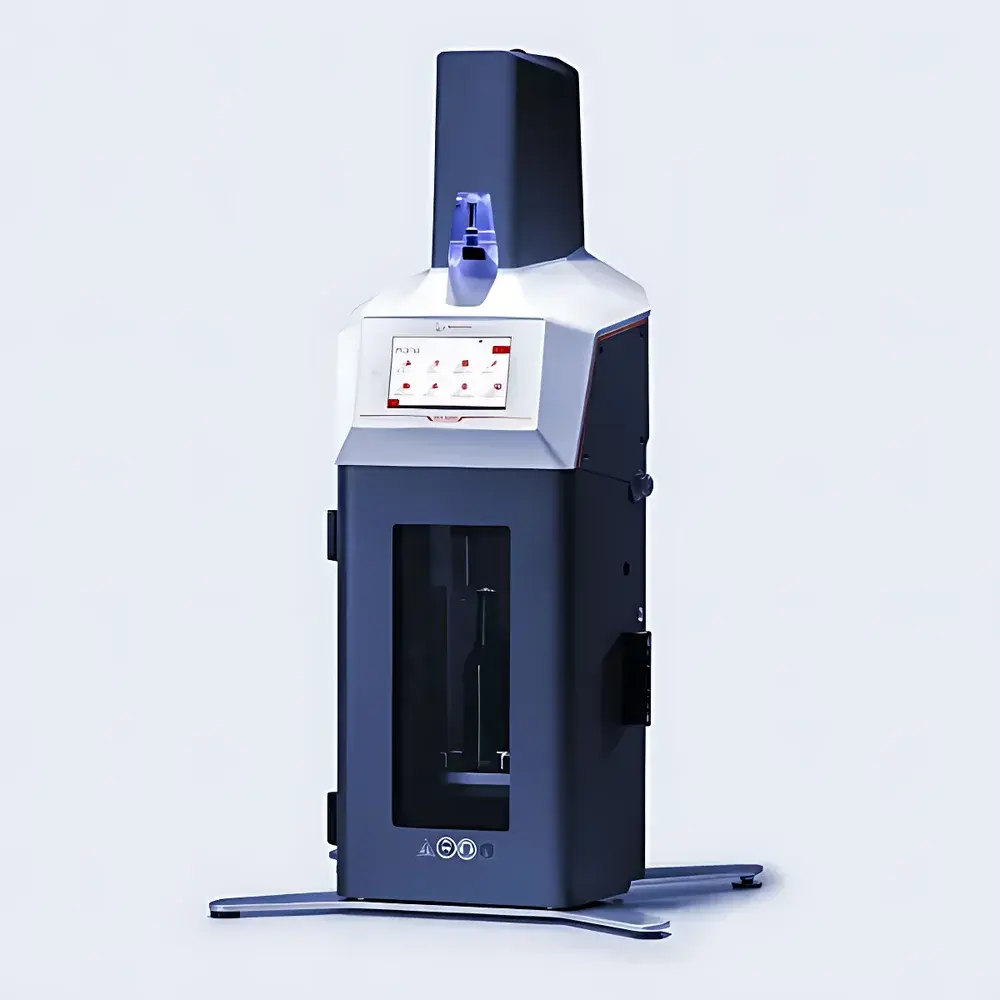
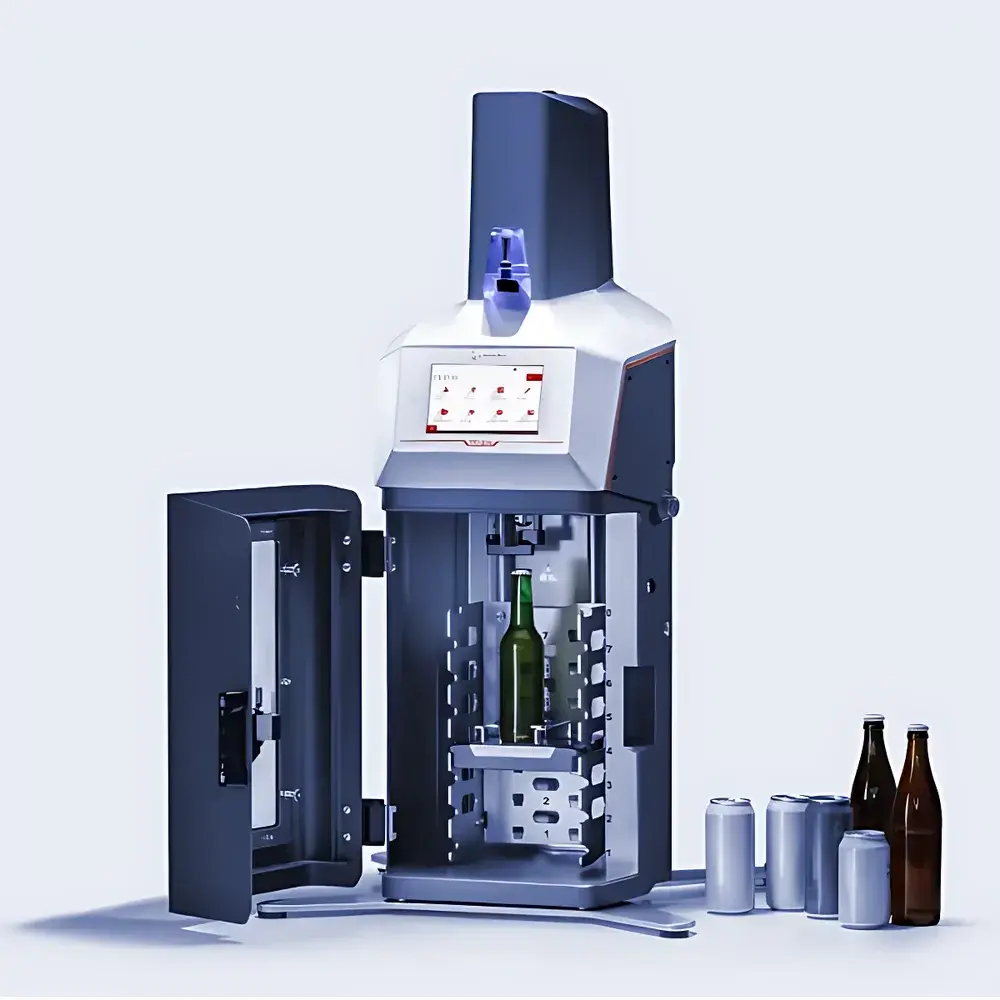
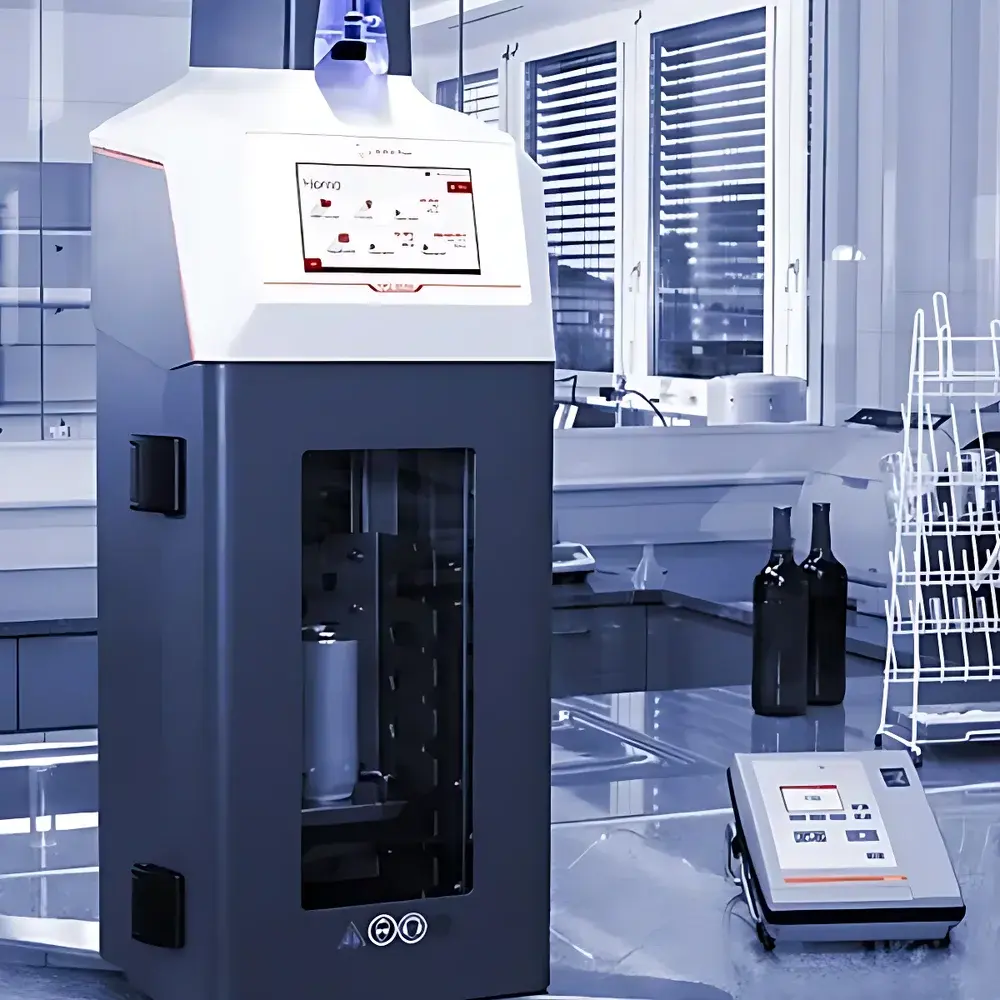
Anton Paar TPO 5000 Total Package Oxygen Analyzer
| Brand | Anton Paar |
|---|---|
| Origin | Austria |
| Manufacturer Type | Original Equipment Manufacturer (OEM) |
| Origin Category | Imported |
| Model | TPO 5000 |
| Instrument Type | Beer-Specific Analyzer |
| Application Mode | Online & Laboratory |
| Measurement Time | 4 min |
| Dimensions (L × W × H) | 515 × 590 × 1120 mm |
| Weight | 70 kg |
Overview
The Anton Paar TPO 5000 Total Package Oxygen Analyzer is an engineered solution for precise, rapid quantification of total oxygen content in sealed beverage packages—comprising both headspace oxygen and dissolved oxygen (O₂). Based on luminescence-based optical sensing technology, the instrument eliminates electrochemical drift and electrode fouling commonly associated with Clark-type sensors. It operates via controlled headspace equilibration followed by selective photometric detection of oxygen quenching effects on a proprietary ruthenium-based luminophore. Designed specifically for quality assurance in high-throughput beverage production environments—including breweries, soft drink facilities, and bottled water lines—the TPO 5000 delivers trace-level oxygen measurement down to sub-ppb resolution under ISO 8536-1 and ASTM D6179-compliant conditions. Its integration-ready architecture supports seamless synchronization with安东帕’s CarboQC CO₂ analyzer, enabling concurrent determination of total package oxygen and dissolved carbon dioxide within a single four-minute cycle—critical for shelf-life modeling and oxidation risk assessment.
Key Features
- Luminescence-based optical oxygen sensor with no consumables or electrolyte replacement required—reducing long-term maintenance and calibration frequency
- Automated self-cleaning system with programmable rinse cycles using dechlorinated process water or compressed air (5–6.5 bar), minimizing operator intervention
- Universal packaging adapter with motorized centering mechanism accommodating glass bottles (250–1000 mL), PET containers (up to 1000 mL), and aluminum cans (8–25 oz), including irregular shapes up to 90 mm diameter and 370 mm height
- IPX3-rated enclosure with splash-resistant front panel, stainless steel chassis, and vibration-damped base—certified for continuous operation in industrial production zones
- 7-inch capacitive touchscreen interface with customizable quick-access menus, glove-compatible operation, and real-time status LED indicators (green/yellow/red)
- Integrated safety interlocks including pressure monitoring, overpressure relief, and automatic gas flow cutoff during abnormal conditions
- Throughput of up to 15 measurements per hour with full traceability: zero-point verification, span checks, and audit-ready calibration logs compliant with FDA 21 CFR Part 11 requirements
Sample Compatibility & Compliance
The TPO 5000 is validated for routine analysis of carbonated and non-carbonated beverages—including lager, ale, cider, sparkling water, flavored sodas, and isotonic drinks—provided samples are free of pulp, particulates, or suspended solids. It complies with international standards governing beverage oxygen testing: ISO 8536-1 (glass containers), ISO 11348 (luminescent bioassay principles), and EN 13805 (beverage packaging integrity). For regulatory reporting, measurement data include timestamps, operator IDs, environmental temperature/pressure logs, and sensor response curves—all stored with SHA-256 hash integrity. The system supports GLP/GMP workflows through configurable user roles, electronic signatures, and immutable audit trails exportable in CSV or PDF format.
Software & Data Management
Embedded firmware v3.2+ enables local storage of up to 5,000 complete measurement datasets—including raw sensor signals, calculated TPO values, headspace O₂ partial pressure (hPa), dissolved O₂ (ppm), and CO₂ concentration when paired with CarboQC. Data export occurs via USB 2.0, Ethernet (TCP/IP), or RS232; CAN bus is reserved exclusively for Anton Paar device-to-device synchronization. Software supports automated report generation aligned with internal QA templates or external regulatory submissions. All calibrations—zero adjustment using nitrogen (5.0 grade) and span validation using certified O₂/N₂ mixtures—are digitally signed and time-stamped. Firmware updates are delivered via secure HTTPS channel with cryptographic signature verification.
Applications
- Final product release testing to verify oxygen ingress limits (<50 ppb typical for premium lagers)
- Package integrity validation across filling line changeovers (cans vs. bottles vs. PET)
- Root cause analysis of premature flavor staling linked to oxidative pathways
- Supplier qualification of closures, liners, and barrier coatings
- Stability studies correlating TPO levels with sensory panel outcomes and peroxide value development
- Process optimization of blanketing gases (N₂ or CO₂) during capping and depalletizing
FAQ
What sample types are supported beyond standard beer and soda?
The TPO 5000 is validated for clear, filtered beverages only. Energy drinks and highly carbonated formulations (>6 g/L CO₂) may be analyzed upon request, subject to method verification per ISO/IEC 17025 guidelines.
Is offline calibration possible without connecting to CarboQC?
Yes—standalone TPO calibration uses certified zero gas (N₂ 5.0) and span gas (e.g., 100 ppm O₂ in N₂); CarboQC linkage is optional and only required for dual-parameter workflows.
How does the instrument handle temperature-sensitive samples?
It accepts samples between 0 °C and 40 °C; for highly carbonated liquids (>5.5 g/L CO₂), measurement is recommended at ≤35 °C to prevent nucleation artifacts affecting headspace equilibrium.
Can measurement data be integrated into LIMS or MES platforms?
Yes—via Ethernet or RS232 using Modbus TCP or ASCII protocol; Anton Paar provides documented API specifications and sample integration scripts for common enterprise systems.
What maintenance intervals are recommended for routine operation?
Optical sensor lifetime exceeds 24 months under normal use; quarterly verification of pneumatic seals, monthly inspection of rinse nozzles, and annual factory recalibration are advised per ISO/IEC 17025 maintenance schedules.





