
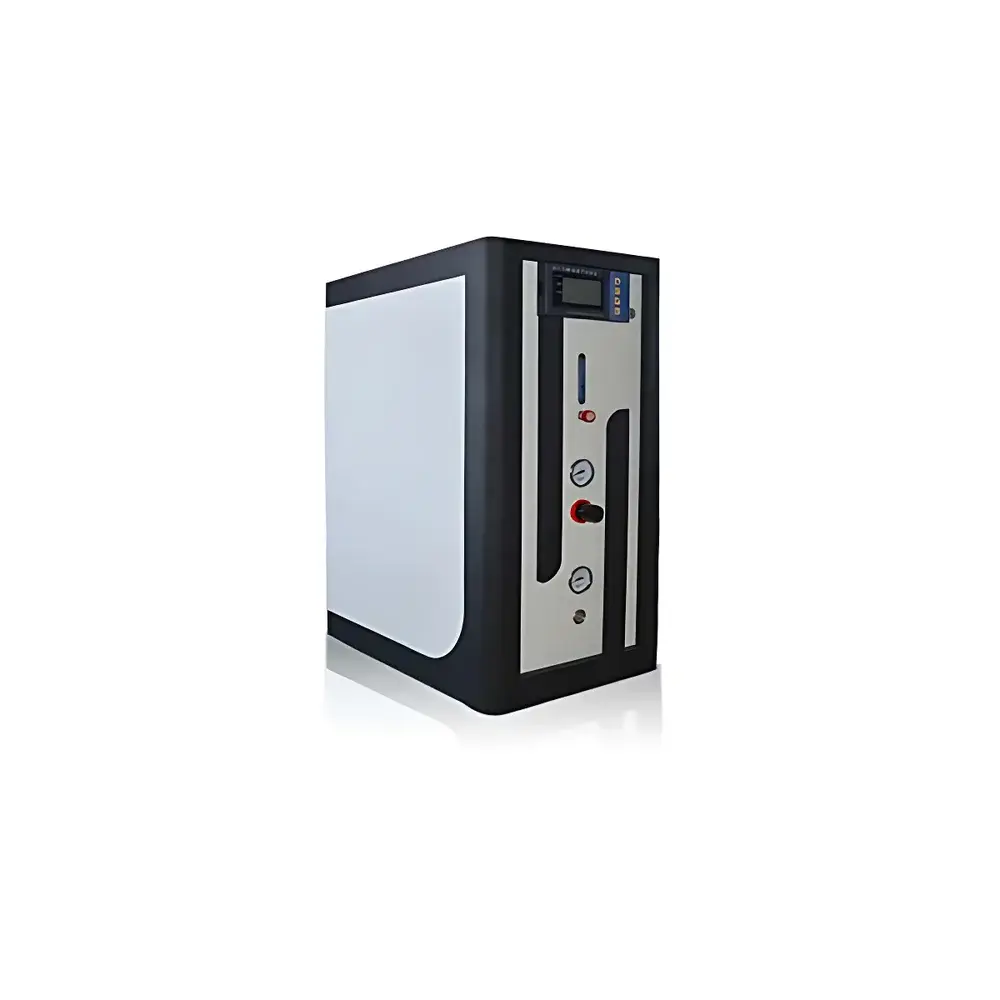
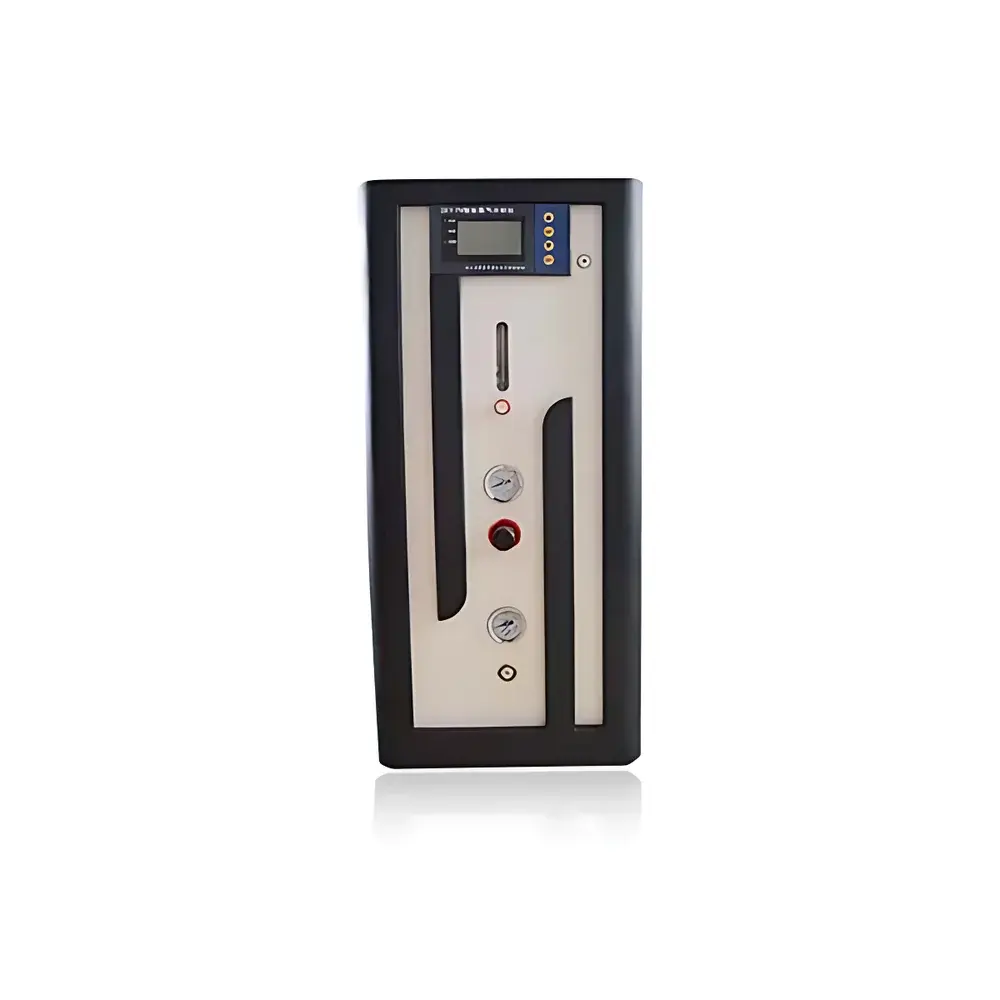
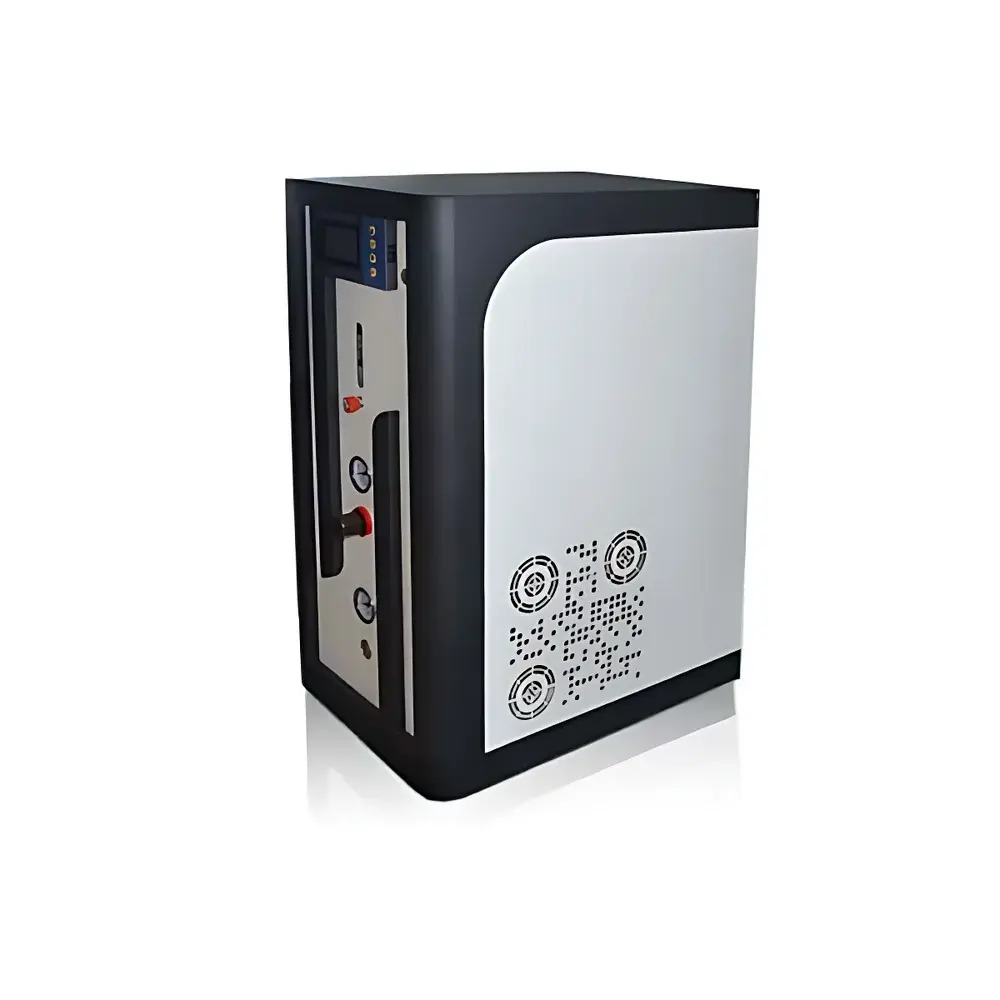
ANYAN AYAN-H1000ml Pure-Water Electrolysis Hydrogen Generator
| [Brand | ANYAN (Hangzhou Anyan Instrument Co., Ltd.) |
|---|---|
| Origin | Zhejiang, China |
| Model | AYAN-H1000ml |
| Hydrogen Purity | ≥99.999% |
| Output Flow Rate | 0–1000 mL/min |
| Output Pressure | 0–0.4 MPa (adjustable, factory-set at 0.3 MPa) |
| Power Consumption | 180 W |
| Input Power | 220 V ±10%, 50 Hz ±5% |
| Operating Temperature | 0–50 °C |
| Relative Humidity | ≤85% RH |
| Dimensions (W×D×H) | 310 × 190 × 360 mm |
| Weight | 12 kg |
| Gas Outlet | 1/8" NPT or Φ3 mm stainless steel tubing |
| Water Refill | Automatic + manual top-up |
| Core Technology | Zero-gap SPE proton exchange membrane electrolysis |
| Compliance | Designed for GLP-compliant lab environments |
Overview
The ANYAN AYAN-H1000ml Pure-Water Electrolysis Hydrogen Generator is a compact, on-demand laboratory hydrogen source engineered for precision analytical applications requiring high-purity, low-contamination gas supply. It employs zero-gap solid polymer electrolyte (SPE) membrane technology—eliminating the need for caustic KOH solutions—and utilizes deionized water as the sole consumable reactant. This design ensures intrinsic safety, minimal maintenance, and long-term operational stability. The generator operates via electrochemical water splitting at the anode and cathode interfaces of a noble-metal-coated SPE membrane, producing ultra-high-purity hydrogen (>99.999%) with trace oxygen and moisture levels below detection limits of standard GC-TCD/FID systems. Its modular architecture integrates a high-efficiency electrolytic cell, multi-stage gas-liquid separation, dual-bed desiccant drying, and pressure-regulated output delivery—making it suitable for continuous operation in chromatographic, catalytic, and reduction chemistry workflows.
Key Features
- Zero-gap SPE membrane electrolyzer with ion-coupled catalyst embedded within the membrane matrix—enabling higher current density, lower overpotential, and extended service life compared to surface-deposited catalyst configurations.
- Fully stainless-steel gas path (electropolished and ultrasonically cleaned), minimizing metal ion leaching and ensuring compatibility with trace-level analytical methods.
- Integrated dual-stage purification: coalescing separator + dual-bed desiccant (molecular sieve + activated alumina) delivers dew point ≤ −40 °C and O₂ < 0.1 ppm.
- Intelligent pressure regulation with built-in overpressure protection (0.4 MPa max) and automatic flow tracking—maintains constant output across variable demand without purity degradation.
- Auto-refill system with level-sensing reservoir and manual backup port; eliminates operator intervention during extended runs.
- Anti-backflow valve and hydrophobic membrane barrier prevent liquid carryover into downstream instrumentation—critical for protecting GC injectors and FID detectors.
- Thermally stabilized electrolytic cell with imported platinum-group electrode coatings ensures consistent efficiency and uniform temperature distribution across operating load range.
Sample Compatibility & Compliance
The AYAN-H1000ml is validated for use with gas chromatography systems (as carrier gas for TCD/ECD and fuel gas for FID), catalytic hydrogenation reactors, glovebox purging, and reducing atmosphere furnaces. It meets essential functional requirements outlined in ASTM D6299 (standard practice for laboratory quality control evaluation of instrumental methods), supports ISO/IEC 17025 method validation protocols, and aligns with instrument qualification expectations under FDA 21 CFR Part 11 when integrated with compliant data acquisition software. While not certified to UL/CE standards out-of-the-box, its electrical design complies with IEC 61010-1 safety principles for laboratory equipment. All wetted materials are ASTM-certified 316L SS and PTFE—ensuring chemical inertness and absence of extractables.
Software & Data Management
This unit operates as a standalone analog-controlled generator with LED digital display of real-time pressure and status indicators (power, ready, alarm). No proprietary software is required for basic operation. However, optional analog voltage outputs (0–5 V DC) enable integration into centralized lab monitoring systems (e.g., LabVantage, Thermo Fisher SampleManager) for audit-trail-capable logging of runtime, pressure deviation, and fault events. When deployed in GxP-regulated environments, users may configure external PLC-based SCADA systems to record timestamped operational parameters—supporting ALCOA+ data integrity principles and facilitating retrospective review during regulatory inspections.
Applications
- Gas chromatography: carrier gas for capillary columns (especially with high-resolution mass spectrometry coupling), combustion support gas for flame ionization detectors.
- Inorganic and organic synthesis: controlled hydrogen delivery for palladium-catalyzed cross-coupling, nitro-group reductions, and alkene/alkyne saturation under ambient or mild pressure conditions.
- Materials science: reducing atmosphere generation for sintering, thin-film deposition, and semiconductor annealing processes requiring ppm-level oxygen control.
- Environmental testing: calibration gas preparation for hydrogen-sensitive sensors and electrochemical analyzers used in air quality monitoring networks.
- Academic research labs: reliable, low-footprint hydrogen supply for teaching labs and pilot-scale reaction screening where cylinder logistics pose logistical or safety constraints.
FAQ
What type of water must be used?
Deionized water with resistivity ≥15 MΩ·cm (ASTM Type I) is mandatory. Tap water, distilled water, or RO water alone will cause rapid membrane fouling and irreversible performance loss.
Is this generator compatible with GC-FID systems requiring strict H₂/O₂ ratio control?
Yes—the stable flow-pressure profile and <0.1 ppm residual oxygen content ensure reproducible detector response and eliminate baseline drift associated with impure fuel gases.
How often does the desiccant require replacement?
Under typical lab usage (8 h/day, 5 days/week), the dual-bed desiccant cartridge maintains specification for ≥12 months; replacement interval shortens in high-humidity environments or continuous 24/7 operation.
Can multiple instruments be fed from one AYAN-H1000ml unit?
Yes—provided total peak demand remains ≤1000 mL/min and gas lines are properly sized (minimum 1/8″ OD SS tubing) with individual pressure regulators at each endpoint.
Does the unit support remote start/stop or alarm signaling?
Not natively—but the 0–5 V analog interface allows connection to external control systems for automated shutdown upon pressure fault or reservoir depletion detection.



