
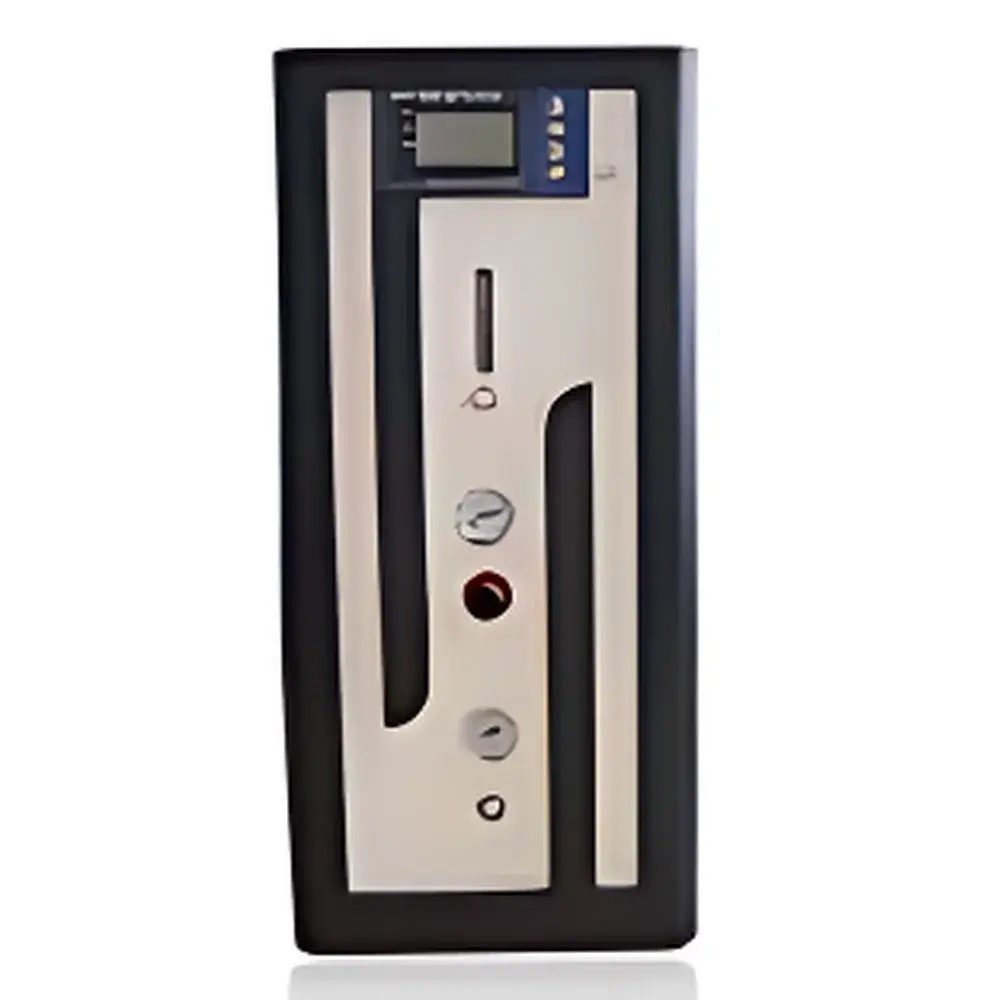
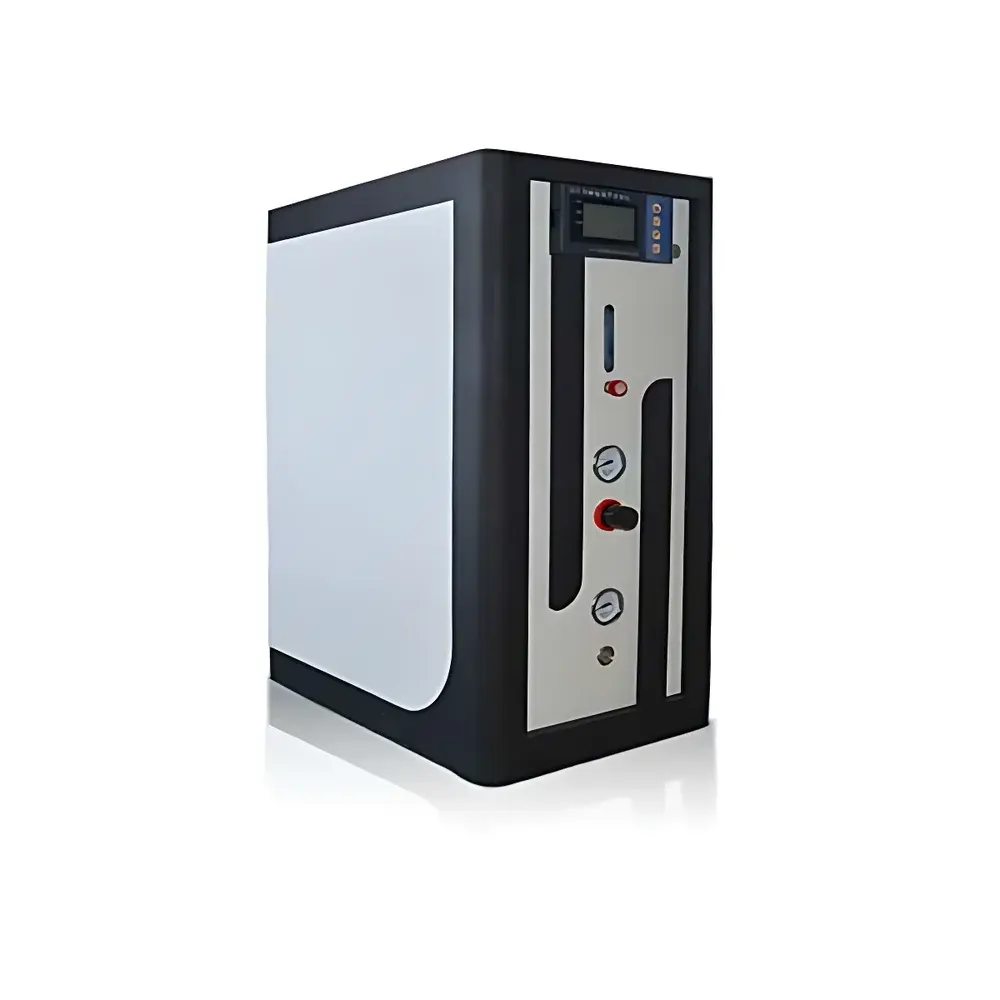
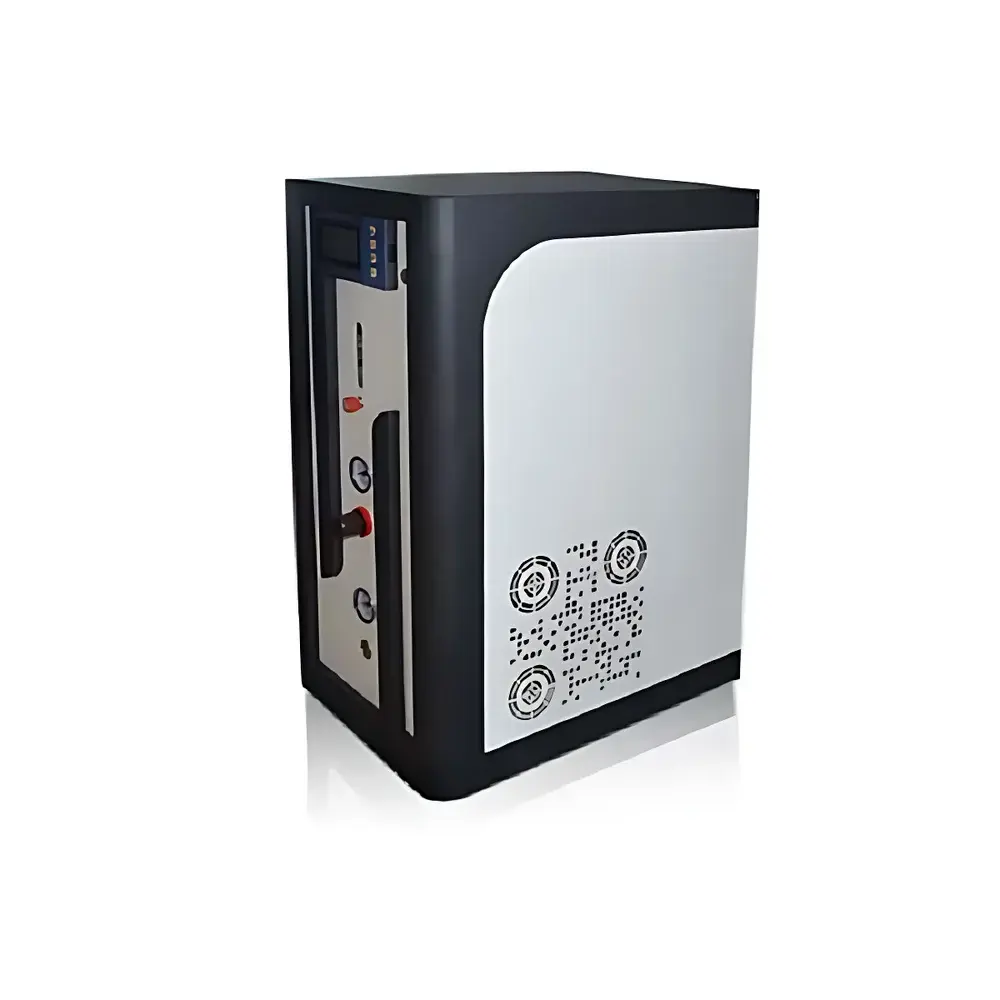
Anyan AYAN-T500 Tri-Gas Generator (Nitrogen, Hydrogen & Zero Air)
| Brand | Anyan |
|---|---|
| Origin | Zhejiang, China |
| Model | AYAN-T500 |
| Nitrogen Generation Principle | Membrane Separation |
| Nitrogen Output Flow | 0–500 mL/min |
| Hydrogen Output Flow | 0–500 mL/min |
| Zero Air Output Flow | 0–5000 mL/min |
| Nitrogen Purity | ≥99.999% |
| Nitrogen Dew Point | −45 °C |
| Nitrogen Output Pressure | 0–0.5 MPa (factory-set at 0.4 MPa) |
| Hydrogen Output Pressure | 0–0.4 MPa (factory-set at 0.3 MPa) |
| Zero Air Output Pressure | 0–0.5 MPa (factory-set at 0.4 MPa) |
| Power Supply | 220 V ±10%, 50 Hz ±5% |
| Power Consumption | 450 W |
| Operating Temperature | 10–40 °C |
| Relative Humidity | ≤85% RH (non-condensing) |
| Dimensions (W×D×H) | 450 × 440 × 400 mm |
| Weight | 35 kg |
Overview
The Anyan AYAN-T500 Tri-Gas Generator is an integrated, on-demand laboratory gas supply system engineered for precision analytical instrumentation requiring high-purity nitrogen, hydrogen, and zero-grade air. Unlike conventional cylinder-based gas delivery, the AYAN-T500 employs membrane separation technology for nitrogen generation—combined with catalytic purification for hydrogen and multi-stage filtration (particulate, hydrocarbon, moisture, and CO2) for zero air—enabling continuous, stable, and contamination-free gas output. Its design targets core applications in gas chromatography (GC), GC-MS, liquid chromatography-mass spectrometry (LC-MS) nitrogen drying/gas shielding, and flame ionization detection (FID) support. The unit operates without consumables beyond standard filter replacements, eliminating logistical dependencies on high-pressure cylinders or cryogenic dewars while reducing safety risks associated with compressed gas storage.
Key Features
- Triple-output architecture delivering independent, simultaneous streams of nitrogen (≥99.999% purity), hydrogen (≥99.999% purity), and zero air (hydrocarbon-free, <0.1 ppm THC, dew point ≤−45 °C)
- Membrane-based nitrogen generation ensures consistent purity without pressure swing adsorption (PSA) cycling—eliminating moving parts, valve wear, and flow/purity drift over time
- Integrated catalytic hydrogen generator with palladium-doped alloy membrane; no alkaline electrolyte or metal hydride cartridges required
- Zero air system features three-stage purification: coalescing pre-filter, activated carbon trap, and heated desiccant dryer—meeting ASTM D6167 and ISO 8573-1 Class 1 compressed air specifications
- Digital pressure regulation per gas channel with factory-calibrated setpoints (N2: 0.4 MPa; H2: 0.3 MPa; Air: 0.4 MPa) and real-time pressure monitoring via front-panel LED display
- Thermal management system maintains stable internal temperature across ambient conditions (10–40 °C), minimizing dew point fluctuation and ensuring reproducible gas quality
- Low-noise operation (<55 dB[A]) suitable for shared laboratory environments; CE-compliant electrical architecture with over-current, over-temperature, and leak-detection safeguards
Sample Compatibility & Compliance
The AYAN-T500 is validated for use with benchtop and floor-standing analytical platforms including Agilent, Thermo Fisher, Shimadzu, and Waters GC/FID, GC/TCD, and LC-MS systems requiring inert purge, carrier, or collision gases. Its nitrogen stream meets ISO 8573-1:2010 Class 1.2.1 (solid particles ≤0.1 µm, oil content ≤0.01 mg/m³, water dew point −45 °C) and complies with USP requirements for pharmaceutical-grade inert gas in dissolution and stability testing. Hydrogen output satisfies ASTM D1946-20 standards for fuel gas purity in thermal conductivity detectors. All gas paths are constructed from electropolished 316L stainless steel and Swagelok® VCR fittings to prevent leaching or outgassing. The unit supports GLP/GMP workflows through optional audit-trail-capable firmware (v2.1+), enabling timestamped event logging for maintenance, calibration, and alarm history per FDA 21 CFR Part 11 Annex 11 expectations.
Software & Data Management
While the AYAN-T500 operates as a standalone hardware platform, its embedded microcontroller logs operational parameters—including cumulative runtime, filter service intervals, pressure deviations (>±5% from setpoint), and thermal sensor readings—for local diagnostics via USB-C interface. Firmware updates and configuration backup/restore are performed using Anyan’s proprietary PC utility (Windows/macOS compatible). Optional RS-485 Modbus RTU integration allows remote status polling and alarm triggering within centralized lab infrastructure management systems (e.g., LabVantage, STARLIMS). No cloud connectivity or vendor-hosted data storage is implemented—ensuring full data sovereignty and alignment with institutional IT security policies.
Applications
- GC carrier gas (N2) and detector fuel (H2) supply for FID, TCD, and NPD systems
- LC-MS nitrogen curtain gas and nebulizer/drying gas—reducing background chemical noise and improving signal-to-noise ratio
- Inert atmosphere purging for glove boxes, sample preparation hoods, and solvent evaporation stations
- Zero air source for ozone generators, particle counters, and environmental chamber calibration
- Pharmaceutical stability studies requiring controlled nitrogen headspace per ICH Q1A(R2) guidelines
- Materials science applications including XRD sample environment control and plasma etching pre-purge sequences
FAQ
Can nitrogen flow rate and purity be adjusted post-installation?
No. The AYAN-T500 uses fixed-permeability polymeric membranes calibrated during manufacturing. Flow and purity are interdependent and preset to deliver ≥99.999% N2 across the 0–500 mL/min range. Manual adjustment is neither supported nor recommended.
Is hydrogen generated via alkaline electrolysis or PEM technology?
Neither. The unit employs solid-state catalytic recombination of purified compressed air—followed by selective palladium-alloy membrane diffusion—to yield ultra-high-purity H2 without liquid electrolytes or noble-metal catalysts.
What maintenance intervals apply to filters and membranes?
Pre-filters require replacement every 6 months under continuous operation; final-stage hydrocarbon and moisture traps every 12 months. Membrane lifetime exceeds 15,000 operating hours when inlet air meets ISO 8573-1 Class 4 specifications.
Does the unit meet regulatory requirements for GxP environments?
Yes—when operated with documented preventive maintenance, calibration records, and firmware-enabled audit trails (optional module), it satisfies baseline traceability requirements for ISO/IEC 17025, CLIA, and EU Annex 11.
Can output pressures be customized for non-standard instrument interfaces?
Factory-set pressures are optimized for compatibility with standard GC and MS pneumatic modules. Custom pressure calibration requires authorized service intervention and voids warranty if performed externally.



