
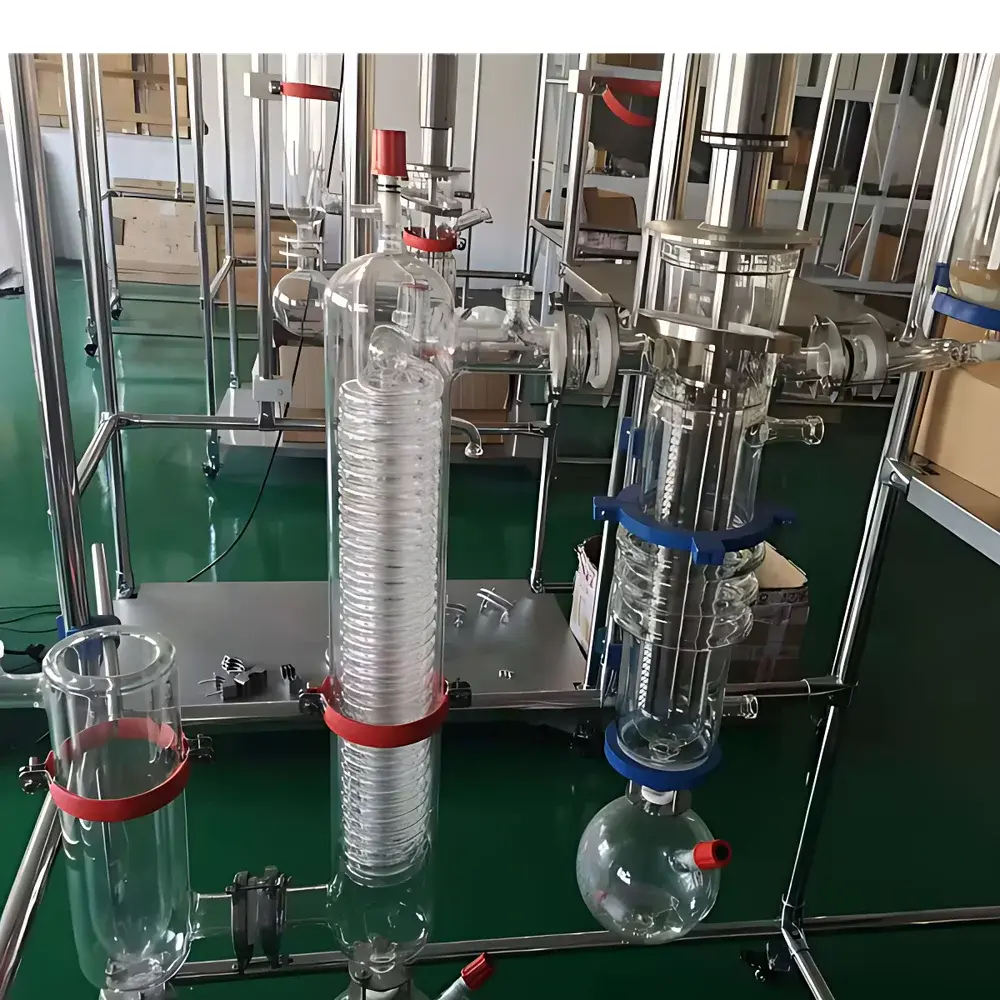
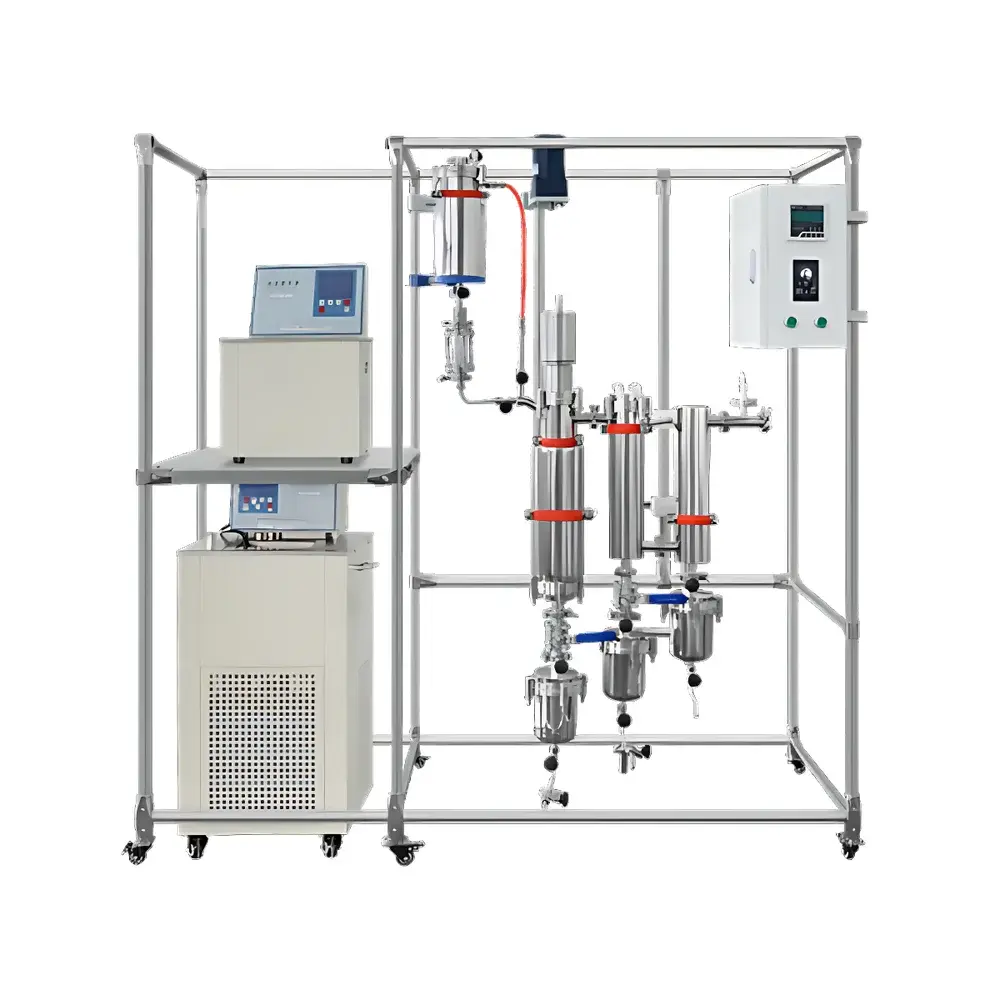
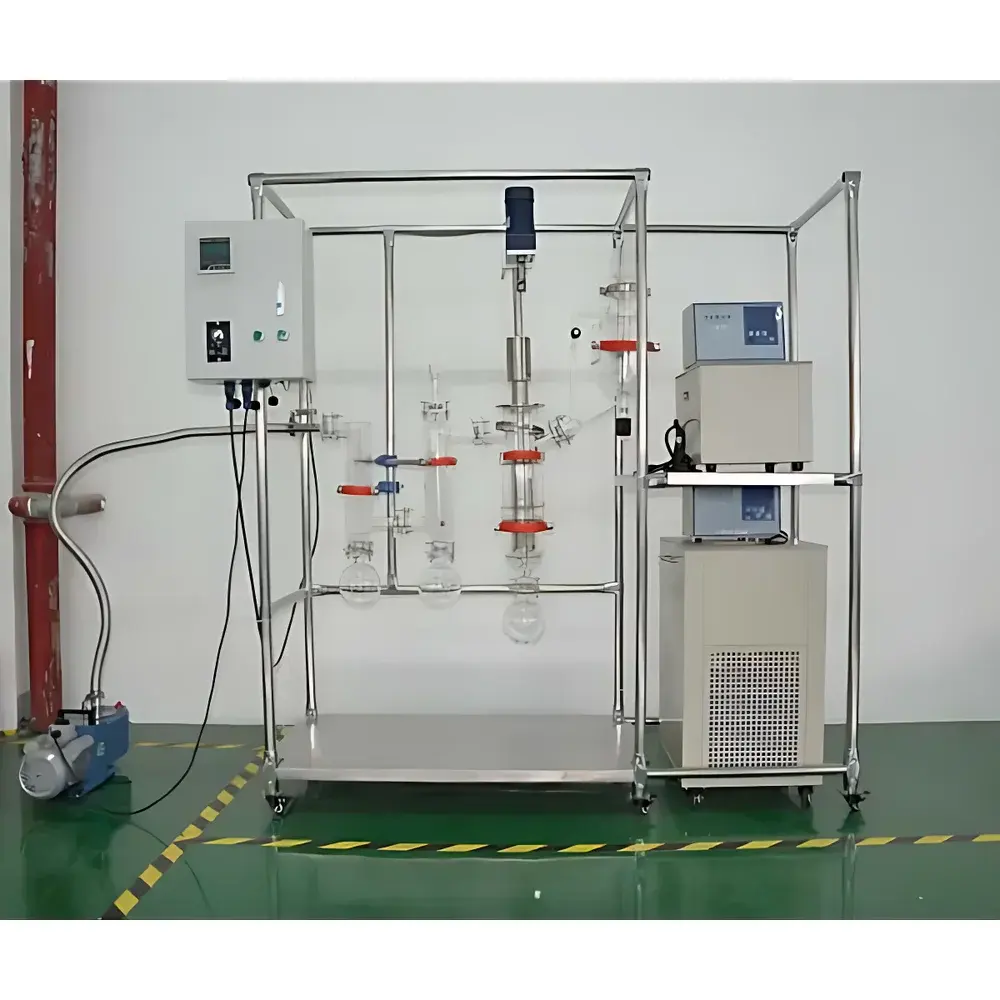
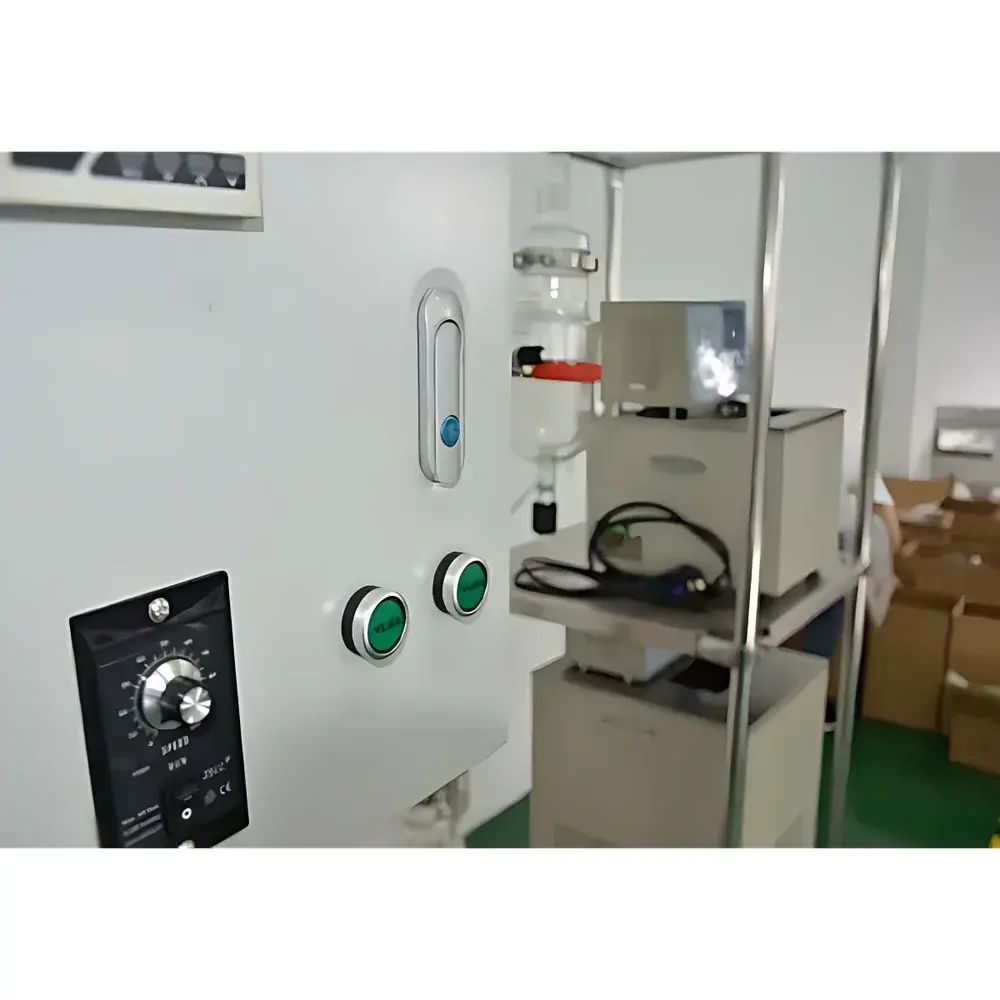
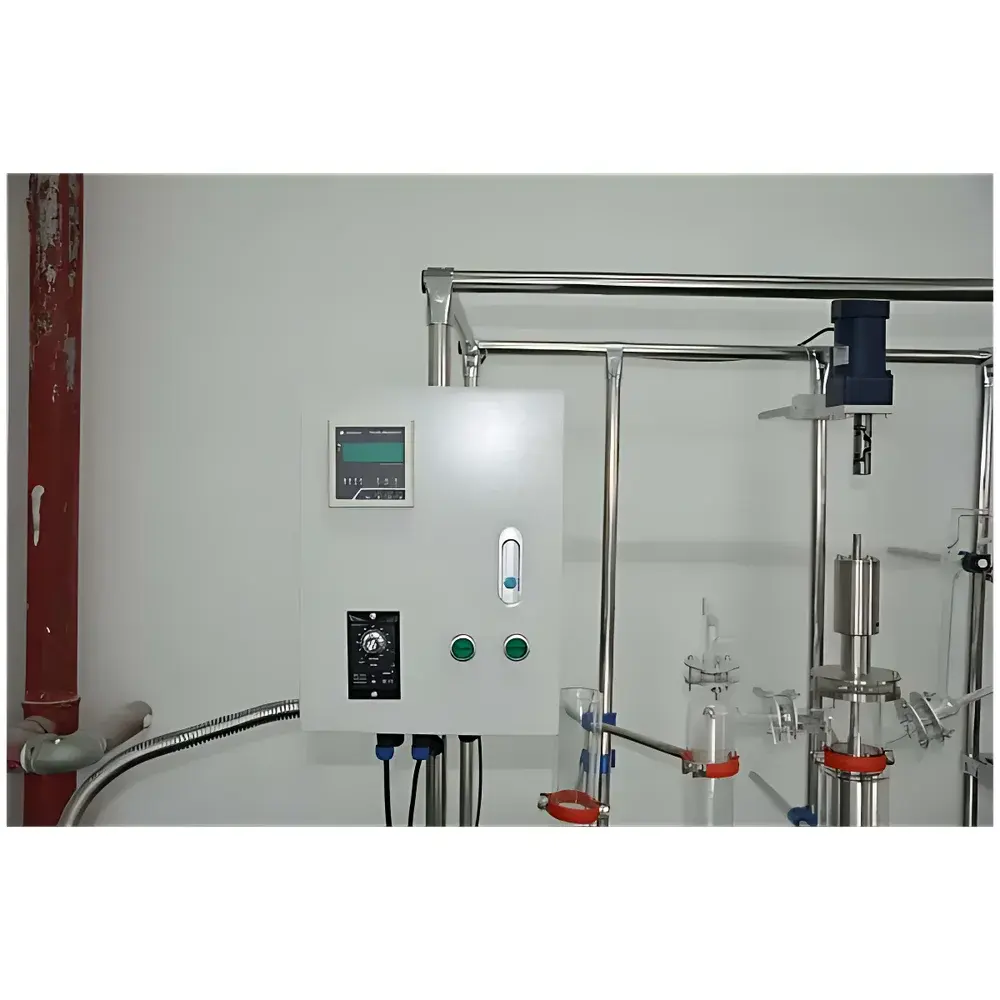
Anyan Instrument AYAN-B120 Laboratory-Scale Thin-Film Evaporator for Vacuum Molecular Distillation
| Brand | Anyan Instrument |
|---|---|
| Origin | Zhejiang, China |
| Manufacturer Type | Authorized Distributor |
| Country of Origin | China |
| Model | AYAN-B120 |
| Feed Rate | 2 kg/h |
| Effective Evaporation Area | 0.2 m² |
| Evaporator Inner Diameter | 120 mm |
| Condensing Area | 0.3 m² |
| Operating Pressure Range | 0.001–1 mbar (≤5 mmHg) |
Overview
The Anyan Instrument AYAN-B120 is a laboratory-scale thin-film evaporator engineered for high-vacuum molecular distillation under controlled thermal and hydrodynamic conditions. It operates on the principle of short-path distillation, where feed material forms a turbulent, sub-millimeter-thick liquid film on a heated cylindrical surface under vacuum (typically 0.001–1 mbar), enabling rapid vaporization of volatile components with minimal residence time (<60 seconds). This design leverages Couette flow dynamics generated by a rotating rotor equipped with PTFE- and SS316L-coated wiper blades to ensure uniform film distribution, enhanced heat transfer, and suppression of droplet entrainment. The system is specifically optimized for thermolabile, high-boiling-point, or oxidation-sensitive compounds—such as polyunsaturated fatty acids, sterols, vitamins (e.g., vitamin A and E), polymer intermediates, and natural fragrance oils—where conventional distillation would induce thermal degradation.
Key Features
- Heated double-jacketed cylindrical evaporation chamber (120 mm inner diameter) with precise temperature control up to 300 °C via external thermal oil circulation
- High-efficiency刮膜 rotor assembly with adjustable speed (0–306 rpm) and dual-material wiper blades (PTFE + SS316L) for corrosion resistance and consistent film formation
- Effective evaporation area of 0.2 m² and condenser surface area of 0.3 m², supporting efficient vapor migration and rapid condensation over short path lengths
- Dual independent collection vessels for simultaneous separation and recovery of multiple fractions (e.g., light distillate and residue)
- Integrated vacuum system capable of achieving ≤5 mmHg (≤0.67 mbar), compatible with secondary cold traps and vacuum monitoring interfaces
- Precision peristaltic or diaphragm feed pump with programmable flow control (2 kg/h nominal capacity) and optional pre-heating capability
- Multi-point silicone gasket sealing; fluoropolymer (FEP/PTFE) gasket upgrade available for aggressive solvents or acidic media
- Modular architecture compliant with standard laboratory utility interfaces (electrical, thermal oil, coolant, vacuum, and inert gas purge lines)
Sample Compatibility & Compliance
The AYAN-B120 accommodates viscous, heat-sensitive, and high-molecular-weight feedstocks—including crude fish oil, lanolin extracts, synthetic esters, essential oil emulsions, and pharmaceutical intermediates—with viscosity ranges up to 5,000 cP at processing temperature. Its design adheres to fundamental engineering principles referenced in ASTM D2892 (standard test method for atmospheric distillation of petroleum products) and ISO 6618 (vacuum distillation apparatus specifications), while operational parameters support alignment with GLP documentation requirements. Though not certified for GMP production, its traceable temperature/vacuum logging, sealed fluid pathways, and non-reactive wetted materials (SS316L, borosilicate glass, PTFE, FEP) facilitate audit-ready process development studies under FDA 21 CFR Part 11–compatible data management protocols when integrated with third-party SCADA systems.
Software & Data Management
The AYAN-B120 operates as a manually supervised benchtop unit without embedded digital control software. However, all critical process variables—including jacket temperature, feed rate, rotor speed, vacuum pressure (via analog output-capable Pirani or capacitance manometer), and condenser cooling temperature—are accessible via standardized 4–20 mA or 0–10 V analog outputs. These signals interface seamlessly with external PLCs, DAQ systems (e.g., National Instruments CompactDAQ), or LIMS platforms for time-stamped acquisition, trend analysis, and electronic batch record generation. Optional RS485 Modbus RTU integration enables remote parameter adjustment and alarm triggering, supporting reproducible method transfer from lab-scale optimization to pilot-scale validation.
Applications
- Fine chemical purification: isolation of aroma compounds (e.g., rose oxide, ionones), monoglyceride fractionation, and removal of residual catalysts from polycondensation reactions
- Pharmaceutical R&D: concentration and solvent exchange of peptide solutions, purification of lipid-based nanocarriers, and recovery of thermally unstable active pharmaceutical ingredients (APIs)
- Food & nutraceutical processing: deacidification and deodorization of edible oils, concentration of omega-3 concentrates (EPA/DHA), and refinement of plant-derived squalene or phytosterols
- Materials science: purification of silicone oligomers, removal of low-MW cyclics from PDMS precursors, and fractionation of bio-based plasticizers
- Environmental analytics: cleanup of sediment extracts prior to GC-MS analysis, and isolation of persistent organic pollutants (POPs) from complex matrices
FAQ
What is the maximum allowable operating temperature of the heating jacket?
The thermal oil jacket supports continuous operation up to 300 °C, with temperature stability maintained within ±1.5 °C using PID-controlled external circulators.
Can the system be used for continuous multi-hour runs?
Yes—designed for extended batch operation (up to 8 h), provided feed consistency, vacuum integrity, and cooling capacity are maintained per specified duty cycle.
Is the evaporator compatible with corrosive feedstocks such as fatty acids or chlorinated solvents?
Wetted components include SS316L, borosilicate glass, and fluoropolymer seals; optional FEP gaskets and Hastelloy C-276 rotor upgrades are available for highly aggressive chemistries.
How is residence time controlled and verified experimentally?
Residence time is governed by feed rate, rotor speed, and film thickness—empirically determined via tracer studies or inferred from mass balance and evaporation intensity (EI) correlations reported in peer-reviewed thin-film evaporation literature.
Does the unit comply with CE or UL safety standards?
The AYAN-B120 meets IEC 61010-1:2010 requirements for electrical safety in laboratory equipment; CE marking is applied per EU Declaration of Conformity issued by the authorized distributor.



