
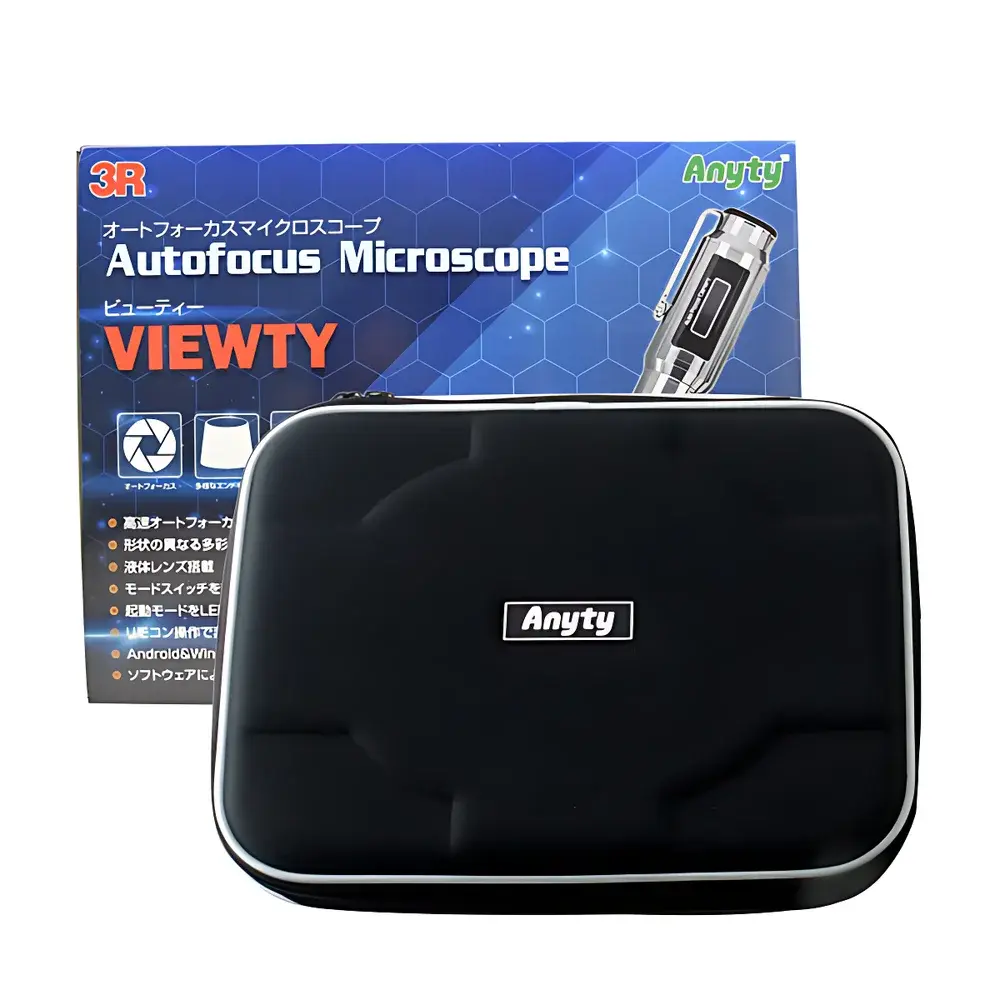
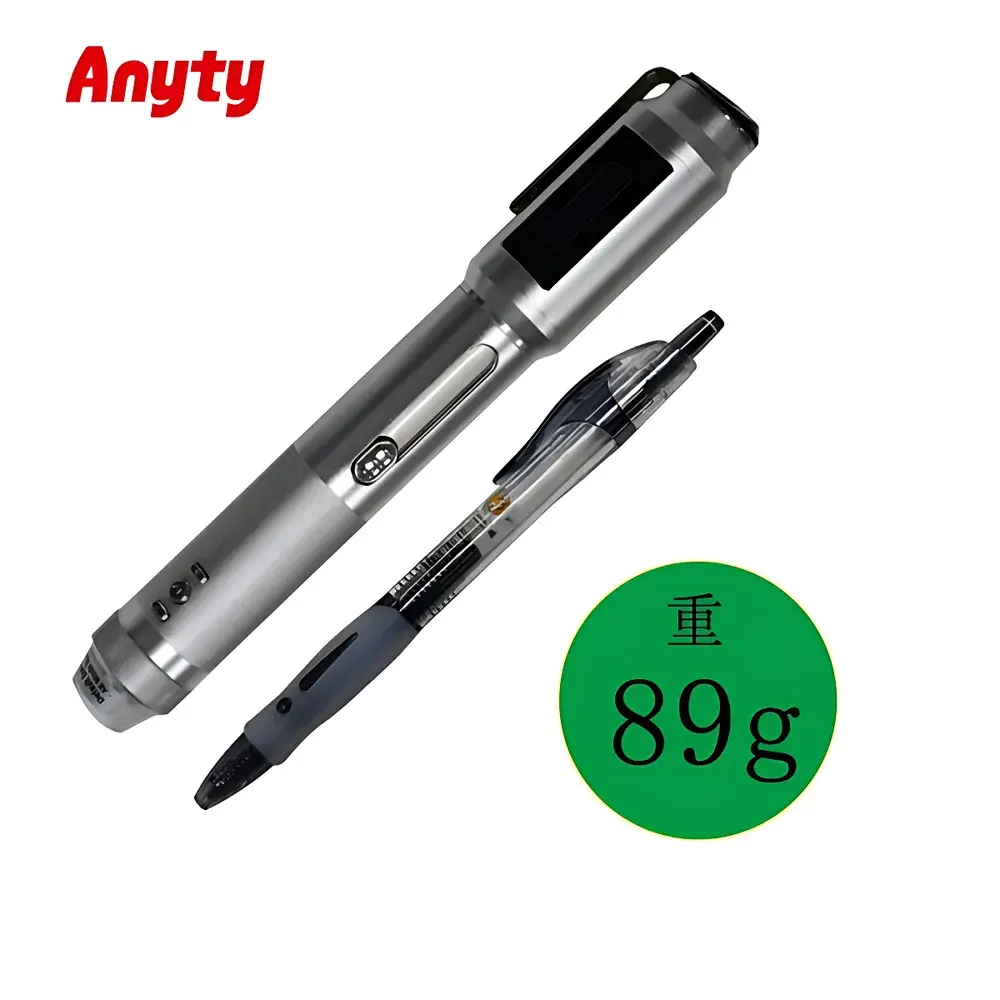
Anyty 3R-MSBTVTY Liquid-Lens Auto-Focus Handheld Digital Microscope
| Brand | Anyty |
|---|---|
| Origin | Beijing, China |
| Manufacturer Type | Original Equipment Manufacturer (OEM) |
| Country of Origin | China |
| Model | 3R-MSBTVTY |
| Imaging Sensor | CMOS |
| Frame Rate | 30 fps |
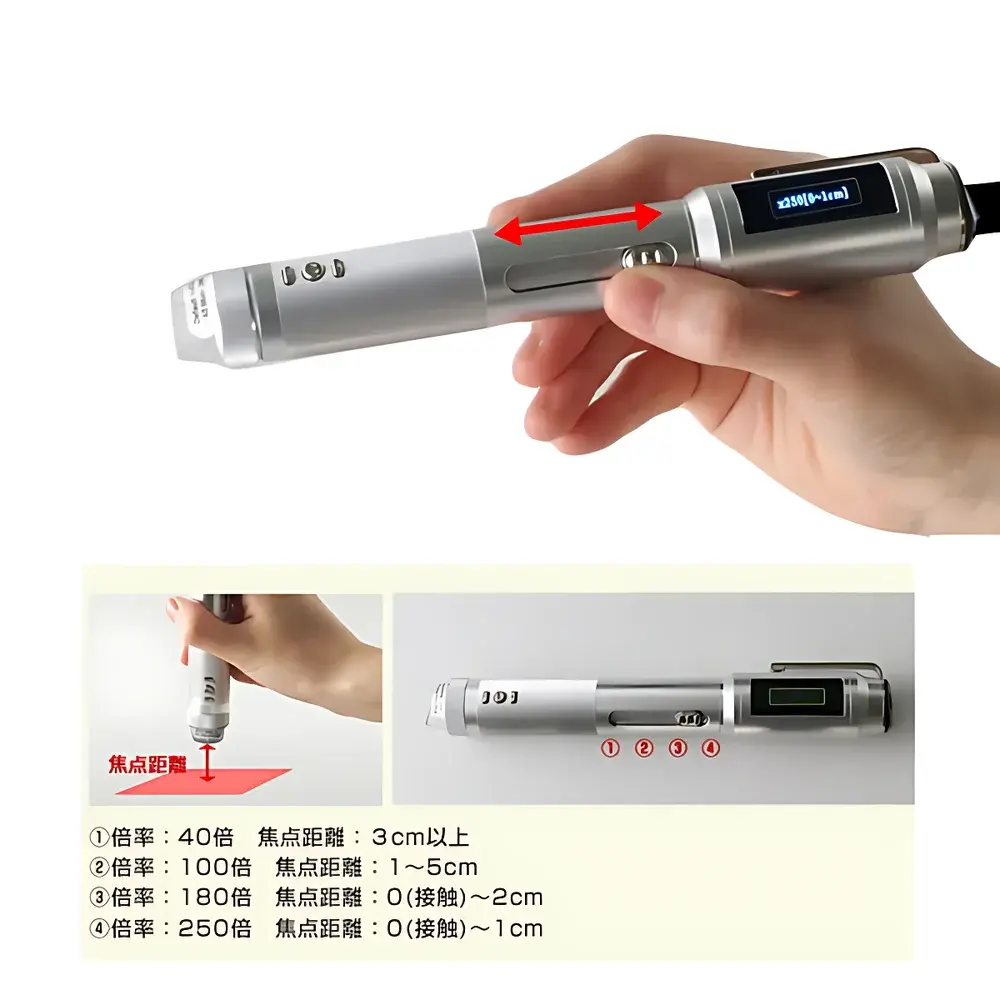
| Magnification Levels | 40× / 100× / 180× / 250× |
Overview
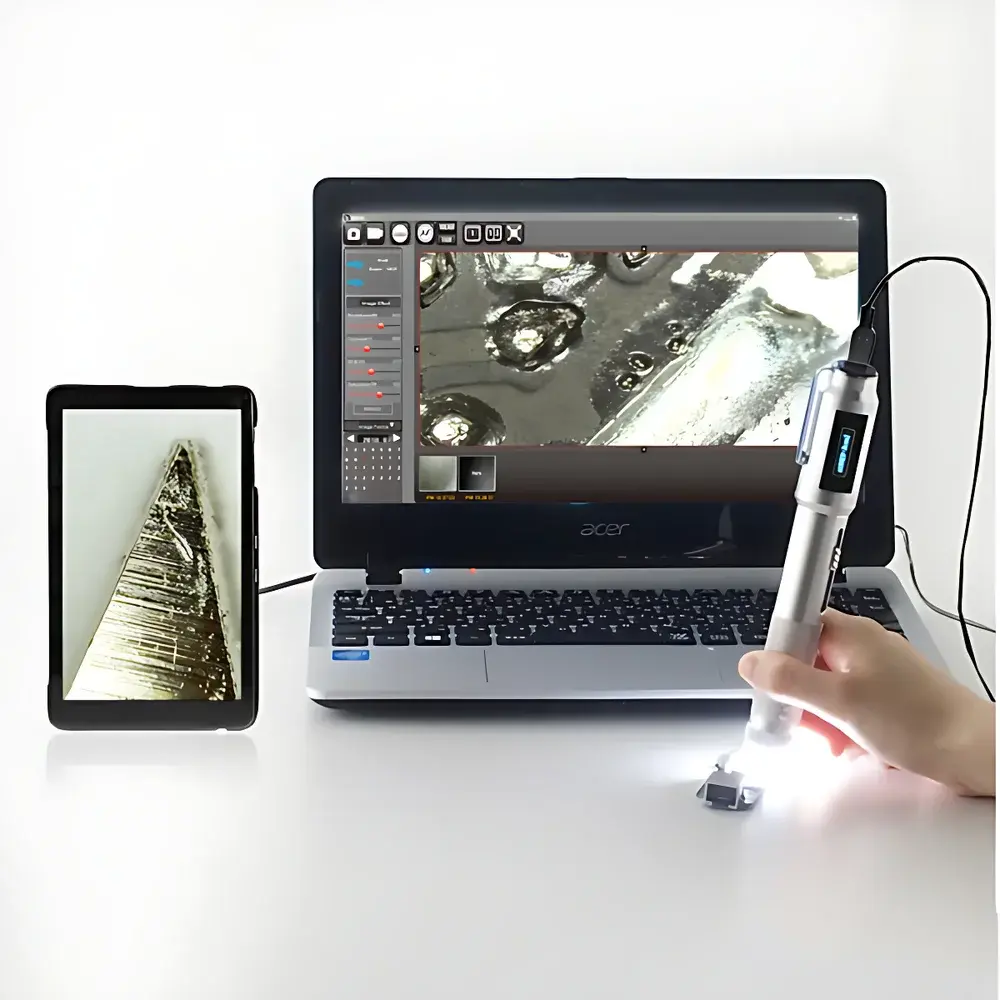
The Anyty 3R-MSBTVTY is a handheld digital microscope engineered for rapid, high-fidelity surface inspection in industrial and quality assurance environments. Unlike conventional mechanical-focus microscopes, it employs electrowetting-based liquid lens technology — a solid-state optical system where focal length is dynamically adjusted by altering the curvature of an interface between two immiscible liquids via applied voltage. This enables millisecond-scale autofocus response without moving parts, delivering consistent image sharpness across varying working distances (typically 10–50 mm). Designed for direct integration into production line workflows or field-based failure analysis, the device operates as a USB-powered imaging peripheral compatible with Windows, macOS, and Linux platforms. Its optical architecture supports real-time visualization at up to 250× digital magnification while maintaining native resolution integrity through hardware-synchronized CMOS capture.
Key Features
- Liquid-lens autofocus mechanism: Eliminates mechanical wear, ensures repeatable focus positioning, and sustains optical alignment stability over extended operational cycles.
- Multi-step magnification presets: Four calibrated zoom levels (40×, 100×, 180×, 250×) are implemented via synchronized optical scaling and digital interpolation, each optimized for signal-to-noise ratio and edge fidelity.
- High-temporal-resolution imaging: 30 fps full-frame output enables smooth panning, dynamic defect tracking (e.g., particle movement on lubricated surfaces), and time-resolved documentation of microstructural changes.
- Ergonomic handheld form factor: Lightweight aluminum-magnesium alloy chassis with integrated trigger button for one-handed operation; designed for prolonged use during repetitive inspection tasks.
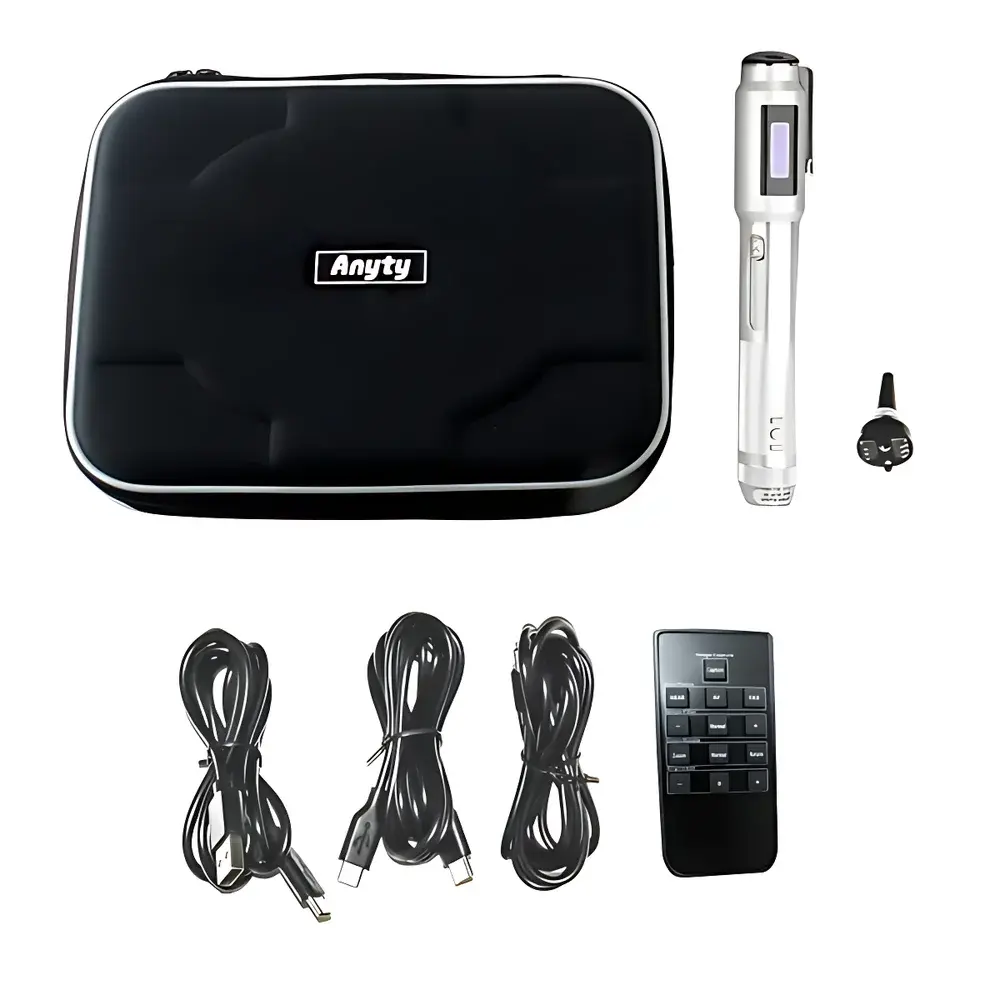
- USB 2.0 interface with plug-and-play compatibility: No external power supply required; draws power directly from host computer or USB hub meeting USB-IF compliance standards.
Sample Compatibility & Compliance
The 3R-MSBTVTY accommodates non-reflective, semi-reflective, and moderately textured samples without auxiliary lighting — its coaxial LED illumination system provides uniform brightness across the field of view. It is routinely deployed for metallurgical surface assessment (e.g., casting porosity, grinding marks, coating adhesion anomalies), PCB solder joint verification, textile fiber morphology analysis, and printed circuit trace continuity checks. While not certified for regulated GxP environments, the device conforms to IEC 61000-6-3 (EMC emission limits) and IEC 61000-6-1 (immunity requirements). Its software architecture supports audit-ready metadata logging (timestamp, magnification, exposure settings), facilitating alignment with internal QA documentation protocols aligned with ISO 9001:2015 clause 7.5.3.
Software & Data Management
Bundled proprietary software (v4.2+) provides measurement calibration using NIST-traceable stage micrometers, enabling linear, area, and angular dimensioning with sub-pixel interpolation accuracy. Image capture supports BMP, TIFF, and JPEG formats; video export uses Motion JPEG-AVIs compliant with FFmpeg v4.x decoding pipelines. All captured data includes embedded EXIF tags recording sensor gain, white balance coefficients, and focus voltage parameters — essential for retrospective validation. The application enforces user-level access control and optional password-protected session logs, supporting basic traceability requirements for non-GMP manufacturing audits.
Applications
- Foundry quality control: Rapid identification of micro-porosity, shrinkage cavities, and sand inclusion defects in aluminum and cast iron components.
- Precision machining verification: Assessment of surface roughness indicators (Ra estimation via texture contrast analysis), burr presence, and tool wear signatures on machined edges.
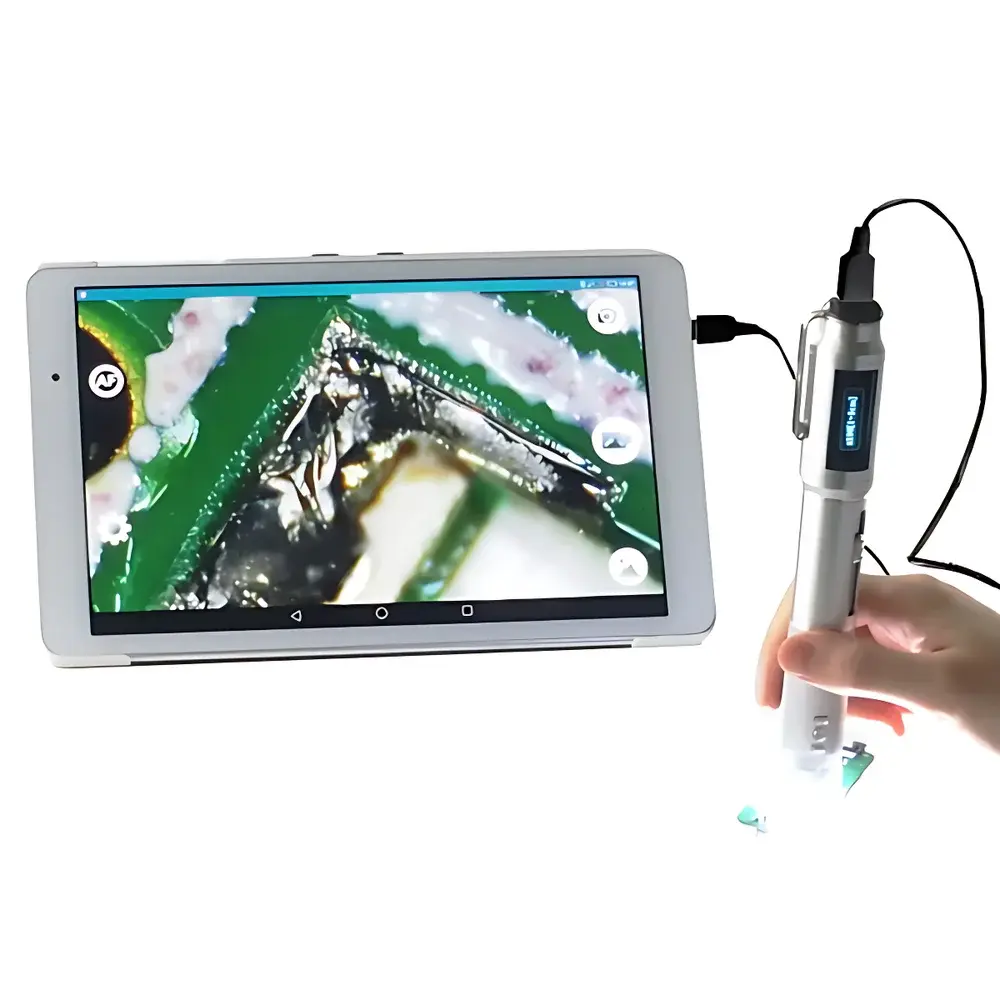
- Electronics manufacturing: Solder fillet geometry evaluation, pad wetting assessment, and detection of micro-cracks in BGA underfill materials.
- Materials R&D labs: In situ observation of polymer crystallization fronts, composite delamination onset, and corrosion pit nucleation kinetics on coated substrates.
- Educational laboratories: Interactive demonstration of optical principles including depth-of-field tradeoffs, diffraction-limited resolution, and digital zoom artifacts.
FAQ
Does the 3R-MSBTVTY support third-party software integration via SDK?
Yes — a documented C/C++ SDK is available under NDA for OEM integration, providing low-level access to frame buffers, focus control registers, and illumination PWM parameters.
What is the minimum resolvable feature size at 250× magnification?
Under optimal lighting and sample contrast conditions, the system resolves features ≥2.8 µm based on Nyquist sampling criteria relative to its 1/3″ CMOS pixel pitch (1.4 µm) and effective optical MTF.
Is the device suitable for use in cleanroom Class 1000 environments?
The housing meets IP52 ingress protection ratings; however, particulate shedding testing per ISO 14644-1 has not been performed — users must validate suitability per facility-specific contamination control policies.
Can measurements be exported in CSV format for statistical process control (SPC) analysis?
Yes — dimensional annotations are exportable as tab-delimited text files containing coordinate pairs, calculated metrics, and uncertainty estimates derived from calibration variance propagation models.




