
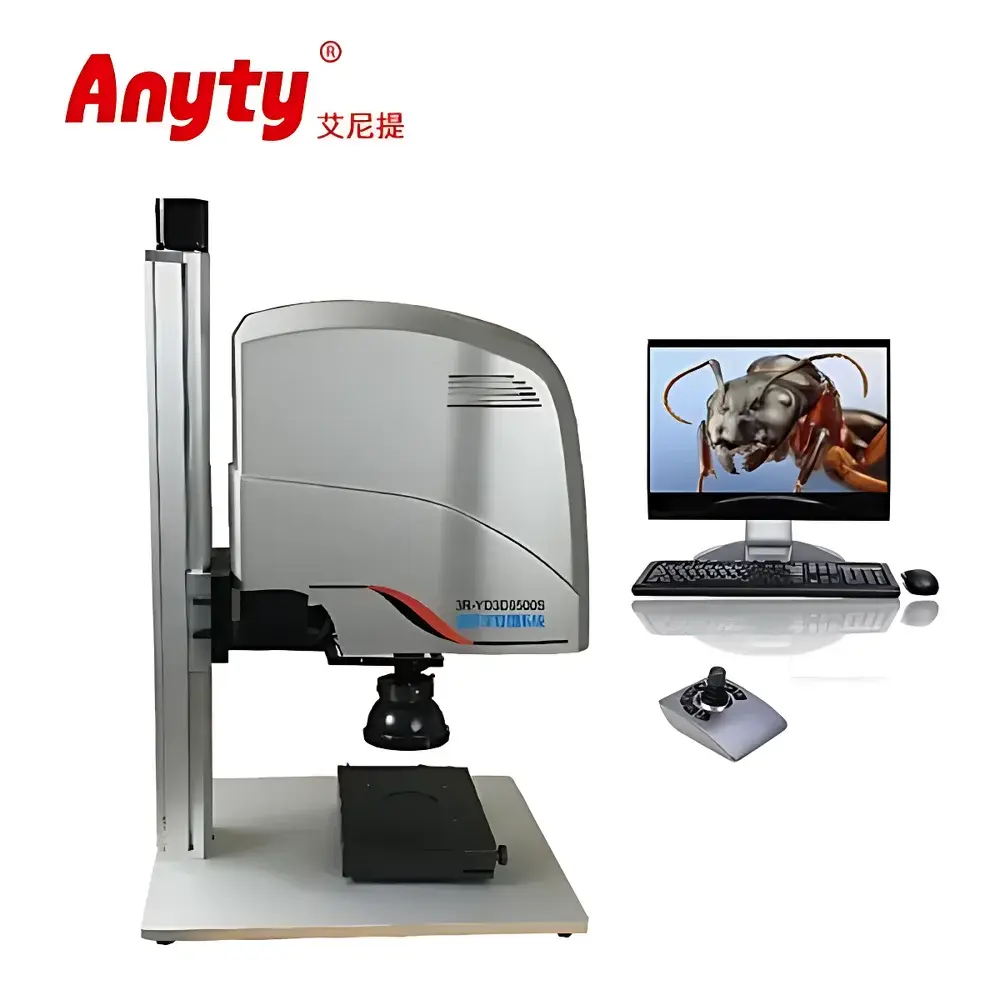
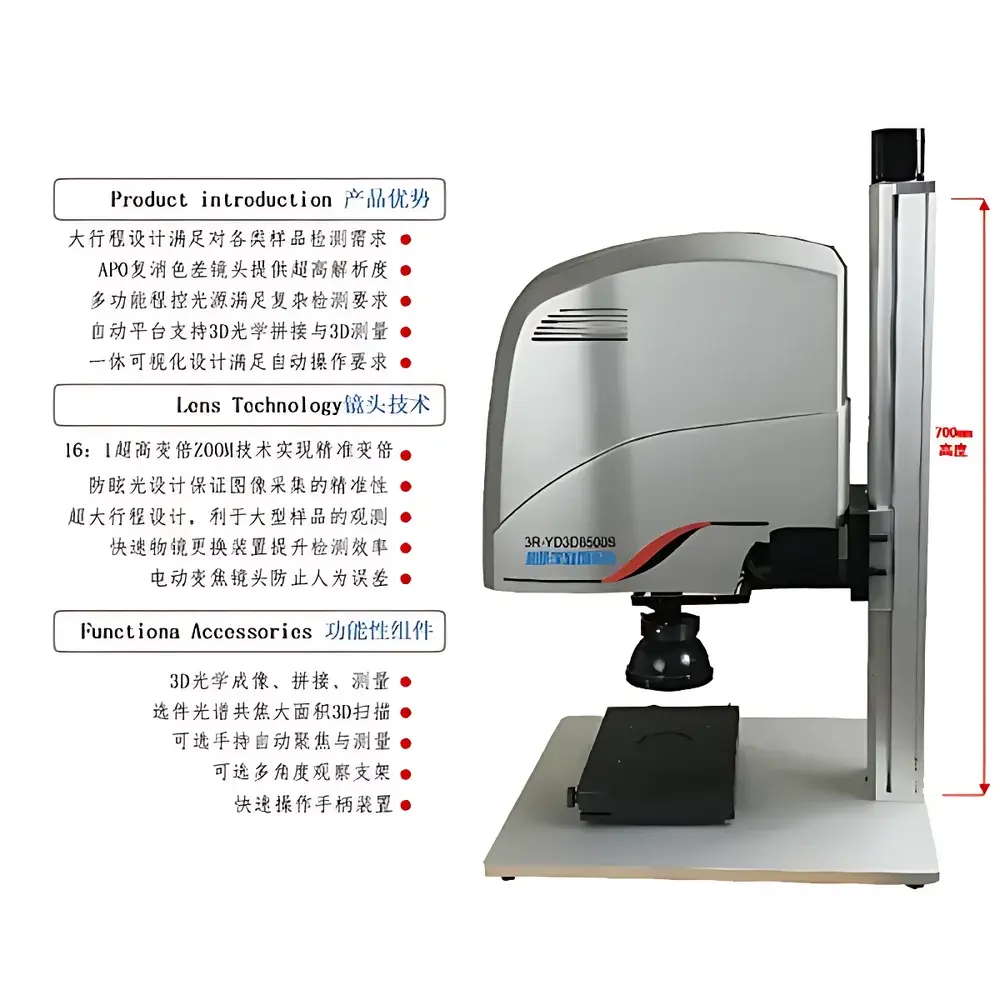
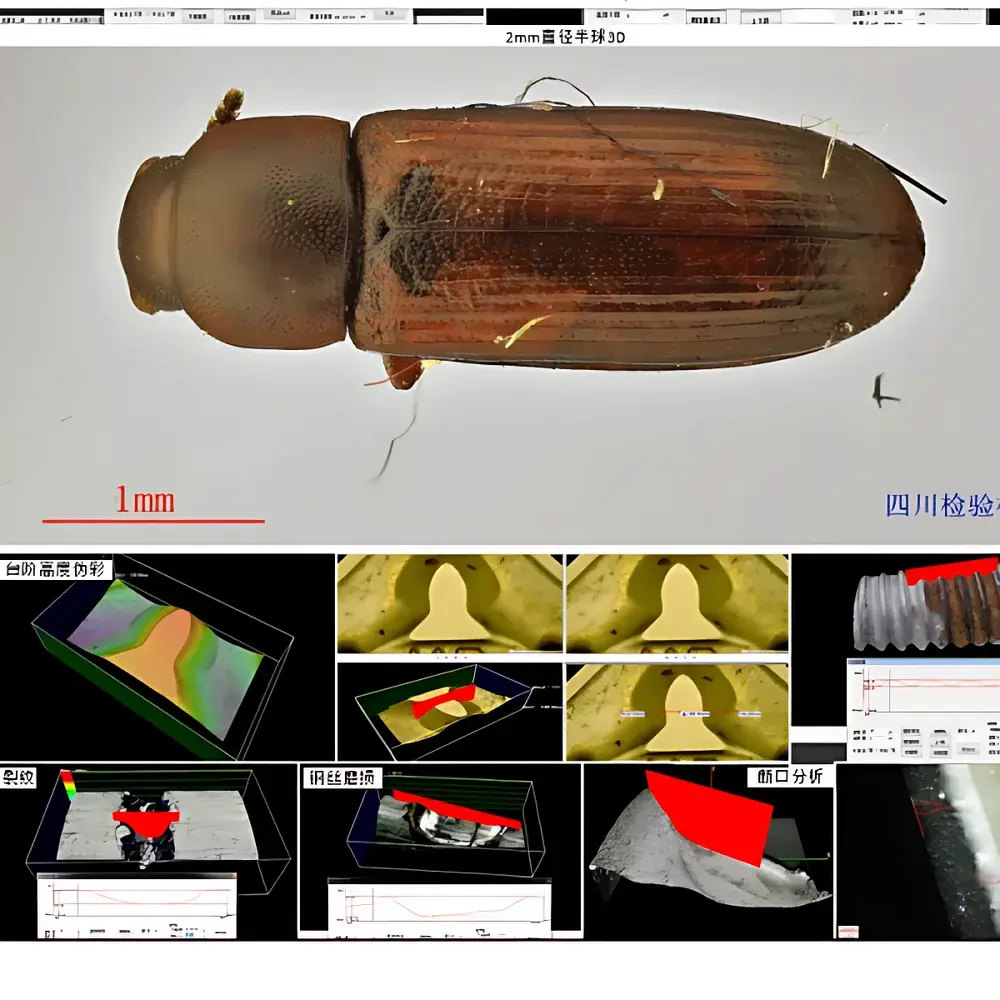
Anyty 3R-YD3D8500S Portable 3D Extended Depth-of-Field Digital Microscope
| Brand | Anyty |
|---|---|
| Origin | Beijing, China |
| Manufacturer Type | Direct Manufacturer |
| Country of Origin | China |
| Model | 3R-YD3D8500S |
| Imaging Sensor | CMOS |
| XY Translation Stage Dimensions | 70 mm × 50 mm or 150 mm × 100 mm (configurable) |
Overview
The Anyty 3R-YD3D8500S is a portable, high-performance 3D extended depth-of-field (EDF) digital microscope engineered for rapid, non-contact surface topography analysis and metrology in field and laboratory environments. Unlike conventional optical microscopes limited by shallow depth of field at high magnifications, this system employs real-time focus-stacking algorithms combined with precision Z-axis motorized control to acquire hundreds of optically focused image slices across variable sample heights. These slices are computationally fused into a single all-in-focus 2D image and simultaneously reconstructed into a geometrically accurate 3D point cloud model—achievable in under 10 seconds per scan. The core architecture integrates a high-resolution CMOS imaging module, programmable LED illumination with adjustable intensity and angle, and a rigid yet lightweight aluminum alloy chassis optimized for vibration resistance and portability. Designed for industrial QA/QC, failure analysis, materials science education, and forensic documentation, the 3R-YD3D8500S delivers reproducible sub-micron lateral resolution and micron-level axial repeatability without requiring vacuum chambers, conductive coating, or complex calibration routines.
Key Features
- Real-time extended depth-of-field imaging: Automatic focus stacking across user-defined Z-ranges (up to 5 mm travel) with <1 µm step resolution
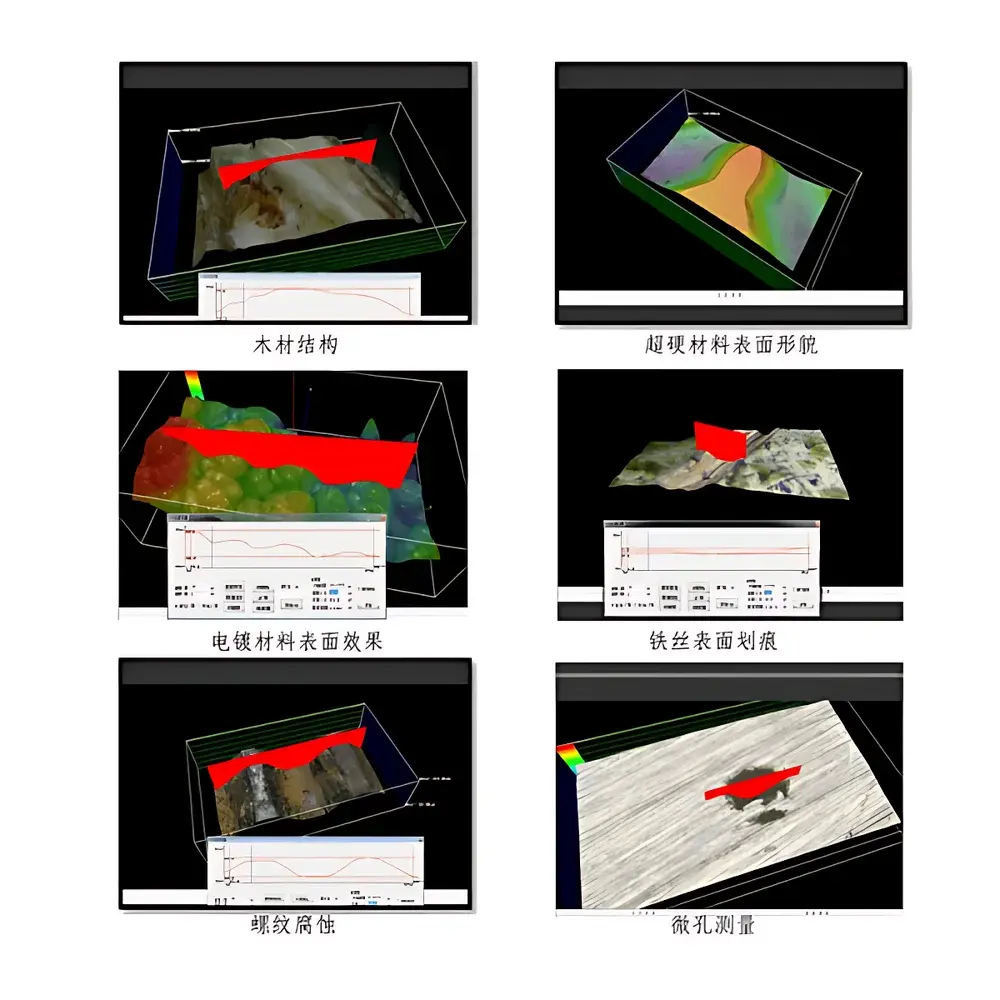
- Integrated 3D reconstruction engine: Generates dense, georeferenced point clouds (XYZ coordinates + RGB color mapping) compliant with STL and OBJ export formats
- Dual-stage XY translation platform: Interchangeable stages support either compact 70 mm × 50 mm (standard) or extended 150 mm × 100 mm (optional) working area—both with micrometer-scale positioning accuracy
- Intelligent measurement suite: Supports 3D height profiling, volume calculation, surface roughness estimation (Ra, Rz), step-height, gap, and angular deviation measurements traceable to NIST-traceable standards
- Portable form factor: Weighs <2.8 kg; operates on AC power or external 12 V DC battery packs; includes ruggedized carrying case with integrated alignment jig
- Optical configuration: Modular objective lens system (1×–10× magnification range); optional polarized or coaxial illumination for glare suppression on reflective surfaces
Sample Compatibility & Compliance
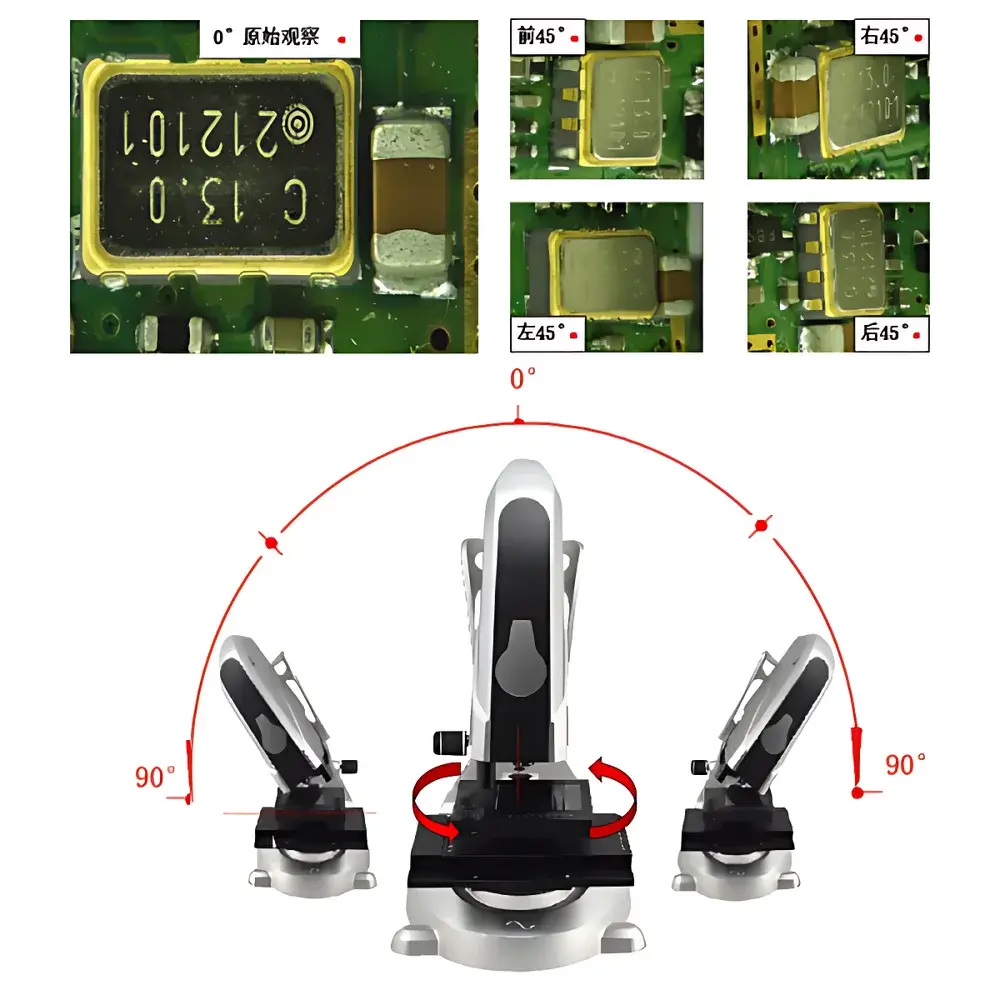
The 3R-YD3D8500S accommodates a broad spectrum of solid, non-volatile samples—including metallic alloys, printed circuit boards (PCBs), polymer composites, geological thin sections, biological tissue mounts, and coated substrates—without size or conductivity constraints. Its open-stage design allows direct placement of irregularly shaped objects up to 120 mm in height. All firmware and measurement workflows comply with ISO/IEC 17025:2017 requirements for testing laboratories, and data integrity safeguards align with FDA 21 CFR Part 11 principles (audit trail logging, electronic signature support, and user role-based access control). Optional GLP/GMP-compliant reporting modules generate PDF reports with embedded metadata, instrument ID, operator credentials, timestamped acquisition logs, and uncertainty budgets per ISO/IEC Guide 98-3 (GUM).
Software & Data Management
The proprietary Anyty 3D-MicroVision Suite (v4.2+) provides full control over acquisition, reconstruction, and analysis. It supports batch processing of multi-region scans, scripting via Python API for automated inspection protocols, and DICOM-compatible metadata embedding for cross-platform integration with LIMS and ELN systems. Raw image stacks and point clouds are stored in vendor-neutral TIFF and ASCII XYZ formats. Built-in calibration verification tools perform daily drift checks using NIST-traceable step gauges, with results archived alongside each dataset. Software updates are delivered through secure HTTPS channels with SHA-256 signature validation.
Applications
- Electronics manufacturing: Solder joint inspection, BGA void analysis, conformal coating thickness mapping
- Materials research: Grain boundary characterization, fracture surface morphology, wear track profiling
- Quality assurance: Dimensional verification of machined parts, surface defect quantification (scratches, pits, porosity)
- Educational labs: Interactive 3D microscopy demonstrations for undergraduate materials engineering curricula
- Forensic science: Toolmark comparison, fiber morphology analysis, document authenticity assessment
- Conservation science: Non-invasive examination of pigment layer stratigraphy in historical artifacts
FAQ
What is the maximum Z-axis scanning range and resolution?
The system supports up to 5 mm total Z-travel with programmable step sizes down to 0.5 µm. Actual axial resolution depends on objective magnification and sample reflectivity but typically achieves ±1.2 µm repeatability (2σ) under controlled lab conditions.
Can the software export measurement data to Excel or MATLAB?
Yes—CSV and XML exports include calibrated XYZ coordinates, intensity values, and measurement annotations. A dedicated MATLAB toolbox is available for advanced surface fitting and statistical process control (SPC) integration.
Is the system compatible with ISO 13565-2 or ISO 4287 surface roughness standards?
The built-in roughness analysis module implements algorithms fully aligned with ISO 13565-2 (for hierarchical surfaces) and ISO 4287 (profile parameters), including filtering, leveling, and parameter computation per specified cutoff wavelengths.
Does the microscope require annual recalibration?
While no mandatory annual recalibration is stipulated, users are advised to perform quarterly verification using certified reference artifacts. Calibration certificates from accredited third-party labs (e.g., A2LA-accredited providers) are supported for audit readiness.
How is focus stability maintained during field deployment?
The optical path incorporates passive thermal compensation and shock-absorbing mounting. Firmware includes adaptive focus-lock algorithms that dynamically adjust exposure and gain to counteract minor environmental vibration or temperature drift.





