
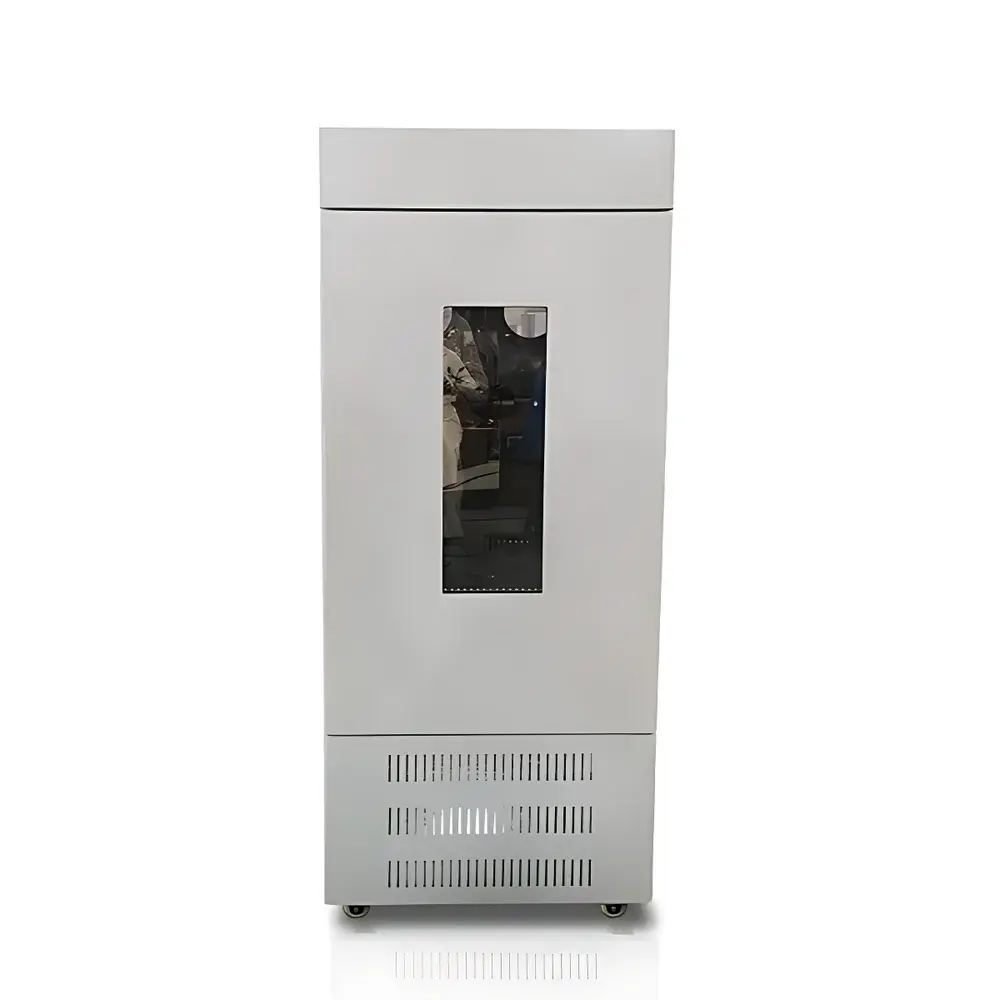
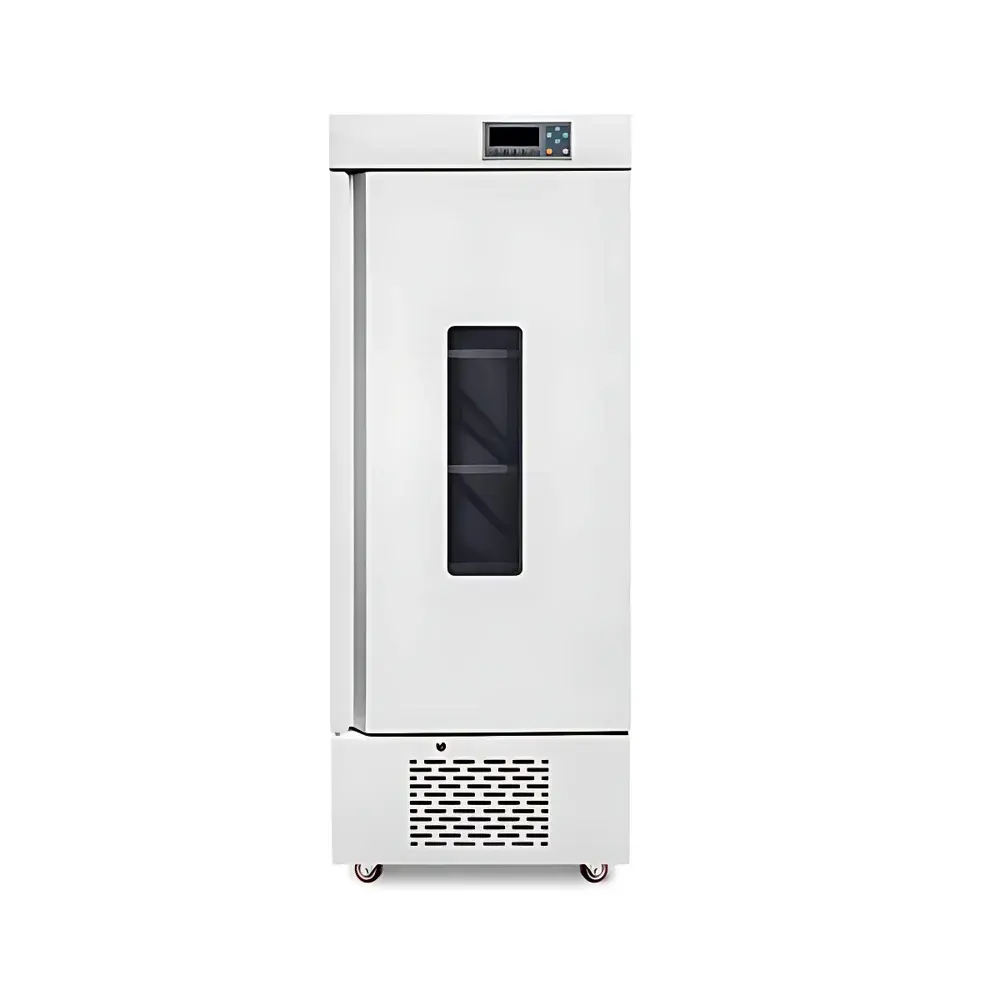
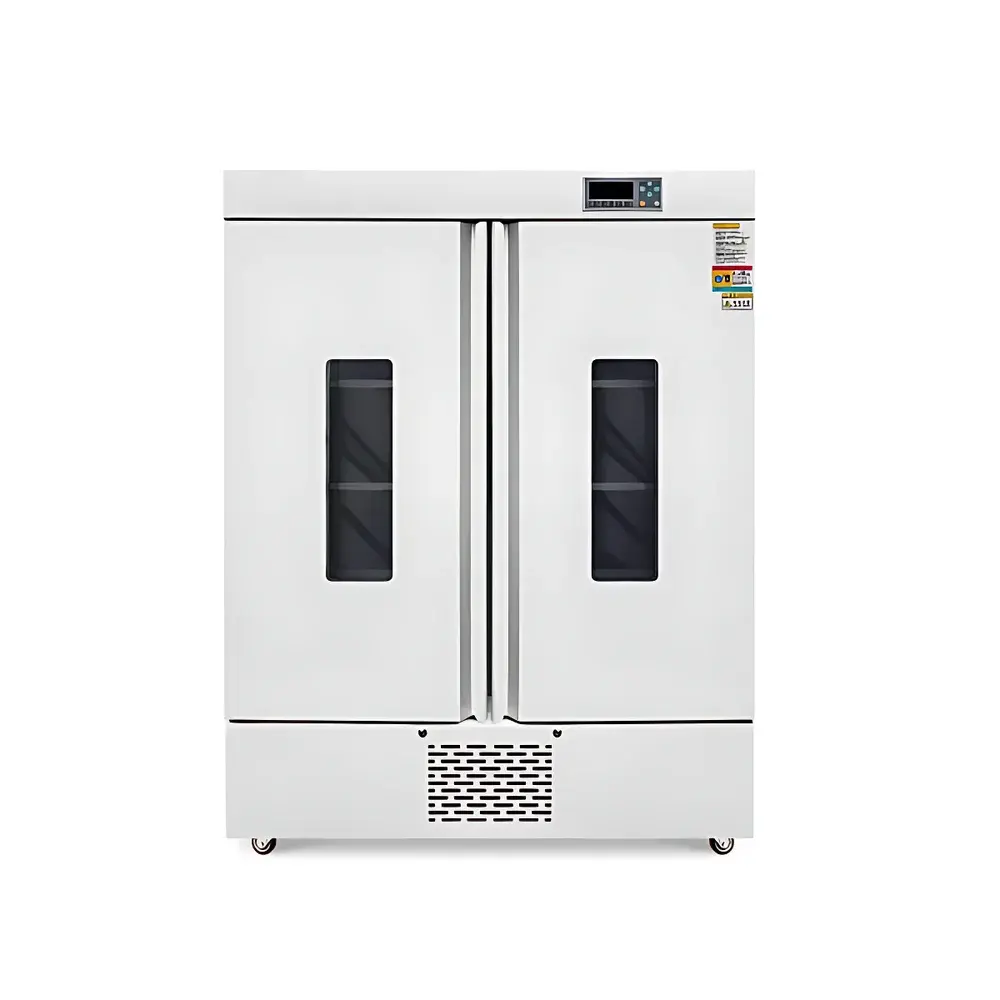
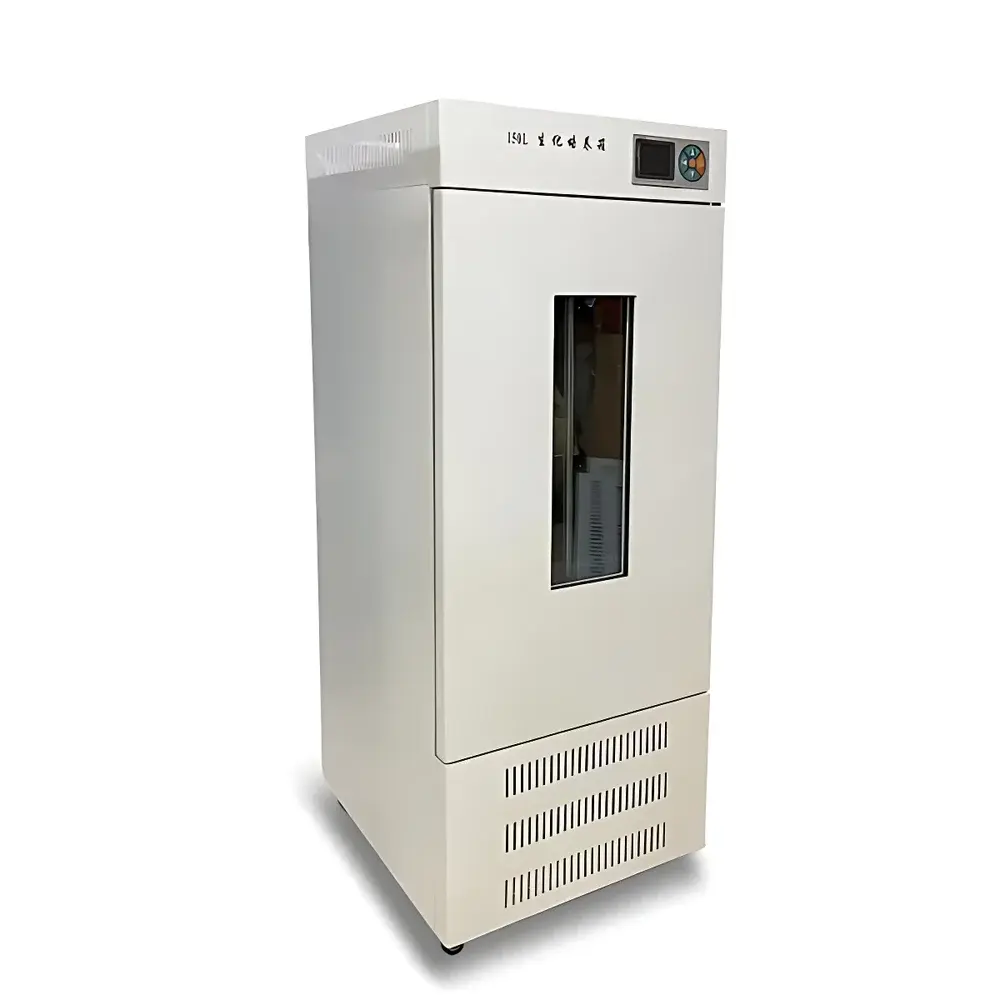
AnYuJie HWS-70B Temperature and Humidity Controlled Incubator
| Brand | AnYuJie |
|---|---|
| Origin | Zhejiang, China |
| Manufacturer Type | Authorized Distributor |
| Product Origin | Domestic (China) |
| Model | HWS-70B |
| Price Range | USD 700–1,150 (FOB) |
| Heating Method | Air-Jacketed Heating |
| Cooling Method | Compressor-Based Refrigeration |
| Humidification System | External Water Reservoir with Ultrasonic Humidifier |
| Temperature Range (with Humidification) | 5–50 °C |
| Temperature Range (without Humidification) | 5–50 °C |
| Temperature Fluctuation | ±1 °C |
| Temperature Uniformity | ±1 °C |
| Humidity Range | 40–95 %RH |
| Humidity Accuracy | ±5 %RH |
| Chamber Capacity | 70 L |
| External Dimensions (W×D×H) | 540 × 540 × 1100 mm |
Overview
The AnYuJie HWS-70B Temperature and Humidity Controlled Incubator is an engineered solution for precise environmental simulation in life science laboratories. Designed around a dual-door air-jacketed thermal architecture and ultrasonic humidification principle, it maintains stable, reproducible conditions across its 70 L stainless-steel chamber. Unlike water-jacketed systems, the air-jacket design enables rapid thermal response while minimizing condensation risk—critical for long-term cell culture, microbial growth studies, and BOD incubation where moisture management directly impacts metabolic activity. The unit operates within a biologically relevant temperature range of 5–50 °C and a humidity band of 40–95 %RH, supporting applications from plant tissue culture to pharmaceutical stability testing under ICH Q1 guidelines. Its compressor-based cooling system—equipped with high/low pressure protection and delayed startup logic—ensures consistent performance during extended operation cycles without thermal shock or refrigerant cycling instability.
Key Features
- Air-jacketed heating system with independent PID-controlled heating elements for fast, uniform temperature ramping and minimal overshoot
- Ultrasonic humidification module coupled with an external water reservoir, enabling continuous, particle-free moisture delivery and improved RH distribution homogeneity
- Dual-pane observation window with integrated LED illumination, providing glare-free visual monitoring without compromising thermal integrity
- Forced-air convection via stainless-steel circulation ducts and low-turbulence centrifugal blower, achieving ±1 °C temperature uniformity throughout the chamber volume
- Independent over-temperature cut-off circuit and sensor fault detection logic, compliant with IEC 61010-1 safety requirements for laboratory equipment
- Microprocessor-based controller with real-time display of setpoint, actual temperature, and relative humidity; supports manual parameter lockout to prevent accidental changes during experiments
Sample Compatibility & Compliance
The HWS-70B accommodates standard Petri dishes (up to 150 mm), multi-well plates (6–96-well), Erlenmeyer flasks (up to 1 L), and upright culture tubes—compatible with ISO 8573-1 clean air classifications when operated in low-dust environments. Its stainless-steel interior (AISI 304 grade) resists corrosion from repeated ethanol or hydrogen peroxide decontamination cycles. While not certified to UL 61010-1 or CE for medical device use, the unit meets GB/T 2423.3–2016 (IEC 60068-2-78) for damp heat testing and aligns with ASTM D4332 for conditioning plastic specimens prior to mechanical evaluation. It is routinely deployed in GLP-aligned labs for environmental stress screening of biological reagents and botanical extracts, though formal 21 CFR Part 11 compliance requires third-party validation of the controller’s audit trail functionality.
Software & Data Management
The embedded controller logs temperature and humidity data at user-selectable intervals (1–60 minutes) to internal non-volatile memory (retains ≥30 days of 5-minute readings). Data export is supported via USB flash drive in CSV format, enabling traceability for QC documentation. No proprietary software is required; exported files integrate natively with LIMS platforms, Microsoft Excel, and Python-based analysis workflows (e.g., Pandas, Matplotlib). Optional RS-485 Modbus RTU interface allows integration into centralized building management systems (BMS) for remote status polling and alarm relay signaling—though analog 4–20 mA output is not available on this model.
Applications
- Biochemical oxygen demand (BOD5) testing per APHA Standard Methods 5210B, maintaining 20 ± 0.5 °C and >90 %RH for 5-day incubation
- Plant seed germination and tissue culture under controlled hygrothermal regimes (e.g., 25 °C / 70 %RH for Arabidopsis thaliana callus induction)
- Accelerated stability studies of lyophilized vaccines and diagnostic reagents per ICH Q5C guidance
- Mycological cultivation of filamentous fungi requiring elevated humidity (e.g., Aspergillus niger at 30 °C / 85 %RH)
- Environmental stress screening of probiotic strains under cyclic humidity exposure (40 ↔ 90 %RH) to assess desiccation tolerance
- Pre-conditioning of polymer-based medical device packaging per ISO 11607-1 Annex B protocols
FAQ
What is the minimum operating temperature with active humidification?
The unit maintains humidification capability down to 5 °C; however, condensation may form on chamber walls below 10 °C at >80 %RH—users should monitor for dew point limitations when designing low-temperature/high-humidity protocols.
Can the external water reservoir be refilled during operation?
Yes—the reservoir is front-accessible and designed for hot-swap refilling without interrupting temperature or humidity control.
Is the stainless-steel chamber electropolished?
No—the interior surface is mechanically polished AISI 304 stainless steel, suitable for routine disinfection but not optimized for ultra-low bioburden applications requiring electropolished finishes.
Does the unit support programmable ramp-and-soak profiles?
No—this model implements only static setpoint control; multi-step profiles require external programmable logic controllers (PLCs) interfaced via the Modbus port.
What is the typical recovery time after door opening?
Following a 30-second door opening at 37 °C / 75 %RH, temperature recovers to ±0.5 °C within 8 minutes and humidity to ±3 %RH within 15 minutes under standard lab conditions (23 °C ambient, 50 %RH).



